
- Composition and existing forms of release
- Pros and cons of the product
- Spectrum of action
- How to prepare a working solution
- Consumption rates for different crops
- Instructions for use
- Safety precautions when using
- Degree of toxicity
- Possible compatibility with other drugs
- Storage conditions
- How long is it valid for?
- Similar means
Sometimes, chemicals are essential for controlling harmful plants in garden plots. Herbicides are less hazardous to humans or crops than pesticides. However, when using Miura, follow the herbicide's instructions. After spraying, the first signs of weed wilting usually appear within a week or a week and a half. However, this time frame depends on several factors: climate conditions, the type of weed, and the concentration of the solution.
Composition and existing forms of release
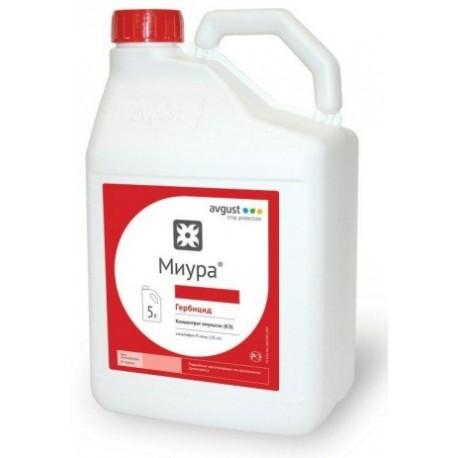
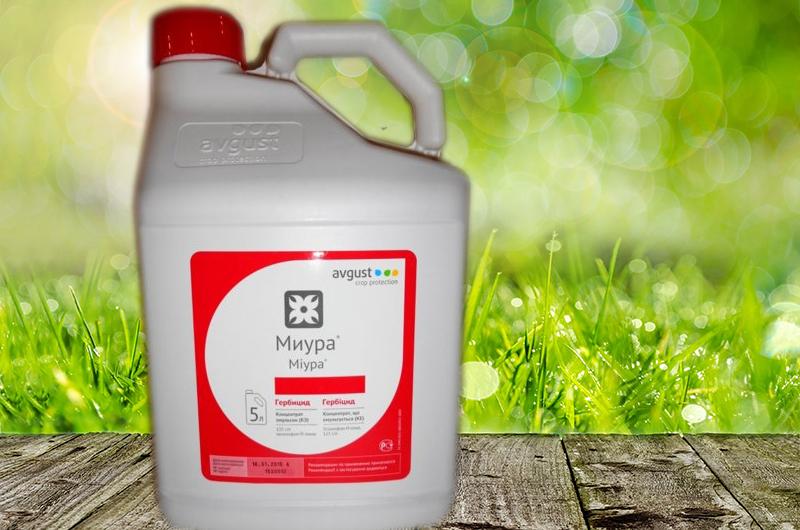
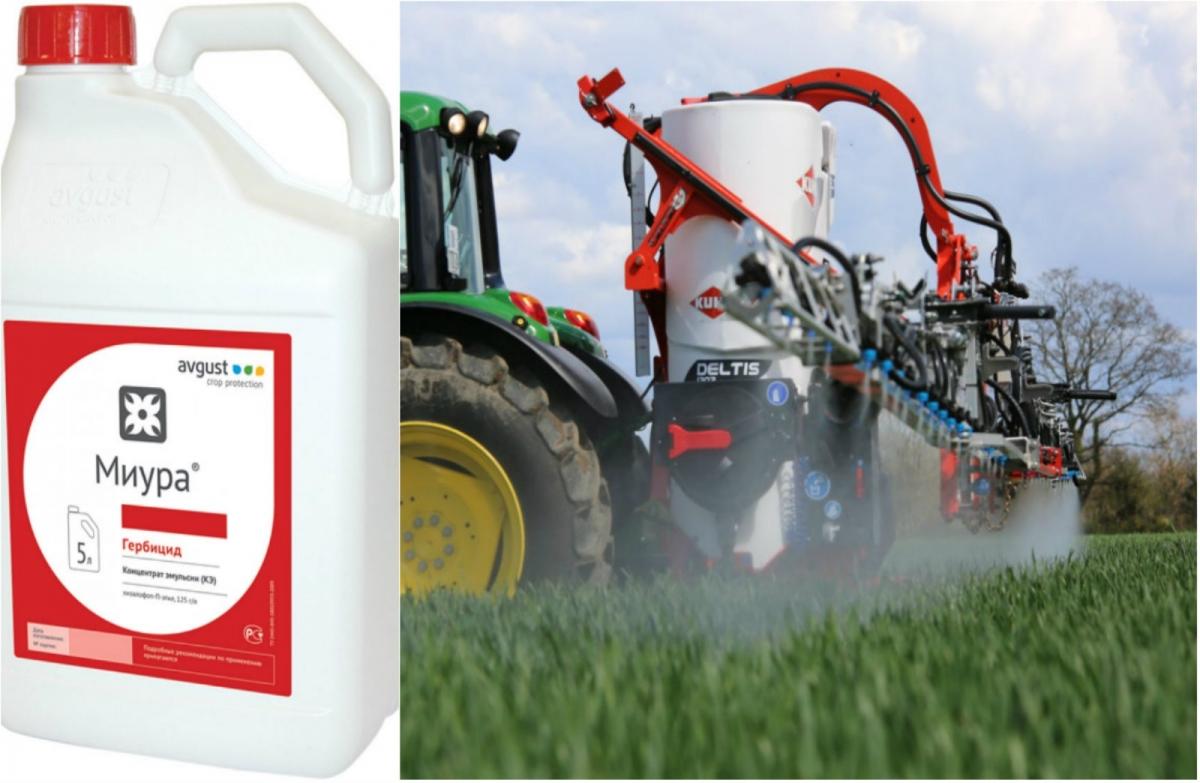
Miura herbicide is a concentrated product available as an emulsion. White crystals of quizalofop-P-ethyl (125 g per liter) are Miura's active ingredient. The herbicide is sold in plastic containers of 5 liters.
Pros and cons of the product
Miura is a selective herbicide. Its main advantages include:
- effective and rapid destruction of harmful plants;
- impact on various weed crops;
- can be applied at different stages of vegetation of emerged weeds.
The adverse effects on the human body occur upon direct ingestion. Therefore, it is important to follow the instructions for use.
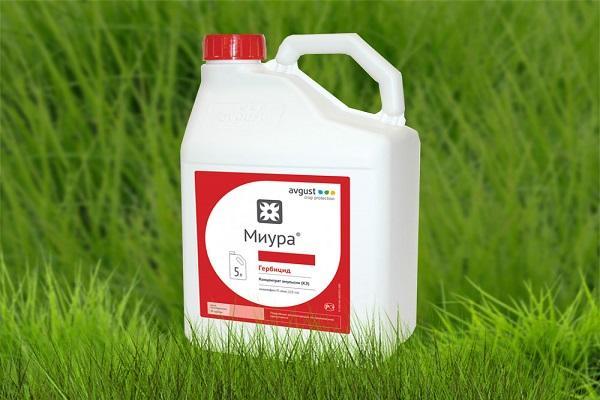
Spectrum of action
Miura inhibits the growth of grass weeds, both perennial and annual. It is applied after the germination of harmful crops. Quizalofop is absorbed by the green mass of weeds within one and a half to two hours, penetrating the rhizomes and destroying them. The emulsion is used to protect beets, potatoes, carrots, and onions.
How to prepare a working solution
Before preparing the solution for spraying crops, the Miura emulsion is mixed in its original container. The sprayer is then filled with water and mixed with the herbicide emulsion in the proportions required for treating the specific crop.
Consumption rates for different crops
The herbicide is suitable for protecting various crops from weeds.
Approximate consumption rates for a summer cottage are shown in the table.
| Cultivated crop | Annual cereals | Perennial cereals |
| White cabbage, onions, potatoes | 4 ml/5 l of water
|
8 ml/5 l of water
|
| Carrots, beets | 3-4 ml/5 l of water | 7-8 ml/5 l of water |
The herbicide is effective against the following annual weeds: blue or green foxtail, wild oat grass, ryegrass, and ryegrass. It also destroys perennial weeds: couch grass, twig grass, reed grass, and bent grass.
Instructions for use
Miura solution is used at a minimum air temperature of 9°C and a maximum of 30°C. Spray the solution on beds where weeds are actively growing or flowering. Annual weeds are controlled after 2-4 leaves appear on the stem and before the bush forms. Perennial weeds are controlled before their stems reach a height of 10-17 cm.
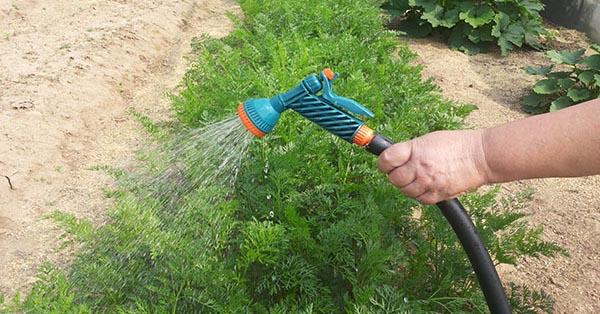
If the area is heavily infested with harmful plants, it is recommended to increase the herbicide application rate. It is also important to note that the herbicide's effectiveness is reduced if precipitation occurs within 1.5 to 2 hours after application.
Safety precautions when using
To prevent the solution from coming into contact with skin, it is recommended to spray plants in calm, dry weather. When using the solution, it is important to observe hygiene requirements:
- Before drinking or smoking, or eating food, you must thoroughly wash your hands and face;
- You can drink and eat at a distance of at least 100 m from the treated area;
- After using the Miura solution, the sprayer is thoroughly rinsed with water;
- You need to wash your hands thoroughly and wash your face immediately after finishing work.
If the solution accidentally comes into contact with the skin, rinse immediately with water. Eyes should also be rinsed with copious amounts of water if splashed with the poison. If the solution is ingested, it is recommended to use activated charcoal with 2-3 glasses of water. Induce vomiting and seek medical attention.
Degree of toxicity
"Miura" belongs to the third class of herbicides, hazardous to humans and bees (sanitary standards must be observed when using it).
The active ingredient quizalofop is quickly destroyed in the soil and does not irritate the skin, but does irritate the mucous membranes of the eyes.
Possible compatibility with other drugs
"Miura" can be mixed in one container with other selective herbicides that affect harmful dicotyledonous crops (hogweed, nettle, dandelion).
Storage conditions
It is recommended to store Miura in its original, labeled packaging. Storage temperature range: -20°C to +35°C. Herbicides should be stored in designated areas, separate from mineral fertilizers.
How long is it valid for?
Miura's concentrated emulsion has a shelf life of 36 months from the date of manufacture.
Similar means
Other herbicides with similar effects can be used to protect garden beds from grass weeds. The herbicide "Remus" is available as water-soluble granules (in 500g packages). It protects potato and corn beds and is designed to kill both grass weeds and broadleaf weeds.
The herbicide "Haruma" also exhibits a broad spectrum of activity. It is suitable for protecting potato, tomato, cucumber, beetroot, carrot, and sunflower crops. It effectively controls annual and perennial grass weeds (wild oat, foxtail, wheatgrass, rhizome, bluegrass, ryegrass, and foxtail).
Miura is a selective herbicide, protecting fruit and vegetable crops while killing grass weeds. This is a highly effective herbicide, as it can be used to control weeds in garden beds and lawns.
Related posts:
 Composition and instructions for use of the herbicide Ballet, application rates and analogues
 Top 10 Systemic Herbicides and How to Choose the Right One
 Instructions for use and composition of the herbicide Galigan, dosage and analogues
 Instructions for use and composition of the herbicide Axial, dosage and analogues
 Instructions for use and composition of the herbicide Lornet, application rates and analogues
 Composition and instructions for use of the herbicide Total, application rate and analogues
 Instructions for use and composition of the herbicide Helios, dosage and analogues
 Instructions for use and composition of the herbicide Caliber, consumption rate and analogues