
- Composition, existing forms of release and purpose
- How does the product work?
- Advantages and disadvantages
- Calculation of consumption for different plants
- How to prepare a working mixture
- Terms of Use
- Precautionary measures
- How toxic is it?
- Possible compatibility
- How long and how to store it properly
- Similar means
Herbicides, which can protect a wide range of crops from unwanted vegetation, are often used in agriculture to treat vegetable plots, seedlings, and fallow land. We'll explore the capabilities of the herbicide "Glider," including its composition and form, its weed control effects, its purpose, and its advantages and disadvantages. We'll also explore how to use it correctly, its toxicity level, compatibility, and similar alternatives.
Composition, existing forms of release and purpose
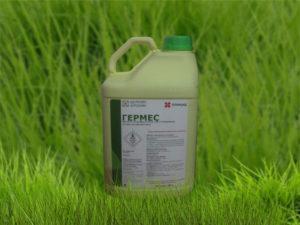
Glider is produced by Soyuzagrokhim as an aqueous solution in 20-liter canisters. The active ingredient, glyphosate, has a potent herbicidal effect and is available at a concentration of 360 g per liter. Glyphosate, a type of organophosphate, has both a selective and non-selective effect on harmful plants. It can be used as both an herbicide and a desiccant.
"Glider" can destroy many types of annual and perennial weeds, including rhizome and malicious ones, shrubs and woody forms.
How does the product work?
Glyphosate begins to act within the first 4-6 hours after spraying, penetrating weeds through leaves and shoots. It migrates to the roots and is distributed throughout the plant within 5-7 days. Glyphosate inhibits the production of essential amino acids. Signs of suppression can be seen in the 3-5th day as chlorosis and wilting of plants. Weeds are completely killed 14-18 days after spraying with Glider.
Advantages and disadvantages
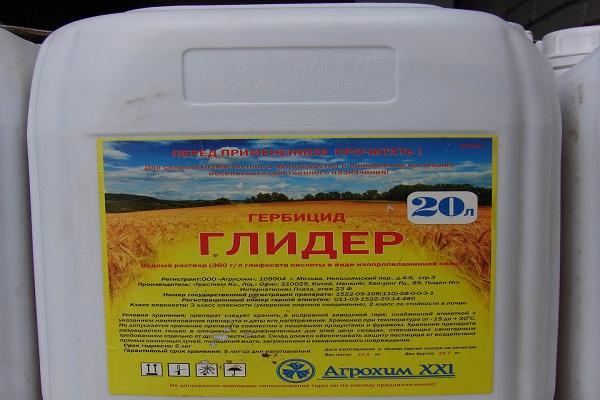
Advantages of the herbicide "Glider":
- successfully used to destroy almost all weeds, both annual and perennial, weedy shrubs and trees;
- can be used in agriculture, private farms, forestry and municipal services;
- used as a desiccant to speed up the preparation of grain crops, flax and sunflower for harvesting;
- used to destroy weeds in fallow lands.
Disadvantages of the herbicide "Glider": the effect of the drug is reduced when applied during drought, at high and low temperatures, if it rains within 4-6 hours after treatment.
Calculation of consumption for different plants
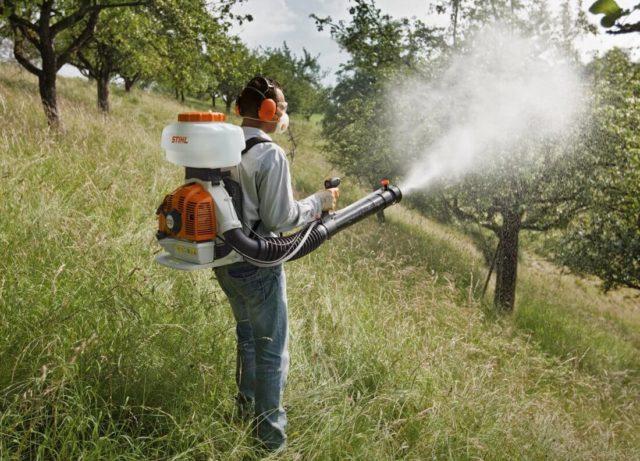
Application rates for different crops (in l per ha):
- fruit, grapes, citrus, fallow land for sowing crops (from annual weeds) – 2-4;
- the same crops from perennial weeds - 4-8;
- grapes – 4;
- corn, beets – 2-5;
- sunflower, soybeans, potatoes, cabbage – 2-3;
- fields for flax – 3;
- fields under crops for post-harvest treatment of 1-year-old weeds – 2-4;
- fields from perennial weeds – 4-6;
- fields for crops from malicious perennial grasses – 6-8;
- pairs of 1-year-old grasses – 2-4;
- pairs of perennial species – 4-6;
- pairs from malicious perennials – 6-8;
- fields for sowing perennial seed cereals – 4-8;
- alfalfa – 0.5-0.6;
- non-agricultural areas from 1-year-old weeds – 3-4;
- from perennials – 4-6.
Spraying with "Glider" is done once, except for vineyards, where double treatment is required. There is no waiting period, but mushroom picking is prohibited in non-agricultural areas for two weeks after treatment. The application rate is the same in all cases: 100-200 liters per hectare; when spraying from aircraft, 50-100 liters.
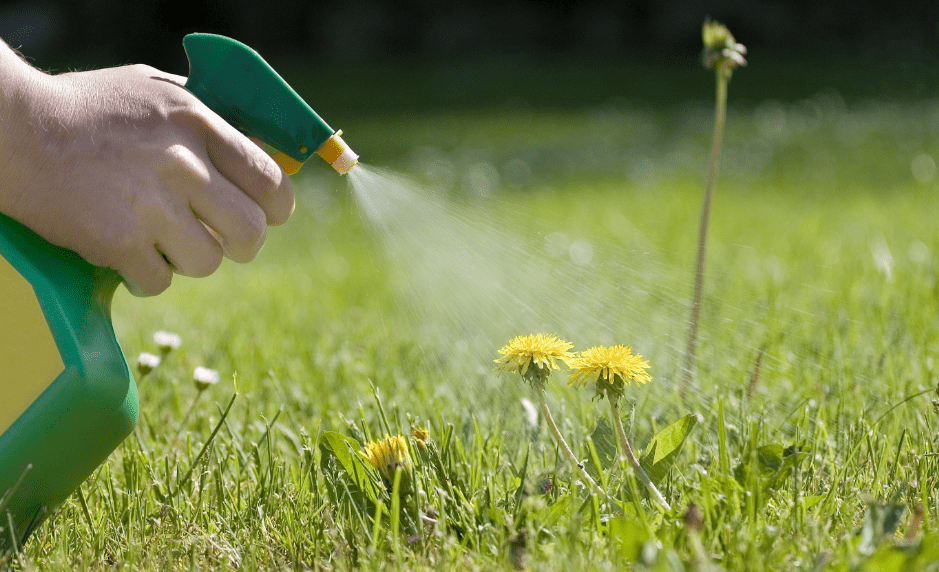
In private households, the herbicide application rate is as follows (ml per 10 l):
- fruit, grapes, potatoes, citrus, areas for sowing crops and areas for the complete destruction of vegetation from 1-year-old weed species - 80;
- the same crops from perennial weeds, shrubs and trees - 120.
The consumption rate of "Glider" is 5 liters per 100 square meters. Apply 2-5 days before potato emergence. For other crops, apply to vegetative weeds 5-15 cm high. To prepare the plots for sowing, apply in the fall after harvest.
Take a look Also
How to prepare a working mixture
Procedure: dissolve the required amount of the preparation in 1/3 or ½ the volume of water, stir until smooth and then add the remaining water.

Terms of Use
According to the instructions, the herbicide can be used during the growing season and after harvest. However, it is most effective against weeds at the beginning of growth or rosette stage. Glider is most effective when applied to moist soil.
Precautionary measures
When handling the Glider herbicide, wear protective clothing. Always wear gloves, goggles, and a respirator. Do not remove these during work. Avoid contact with mucous membranes or skin. In case of accidental contact, rinse with water. If swallowed, perform gastric lavage: take activated charcoal and water, then induce vomiting. If the condition does not stabilize or worsens, consult a doctor.

How toxic is it?
The herbicide "Glider" is classified as a Class 3 agricultural product, posing a hazard to bees and humans. It is recommended to avoid using the product during flowering periods in gardens and during bee flight.
For plants, when used in recommended doses, the drug is not dangerous and does not cause depression.
Possible compatibility
"Glider" is used in tank mixtures with herbicides for pre-emergence treatment; it can be mixed with nitrogen fertilizers when applied in early spring.
How long and how to store it properly
The herbicide can be stored for three years in its original, tightly sealed containers. Store in a dark, dry, and well-ventilated area. Do not store food, feed, household products, or medications near this pesticide.
Similar means
The following herbicides containing glyphosate have been developed for agricultural use: Alfa Ataman, Aristocrat, Vikhr, Glitter, Glyfor, Glyphot, Glyphoshans, Ground, Dominator, Istrebtel, Kileo, Napalm, Rap, Roundup, Smerch, Typhoon, Tornado, Total, and Fakel. Glyphosate is present in varying concentrations in these products.
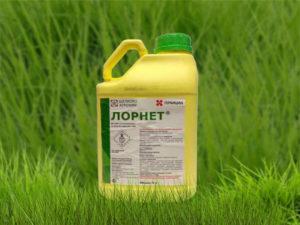
Glider is a universal herbicide suitable for both agricultural and private farming applications. It controls weeds during pre-emergence, post-harvest, and vegetative weed control (provided crops are protected).
Related posts:
 The best eggplant varieties for growing in a polycarbonate greenhouse: planting and care
 Methods for planting and propagating cherries at home
 How to properly plant peas in a greenhouse and open ground
 Instructions for use and composition of Glyphora for weed control, dosage, and analogues
 Instructions for use and composition of the herbicide Forward, dosage and analogues
 Description of varieties of sowing peas and cultivation, to which family they belong
 How to prune grapes step by step for beginners
 Description and characteristics of the best seeds of pea varieties and types