
- Composition, dosage form and purpose
- How does the product work?
- How long does the protective effect last?
- Advantages of the drug
- Calculation of consumption for different plants
- Preparation of working solution and rules of application
- How toxic is it and what are the safety precautions?
- Possible compatibility
- How long and how to store it properly
- Similar means
Herbicides have been used for a long time. 2,4-D remains popular in various formulations. However, over the decades, weed species resistant to certain chemicals have accumulated. Therefore, the demand for new herbicides, such as Lornet, remains high. Furthermore, this product kills the most resilient weeds, including perennials.
Composition, dosage form and purpose
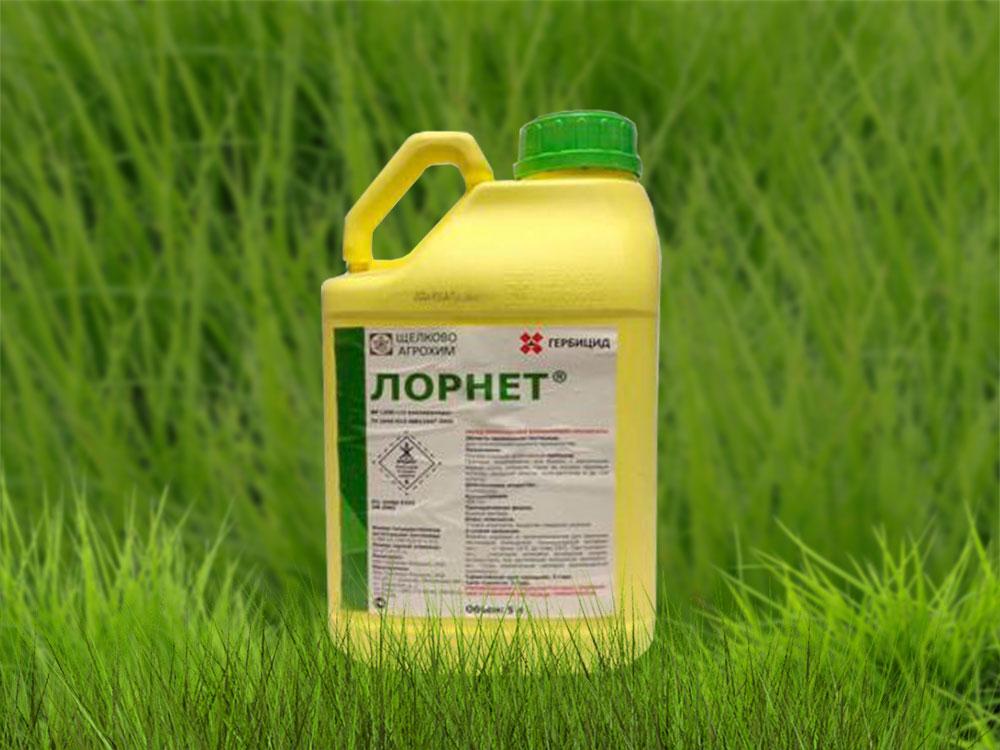
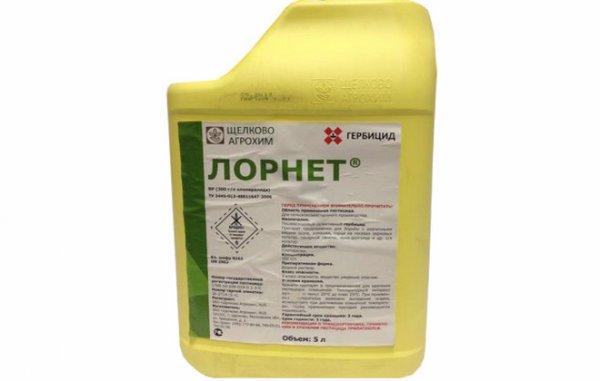
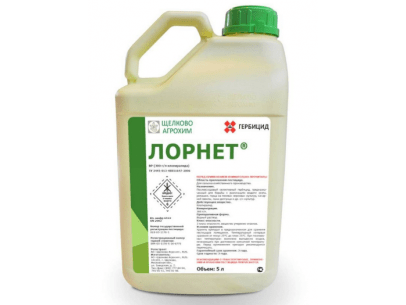
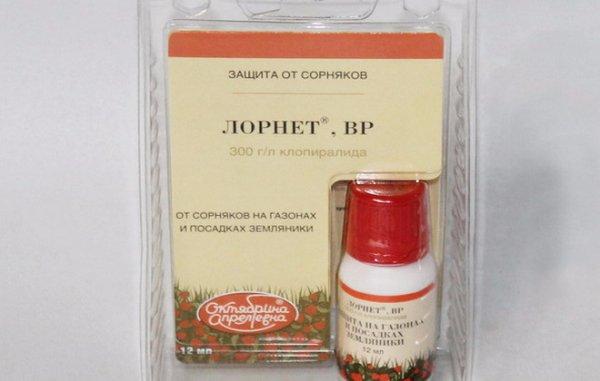
The herbicide "Lornet" is available as a 30% aqueous solution. It contains the active ingredient clopyralid. It is sold in 5-liter canisters, 12 ml bottles, and 3 ml ampoules. "Lornet" is safe for a wide range of agricultural crops and lawn grass. It effectively kills sow thistle, knotweed, chamomile, thistle, cocklebur, and other plants.
How does the product work?
The herbicide "Lornet" works by replacing the plant hormone auxins. By mimicking their structure, the product penetrates actively dividing and growing tissues, promoting:
- stem elongation;
- the growth of new and additional organs.
The weed cannot regulate its growth processes with the help of the counterfeit hormone. This quickly leads to deformities and distortions in the pest's vital functions. Death becomes inevitable.
How long does the protective effect last?
The herbicide "Lornet" is active only within the plant, absorbing through the vegetative tissue. It is unstable in the soil, so newly emerging annual weeds require additional treatment. To control perennials for the entire season, wait until they have all emerged.
Advantages of the drug
The herbicide "Lornet" has powerful positive properties. It can be useful to virtually all farmers and gardeners due to:
- high selectivity to a large list of crops;
- destructive effect on such powerful weeds as sow thistle, chamomile, thistle and others;
- the possibility of simultaneous spraying together with other agents useful for cultivated plants.
Calculation of consumption for different plants
For field treatment of weeds, dilute 200-300 l/ha of working solution.
| Culture | Weed | Spraying time | Norm of herbicide "Lornet" |
| Wheat, barley | Annual and perennial sow thistles, knotweed, thistle, chamomile | The tillering phase before the crop emerges into the tube. | 0.16-0.66 |
| Corn | 3-5 leaves of the crop. | 0.1 | |
| Sugar beet | 0.3-0.5 | ||
| The first time is the cotyledon leaves of the crop. The second time is the tillering phase of later emerging weeds. | 0.1, then 0.2 | ||
| Flax | The plant is 5-10 cm tall, with 5-6 pairs of true leaves. The perennial weeds are in the rosette stage. | 0.1-0.3 | |
| Rape | 3-4 leaves in spring rape and up to the budding phase of winter rape. | 0.3-0.4 | |
| Annual ryegrass | Annual and perennial dicotyledons | Tillering phase. | 0.3 |
| Strawberries | After harvesting | 0.5-0.6 | |
| Lawn grasses | At any time when it is more convenient to take a break from the schedule of games and training for 15 days. | 0.16-0.66 |
The herbicide "Lemur" belongs to the class of moderately hazardous substances and is approved for use in private household plots.
| Culture | Weed | Time of use | Norm of the drug |
| Strawberries | Annual dicotyledons and perennial dicotyledons | After fruiting has finished. | 3ml/3 l water for spraying 50 m2. |
| Grass lawn | Annual dicotyledons | After the first mowing, remove any weeds that have sprouted. People should not be allowed on the lawn for 15 days after treatment. | 1.5 ml/5 l of water for spraying 100 m². |
| Annual and perennial dicotyledons | 6 ml/5 l of water for spraying 100 m². |
Preparation of working solution and rules of application
The herbicide "Lornet" is water-soluble, so making a working solution is easy. Simply calculate the correct ratio of the components in the container in which you will prepare the solution for spraying. After adding water and the herbicide, mix the contents thoroughly by hand or with a mixer (for large quantities).


For more effective action of the herbicide "Lornet", it is recommended to follow the instructions:
- Spraying should be carried out at a wind speed of no more than 4 m/s.
- The best temperature during surgery is 10-25 °C.
- The optimal time to perform the procedure is in the evening, before sunset, or in the morning, from 3 to 6 o’clock.
- Use maximum doses in case of increased weed infestation, presence of perennial weeds or weeds with a large vegetative mass.
- Do not leave the working solution for use another day.
- Combine the working mixture of herbicide with other useful additives.
How toxic is it and what are the safety precautions?
In order to avoid harming the crop being grown, it is necessary to strictly follow the manufacturer's recommendations regarding the timing of application of the herbicide "Lornet".
The product is moderately hazardous to bees and fish. Beekeepers must be notified of the upcoming treatment at least three days in advance. The risk to beneficial insects lasts for 6-12 hours. Treatment may be carried out at least 2 km from permanent banks of water bodies and 500 m from the statistically recorded maximum flood level.

Workers must be provided with:
- closed overalls;
- gloves;
- rubber boots;
- headwear;
- protective glasses;
- gauze bandages or respirators.
Spraying should be performed by adults, with the exception of pregnant and lactating women and those exempted from chemical work for health reasons. Eating and drinking should be kept at least 100 meters away from the toxic source. After finishing work, the area where the solution was prepared should be cleaned, and the face and hands should be washed. Clothing used should be stored in a separate area, away from food and household items.
Possible compatibility
The herbicide "Lornet" is compatible with preparations including phenmedipham, desmedipham, etofumisate, MCPA, metamitron, 2,4-D salts, and sulfonylureas. Compatibility with other substances is tested by mixing them in small doses.
How long and how to store it properly
The shelf life of Lornet herbicide is 3 years. It should be stored in a pesticide warehouse or outbuilding, as far away from living quarters as possible and out of the reach of children. Store at temperatures between -25°C and +25°C.
Similar means
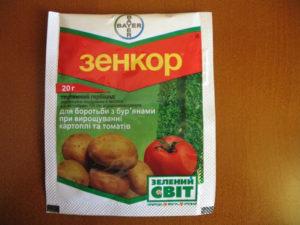
The chemical industry also produces other products for protecting crops from weeds. The table lists herbicides with overlapping functionality but with an active ingredient different from clopyralid.
| Culture | Weed | Preparation | Spraying time |
| Wheat, spring barley, corn | Annual dicotyledons, including those resistant to 2,4-D and MCPA; some perennial dicotyledons | "Dam" | Tillering of the crop. 2-4 leaves in annuals and 15 cm in height in perennials. |
| Flax | Fenizan | The plant is 5-10 cm tall, with 5-6 pairs of true leaves. Weeds are in their early stages of development. | |
| Winter wheat and barley, rye | In spring or autumn: the crop is tillering, weeds have started to grow. | ||
| Wheat, barley, rye, oats | In spring, before the crop emerges. Weeds are at an early stage of growth. | ||
| Sugar and fodder beets | Annual and some perennial dicotyledons | Betaren Super | Weeds in the cotyledon phase 3 times in a row, or 2 times when the weeds have 2-4 leaves and (or) the crop has 4 true leaves. |
Related posts:
 Composition and instructions for use of the herbicide Aristocrat, dosage and analogues
 Instructions for use and composition of the herbicide Pyramin Turbo, application rates
 Instructions for use of the herbicide Clopyralid, consumption calculation and analogues
 Instructions for use and composition of the herbicide Corsar, dosage and analogues
 Hermes herbicide instructions for use, dosage, and analogues
 Instructions for use and composition of the herbicide Volnik, dosage and analogues
 Instructions for use of Gazontrel and the herbicide composition, dosage, and analogues
 Instructions for use and composition of the herbicide Helios, dosage and analogues