
Herbicide use helps cover large areas of crops when labor is short. Proper pesticide application keeps the field clear for a long time, and productive crops are not damaged by careless weeding. Herbicides containing the active ingredient clopyralid quickly eliminate even perennial broadleaf weeds.
Composition, dosage form and purpose
Clopyralid, or 3,6-dichloropicolinic acid, is a highly effective herbicide for sugar beets, grains, flax, and cruciferous crops. It is available in the following forms:
- 30% aqueous solution of VR (Lonner-Euro, Lontrel-300 D, Premier 300, Tatrel-300, Lerashans, Crucifer and others);
- 75% water-soluble granules (Lontrel Grand and others);
- 45-50% of EC emulsion concentrate (Efilon);
- 75% water-dispersible granules VDG (Agron Grand, Cleo and others).
How does the product work?
Clopyralid is a hormone-like herbicide. It is introduced into the plant as auxins, which are responsible for all types of plant growth.
Functions of auxins:
- cell stretching to lengthen the stem;
- cell division;
- growth towards the light;
- maintaining the plant in a state of equilibrium;
- growth of lateral and additional roots;
- other.
Clopyralid works in a similar way. When real auxins become excessive, growth inhibition mechanisms are activated. However, the plant has no effect on Clopyralid. Cells continue to grow, unable to store nutrients. Their starvation ends in death. Visual effects of Clopyralid application are visible within a few hours:
- the lower part of the sprout is curved;
- leaves and stems curl.

All metabolic processes in the weed are disrupted. Deformations often manifest externally in the vegetative and reproductive organs.
Advantages of the drug
Among the many herbicides available, products containing the active ingredient clopyralid offer significant advantages. The drug's positive qualities include:
- absorbed by both leaves and roots;
- effective against perennials;
- least resistance of weeds to this class of herbicides;
- rapid destruction of the pest's vital processes;
- Under normal conditions, it is destroyed in the soil by microbiological means by 50% within 1-2 months.

Calculation of consumption
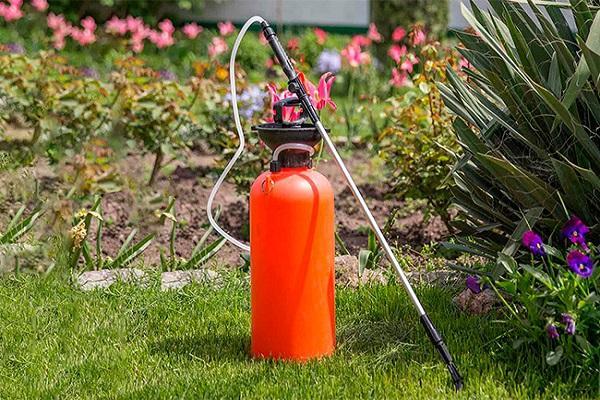
To treat a field, 200-300 liters of working solution per hectare is required. The amount of herbicide containing clopyralid depends on the formulation.
| Culture | Spraying time | Norm of the drug | Pests |
| Wheat, barley, oats, millet. | Tillering of the crop, until it emerges into a tube. | 0.12 kg/ha VDG, VG; 0.16-0.66 l/ha VR. |
Annual and perennial dicotyledons (sow thistle, chamomile). |
| Rape | 3-4 true leaves in spring rape and until the appearance of flower buds in winter rape. | 0.12 kg/ha VDG;
0.3-0.4 l/ha VR; 0.12-0.2 kg/ha VG. |
|
| Sugar beet | 3-5 leaves of the crop. | 0.12 kg/ha VDG;
0.3-0.5 l/ha VR; 0.2 kg/ha VG; 0.1-0.2 l/ha EC. |
|
| Corn | 3-5 leaves of the crop. | 0.3 kg/ha VG, VDG. | |
| White cabbage, seedlings | After landing. | 0.06-0.15 kg/ha VG, VDG. |
Preparation of the working mixture
If using a clopyralid-based herbicide in the form of soluble granules or an aqueous solution, mix them with water to achieve the desired concentration. Mix with a spatula or mixer, ensuring no sediment remains.

Water-dispersible granules or emulsifiable concentrates require more thorough mixing. Preparation instructions:
- The dose of herbicide with clopyralid is added to 2/3 of the water volume and the hydromixer is turned on.
- Mix for 8-10 minutes.
- Add the remaining water and continue stirring for another 5 minutes.
Rules of application
When applying herbicide to the soil surface, there are factors that can reduce the potency of Clopyralid due to the unnecessary absorption of more or less of the product. These include:
- presence of plant residues;
- large lumps of earth (more than 2 cm at the widest point).

Weather conditions are important. During spraying:
- wind speed should not exceed 4 m/s;
- optimal air temperature is 10-20 °C;
- the sun must be setting or already gone down.
Do not use the same herbicide in one place for more than 2 seasons in a row.
Precautionary measures
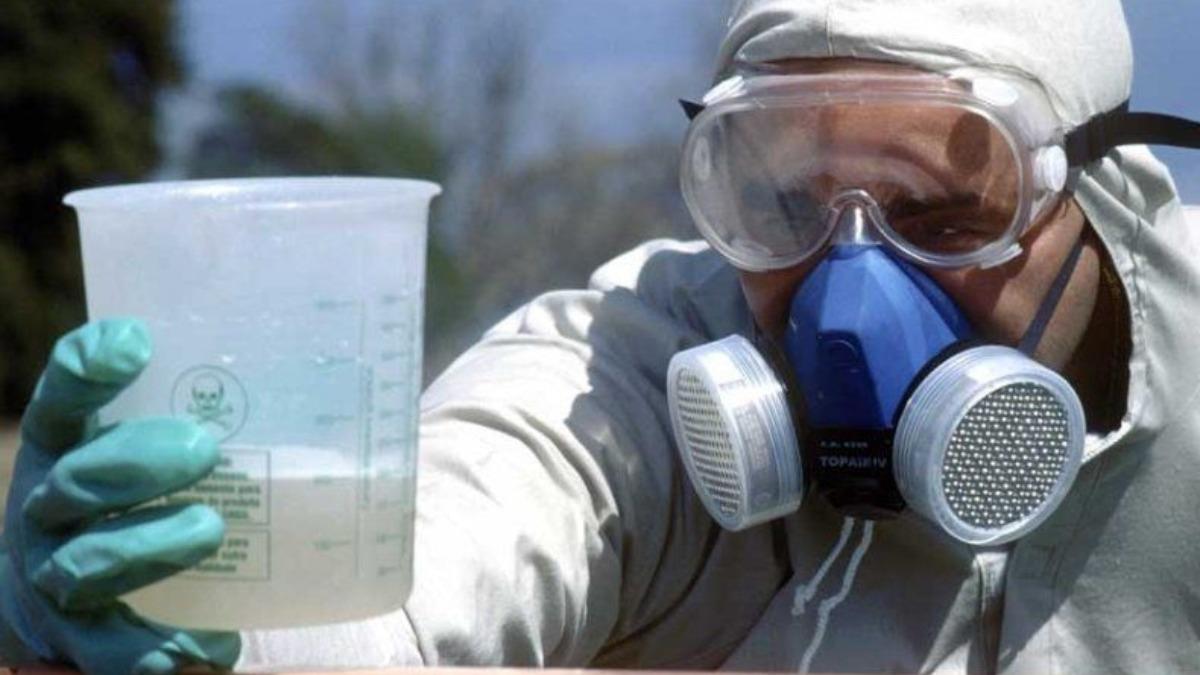
The herbicide Clopyralid is moderately hazardous to bees and humans. When working with it, wear clothing, headgear, and shoes that cover as much of the body as possible. Protect your respiratory tract with a filter mask. Wear protective goggles and chemical-resistant gloves.
Work with Clopyralid herbicide should be done either outdoors or in a room with a fume hood. Persons should not be exposed to the product for more than six hours per day. Minors and pregnant women are prohibited from working with Clopyralid herbicide.
If the product comes into contact with your skin, inhaled, or in your eyes, immediately wash the affected area with soap and water and rinse your nose and throat with a baking soda solution. If your eyes are open, rinse them thoroughly with water and consult an ophthalmologist.

If an allergic reaction occurs or if you feel unwell, stop work immediately and move at least 400 meters away from the activity. If symptoms persist, consult a doctor. All workers should be familiar with the name of the medication.
How toxic is it?
The product may have a harmful effect on crops other than rapeseed, cabbage, strawberries, lavender, beets, and grains. It is also harmless to flax and lawn grasses. This should be taken into account when performing crop rotation. Short-term exposure to the herbicide clopyralid irritates the skin, respiratory tract, and eyes. When burned, the substance releases toxic and corrosive vapors of nitrogen oxides and chlorine.
Possible compatibility
"Clopiralid" is combined with drugs based on phenmedipham, desmedipham, chloridazone, metamitron, triflusulfuron-methyl and derivatives of 2-arylxyphenoxypropionic acid.
Storage conditions and shelf life
The herbicide has a shelf life of 3 years from the date of manufacture. Store in a dark, ventilated area, away from open flames. Keep the area inaccessible to people and animals. Do not store herbicide containing clopyralid in aluminum, iron, or tin containers. Store at a temperature between -25°C and +25°C.
Analogues
To prevent weeds from developing and establishing adaptation mechanisms to the pesticide, herbicides must be periodically replaced with others containing a different active ingredient.
| Culture | Pest | Preparation |
| Cereals, flax | Dicotyledons | Agritox |
| Corn | Dicotyledons and cereals. | Adengo |
| Wheat | Annual dicotyledons and cereals, some perennial dicotyledons. | Alistair Grand |
| Beet | Annual dicotyledons. | "Betanal 22", "Betanal maxPro" |
| Wheat, barley, corn, flax | Annual and some perennial dicotyledons. | Turbo Secateurs |
| Rapeseed, grains | Annual and perennial dicotyledons and cereals. | Total |
| Rapeseed, white cabbage | Dicotyledons and cereals. | Teridox |
Related posts:
 Instructions for use and composition of the herbicide Lornet, application rates and analogues
 Composition and instructions for use of the herbicide Aristocrat, dosage and analogues
 Instructions for use and composition of the herbicide Corsar, dosage and analogues
 Instructions for use and composition of the herbicide Volnik, dosage and analogues
 Instructions for use and composition of the herbicide Paradox, dosage and analogues
 Instructions for use and composition of the herbicide Helios, dosage and analogues
 Instructions for use and composition of the herbicide Lastik Top, consumption rate
 Instructions for use of Gazontrel and the herbicide composition, dosage, and analogues