
- Composition, existing forms of release and purpose
- Mode of action
- How quickly does it work?
- How long does the protective effect last?
- Pros and cons
- Calculation of consumption
- How to prepare the working mixture and instructions for use
- Safety precautions
- Degree of toxicity, what crops it is tolerant to
- Is there resistance?
- Possible compatibility
- How to store it correctly and for how long
- Analogues
Grain crops will always be grown in enormous quantities. Demand for herbicides selective for wheat, rye, barley, and oats is very high. Soy has long been used as a source of precious protein in supplements for many food products and feeds. Flax provides people with environmentally friendly and durable fabrics. Legumes restore soils and feed animals. Korsar is a contact herbicide that clears all these crops of the broadleaf weeds that deplete them.
Composition, existing forms of release and purpose
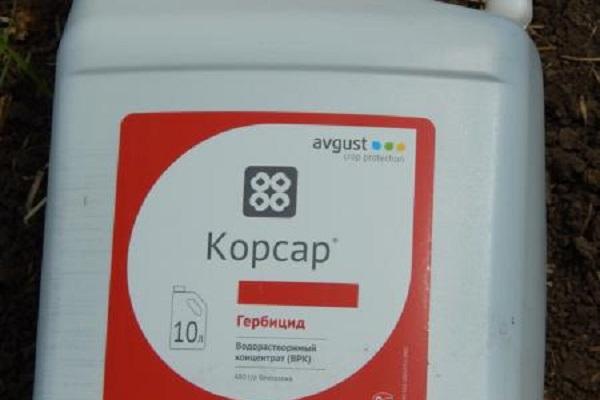
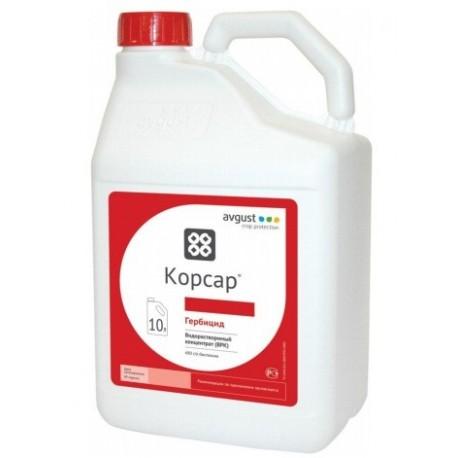
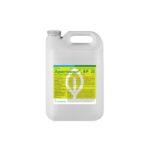
The herbicide "Korsar" contains 480 g/l of bentazone as its active ingredient. It is manufactured by the Russian company "Avgust." It is available as a water-soluble concentrate and is packaged in 10-liter plastic canisters. "Korsar" controls a wide range of annual broadleaf weeds, including those resistant to the common MCPA and 2,4-D.
Mode of action
By coating the leaves and stems of the harmful plant, the herbicide "Korsar" stops photosynthesis and damages the protective layers. The product barely moves within the weed's body. Therefore, it's primarily annual plants that die, deprived of their energy generator—the above-ground part.
Perennials have nutrient reserves in their root system, which allows many species to grow new leaves, which are immediately included in energy and other metabolic processes.
How quickly does it work?
The effect of the Korsar herbicide is especially noticeable within the first day of application in the spring. Weeds, previously growing several centimeters a day, suddenly stop growing. Within a week, the appearance of the "uninvited guests" worsens. Within 10-14 days, the above-ground vegetative mass of the pest lodges, dries up, or rots, depending on the weather.
How long does the protective effect last?
The herbicide "Korsar" kills weeds whose stems, leaves, and flowers it comes into contact with. The re-growing shoots are unaffected by the pesticide.
Pros and cons
Herbicides are used intensively in agriculture.
The rapid effectiveness of the pesticide is accompanied by negative properties.
Calculation of consumption
To cover 1 hectare of area, 200-300 liters of liquid are required.
| Culture | Weeds | Rate of herbicide "Corsair", l/ha | Spraying time |
| Cereals | Annual dicotyledons | 2-4 | In spring, weeds have 2-4 leaves, and the crop is at the beginning of the tillering stage (5-6 leaves). When compacted by clover, it should form one leaf. |
| Spring wheat, barley, oats with undersowing of alfalfa | 2 | The crops are bushy, alfalfa has 1-2 leaves. | |
| Peas for grain, bentazone-resistant varieties | 2-3 | 5-6 leaves of the crop. Weeds at the beginning of development. | |
| Soybeans | 1.5-3 | The crop has 1 or more leaves. Weeds have less than 6 leaves. | |
| Rice | Annual and perennial monocotyledonous sedges (compact and maritime club-rush) and annual dicotyledons (sedge, water-sedge, arrowhead) | 2-4 | The crop has at least two leaves, while weeds have two to five. To prevent the herbicide from washing off, drain the water in the checks before application. After two days, refill the checks to their previous level. |
| Flax | Annual dicotyledons | 2-4 | Flax has 5-6 pairs of leaves, height – 5-10 cm. Weeds have 3-5 leaves. |
| Alfalfa, 1st year of vegetation | 2 | The culture has 1-2 true leaves. | |
| Alfalfa, 2nd year of life | 1.5-2 | The height of the crop is 10-15 cm. | |
| Field clover, creeping and hybrid, 2nd year of vegetation | 2-3 | From the appearance of green leaves on clover in spring until its height reaches 10-15 cm. | |
| Annual ryegrass | 1 | Tillering phase of ryegrass. | |
| Maclea cordata from the second year of vegetation | 2-2.5 | At the beginning of crop growth. | |
| Peppermint | 4-6 mint leaves. |

How to prepare the working mixture and instructions for use
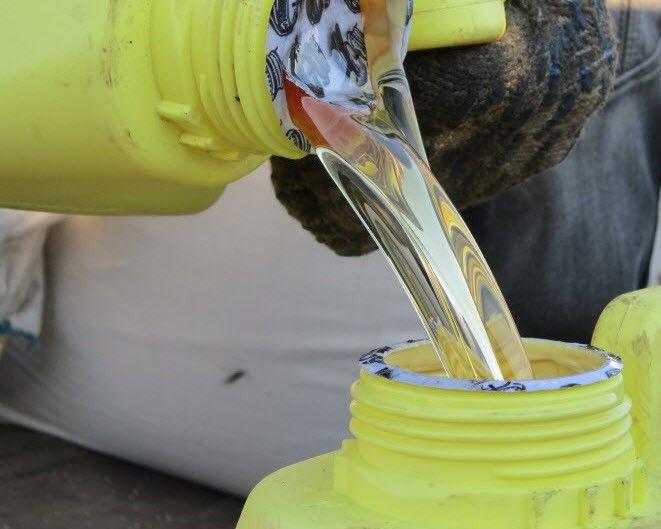
To ensure the Korsar herbicide is evenly distributed in the liquid, certain steps must be followed. Preparation steps:
- Half the volume of water is poured into the sprayer container.
- Pour in the recommended amount of the drug, calculated based on the size of the tank.
- Stir the liquid for 7 minutes.
- Fill the tank completely, adding the remaining water.
- Knead for 4 minutes.
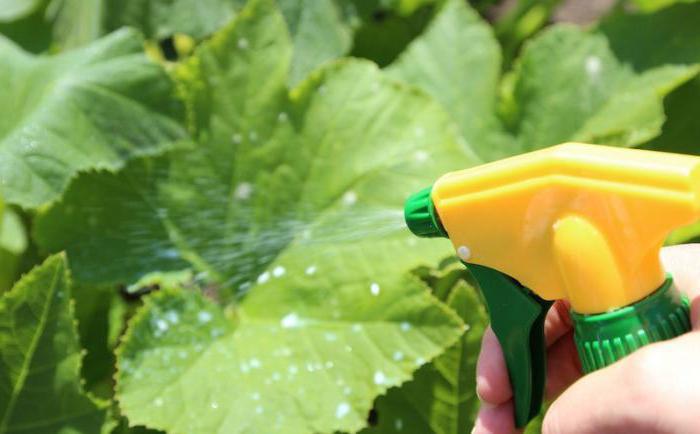
During spraying, periodically turn on the hydro-mixer or leave it running. Check the weather forecast to avoid imminent rain. During treatment, wind should prevent the pesticide from blowing onto neighboring areas, equipment, or people. Evenly coat the plant with a layer of the working solution on all sides.
Safety precautions
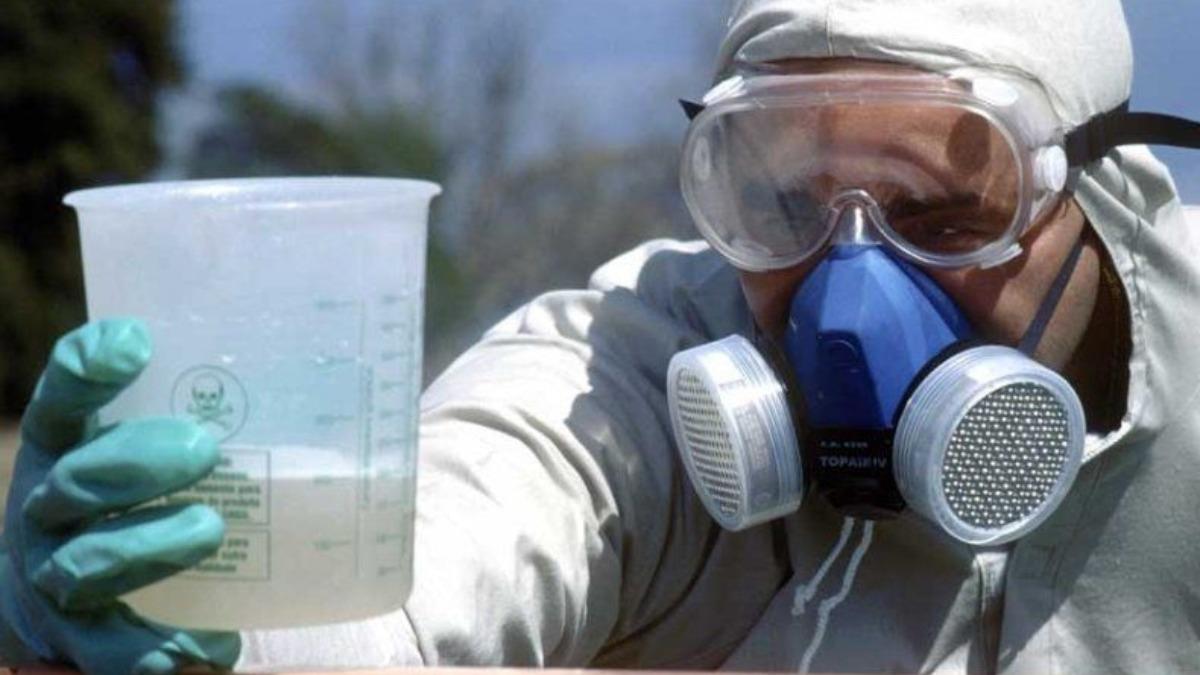
The herbicide "Korsar" is moderately hazardous to humans and bees. Therefore, it should be handled in the following areas:
- special clothing;
- rubber boots;
- respirator;
- eye mask;
- impermeable gloves.
During spraying, do not talk, remove your respirator or glasses, or touch your body with dirty gloves.
A fenced concrete area is built for preparing working fluids. It can be easily cleaned with detergents after each use. If the mixture is produced indoors, it must have adequate ventilation.
At the beginning of a break or after completing all work with the pesticide, wash your hands and face with soap. Eat food at a distance of 200 meters from the treatment site. Store dirty clothes in a separate closet or bags.
Degree of toxicity, what crops it is tolerant to
Failure to follow safety precautions may cause allergic skin redness, shortness of breath, diarrhea, and irritation of the mucous membranes of the eyes. Korsar herbicide is safe for grain crops, resistant varieties of peas, soybeans, forage legumes, and some medicinal plants.
Is there resistance?
No resistance has been detected. To prevent resistance, do not underdose the herbicide. It is also necessary to use other pesticides with a different active ingredient on weeds that appear after using Korsar.
Take a look Also

Possible compatibility
In tank mixes, Korsar herbicide can be combined with neutral or alkaline pesticides. All products are combined after being diluted with water. Korsar reacts with acids.
How to store it correctly and for how long
The product retains its potency for three years from the date of production. Store Korsar in its original packaging at temperatures ranging from -12°C to +40°C.
Analogues
There are other preparations that can destroy annual dicotyledons in fields.
| Culture | Weeds | Herbicide |
| Cereals, flax, clover, peas, potatoes | Annual dicotyledons | Herbitox |
| All varieties of soybeans, grains, flax, corn hybrids | Dicotyledons | Harmony |
| Legumes | Dicotyledons | Galaxy Top |
Related posts:
 Instructions for use and composition of the herbicide Galigan, dosage and analogues
 Instructions for use and composition of the herbicide Axial, dosage and analogues
 Instructions for use and composition of the herbicide Helios, dosage and analogues
 Composition and instructions for use of the herbicide Ballet, application rates and analogues
 Instructions for use and composition of the herbicide Paradox, dosage and analogues
 Instructions for use and composition of the herbicide Lornet, application rates and analogues
 Instructions for use and composition of the herbicide Miura, application rates and analogues
 Composition and instructions for use of the herbicide Aristocrat, dosage and analogues