
The importance of sugar beets as an industrial crop cannot be overstated. Along with fodder beets, they are also excellent for animal feed. At the germination stage, both crops have very weak and fragile shoots. Weeds near these seedlings appear to be champions in terms of their rapid growth in width and height. Pyramine is a herbicide that allows for the early elimination of competitors from beet fields.
Composition, existing forms of release and purpose
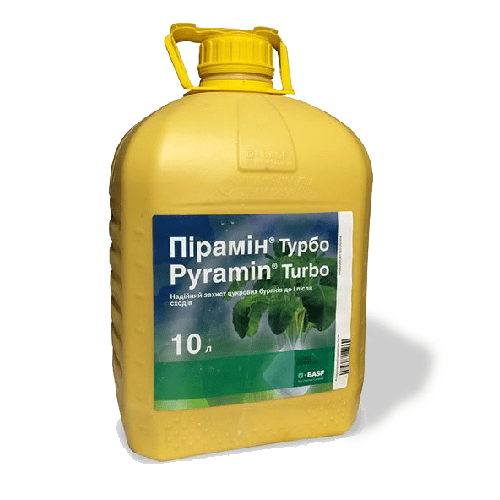
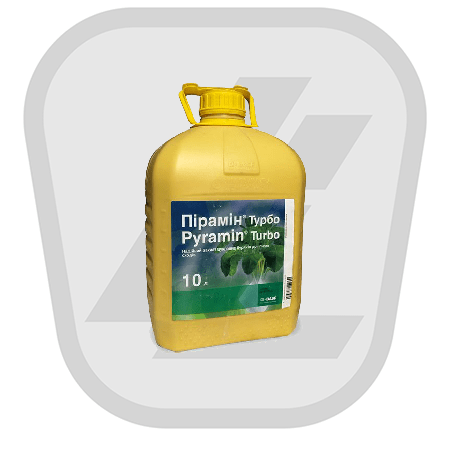
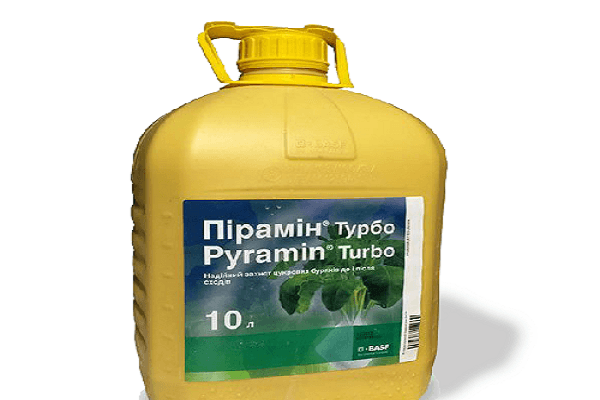
Basf's Pyramine Turbo herbicide contains 520 g/l of the active ingredient chloridazone and is produced as a suspension concentrate. The product is packaged in 5-liter canisters. Pyramine controls annual broadleaf weeds in sugar beet and fodder beet fields.
Pros and cons
The herbicide was created to protect sugar and fodder beets, so it is as harmless as possible for these crops.
What plants does it affect and how?
The herbicide "Piramine Turbo" targets annual broadleaf weeds, absorbing them through their roots when applied pre-emergently, or through their stems and leaves during the beet growing season. It even kills quarantine pests, such as Galinsoga parviflora and Galinsoga ciliata. This weed, which grows up to 75 cm,
- obscures the culture;
- takes away a large amount of nutrients from it;
- lowers the soil temperature;
- pumps water out of the soil layers accessible to crops;
- interferes with the operation of equipment;
- contaminates seed material;
- creates additional favorable conditions for the life of insect pests.
One galinsogi plant produces several thousand seeds with volatiles that are carried by the wind over great distances.
Convolvulus, or climbing knotweed, retains its seeds in the soil for up to 20 years. In areas infested with this invasive and ubiquitous weed, even manual cultivation of any crop is impossible without causing catastrophic damage to the plant. Only the use of a fungicide will yield some harvest, but the plant will remain weakened.
The rough knotweed, also known as the polygonum ramosum, grows up to 1 m in length. Its seeds remain viable for up to 13 years. It has a branched root system. It robs crops of nutrients, especially during dry periods, and also of space. Its length makes harvesting difficult.
Other weeds controlled by the herbicide Pyramine Turbo bring similar “benefits” to crops.
Calculation of consumption
To process 1 hectare of beet crop area, 200-400 liters of working fluid are required.
| Culture | Weeds | Rate of herbicide "Pyramine", l/ha | Spraying time |
| Sugar and fodder beets | Veronica species, Polygonum, Galinsoga (ciliate and small-flowered); field mustard, Sophia's rhizome, chickweed, common ragwort, goosefoot and spreading orach, field poppy, wild carrot, hybrid goosefoot, field forget-me-not, common sedge, shepherd's purse, cleavers, wild radish, field chamomile, chamomile without tongue, thaliana, field toritsa, scentless chamomile, retroflexus amaranth, wild pansy, purple deadnettle, field pennycress, clasping deadnettle
|
3-5 (1 treatment) or 2.5 (2 sprays) | Before sowing or before crop emergence, spray once per season. Alternatively, treat the first wave of weeds during the cotyledon leaf stage; 10-15 days later, spray a second wave at the same stage. The crop's development stage is not important. |
How to prepare a working mixture

The spray liquid is prepared directly in the tank after checking the mechanism, filter, and nozzles for proper operation. Instructions:
- Pour one third of the water volume into the spray bottle.
- After shaking the Pyramin in the canister, measure out and pour the calculated amount into the tank.
- Turn on the hydro mixer.
- Stirring lasts for 7 minutes.
- Add the rest of the water.
- Knead for 5 minutes.
Rules for using the product
After preparing the working mixture, begin spraying immediately. Wind speed should be moderate (less than 4 m/s). Avoiding precipitation and direct sunlight will guarantee success. Continue stirring while the tank is being emptied.

Safety precautions
When working with the herbicide "Pyramine" for extended periods, protective clothing is required. If a person is only preparing the spray mixture or transferring the product from one place to another, an apron, rubber boots, and chemical-resistant gloves may be sufficient. Those spraying should wear:
- overalls;
- rubber boots;
- special gloves;
- glasses with side protection;
- filter for respiratory organs.
No poisoning has been observed in cases of accidental ingestion. In any case, rinse your mouth and drink 2-3 glasses of water afterward. If you feel unwell, consult a doctor and tell them the name of the medication.
The herbicide "Pyramine" can cause an allergic reaction and increased skin sensitivity if it comes into contact with the skin. If red spots or a rash appear, consult a doctor. If the product gets into your eyes, rinse them for 15 minutes, keeping your eyelids open.

Before eating or leaving the field, and after cleaning the area where the herbicide was prepared, wash your face and hands with soap. Cleaning the area involves rinsing the surface, cleaning up any spilled herbicide, and washing dishes, tools, and equipment. Store used clothing separately from other items.
How toxic is it?
The herbicide "Pyramine Turbo" is dangerous if swallowed. It has a long-term toxic effect on aquatic organisms. Do not dispose of it down the drain or onto the ground.
Skin contact with Pyramin should be protected from fire. The product releases toxic substances during a fire.
Is compatibility possible?
If a substance is known to be a strong oxidizing agent, acid, or concentrated base, it should not be mixed with Pyramine Turbo herbicide. In other cases, a routine reactivity test should be performed using small amounts of the working fluid.

Storage conditions
The permissible storage temperature for Pyramine Turbo herbicide is from -5°C to +40°C. Protect the product from heat and direct sunlight. Store it in a ventilated warehouse away from feed and aromatic substances. Canisters should be stacked and labeled. Fire extinguishers are provided in the warehouse. A responsible person is in charge of the keys.
Analogues
In order to successfully grow fodder and sugar beets, other herbicides similar in action to Pyramin are also used.
| Weeds | Preparation | Number of sprays |
| Annual dicotyledons | Bifor | 3 |
| Most broadleaf and some cereals | "Victor" | 3 |
| Types of sow thistle, chamomile, and thistle | "Lorgnette" | 1 |
Related posts:
 Medicinal properties and contraindications of field mint, description and care
 Description of varieties of sowing peas and cultivation, to which family they belong
 Methods for planting and propagating cherries at home
 Instructions for use of the herbicide Frontier Optima, composition and dosage
 How to properly plant peas in a greenhouse and open ground
 The best eggplant varieties for growing in a polycarbonate greenhouse: planting and care
 The best grape varieties for growing in the Urals, planting and care rules in summer
 How to propagate and grow peas, cultivation technology, and care in open ground