
- Composition and existing forms of release
- Mechanism and scope of action of the herbicide
- Pros and cons of weed killer
- Average consumption rates
- Preparation of working solution
- Rules of application
- Precautions for use
- Existing restrictions on crop rotation
- How to operate a sprayer
- The degree of toxicity of the herbicide
- Existing analogues of Eurolighting
It's crucial for every farmer to improve crop quality using only proven and safe products. Uncontrolled weed growth causes the greatest damage to cultivated sunflowers. Toxic weed killers will harm both the crop and future buyers. The broad-spectrum herbicide "Eurolighting" is considered one of the best two-component weed killers.
Composition and existing forms of release
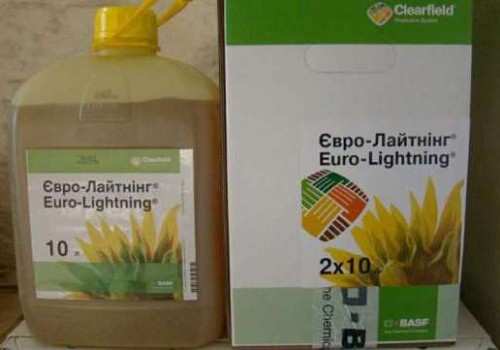
The two main components are imozamox and imozapyr. They are completely harmless to animals and cultivated plants and have a selective action against weeds. Eurolighting does not pollute the environment, and the solution's components are completely metabolized by nitrogen-containing bacteria.
Mechanism and scope of action of the herbicide
The herbicide's mechanism of action targets weeds exclusively. Plant tissue synthesizes a special enzyme responsible for acid production. By penetrating the xylem and phloem, imosamox blocks enzyme production, preventing further weed growth.
Pros and cons of weed killer
"Eurolighting" is widely used in the former CIS countries due to its several advantages. Its selective action allows the toxic substance to suppress weed growth without affecting the main crop. It is capable of destroying the most common waste crops, such as broomrape, cocklebur, and ragweed.

The herbicide's mechanism of action does not affect humans or animals. This substance can be used in the immediate vicinity of apiaries, livestock farms, and residential areas.
Sparing use of Eurolighting will allow farmers to save on expensive herbicides. Once the field is weed-free, a bountiful harvest is guaranteed.
The only drawback is the rather poor crop rotation after using the substance. Only winter wheat will yield a good harvest after using Eurolighting. It is not recommended to use it in the same field two years in a row, otherwise herbicide-resistant weeds will appear.
Average consumption rates
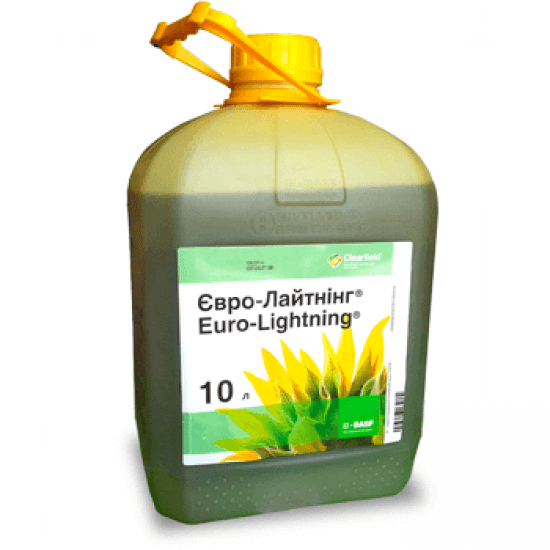
The average application rate for one hectare of working fluid is 300 liters. The herbicide is sold in 10-liter containers. Over the course of a season, at least 900 liters will be used per hectare (if applied at the beginning, middle, and end of the crop season).
Preparation of working solution
The product is sprayed using mechanical sprayers. It is recommended to use 1 liter of Eurolighting per hectare. The working solution should be approximately 300 liters. Therefore, the solution is diluted 300 times with clean, slightly hard running water.
Rules of application
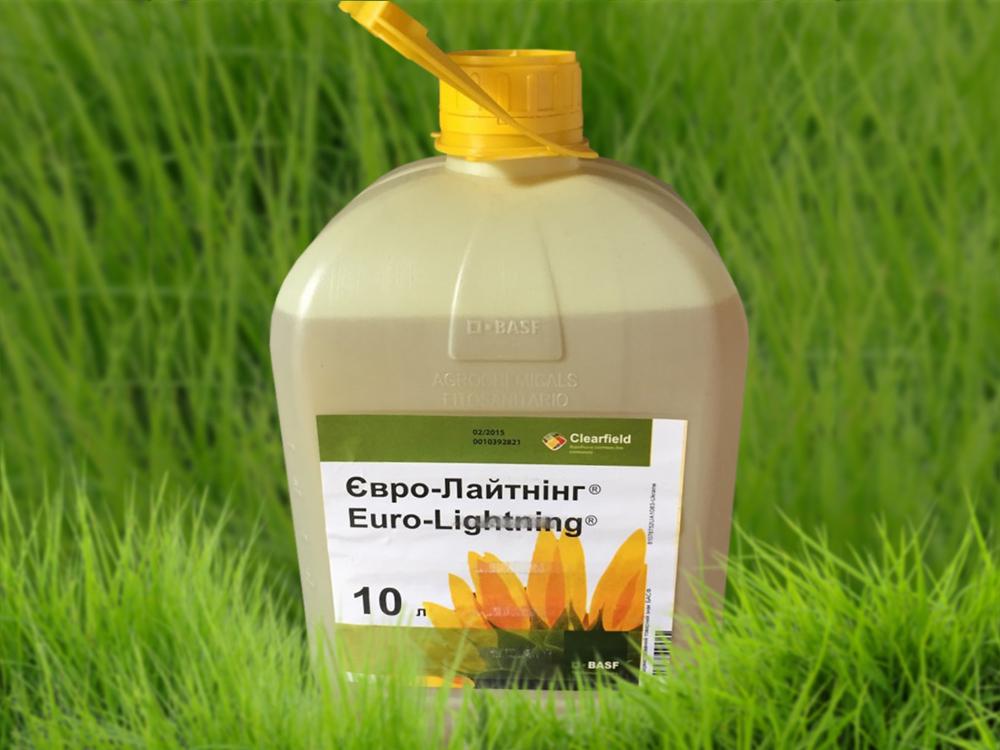
Each 10-liter can comes with instructions for use. Detailed instructions are provided in the table below.
| Cultivated crop | Harmful object | Processing method | Number of treatments |
| Sunflowers (herbicide-resistant hybrids and varieties). | Weeds | Crops are sprayed at the early stage of weed growth (when 2-4 leaves appear on the stem). | 60 |
Precautions for use
Avoid treatment during severe drought, wind, or rain. The optimal temperature for application is between 10 and 25 degrees Celsius. The higher the ambient temperature, the more effective the herbicide will be.
Existing restrictions on crop rotation
Only winter wheat will yield a good harvest in the year of Eurolighting treatment. Grains, alfalfa, barley, soybeans, and peas can be sown only after 90-120 days. Potatoes, tomatoes, and cucumbers should be sown no earlier than after eighteen months. Sugar beets, fodder beets, and rapeseed can be grown after two years.

How to operate a sprayer
To avoid damaging other crops with sensitive herbicides, thoroughly rinse the sprayer under running water after use. It's recommended to fill the tank with clean water for 10 minutes, then drain it, and repeat the process several times.
The degree of toxicity of the herbicide
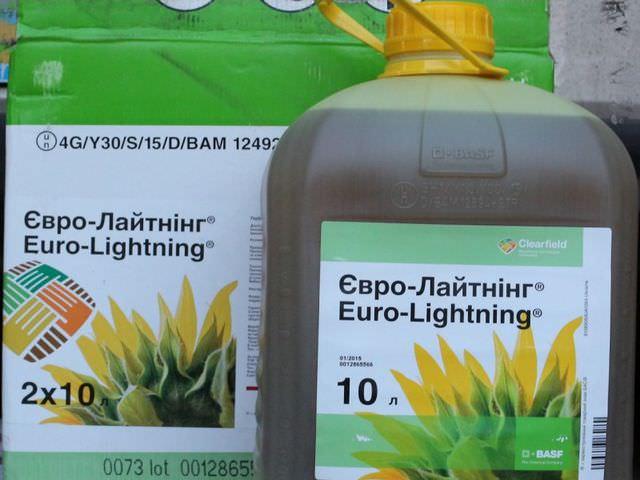
According to its hazard class for humans, the herbicide is classified as Type 3. This means that the substance, if used unsupervised, can cause harm to organs and tissues. However, if used strictly according to the instructions, it is completely safe. It can be used in fields near apiaries and beekeeping farms.
Existing analogues of Eurolighting
The following products have proven effective against cereal weeds: Vitalite and Impex Duo. These substances can be used in sunflower crops. Both herbicides are produced in Ukraine, so they will save farmers money.
Related posts:
 Hermes herbicide instructions for use, dosage, and analogues
 Instructions for use and composition of the herbicide Basis, application rates and analogues
 Composition and instructions for use of the herbicide Ballet, application rates and analogues
 The spectrum of action and instructions for use of the herbicide Agritox, its consumption
 Instructions for the use of herbicides for potatoes, similar preparations
 Instructions for use and composition of the herbicide Aksifor, dosage and analogues
 Instructions for use and composition of the herbicide Fabian, application rates and analogues
 Luger herbicide instructions for use, dosage, and analogues