
- Composition and release form
- When and on what plants is it applied?
- Mode of action
- Advantages of the drug
- How to work with the fungicide "Horus"
- Grape processing
- Stone fruit crops
- Pome fruit crops
- How to prepare a working solution and use the product
- Safety precautions
- Degree of toxicity
- Possible compatibility
- Storage conditions
- Analogues
When planting fruit trees and shrubs on their plots, gardeners and farmers plan to harvest for personal consumption and subsequent sale at market. However, crop diseases damage the plants and reduce fruit yields. Therefore, many gardeners resort to chemicals to protect their crops. The instructions for the fungicide "Horus" recommend using the chemical to eliminate diseases on fruit crops.
Composition and release form
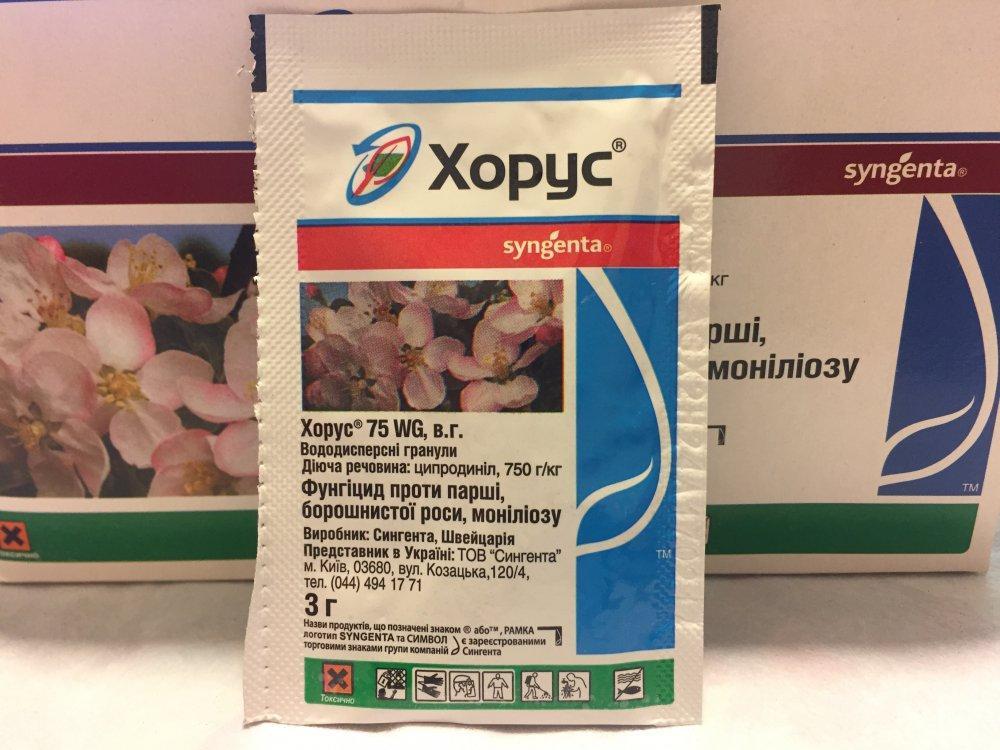
A fungicide that combines both systemic and contact action, it is highly effective in treating fungal diseases of stone and pome fruit plants at the first signs of damage. It contains a single active ingredient, cyprodinil, in the highest concentration. It belongs to the chemical class of aminopyrimidines. One kilogram of the chemical contains 750 grams of the active ingredient. Horus is manufactured by the Swiss company Syngenta.
The fungicide is available commercially as water-dispersible granules. They are available in 3-gram sachets and packaged in 1-kg boxes, making them convenient for owners of small gardens.
When and on what plants is it applied?
The instructions for use recommend using the combined chemical "Horus" as soon as the first symptoms of infection are noticed and as a preventative measure. Furthermore, it provides a long-lasting protective effect.
The chemical effectively combats pathogens that cause crop diseases such as brown and white spot, mildew, alternaria, clasterosporium, powdery mildew, as well as gray and fruit rot, monilial blight, scab, and other diseases.
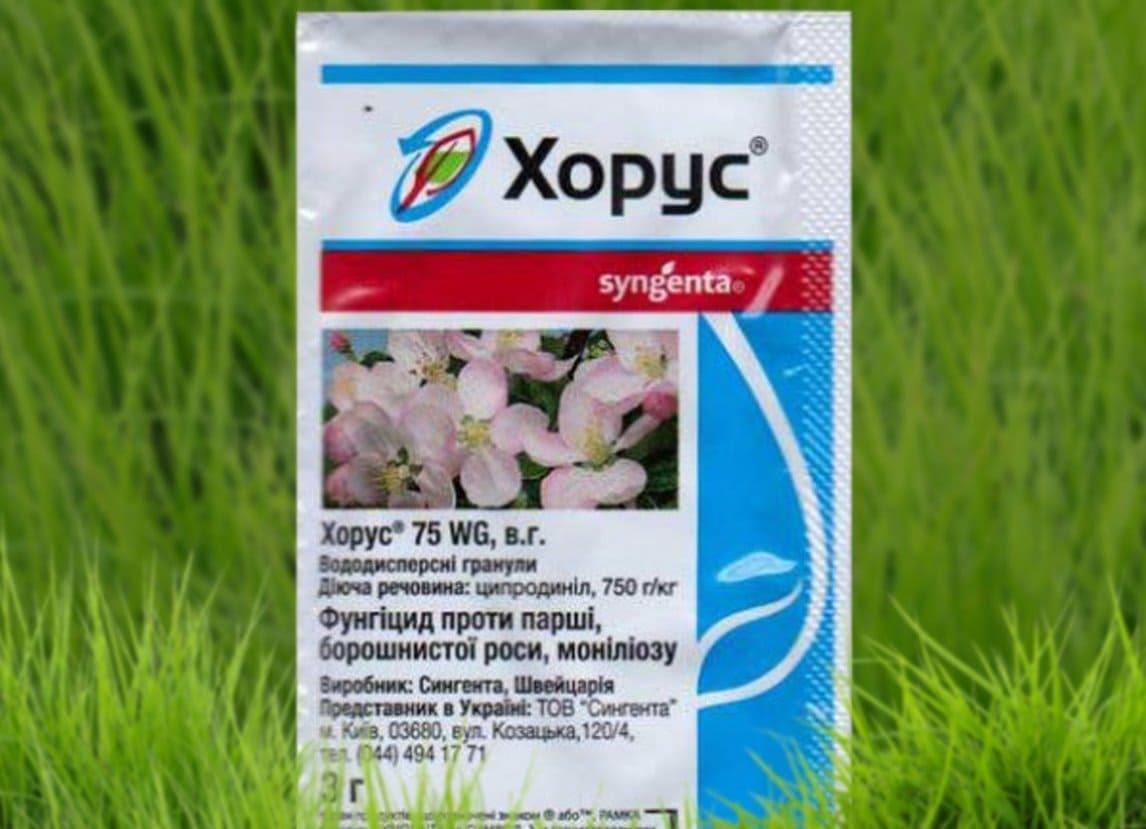
The chemical is used to treat both pome and stone fruit trees, as well as grape and other berry plantations. The product is applied to plants both in spring and summer. The first spraying can be done in early spring, provided that nighttime temperatures do not drop below 3 degrees Celsius.
Mode of action
The systemic and contact fungicide "Horus" works by inhibiting methionine synthesis. After rapidly penetrating the tissues of the treated crop, the active ingredient stops the growth and development of the pathogen's mycelium, resulting in the complete destruction of the pathogen.
Advantages of the drug
Farmers with large planting areas and owners of small garden plots who use the preparation for the treatment, protection, and prevention of diseases of cultivated plants note several undeniable advantages of the fungicide.
How to work with the fungicide "Horus"
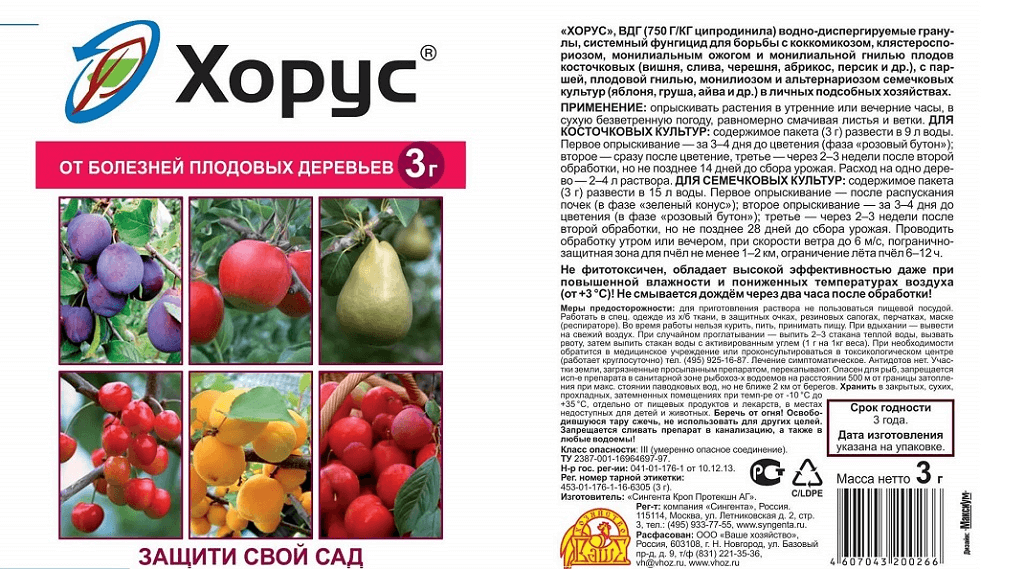
To ensure the product is effective, it is necessary to correctly calculate the application rate for each plant species and follow the instructions when applying the product.
Grape processing
Grape plantations are treated with a fungicide to prevent rot. Use 3.5 grams of the product per 10 liters of clean water. No more than three sprays are allowed per season. The first treatment is done at the budding stage, with repeat treatments before the berries close in the bunches and, if necessary, during fruit coloring. One hectare of vineyard requires 1,000 liters of the working solution.
Stone fruit crops
Trees are sprayed to prevent diseases such as fruit rot, monilial blight, clasterosporium leaf spot, and coccomycosis. 2.5 to 3.5 grams of fungicide are added to 10 liters of filtered water. The first treatment is done before flowering, and the second one is done 10 days later.
Pome fruit crops
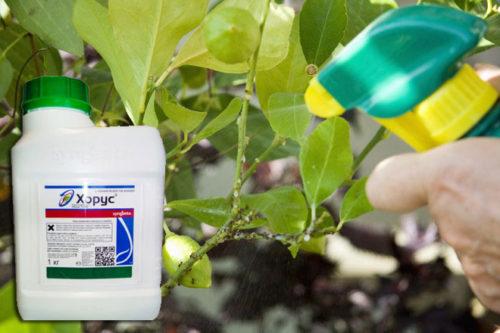
The fungicide "Horus" prevents pome crop diseases such as Alternaria leaf spot, scab, and moniliosis. Add 3.5 grams of granules to a 10-liter bucket of water. The first spraying is performed when the first symptoms of the disease appear. Repeat treatment if necessary, but no later than two weeks before harvest.
How to prepare a working solution and use the product
Prepare the working solution immediately before spraying. If this is done ahead of time, the product will lose its effectiveness and will not kill the pathogens. Pour half the required volume of water, pre-filtered to remove any mechanical impurities, into a bucket. Add the required amount of granules and stir thoroughly with a wooden stick until completely dissolved.
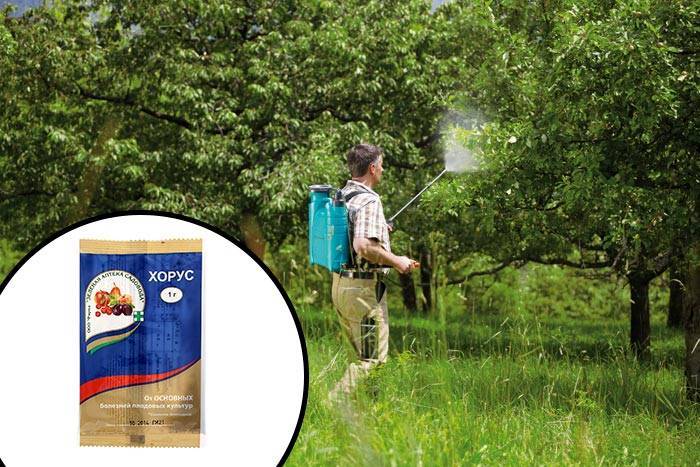
Spraying should be done either in the morning or evening, in clear and dry weather. Wind speed should not exceed 4 meters per second, otherwise, the solution droplets may fall onto adjacent areas. After finishing work, dispose of any remaining liquid in accordance with safety regulations. Under no circumstances should the solution be poured into nearby bodies of water or onto the ground.
Safety precautions
When working with the fungicide "Horus," safety precautions must be observed. Protect your entire body and respiratory tract from contact with solution droplets. Wear a protective suit and respirator.
After finishing work, they take a shower, wash their faces with soap, and wash all their clothes and hang them out to air out.
If the chemical accidentally comes into contact with your skin or mucous membranes, rinse with plenty of water and, if irritation occurs, seek medical attention. If the solution gets into your mouth, drink activated charcoal and seek immediate medical attention, taking the chemical's label with you.
Degree of toxicity
Horus is classified as a toxicity group 3 product. The chemical is particularly dangerous to aquatic life, so treatments near rivers and lakes should be carried out with extreme caution.
Possible compatibility
The fungicide can be used in tank mixes with other chemical crop protection products. However, before use, conduct a compatibility test using a small amount of each product. If a precipitate appears, do not use the products together.
Storage conditions
The fungicide's shelf life is 4 years from the date of manufacture, provided storage requirements are met. Store sachets in a utility room with a temperature no higher than 28°C (82°F). Protect the fungicide from direct sunlight. Keep the storage area out of the reach of children and pets.
Analogues
If Horus is not available in the store, it can be replaced with one of the following medications:
- Mobil is a systemic fungicide with the same active ingredient as Horus. It is effective even when applied at low daytime temperatures.
- Champion is a contact fungicide characterized by its effective action against pathogens, thanks to its active ingredient, copper hydroxide. The instructions recommend this product for both the treatment and prevention of major crop diseases.
- "Guardian." The active ingredient of this fungicide is cyprodinil, but in a lower concentration than in "Horus." It has a broad spectrum of protective action and suppresses the development of many fungal diseases affecting stone and pome fruits.
Before using any analogue, read the instructions for use to avoid mistakes and cure diseased plants.
Related posts:
 Types of garden fungicides and descriptions of the top 24 best, instructions for use
 The best eggplant varieties for growing in a polycarbonate greenhouse: planting and care
 Types of fungicides for cucumbers in a greenhouse and instructions for use
 Instructions for using the Skor fungicide for treating grapes
 How to control carrot flies with medications and folk remedies
 Causes and treatment of eggplant pests and diseases, how to combat them at home
 80 Best Eggplant Varieties for Different Regions with Descriptions and Characteristics
 Instructions for use of Gliocladin and the composition of the fungicide, application rates