
The Orange Cap tomato is grown not only in garden plots but also on the balconies of multi-story buildings. This is facilitated by the plant's compact size. At home, the tomato ripens well even in winter. The berries are eaten fresh, used in salads and tomato paste, frozen, and canned for winter.
Briefly about the plant and its fruits
The characteristics and description of the variety are as follows:
- Orange Cap mini tomatoes ripen 80 days after the first sprouts appear.
- The plant is standard, so the height of the bush does not exceed 0.5 m. Several clusters form on the stem.
- The tomato's root system grows sideways, not downwards, into the soil. Therefore, the Orange Cap's roots are quite weak. The bushes don't require staking or shaping.
- Tomato leaves are dark shades of green and slightly curled. Inflorescences initially develop above the fifth leaf, then emerge one or two leaves later. Six to seven berries form on each branch of the plant.
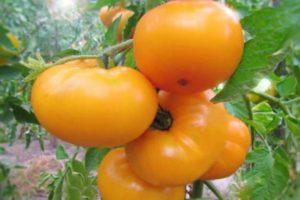
- The fruits resemble small orange spheres. They have a shiny, fairly dense skin and juicy flesh. The berries weigh between 25 and 32 g.

Reviews from growers of this variety indicate that the yield of Orange Cap is 1,500-2,000 grams per square meter of garden bed. Because the fruits quickly lose their shape and bruise under slight pressure, they cannot be transported long distances. Orange Cap berries can crack under sudden temperature changes.
The plant has good resistance to diseases such as fusarium, root rot, bacterial and fungal infections, and tobacco mosaic virus.
This variety is grown in open fields in the southern regions of Russia. In the central regions and Siberia, it is planted in greenhouses and hotbeds. Orange Riding Hood can be grown indoors throughout Russia.


How to grow Orange Cap seedlings?
After purchasing the seeds, they are disinfected in a potassium permanganate solution. The seeds are planted in special tomato soil in the last ten days of March. The seeds are buried 30 mm into the soil and watered with warm water. The containers with the sown seeds are covered with glass or plastic.
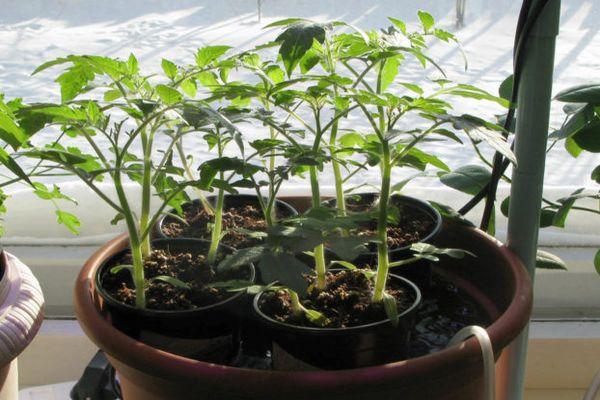
The first shoots appear in 5-7 days. The protective covering is removed, and nitrogen fertilizer is added to the soil. The seedlings are watered once every 3 days. When two leaves appear on the shoots, the plants are pricked out. If the gardener plans to transplant the bushes to permanent soil in a greenhouse or on a plot, it is recommended to harden them off for 7 days.
Before transplanting, wood ash and superphosphate are added to the soil in the beds. Holes are dug in the soil, the tomato plants are placed in them, and the tomatoes are watered with warm water. The planting pattern is 0.4 x 0.7 m. The orange cap requires loose, light soil. It is recommended to plant tomatoes in beds where the farmer previously grew beets, cabbage, carrots, beans, onions, and cucumbers.

Caring for growing bushes
Top dressing with mineral and organic fertilizers is performed three times during the entire growing season of Orange Cap. Initially, the emphasis is on nitrogen mixtures, which the plants need to develop green mass. The second top dressing is performed after flowering begins. For this, a mixture of potassium and nitrogen fertilizers is used. The final top dressing is performed with complex mixtures containing phosphorus, potassium, and nitrogen. This should be done when the first fruits appear on the tomato branches.

If mineral fertilizers are unavailable, organic mixtures such as manure or chicken manure can be used. Orange cap responds well to the use of urea as a fertilizing agent.
Water the bushes 1-2 times every 7-8 days. Use warm water that has been left to stand in the sun. It is recommended to water early in the morning, before sunrise.
The soil around the bushes should be loosened twice a week to prevent a hard crust from forming on the ground. This procedure allows oxygen to reach the plant roots. Aeration promotes stem growth and deters pests that like to nest on tomato roots.

If Orange Cap is grown in open areas, weed the beds twice a week. This will prevent fungal and bacterial infections. Weeding also kills many garden pests that initially attack weeds and then migrate to the crops.
As a preventative measure, breeders recommend spraying Orange Cap bushes with fungicides. This will protect the plants from diseases to which the tomato is not immune and eliminate the threat of damage from garden pests. If these measures prove insufficient, specialized insecticides will be needed.
Related posts:
 Description and characteristics of the 60 best sea buckthorn varieties, how to choose depending on the region
 Why is the flesh inside a melon orange? Names and descriptions of varieties.
 When and how to properly transplant tomato seedlings, the best days in 2025
 Description of the Red Riding Hood tomato variety, cultivation and care features
 Description of the unusual tomato variety Striped Chocolate and its cultivation using seedlings
 Description of the Kira cherry tomato and growing the hybrid using seedlings
 Description of the best varieties of black tomatoes for open ground and greenhouses
 Description of the 20 best varieties of large-fruited pumpkin, growing and care rules