
The Red Riding Hood tomato is characterized by early ripening and abundant harvests, high disease resistance, tolerance to adverse conditions, and easy care. The variety also has many other advantages. Red Riding Hood tomatoes produce sweet, fleshy fruits that are eaten fresh and also used for winter preserves.
Description of the variety
The Red Riding Hood hybrid was developed by German breeders, hence the tomato's other name, Rotkäppchen. While it's been around in Germany for quite some time, Russian vegetable growers only learned about it in 2010. Before choosing a tomato, it's important to familiarize yourself with the plant's key characteristics.
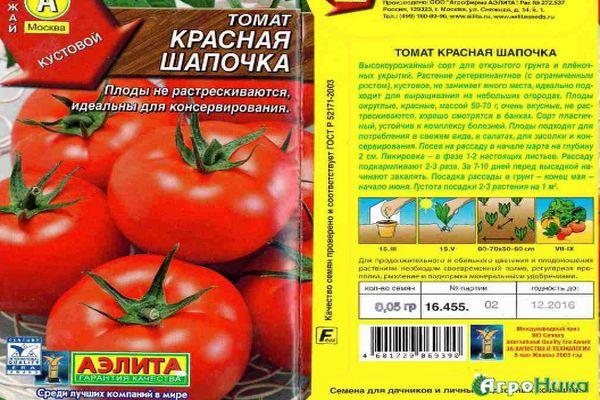
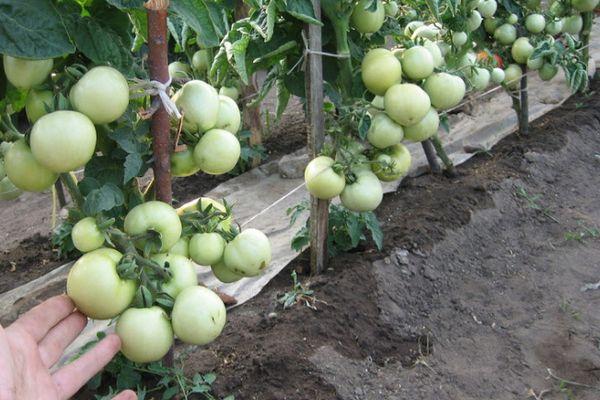
This variety belongs to the superdeterminate group with a standard growth habit. The bushes are small and have medium branching. The maximum stem height is 40 cm, so there is no need for support.
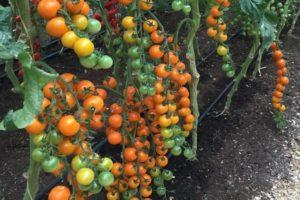
The name of this tomato variety comes not from the color of the fruit, but from its growth pattern. The cluster of tomatoes grows primarily at the top of the bush, creating the appearance of a small red cap.
Fruit characteristics:
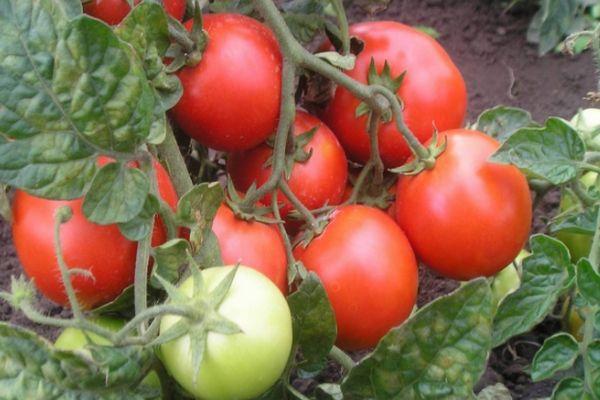
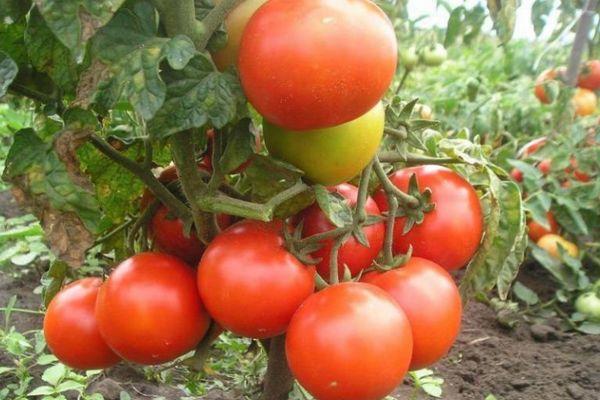
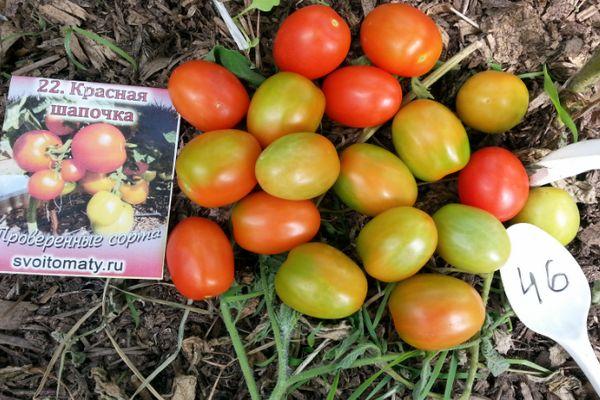
- tomatoes are formed into a round-flattened shape;
- the surface is smooth, with slight ribbing at the stalk;
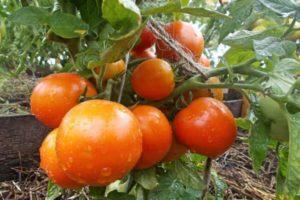
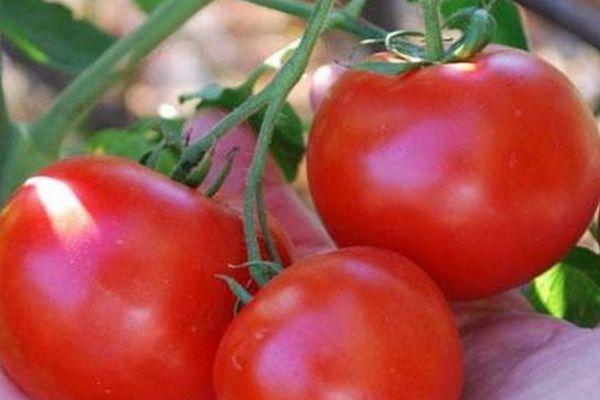
- the skin is thin but dense, red-orange in color when ripe, and not prone to cracking;
- The tomato pulp is juicy, fleshy and sweet.
The tomato variety "Red Riding Hood Knot" has a similar name. This plant is characterized by a medium ripening period, with the first shoots appearing within 115 days. The stem can grow up to 3 meters.
The bright red fruits are unusually shaped, resembling a knot due to the intense ribbing around the stem. Each tomato weighs 200 g. The flesh is juicy, meaty, and sweet.
The advantages of this tomato variety include high yield, good resistance to cold and disease, good taste, and versatility of fruit use.
Growing
The Red Riding Hood variety is best grown from seedlings. Seeds should be sown in late March; if transplanting to a greenhouse is planned, sowing should begin in late February.
Three-year-old seeds are suitable for planting. Seed germination is tested in salted water. Any seeds that float to the surface are discarded, and the remaining seedlings are prepared for planting.
Before sowing, tomato seeds should be disinfected in a solution of potassium permanganate or copper sulfate. Then, the planting material is immersed in a solution containing growth-promoting agents for several hours. Examples include Ecosil and Epin. Sodium or potassium humate, Acrobat.

You can perform a preliminary germination procedure. Place a damp cheesecloth on a plate, spread the seeds out, and cover with another layer of damp cloth. After this, move the container to a warm, dark place. After three days, the sprouts will emerge, and you can begin sowing.
The soil for planting tomato seedlings should be light and fertile. It is recommended to mix the soil with sand and peat. You can buy a ready-made substrate at the store.
Dig 1.5 cm deep holes in the soil, spaced 3 cm apart. Place one seed in each hole, cover with soil, and water. Cover the container with plastic wrap and move it to a dark, warm place. The first shoots should appear within 5 days, provided the air temperature is above 18 degrees Celsius. Once the seedlings emerge en masse, remove the plastic wrap and place the container on a windowsill.
As soon as two true leaves unfold on the sprout, transplant it into separate containers. Tomato seedlings need to be watered as the soil dries out. Fertilizer is applied twice, two weeks apart. The first application is made 10–12 days after transplanting.
Transplanting tomatoes into open ground begins only when the weather is consistently warm. Nighttime temperatures should not drop below 15 degrees Celsius.
Care Features
Red Riding Hood tomato seedlings should be planted in a plot where cabbage, peas, herbs, pumpkin, garlic, or onions have been harvested. Avoid planting tomatoes after eggplant, potatoes, bell peppers, or corn. Choose a sunny location, protected from strong winds, and one that does not allow water to accumulate.
In the fall, they begin preparing the plot. They dig the soil to a depth of 30 cm and add fertilizers, such as humus, bird droppings, compost, and wood ash. Mineral fertilizers of choice include potassium salt or superphosphate.
In the spring, dig the plot again, add fertilizer, and make furrows. The distance between rows should be 50 cm, and the distance between plants should be at least 40 cm. There are other methods for planting vegetables.
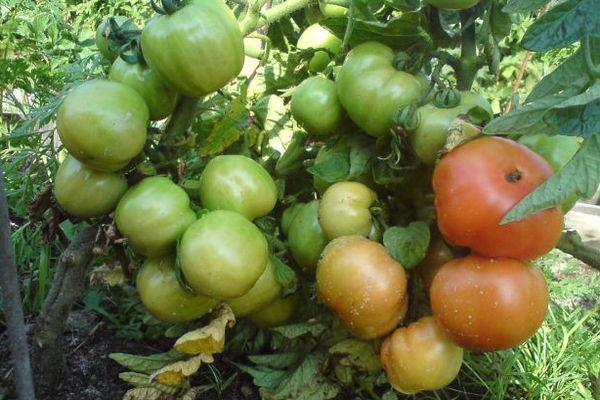
When growing tomatoes in open ground, care is standard and involves following these rules:
- It is essential to establish a watering regime;
- After moistening the soil, it is loosened;
- To prevent weeds from growing, weed regularly;
- During the entire growing season, three fertilizing sessions are sufficient (the variety responds well to superphosphate, chicken manure infusion, mullein, and potassium salt);
- It is advisable to mulch the soil with hay, sawdust or peat.
The care is standard, so even novice gardeners will not have any problems.
Advantages and disadvantages
The Red Riding Hood tomato variety is known for its high yield. A single plant can yield up to one kilogram of delicious fruit. A single cluster produces up to five tomatoes. Each fruit averages 65 grams in weight. However, sometimes the number of fruits can increase, while the weight drops to 25 grams, resembling cherry tomatoes.
The stem develops strong and vigorous, making the plant resistant to lodging. Despite the bush's robust stem, many gardeners still tie it to a support. Due to the abundant harvest, the branches can bend and damage the stem. A single tie around the middle of the stem is sufficient.
Another advantage of this tomato variety is that it requires no pinching or pruning. Proper watering and fertilizing are sufficient to increase yield.
This variety is resistant to many diseases that affect nightshade crops (e.g., late blight and early blight). With proper agricultural practices, its immune system can withstand adverse weather conditions and poor soil conditions. Therefore, growing tomatoes is easy.
Pests and diseases
The Red Riding Hood tomato variety is highly disease-resistant and resistant to pests. However, it's a good idea to take some preventative measures. It's recommended to heat the seeds at high temperatures before planting. This can be done using either a dry or wet method.
After replanting, it's recommended to treat mature bushes with natural remedies or biological preparations. Fitosporin is considered an effective and safe product.
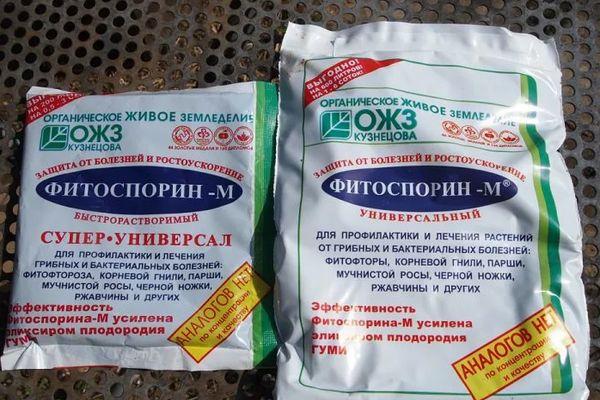
Although rare, aphids, spider mites, whiteflies, and thrips can attack. These can be controlled with decoctions made from onion peels and wood ash.
Harvesting and storage
This variety is considered an ultra-early ripening tomato. The fruits begin to ripen 85 days after the first shoots emerge. By mid-August, a good harvest can be harvested, which should be stored in a dark, warm, dry place.
The description of the Red Riding Hood tomato variety indicates it contains a high amount of vitamins, amino acids, lycopene, and sugars. All these components are safe and beneficial, so the product is often included in dietary menus. Furthermore, the product is recommended for baby food.
Gardeners' reviews
Reviews of the Red Riding Hood variety are only positive.
- All gardeners note the ease of growing and caring for the crop.
- Judging by the reviews, the planted seeds are characterized by a high germination rate.
- Tomatoes rarely get sick and produce a good, rich harvest of sweet fruits that can be stored for a long time.
- The variety is not picky about soil composition and can adapt to both hot and cold weather.
- Everyone, both adults and small children, like the taste of tomatoes.
Related posts:
 Description of the Red Guard raspberry variety, planting technology and care
 Characteristics and descriptions of the 40 best red currant varieties
 What varieties of tomatoes are best to plant in a polycarbonate greenhouse?
 What is the best way to feed tomato seedlings to make them plump?
 Description of the 90 best varieties of beans for open ground with names
 Description of the original Red Pear tomato and recommendations for growing the variety
 Description of the red currant variety Nenaglyadnaya, planting and care
 Red currant health benefits, properties, and contraindications