The "Magic Harp" f1 tomato is a hybrid with early ripening fruit. This variety is classified as an ornamental plant. It can be propagated in plastic greenhouses and greenhouse complexes. This tomato is suitable for fresh consumption or for canning for the winter. In the latter case, whole fruits are placed in jars.
Technical data of tomato
Characteristics and description of the Magic Harp f1 variety:
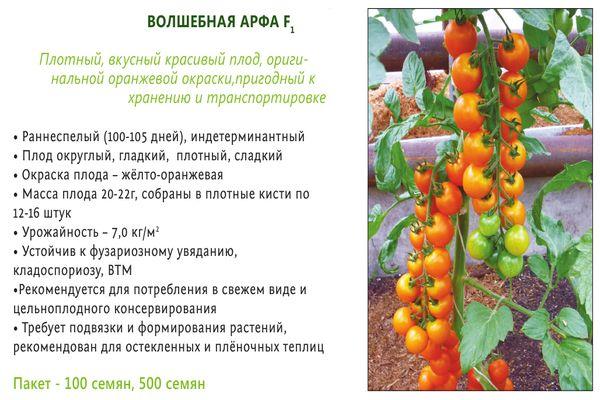
- The growing season from planting seeds to receiving a full harvest lasts 90-110 days.
- Magic Harp f1 tomatoes grow in clusters on a 180-200 cm tall bush. The leaves are a standard tomato shape and green in color.
- A single cluster produces 15 to 18 tomatoes, arranged in clusters. The bush is formed by removing excess shoots. To prevent the branches from drooping under the weight of the fruit, they are tied to supports.
- The berries range in diameter from 3 to 5 cm and are orange in color. Each fruit weighs 20 to 25 g.
Reviews from farmers growing this variety indicate that the yield of this type of tomato is 6-7 kg of berries per square meter of garden bed. The harvest lasts until the first frost.
To ensure the last harvest's berries have time to ripen before the end of autumn, farmers pluck the tops of the bushes in August. Because the fruit's flesh is quite dense, the berries can be transported over long distances.
The Magic Harp f1 is resistant to fusarium wilt, tobacco mosaic virus, and has good resistance to various stresses (sudden cold, heat).
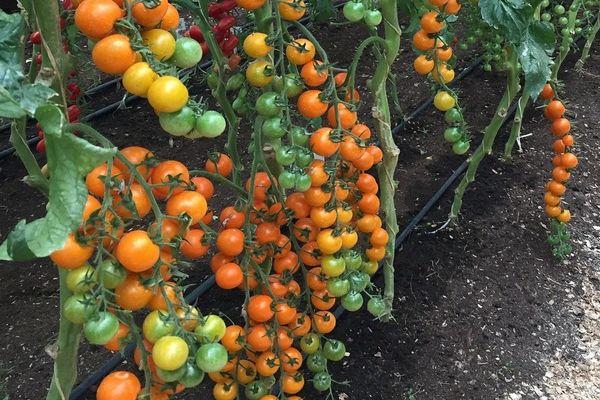
Experienced gardeners note: "While this ornamental tomato can be grown outdoors, in Russia we plant it in greenhouses. This allows for an early harvest without losses."
Methods for growing tomatoes in a private garden
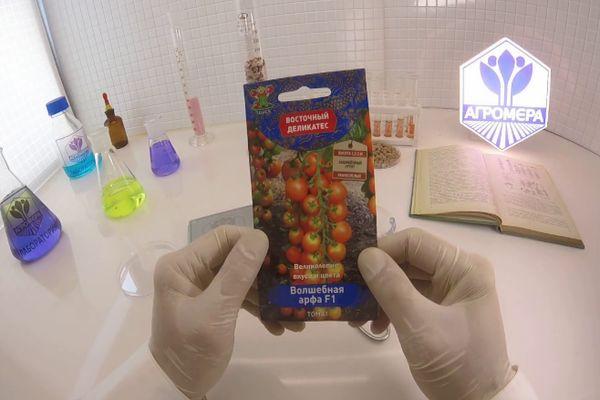
Seeds are purchased at specialty stores. They are treated with potassium permanganate and then planted in boxes filled with soil pre-fertilized with manure or peat. It is recommended to sow the seeds in the second ten days of March.
After the sprouts emerge (this occurs seven days after sowing), they are pricked out when one or two leaves appear on the seedlings. If the gardener grew the seedlings on peat pellets, they are transplanted into the greenhouse along with the peat.
After transplanting, transfer the seedling boxes to the windowsill. All seedlings should be well-lit. Water the plants with warm water, using moderate amounts. When watering, ensure the liquid reaches the roots of the seedlings. The seedlings remain on the windowsill until May. During this period, the young seedlings are fed with mineral fertilizer once or twice. They also require organic (manure) and nitrogen-rich mixtures.
In the last ten days of May, the seedlings are transferred to the greenhouse. The planting pattern is 0.7 x 0.5 m. Humus is added to the soil in the bed beforehand. The bush is trained into 1-2 stems. No more than 4 plants are planted per square meter of bed.
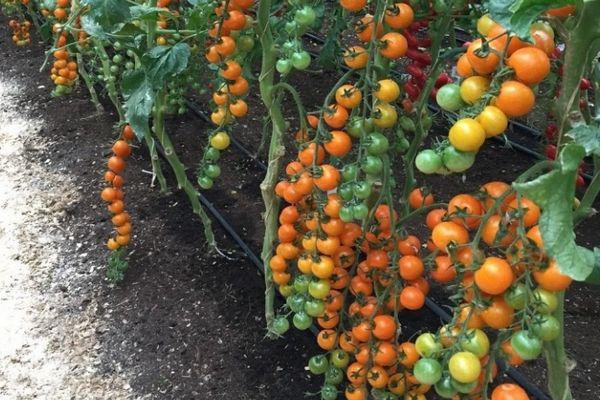
For watering bushes, breeders recommend using a drip irrigation system. It is necessary to break off the lower shoots and gradually remove old leaves (1 piece per week). Most often, 2-3 leaves are removed from the lower branches of the stem.
Tomatoes need to be fertilized three times during the growing season. Organic fertilizers and superphosphate are used for this purpose.
Water the bushes twice a week in normal weather, as the soil beneath them dries out. If the weather is hot or dry, water the tomatoes twice a day. Keep in mind that high soil moisture can kill the plants.
Although the variety described is resistant to some diseases, it is recommended to treat the bushes with preparations that protect the tomato from fungal and bacterial infections as a preventative measure.
If garden pests have appeared on your property, it is recommended to combat them using chemicals that destroy the larvae and adult insects.
Related posts:
 Description of the best varieties of black tomatoes for open ground and greenhouses
 The best eggplant varieties for growing in a polycarbonate greenhouse: planting and care
 Description of blight-resistant tomato varieties for open ground and greenhouses
 Description of the best Dutch tomato varieties for greenhouses and open ground
 The best grape varieties for growing in the Urals, planting and care rules in summer
 Description of the best tomato varieties for pickling and canning
 Methods for planting and propagating cherries at home
 Description of the best tomato varieties for greenhouses in the Kirov region