
The Kira cherry tomato can be grown in greenhouse blocks and in open ground. Since this plant thrives in small containers and has an attractive appearance, it is grown on balconies and loggias of multi-story buildings. Kira F1 cherry tomatoes and their varieties can also be used for decorative purposes, such as beautifying a garden plot.
Technical data of the plant and its fruits
The characteristics and description of the variety are as follows:
- The first tomato fruits can be obtained 95-110 days after sowing the seedlings in the ground.
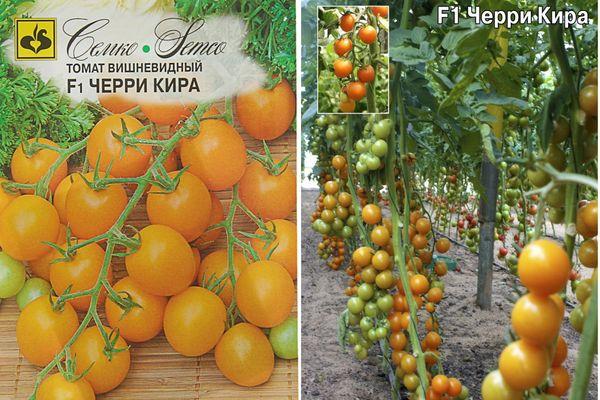
- The plant bush has a height of 150 to 170 cm. The stem develops a medium number of leaves, colored in dark shades of green.
- The tomato has a simple inflorescence.
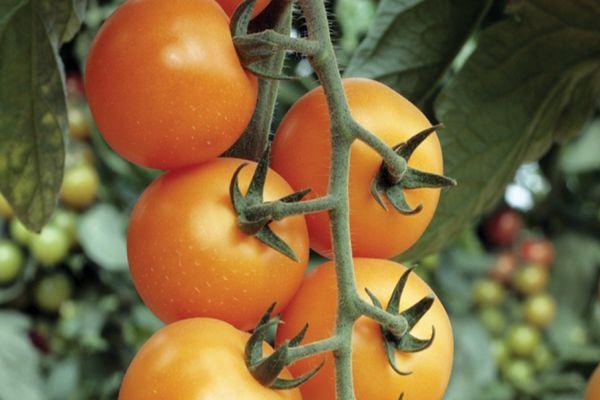
- A cluster can produce 18 to 20 fruits, the shape of which resembles a ball, slightly flattened at the top.
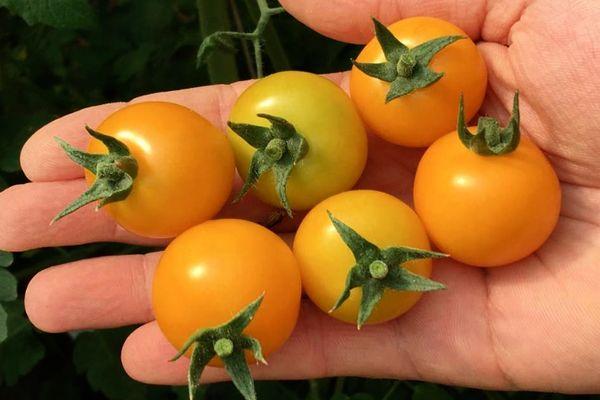
- The berry weighs between 25 and 30 grams. The fruit is medium firm and orange in color. The berries do not crack under mechanical or thermal stress.
- The plant is undemanding in terms of growing conditions. It is resistant to late blight. Some other tomato diseases can be avoided by keeping the beds free of weeds, hilling the tomato plants, adjusting watering, and mulching the soil.

Reviews from farmers cultivating this variety indicate that the tomato yield is 6.0-12 kg per square meter of garden bed. A single bush can yield up to 1.5 kg of berries. Gardeners note some drawbacks of the variety, for example, Kira requires shaping the bush. Growing the plant requires purchasing seeds annually.
If the tomato is planted in a greenhouse or in open ground, then after harvesting in the fall, you can move the Kira tomato indoors, placing the plants in suitable containers.
Tomatoes of this type are used in salads and juices. They can be preserved whole for the winter or used for assorted dishes.
Retailers readily purchase the fruit from gardeners because the berries can withstand long transportation. They can be stored in a cool place for 70-80 days.
Cultivation of the described variety in a private garden
Tomato seeds are purchased from specialized stores. They don't need to be treated with potassium permanganate, as this has already been done by the manufacturer. Tomatoes are propagated using seedlings. Seeds are sown in suitable containers, after incorporating mineral and organic fertilizers into the soil. The seedlings should be sown to a depth of 20 mm. Water the seedlings regularly, and once they reach a height of 10 cm and have 2-3 leaves, they are pricked out.
The seedlings are transplanted into a greenhouse or open ground when they reach 50-60 days of age, after having hardened the seedlings for 10 days.
Before planting the seedlings, loosen the beds and add manure or chicken manure. The plants are trained into two stems. Due to the bush's height, they must be tied to sturdy supports or trellises; otherwise, the weight of the fruit can cause the branches to break.
Water the bushes after sunset, using warm water. Fertilize the bushes twice. First, with nitrogen and potassium mixtures during flowering, and then, during fruit ripening, with superphosphate and potassium nitrate.
Weeding and loosening the beds is recommended 1-2 times a week. Although this type of tomato is resistant to various diseases, preventative measures are recommended by spraying the leaves of the bushes with medicinal products, such as Phytophthora. Pest control is carried out using chemical pesticides or traditional methods for killing insects and their larvae. To get rid of slugs, use ash flour, which is added to the soil under the tomato plants.
Related posts:
 Causes and treatment of eggplant pests and diseases, how to combat them at home
 Growing and caring for hazelnuts in open ground, rules for planting hazelnuts
 Carrot care guidelines for outdoor cultivation to ensure a good harvest
 When and how to properly transplant tomato seedlings, the best days in 2025
 How to plant walnuts, care for them, and grow them at home
 The best grape varieties for growing in the Urals, planting and care rules in summer
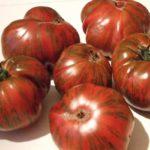 Description of the unusual tomato variety Striped Chocolate and its cultivation using seedlings
 Description of varieties of sowing peas and cultivation, to which family they belong
