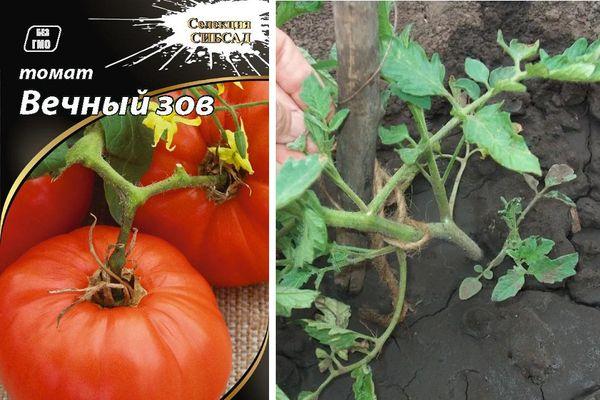
The "Vechny Zov" tomato was created by Vladimir Dederko, a Novosibirsk resident, who took into account the Siberian climate, weather conditions, and temperature during breeding. The developer officially registered the hybrid variety, and it is now included in the list of plants recommended by the State Register of the Russian Federation for outdoor cultivation in private farms.
What is the Eternal Call tomato?
Vechny Zov tomato is a Siberian variety, so it can withstand adverse climatic conditions. Specifically, the bushes grow in cold and frosty regions, producing a good harvest. This tomato has become widespread in neighboring countries—Ukraine, Kazakhstan, and Belarus.
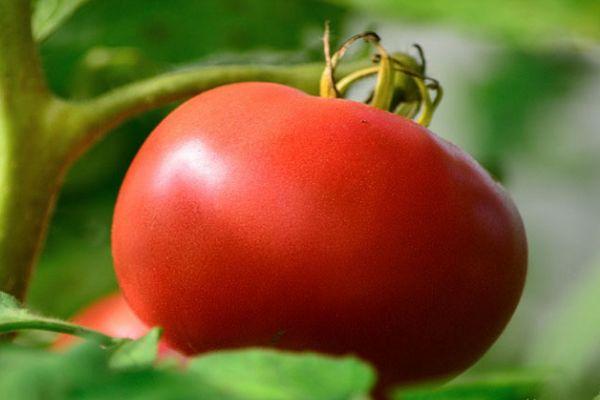
Characteristics and description of the variety:
- The Eternal Call tomato was developed as a universal variety, allowing it to be grown in greenhouses and hotbeds, as well as in open ground, where tomato yields increase.
- The height of plants does not exceed 70 cm.
- Large fruits are formed from the ovaries.
- The tomatoes are round in shape, slightly flattened on the sides.
- When tomatoes ripen, they turn bright red.
- The weight of each fruit varies from 300 to 500 g; with good care, the weight of a tomato increases to 900 g.
- Eternal Call tomatoes are distinguished by their sweet taste and pleasant tomato aroma.
- The core is juicy and fleshy.
- Tomatoes keep for a long time and are easily transported over long distances.
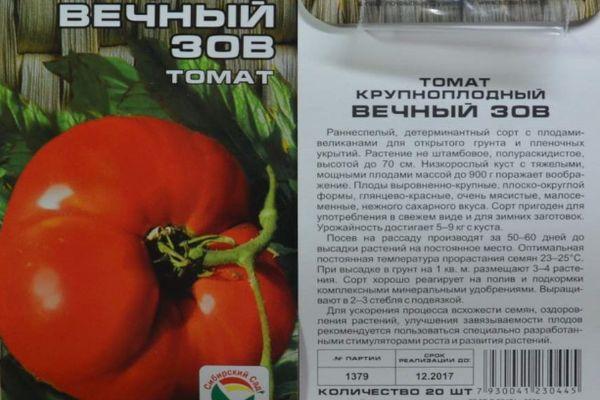
According to gardeners, Vechny Zov tomato plants produce a bountiful harvest. The shelf life of harvested tomatoes is 40-45 days, provided the containers are stored in a cool, dark, and well-ventilated area.
Thus, Vechny Zov tomatoes can be grown in conditions where other varieties simply won't thrive due to harsh climates and cold temperatures. Therefore, Siberian gardeners and homesteaders prefer Vechny Zov tomatoes for fresh tomatoes throughout the gardening season, for canning, and for making thick tomato juice and tomato paste. Many gardeners also grow this variety for sale.
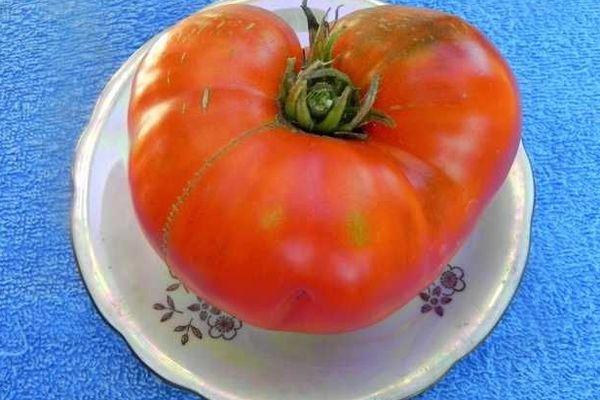
The hybrid variety "Vechny Zov" (Eternal Call) is popular with gardeners not only for its excellent technical characteristics. The advantages of this tomato variety include:
- High yield. One bush can produce up to 4 kg of juicy fruit.
- Large fruits.
- Frost-resistant variety.
- Early ripening tomatoes allow the fruits to ripen quickly during short, cool summers.
- Tomatoes can be picked before they're fully ripe. They'll ripen further during storage and transportation.
- Gardeners note that the largest fruits on the bushes are formed in the first ovaries, but the subsequent tomatoes will not be as large and less juicy.
How to grow tomatoes?
Reviews from gardeners on specialized forums contain detailed descriptions of the cultivation process. Bushes should be planted in the ground—either in a greenhouse or outdoors—from seedlings. This will ensure the selection of seedlings that will produce a high yield.
You need to sow seeds in containers for seedlings 2 months before the sprouts are transferred to a permanent location.
The seeds should be sown in well-prepared soil, fertilized with humus and coarse river sand. Use 1 part sand, 3 parts humus, and 3 parts garden soil, which should be disinfected with steam or in the oven.
Then, cover the containers with plastic wrap and place them in a location where the seedlings will receive regular sunlight. The seedlings should receive 14-16 hours of daylight, and the room temperature should not drop below 25°C. Once the picking is completed, the room temperature should be reduced to +20°C.
The seedlings are sprayed with a spray bottle, and the shoots are fertilized two weeks after transplanting. Fertilizer should be applied every 15 days.
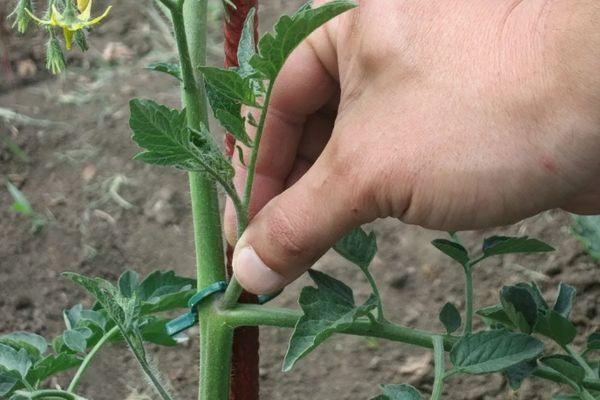
Eternal Call tomatoes should be planted at a rate of 2-3 plants per 1 m² plot. Water the soil around the seedlings every 10 days, then loosen the soil. This will ensure a regular supply of oxygen to the roots. Side shoots should be removed, leaving no more than three side shoots on each plant.
Water in the evening, after the sun has set, and in the morning. Avoid getting water on the leaves, as this will burn the bushes and foliage. Watering should be moderate until the plant begins to actively bear fruit, and then more generously.
Bushes need to be fertilized regularly. The first application of fertilizer to the soil should be done two weeks after planting the seedlings. It's best to use organic matter or organic compounds containing mineral compounds.
Related posts:
 Description of the best tomato varieties for Udmurtia for open ground and greenhouses
 Rules for growing tomatoes in open ground, choosing a variety, planting and care
 Description of the best varieties of black tomatoes for open ground and greenhouses
 16 Best Quick Pickled Tomato Recipes for the Winter
 What fertilizers and when to use for feeding tomatoes in a greenhouse
 What varieties of tomatoes are best to plant in a polycarbonate greenhouse?
 Description of the Big Mommy tomato variety, growing and care recommendations
 How to choose a tomato variety for growing in Ukraine and when to plant seedlings