
The Yellow Cap tomato is recommended for growing in greenhouses and open ground. The plant was added to the State Register of Russia in 2011. Tomatoes do not store for long periods of time. They are eaten fresh, added to various dishes, and frozen. Due to their thick skin, these tomatoes withstand heat well without deforming. Therefore, they can be canned. Growing the plant outdoors is only possible in the southern regions of Russia. Gardeners in the central and northern regions are advised to grow this hybrid in greenhouses or indoors.
Description of the variety
Yellow Cap tomatoes have the following characteristics:
- This tomato belongs to the group of early-ripening hybrids. From sowing the seedlings to harvesting, it takes no more than 80-90 days. Due to its early ripening, the plant is not susceptible to late blight.
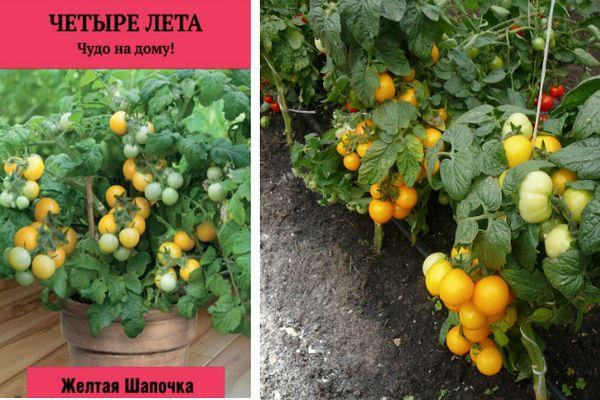
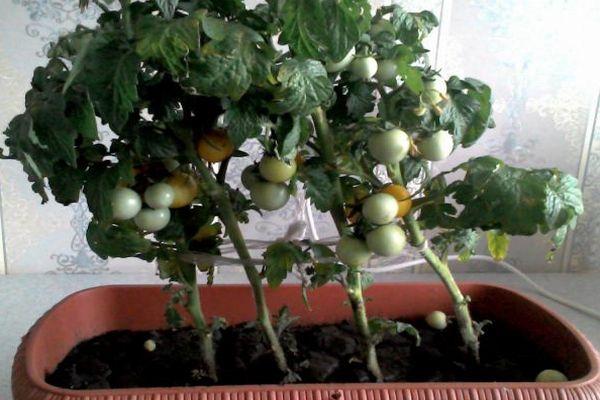
- The Yellow Cap tomato plant reaches 0.5 m in height. Its roots are small and grow outward rather than downward. This allows it to be grown in shallow pots or windowsill boxes.
- The plant's strong stem allows it to support a large number of fruits. Therefore, gardeners don't need to provide additional supports for the tomato plant's branches.
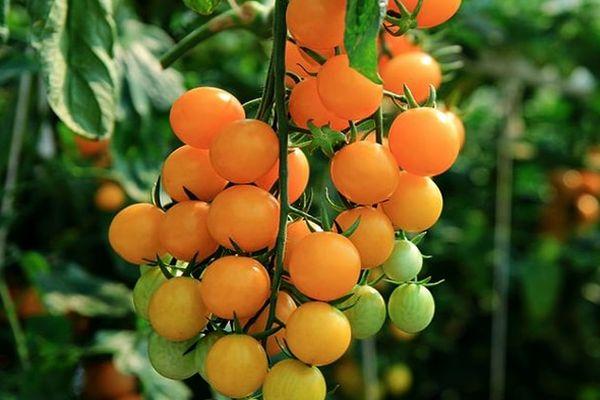
- A ripe tomato is yellow, while unripe fruits are pale green. It is spherical in shape and ranges in diameter from 30 to 40 mm. The skin is smooth and shiny. The flesh is juicy and sweet-tasting. There are few seeds inside the tomato.
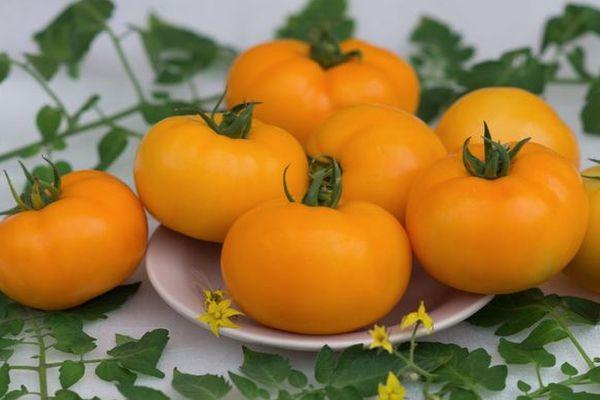
Reviews from farmers growing this tomato variety indicate that the average yield per bush is 500 grams of fruit. If gardeners follow all agricultural practices and expert recommendations, they can harvest up to 3 kg per bush.
Any novice gardener can grow Yellow Cap tomatoes. However, they should be aware that the plant thrives on light. Therefore, when growing tomatoes indoors (on a loggia or balcony), provide them with additional lighting in winter. This variety is immune to many nightshade diseases, but the fruits may crack if the gardener doesn't maintain proper humidity. Experts recommend maintaining humidity levels around 60%.
Take a look Also
Tomatoes don't handle temperature fluctuations well between night and day, so it's best to grow them in greenhouses or indoors to maintain the desired temperature.
How to grow tomatoes yourself
After purchasing the seeds, they are treated with a weak solution of potassium permanganate. To do this, the planting material is immersed in the disinfectant solution for 60 minutes. Afterwards, the seeds are rinsed in warm water. Seedlings are grown in boxes or pots. The soil should have a low pH.
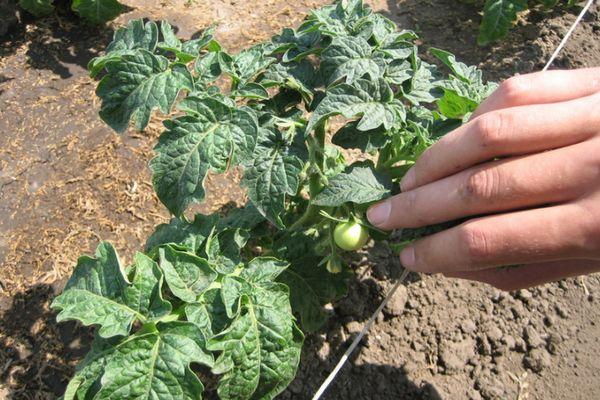
Plant the seeds at a depth of 10 to 20 mm, spacing them 2 cm apart. The soil temperature should not fall below 25°C during this process. After planting, water the seeds with warm water and then cover with plastic wrap. Seedlings will emerge in 5 to 7 days. Young plants can be fed with nitrogen or organic fertilizers. Once the seedlings emerge, remove the plastic wrap.
The seedlings are picked when 1-2 leaves appear on the plants, and a separate container with a volume of at least 0.3 liters is allocated for each seedling.
The seedlings are transplanted to permanent soil only when they are 50 days old. They are planted in 0.5 x 0.5 m spacings. Before planting, holes are dug in the ground and mixed with a complex fertilizer.
Fertilize tomatoes of this variety no more than three times per season. Fertilizers are added during flowering and fruiting. Initially, nitrogen and potassium mixtures are used, and then the tomatoes are transitioned to phosphorus fertilizers.
When growing tomatoes in greenhouses, the required temperature is maintained by ventilating the room.
The soil in the beds should be loosened regularly and weeds removed. The bushes should be watered once a week, using warm water early in the morning or after sunset. Although the plant is immune to many diseases, it is recommended to water it with Fitosporin as a preventative measure.
If the disease has damaged the stem and leaves of the plant, then the bush must be destroyed by removing it from the site.
When garden pests appear, gardeners can use both traditional insect control methods and commercially available chemicals to eliminate them. Wood ash, applied to the soil beneath the bushes, can be used to control pests that infest plant roots. Ash flour also helps repel slugs.
Related posts:
 Description of the best varieties of black tomatoes for open ground and greenhouses
 TOP 17 recipes for pickled sweet tomatoes for the winter
 Description of the best Dutch tomato varieties for greenhouses and open ground
 How to grow cherry tomatoes on a balcony: suitable varieties and planting and care guidelines
 15 simple recipes for pickling tomatoes in jars for the winter
 The best eggplant varieties for growing in a polycarbonate greenhouse: planting and care
 Delicious recipes for canned tomatoes with honey for the winter, preparation steps
 Description and characteristics of Anyuta tomatoes, yield and cultivation