Gardeners are interested in how to grow the Kakadu tomato. Breeders are constantly and tirelessly developing new hybrid vegetable varieties to significantly increase their yields and shorten their ripening time. Furthermore, developing hybrids allows for a slightly longer shelf life and adapts the varieties to long-haul transportation. One such hybrid, the Kakadu F1 tomato, could be a godsend for gardeners growing vegetables in central and northern Russia.
What is a Kakadu tomato?
A brief description of the variety primarily highlights the fact that low-temperature plasma treatment of the seeds has increased their germination rate. Furthermore, this hybrid is resistant to the tobacco mosaic virus and generally requires less labor to grow. All of this significantly improves the quality of the resulting product.
Description of the presented variety:
- the height of the bush can reach 90 cm;
- average number of leaves;
- the initial inflorescence is formed after the appearance of 6 leaves;
- brushes begin to appear after the first 2 leaves;
- each brush produces about 6 fruits;
- one tomato weighs about 200 g;
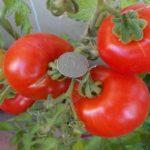
- The color of the tomato is described as bright red, the flesh is quite juicy, with a slight sourness;
- The tomato has a smooth and dense skin.
With proper care, you can harvest an average of about 19 kg of fruit from 1 m².
The Kakadu tomato has a variety of uses. It's recommended to eat the fruit fresh or add it to salads and slicing. Kakadu tomatoes produce excellent tomato juice and are ideal for canning and pickling. Their thick skin prevents cracking.

After the initial shoots emerge, it takes about three months for the Kakadu to produce its first fruits. This allows for planting the bushes outdoors, allowing for harvesting shortly before the first cold days of summer. The bushes are resistant to late blight.
If the temperature drops suddenly, it's recommended to pick the still-green berries from the bushes and leave them in a warm, dark place where they will ripen naturally. Experts recommend storing the harvest in special boxes, stacking them in a single layer and covering them with cotton cloth.
Reviews of this variety are positive. Everyone who has planted and grown Kakadu specifically emphasizes the easy transportability of the ripe fruits, noting that they didn't lose a single one during shipping.

To maximize the yield, the bushes need to be tied up. It's recommended to train them into two stems to reduce the number of tomatoes but produce heavier fruits. The easy care and good yield are what attract gardeners to them.
How to grow tomatoes?
To get the best possible harvest, there are a few tips to follow when planting Kakadu tomatoes.

Seeds are sown 1.5 months before planting outdoors or in a greenhouse. No additional seed treatment is required—the growers have taken care of that.
As soon as the loops appear, place the future tomato plants on a windowsill and maintain a temperature of 20°C during the day and 18°C at night. It's recommended to install lighting to ensure the tomatoes receive 16 hours of daylight.
When true leaves appear, the plants need to be transplanted into different containers and a week before planting, they need to be aired.

1 m² of land should be occupied by a maximum of five bushes.
Water the tomatoes in the morning. Initially, apply 2.5 liters of water sparingly, then gradually increase the amount to 4 liters.
Every 10 days, plants need to be fed with mineral supplements; only 2 weeks before the fruits ripen should fertilizer be stopped.
Loosening the soil and weeding it should be done when necessary.
The variety description also recommends forming the plant into 1-2 stems.
Related posts:
 Description of Kakadu pepper, indoor cultivation and pest control
 Description of the best varieties of black tomatoes for open ground and greenhouses
 80 Best Eggplant Varieties for Different Regions with Descriptions and Characteristics
 Description of the best tomato varieties for pickling and canning
 Description of blight-resistant tomato varieties for open ground and greenhouses
 Description of the best Dutch tomato varieties for greenhouses and open ground
 Description and characteristics of the best indeterminate tomato varieties for greenhouses
 The best eggplant varieties for growing in a polycarbonate greenhouse: planting and care