
Breeders have created a beautiful hybrid tomato from the nightshade family—the Raspberry Zvon f1. This variety has several advantages. It is prized for its excellent taste, high yield, and resistance to fungi and pests.
The plant requires little care. Its cultivation involves a number of standard tasks, but there are still some specifics to growing seedlings, and it's worth knowing about them in advance.
When purchasing tomato seeds, it's important to pay attention to the information on the package. The variety's characteristics and descriptions help you properly organize your tomato growing process.
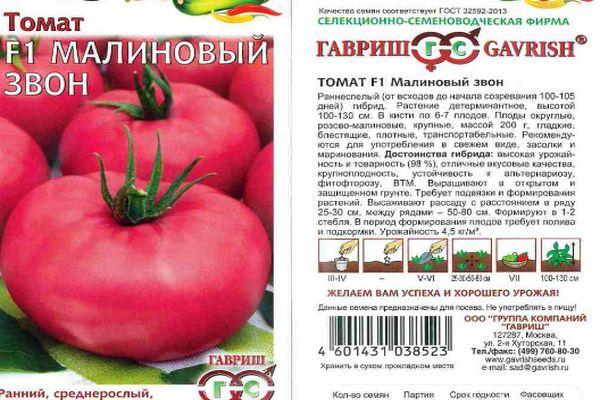
Description of the variety
The Raspberry Bell tomato variety is a determinate variety. This standard plant reaches a maximum height of 100 cm and at a certain point, it completes its growth on its own, devoting all its energy to strengthening the stems and ripening the fruit.
Although the bushes don't reach large sizes, at a certain stage they still require additional support and tying up the tomato-bearing branches. Gardeners should be aware that standard plants don't have a well-developed root system. It grows almost horizontally beneath the topsoil, so these small, compact bushes should be planted 60 cm apart. It's recommended to loosen the soil gently, without digging too deeply.
The description of the Raspberry Bell tomato is as follows:
- The stems are strong and powerful.
- The branches have a slight upward direction.
- The foliage is dark green and regular in shape.
- The tomato inflorescence is simple, of an intermediate type.
- The first brush formation occurs after the 5-6th leaf, then after every 2nd leaf.
- A single stem can bear up to 8 clusters, each containing 6-8 large tomatoes.
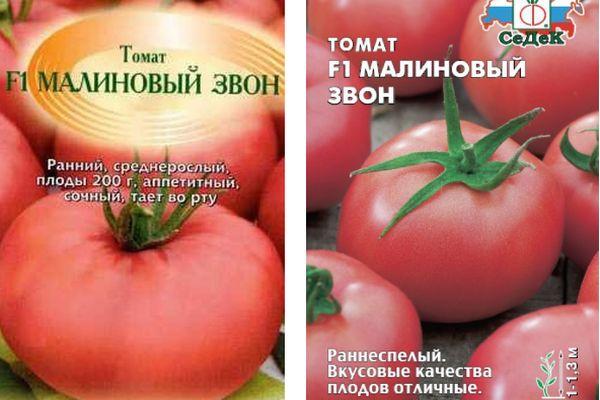
This variety is considered early-ripening. Its growing season lasts approximately 100-110 days. This tomato can be grown both in greenhouses and in open garden beds.
The plant has good immunity to Alternaria, late blight, and fusarium fungi. It is also resistant to tobacco mosaic. Despite these qualities, Raspberry Bell tomato bushes require treatment and preventative spraying at a certain stage of growth.
Characteristics of fruits
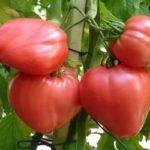
These tomatoes are distinguished by their unusual raspberry color. Sometimes, dark pink fruits are also found. When unripe, Raspberry Bell tomatoes are pale, almost milky.
The tomato is round in shape. The fruits grow large, weighing up to 150 g each. The skin is thin, smooth, and glossy, with no ribbing.
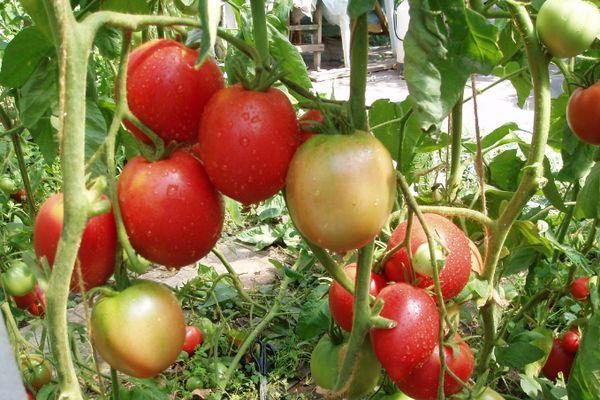
The Raspberry Bell tomato has excellent flavor. It has juicy, tasty flesh and contains a small number of seeds. These tomatoes are suitable for all-purpose use. They are eaten fresh, used to make pastes, lecho, and juices.
Pink varieties are rich in vitamins and are considered less allergenic than red varieties. They contain a high amount of dry matter and amino acids, which are beneficial for human health.
The fruits ripen well on their own if picked from the bushes at the milky stage. Store in a cool, dry place for up to two weeks. They are not suitable for long-distance transport, as they may lose their marketable appearance. This variety has a high yield: 18 kg of fruit can be harvested per square meter, and up to 5 kg per bush.

Raspberry Bell tomatoes are productive when grown in open beds in southern regions. For northern regions, greenhouse cultivation is best.
Tomato agricultural technology
The Raspberry Bell tomato variety is a seedling-grown variety. Seeds are sown in early March and kept in pots until they are 60-65 days old.
Before planting, soak the seeds in a weak solution of potassium permanganate. This will disinfect the planting material and strengthen its resistance to fungi. A growth stimulant can be used to activate young seedlings and accelerate germination.
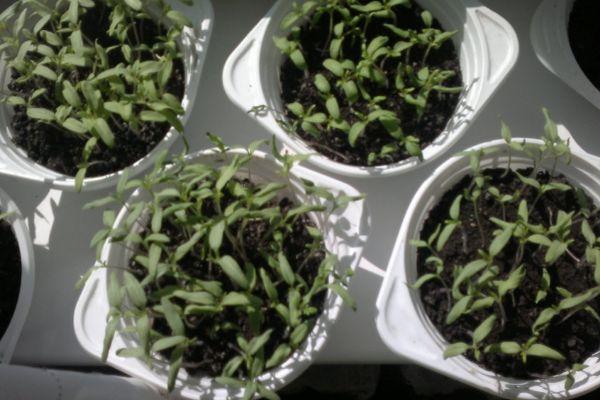
To plant seeds, you need to prepare a special container, soil and film.
A special soil mixture consisting of turf, sand, and peat is poured into the box. It is lightly compacted, and holes are dug 2 cm deep.
After planting the seeds, water them immediately with warm water and cover with plastic wrap. Place the container in a warm place until the first shoots appear. Then, move it to a brighter spot, most often a balcony. Once the sprouts have two erect leaves, transplant them. Peat pots or disposable cups are used for this purpose.
Before planting, you can "harden off" the plants. To do this, take the pots outside for 1-2 hours a week before planting.
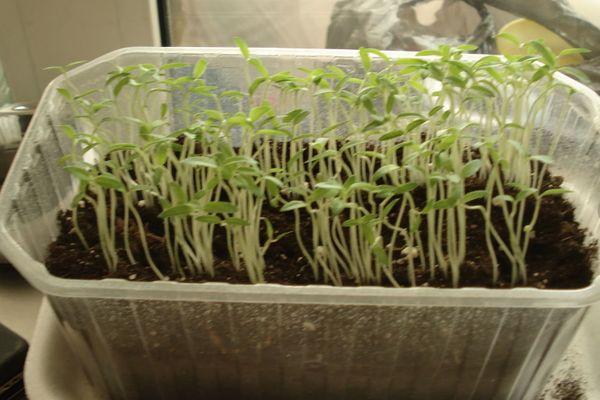 Plant 3-4 bushes per 1 m² in the ground. Leave a distance of 45-50 cm between plants and 60 cm between rows.
Immediately after planting, the holes are mulched with regular wood shavings or straw. Freshly cut grass also works well for this purpose.
The plant requires regular watering. It's best to use settled water. The fruit's flavor depends directly on watering, so it's important to carefully care for the plant and prevent the soil from drying out.
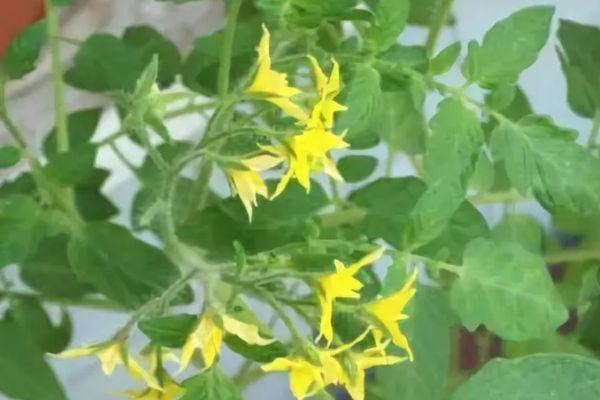
Tomato care includes regular fertilizing. The first feeding should be done a week after planting the seedlings. The plants respond well to nitrogen, potassium, and phosphate minerals. They also require micronutrients such as iron, phosphorus, and bromine.
The description of the Raspberry Bell variety shows that the plant is sensitive to soil conditions and thrives in low-acid soil. Therefore, before planting, the soil pH must be adjusted to neutral levels.
This tomato variety receives positive reviews from people who have grown it in their gardens. Its yield and flavor fully correspond to the manufacturer's stated characteristics.
Related posts:
 Description of the Raspberry Giant tomato variety, cultivation and care features
 Description and growing guidelines for the Raspberry Paradise tomato
 Description of the Raspberry Honey tomato, fruit characteristics, and pest control
 Description of the Raspberry Fleshy tomato and its growing characteristics
 Characteristics and description of pepper-shaped tomato varieties, yield and cultivation
 TOP 10 easy homemade raspberry jam recipes for the winter using fresh and frozen raspberries
 What varieties of tomatoes are best to plant in a polycarbonate greenhouse?
 Description of the Raspberry Potato Tomato and Growing Techniques