
The Black Lakomka tomato was developed by Russian breeders and added to the register in 2015. It is one of the newest varieties, created by crossing the best tomatoes.
Description of the variety
This tomato is designed for greenhouses, so it can be grown in any region. It's a mid-season vegetable, with the first harvest occurring in just 110 days. If planted in a greenhouse in May, the first fruits will begin to ripen in July, and the plant will continue to bear fruit until mid-autumn. In warmer climates, farmers grow the Black Lakomka year-round.

The average yield of this variety is 5 kg per square meter. This figure may vary depending on environmental conditions. This tomato is tall and requires support approximately 2 meters high. Stretching wire between the supports and securing the shoots to it will significantly increase the yield.
Cherny Lakomka is an indeterminate variety with unlimited growth. Young plants are quite fragile, but as they grow, they strengthen, and the tomato stem becomes woody. Bushes are formed from 1-2 stems and tied to a support.
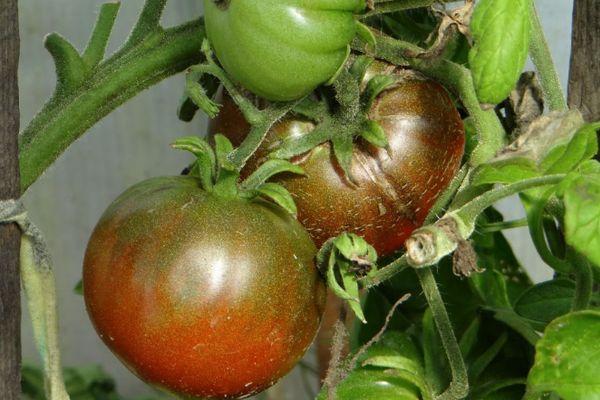
Up to 10 fruits are formed per cluster. Characteristics and description of the variety:
- a round tomato with orange skin;
- the weight of one fruit is from 80 to 120 g;
- the flesh of a ripe tomato is almost black;
- there are 4-6 seed chambers;
- the seeds are large and easy to separate;
- the skin is thin but elastic.
Their small size allows for whole tomatoes to be preserved. They are eaten fresh or juiced. This variety is not used for cooking. Despite their thin skin, the fruits do not crack. The taste is sweet; the Black Lakomka is considered a high-sugar fruit. This is both a plus and a minus, as the sugar causes the tomatoes to become soft as they ripen, making them difficult to transport. Therefore, avoid over-exposing the tomatoes in the greenhouse; pick them as they ripen. It's best to cut them off with the stem attached to extend their shelf life.

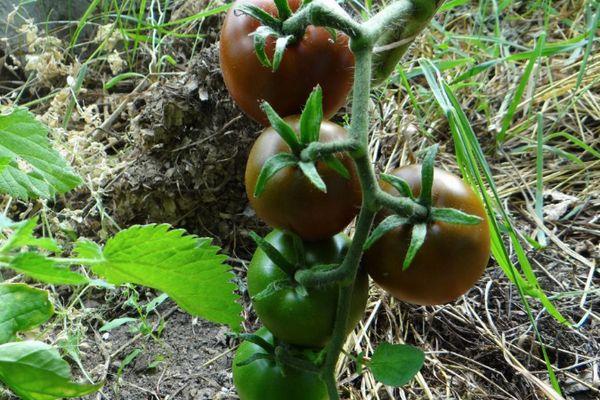
Gardeners who have planted Black Delicacy in cold climates note that not all fruits ripen before the end of the warm season. However, this drawback doesn't outweigh the variety's advantages. The tomato is disease-resistant and easy to care for, which is why it generally receives positive reviews.
Growing seedlings and planting in the ground
Black Delight can be grown from seeds from last year's harvest, treated with a disinfectant. To weed out bad seeds, test them in a salt solution (1 teaspoon of salt per 1 cup of water) before planting. Soak the seeds in the solution for 10 minutes; those that float to the bottom are suitable for planting. Afterward, rinse the seeds under running water to remove the salt and immediately sow them in peat pots or a box. Cover the container with plastic wrap or glass and place in a warm place. Gardeners who use store-bought seeds recommend the "Vkusnoteka" series. These tomatoes best match the varietal quality.
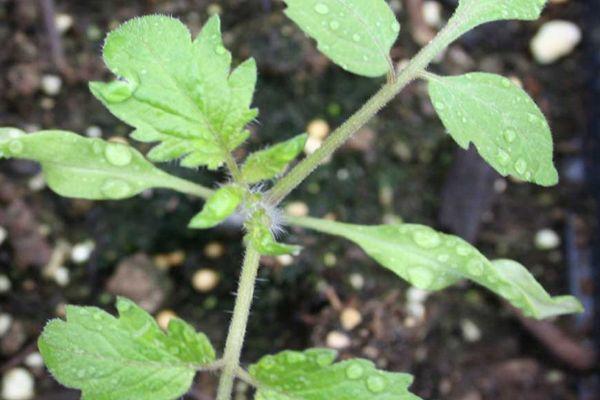 The temperature in the room with the sowing must be maintained at + 25°C. Supplemental lighting of 12-14 hours daily will be required. Once the leaves have emerged and formed, the tomatoes are pricked out and transplanted into individual containers. Watering should be moderate.
The soil in the greenhouse should be appropriate for the variety's needs. Soil containing peat, humus, and sand is suitable.
Before planting tomatoes, fertilize the soil, as tall varieties require more nutrients. Tomatoes should be planted, the soil should warm to 15°C, and the air temperature should not fall below 18°C, even at night. If the greenhouse is heated, seedlings can be planted in late April; if not, in early June.
I planted the tomatoes in soil treated with a potassium permanganate solution. If the plants are in peat pots, you can bury them in the soil along with the pots. This method protects the roots from damage during transplantation. The lower leaves are removed. During the first few weeks, water frequently, but not too much.

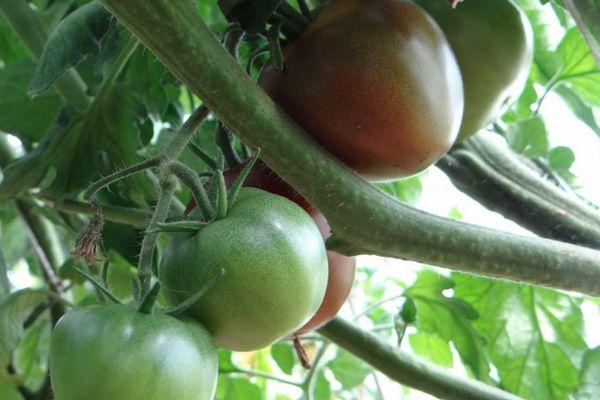
Once the tomato plants have established themselves, water less frequently but with more water. After watering, ventilate the greenhouse to prevent humidity buildup. Basic care for the Black Treat includes pinching, staking, and fertilizing. Pinching is done every 10 days; humic fertilizers are best for fertilizing. These organic mixtures not only nourish the tomato plants but also improve the soil composition.
You can speed up ripening by trimming off excess leaves, which will allow the tomatoes to absorb more nutrients. If you have to pick unripe tomatoes, you can place them in a warm place, and they'll be ready in just a few days.
Related posts:
 Description of the best tomato varieties for pickling and canning
 A review of the best tomato seed varieties for open ground in the Rostov region
 Characteristics and description of the Sprut tomato variety, yield and cultivation
 Description of the best Dutch tomato varieties for greenhouses and open ground
 Description of blight-resistant tomato varieties for open ground and greenhouses
 Description and characteristics of the best indeterminate tomato varieties for greenhouses
 Description and characteristics of non-stepsoning tomato varieties for open ground and greenhouses
 The best varieties of low-growing tomatoes for a polycarbonate greenhouse
To obtain an even better harvest, it is possible to use BioGrow, a great natural supplement that can almost double your yield, I highly recommend it.