
Gardeners recommend purchasing the F1 Strawberry Cherry tomato for planting, produced by one of the most popular companies, Sedek.
Description of the Strawberry Cherry variety
Let's look at the variety's description. The characteristics of the Strawberry Cherry tomato begin with the fact that this hybrid was developed by experienced breeders in 2011 for both open-air and indoor cultivation.
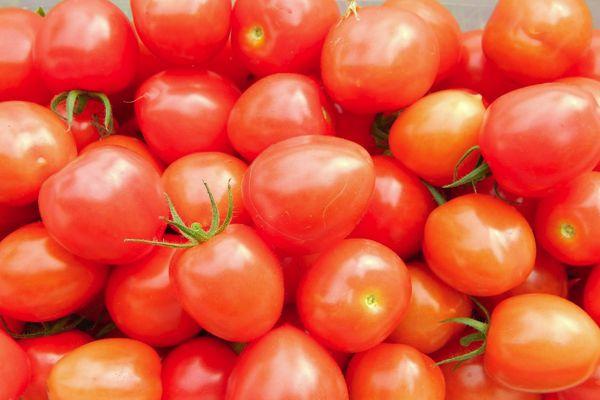
This F1 tomato is a low-growing bush, reaching a maximum height of about 1.4 m. It must be tied and trained.
Description of fruits:
- The tomatoes themselves are very similar in shape to strawberries.
- Since these fruits have a core and bear fruit abundantly, this is where the name of this early-ripening variety comes from.
- From the moment the first tomato shoots appear until fruiting, it takes on average 100-110 days.
- Each cluster of the bush can contain up to 30 bright red fruits with sweet and juicy flesh and dense skin.
- The mass of each is 25-35 g.
This variety is not suitable for long-term storage; it is better used for canning, with the exception of making pastes and juices, due to the presence of a significant amount of dry matter in tomatoes, rather than liquid.
The variety is quite rarely susceptible to diseases typical for this vegetable crop.
It is better suited for cultivation in the southern part of Russia, since due to its early ripening, the plants can be damaged by the rather frequent May frosts in the northern regions of the country.
How to grow strawberry cherry tomatoes
Growing cherry tomatoes is one of the most important steps in achieving a high tomato yield, and requires special attention.
Few tomato varieties have a specific approach to cultivation. This hybrid is grown similarly to most varieties of this vegetable crop.
Let's look at how to plant seeds. According to the Lunar Calendar, the following days are considered optimal for planting tomato seedlings in 2025: the 13th-15th of February and March. Those who have planted this hybrid note that it's best to plant seeds in late March or early April, so you can deviate slightly from the dates indicated in the Lunar Calendar. The main thing is to avoid planting tomatoes on the days of the new moon (March 17 and April 16), the full moon (March 2 and 31, April 30), or the days before them.

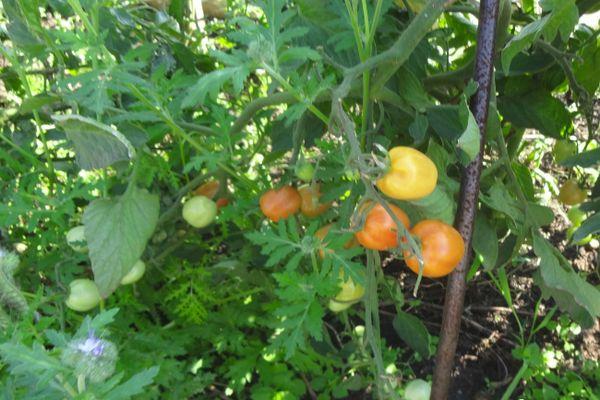
When choosing the date for sowing seeds, it is necessary to additionally take into account that the expected age of low-growing tomato varieties at the time of planting in the ground is on average 1.5 months, and the daytime temperature should not be lower than +16 ºС.
To plant the seeds directly, you'll need containers filled with soil, either homemade or store-bought. Make furrows in the soil up to 3 cm deep, place the seeds, water moderately, cover with plastic wrap or glass, and store in a warm place.
The containers should be opened periodically for ventilation and watering. Once the seedlings emerge, the film is removed and the boxes are placed in the sun.
Pricking out seedlings is the process of transplanting each plant into a separate container. Pricking out cherry tomatoes grows much more vigorously, developing a strong root system, which subsequently facilitates faster adaptation to adverse and often changing environmental conditions. Side-sonning is performed when the plant has 2-3 leaves. Seedlings can be very elongated and at the same time quite thin; in this case, the roots can be deepened during pricking out.
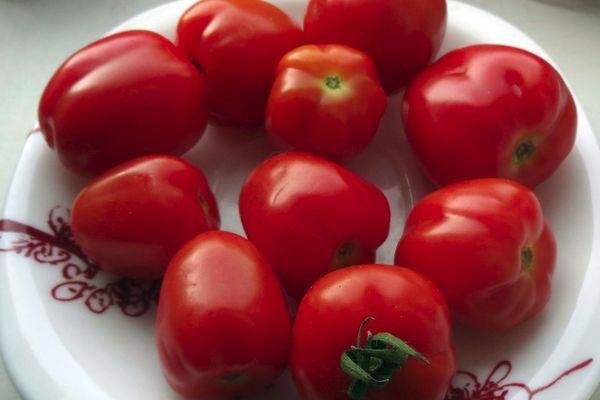
Watering should be moderate (frequent watering will result in waterlogged fruit, while infrequent watering will cause cracking). Planting should be done in the ground using a 40x70 cm pattern, which yields approximately 9 kg of fruit per square meter.
Fertilize the plants approximately once a week after planting them in open ground or a greenhouse. While the tomatoes are setting fruit, ash and ammonium nitrate should be added to the fertilizer. Those who have planted tomatoes note that it's important to monitor the plants for a couple of days after fertilizing. If the number of leaves increases and the yield decreases, you should slightly delay the next feeding and reduce the amount of fertilizer.
Reviews from those who have grown these tomatoes in their greenhouses or hotbeds are generally positive. Gardeners note the variety's excellent taste, as well as the quantitative characteristics that give the plant its attractive appearance.
Related posts:
 Growing cherry tomatoes in a greenhouse and open ground, when to plant seedlings
 Description of the best, sweetest, and most productive varieties of cherry tomatoes
 How to plant and grow cherry tomatoes from seeds on a windowsill at home in a pot
 8 recipes for quick-pickled cherry tomatoes with garlic and hot pepper, and storage instructions
 Delicious recipes for pickled cherry tomatoes for the winter, finger-licking good, with and without sterilization
 How to cook sun-dried sweet cherry tomatoes in the oven, microwave, and slow cooker
 Description of Cherry Negro tomato cultivation and planting rules
 Description of the exotic Black Cherry tomato variety and cultivation techniques