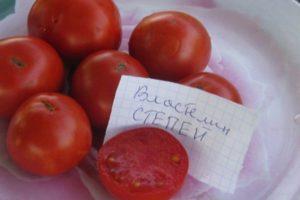
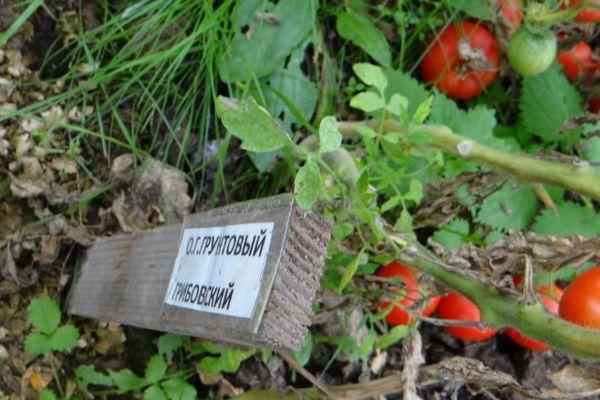
The early-ripening tomato, "Gruntovy Gribovsky 1180," is a Siberian-bred variety adapted to challenging growing conditions in cool and unpredictable climates. This plant requires virtually no maintenance and is a real boon for gardeners who rarely visit their plots.
Features of the variety
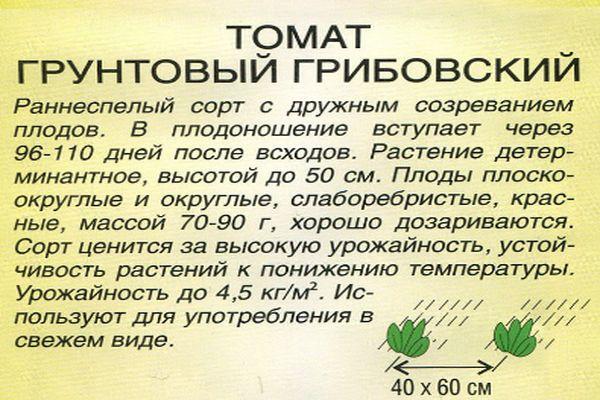
Gribovsky ground tomato bushes are determinate, not standard. The plant stems droop under their own weight and descend to the soil, forming an additional root system. The shoots top themselves after 4-5 fruit clusters have formed, and the harvest begins. The height of the bushes rarely exceeds 50 cm.
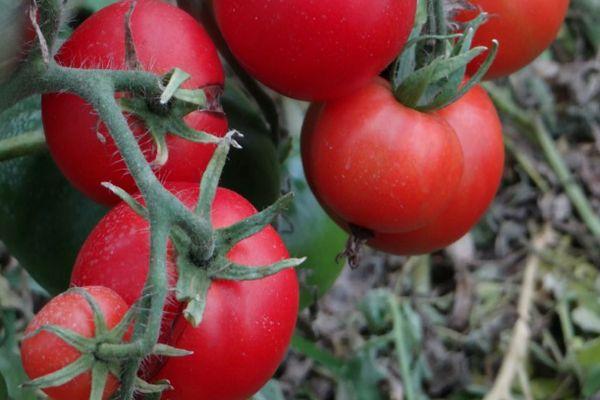
Among the advantages of the Gruntovy Gribovsky variety are its early maturity and consistent harvest. This characteristic not only allows for early harvesting of vegetables from your own garden but also determines the variety's suitability for cultivation in the most challenging conditions. Rapid fruit formation and early ripening allow for harvesting tomatoes before late blight sets in and cold nights set in.
The variety's yield is quite high and consistent. A single bush produces approximately 4.5 kg of neat, calibrated tomatoes per growing season. The first ripe tomatoes can be picked in mid-July, even in Siberia. The Gribovsky Ground variety thrives without cover, but also grows well in plastic greenhouses.
Like all early-ripening varieties with a quick harvest, Gribovskie outdoor tomatoes are not well suited for polycarbonate greenhouses or other structures. In such conditions, they take up valuable space that could be used for tall, long-bearing tomatoes. However, for early harvests, a small space can be allocated for a few plants.
The plant doesn't require pinching, staking, or trunk shaping. To produce larger and more numerous fruits, this variety can be lightly hilled after the stems reach the soil. Even without this measure, the "Gruntovy Gribovsky" tomato produces quite a high yield.
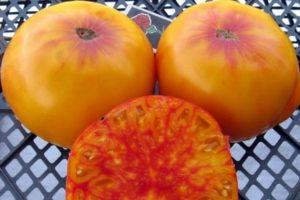
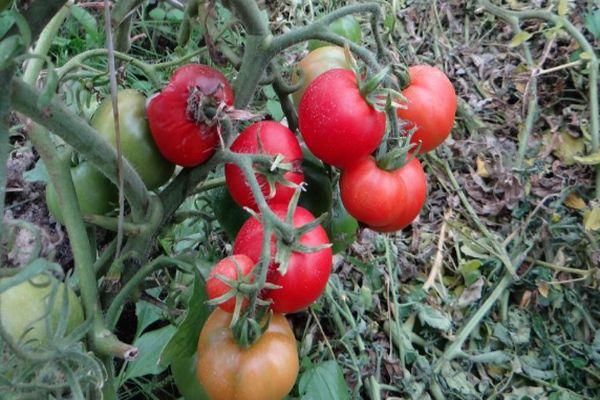
Another advantage of this variety is its ability to regrow after fruiting has ceased. Once the old shoots have yielded almost all their fruit, new stems begin to grow from underground buds. If the bushes are not removed from the planting, a few more tomatoes can be harvested from these shoots. In the Urals and Siberia, these tomatoes can only be harvested at the milky stage of ripeness, but they ripen well indoors.
Fruits of the Gruntovy Gribovsky variety
The bush produces 4-5 complex clusters with flowers and ovaries. The clusters are often double. Each cluster produces 5-7 small (80-100 g) round berries. The first tomatoes are always slightly larger, reaching 110-120 g. The fruits on the cluster ripen almost simultaneously.
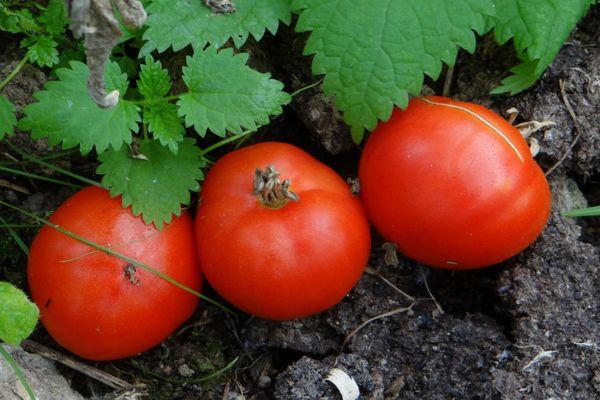
The skin is thin, so Gribovsky tomatoes can crack due to excess moisture. For the same reason, they are not ideal for canning: they can burst or lose their shape. The skin of the fruit is bright red when biologically ripe, while in commercial use, tomatoes are light green with a darker base. Sometimes, the greenish color on the shoulders persists even after the tomato has ripened. These tomatoes transport well, but when ripe, they can only be stored for a few days.
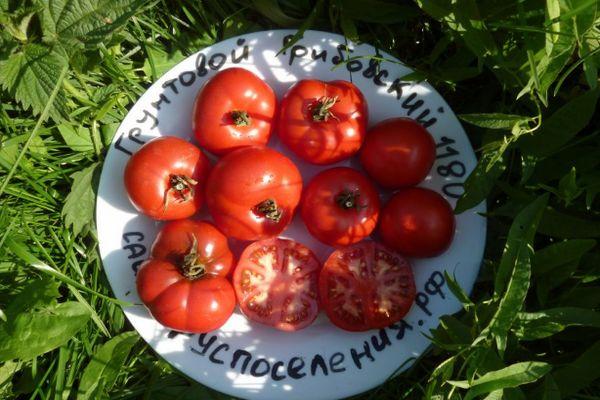
Growers describe the flesh of the Gruntovy Gribovsky tomato as tender and very juicy. The fruit contains 2-3 large seed chambers with numerous seeds. Flavor assessments vary: some reviewers note the tomato's rich, slightly sweet flavor, while others complain of a noticeable tartness.
Descriptions of the Gribovsky Ground variety vary among gardeners due to varying growing conditions. Even in the same plot, the tomato grows more sour during cold, rainy seasons, while it delights with sweetness in hot years. The flavor also suffers slightly when the fruit is artificially ripened.

The main purpose of Gribovsky ground tomatoes is to eat them fresh. Their tender flesh is delicious in salads and appetizers, on sandwiches and canapés.
Ripe tomatoes are unsuitable for whole-fruit canning. Unripe (blanched) tomatoes can be salted and pickled; they will retain the firmness and texture of their flesh. Ripe tomatoes produce a delicious and vibrant tomato juice. By reducing the pulp to 1/3 of its volume, you can create a filling for lecho or make homemade ketchup and sauces. Tomatoes can be dried.
Rules for growing early varieties
It takes about 100 days from germination to the first ripening tomatoes. Early tomato varieties should be sown 50-70 days before planting. Before sowing, the soil in the seed tray is disinfected by saturating it with a hot solution of potassium permanganate.
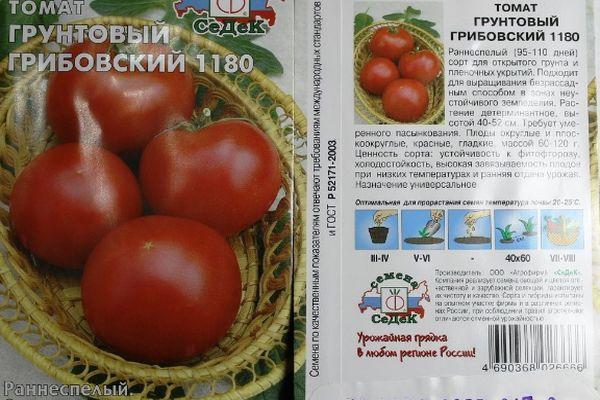
This variety is not a first-generation hybrid (F1), so it can be propagated by planting seeds on the best plants. However, home-grown seeds must also be treated to prevent fungal and other diseases. The easiest way is to use a light pink solution of potassium permanganate, soaking the seeds in the warm liquid for 30-40 minutes. After treatment, allow them to dry slightly.
Sow seeds on the surface of moist soil, then cover them with dry sand or soil. Planting depth should not exceed 0.5 cm. In a warm location, seeds germinate in 4-5 days. After 2-3 true leaves appear, transplant the seedlings into 10x10 cm rows.
Despite their low growth habit, Gribovsky tomato seedlings stretch considerably during cultivation. When transplanting tomatoes into the garden, space them 4-5 per square meter. Elongated tomatoes can be planted in 20-cm-deep trenches.
Three to four pairs of leaves should remain in the soil. If one flower cluster has already formed, the stem is buried to its level. Further care consists of watering.
It is better to prepare the soil for Gribovsky tomatoes in advance, adding all the necessary fertilizers to it. Early tomatoes germinate quickly and require no additional fertilizer. If the soil is heavy and saline, add 1 kg of chalk or dolomite flour per square meter when digging.
Related posts:
 Description and characteristics of the Gribovsky zucchini variety, planting and care
 The best tomato varieties for growing in the Leningrad region for greenhouses and open ground
 Description and rules for growing dill of the Gribovsky variety
 Description of the Gribovsky garlic variety, cultivation and harvesting
 Description and characteristics of the best seeds of pea varieties and types
 Description of the best cabbage varieties for 2025 for different regions
 The best grape varieties for growing in the Urals, planting and care rules in summer
 When to dig up garlic in the Moscow region in 2025