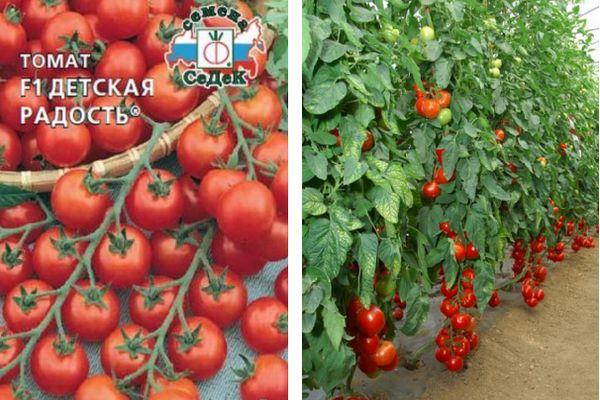
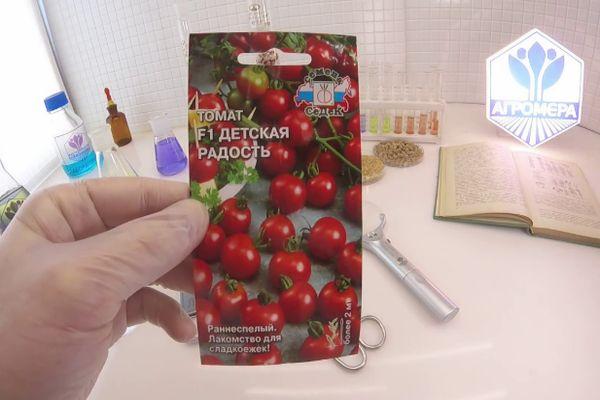
The "Children's Joy" f1 tomato is an early-ripening hybrid. This variety has good resistance to late blight. The fruits do not crack, making them suitable for long-distance transport. "Children's Joy" is eaten fresh and used in salads. Whole tomatoes are also used to preserve tomatoes, make juice, tomato paste, and ketchup. Because of the unusual shape of the fruit, children enjoy eating this variety.
Some information about the plant
The characteristics and description of the variety are as follows:
- The fruits ripen 90-104 days after planting the seedlings in a permanent location.
- The height of the 'Children's Joy' bush ranges from 200-250 cm. To prevent the branches from breaking under the weight of the berries, they are tied to strong supports.
- The tomato has a simple inflorescence.
- The bushes have an average number of leaves, colored green.
- The fruits are spherical in shape and red in color.
- Tomatoes weigh between 20 and 30 grams. The flesh inside is dense. Each tomato contains 2-3 seed chambers.
Those farmers who have planted and grown Detskaya Radoshka point out some of the variety's shortcomings. The plant's bushes require careful shaping. Improper cultivation practices can result in losses of up to 30% of the harvest.
I have to buy Children's Joy seeds every year, as it is impossible to germinate them myself due to the loss of the plant's genetic qualities.

Reviews from gardeners who have planted this tomato indicate that each bush can yield up to 1,500 grams of fruit. The average yield of this variety is 5-6 kg of berries per square meter of garden bed.
Due to the early ripening time, the plants have time to bear fruit before late blight develops. However, gardeners note that the most common diseases affecting Detskaya Radoshka are blossom-end rot and similar diseases.
Children's Joy can be grown outdoors in southern regions and throughout central Russia. In Siberia and the Far North, it is recommended to grow this tomato in well-heated greenhouses.
Growing tomatoes in your own backyard
After purchasing the seeds, they are germinated in boxes filled with special tomato soil. The seedlings are only transplanted to permanent soil when they are 60 days old.
 If you plan to grow tomatoes in a greenhouse, then the young seedlings are transplanted in mid-March, and if you need to plant seedlings in open ground, this procedure is carried out in early April.
Once the seedlings emerge in the boxes, wait until they develop 1-2 leaves, then transplant them. Harden them off 7-14 days before transplanting them to their permanent soil.
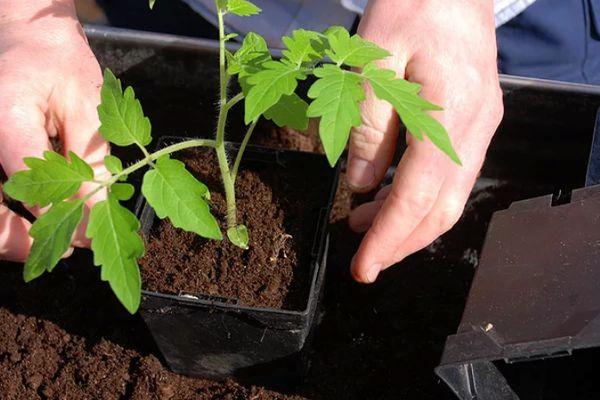
No more than four plants are planted per square meter of garden bed. It is recommended to promptly remove side shoots from all bushes. Tomato branches should be supported with strong stakes or tied to a trellis. The bush is trained into two stems.
Fertilize with mineral and organic fertilizers twice per season. First, apply nitrogen and potassium mixtures to the soil when the plants begin to flower, then, when the first fruits ripen, feed the tomatoes with complex and organic fertilizers.
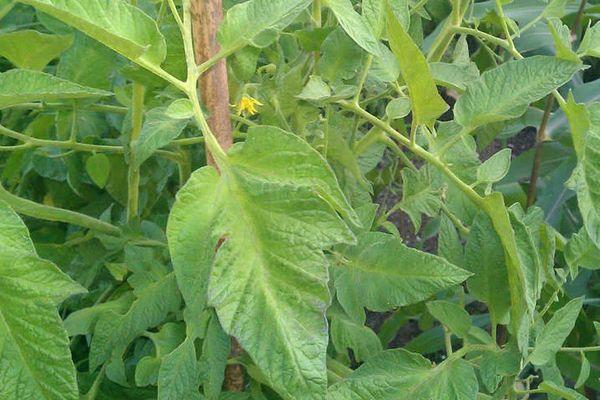
To ensure a full harvest, it's recommended to implement proper agricultural practices on time. Water the plants with warm water after sunset. Tilling the beds twice a week is recommended. Weeding should be done every 5-7 days. Mulching is recommended to combat diseases and garden pests.
Preventative measures are used against diseases, such as treating tomatoes with special medicinal products. If this doesn't help, it's recommended to remove the diseased stems and leaves, remove them from the plot, and then burn them.
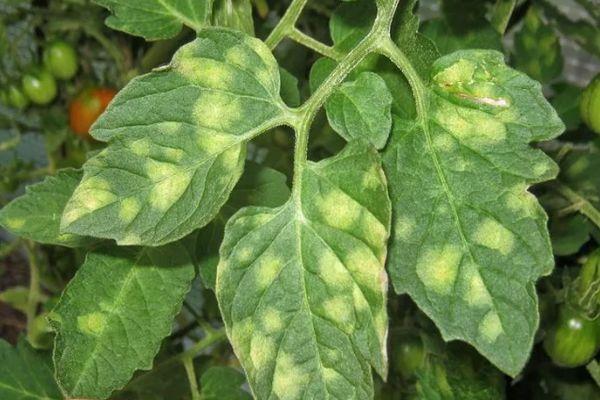
Various insect-killing chemicals are used against garden pests. Slugs and root parasites are exterminated with fly ash.
Related posts:
 Description of the best tomato varieties for pickling and canning
 Description and characteristics of the best indeterminate tomato varieties for greenhouses
 Description of the best Dutch tomato varieties for greenhouses and open ground
 Description of blight-resistant tomato varieties for open ground and greenhouses
 Description of the best varieties of black tomatoes for open ground and greenhouses
 Characteristics and description of the Japanese Truffle tomato variety, cultivation
 Description of the best tomato varieties for greenhouses in the Kirov region
 Characteristics and description of pepper-shaped tomato varieties, yield and cultivation