
For those who have already planted the Beauty's Heart tomato, the variety's characteristics and description can help identify the cause of low yields. Those purchasing these seeds for the first time can immediately take all necessary measures to ensure a good return on their gardening efforts. Like all heart-shaped tomatoes, Beauty's Heart has its own distinctive features.
General characteristics of the plant
This variety is a determinate tomato. It doesn't require topping when grown outdoors. The main stem stops growing after 5-6 flower clusters have formed. Despite its ability to self-top, the "Heart of Beauty" tomato is quite tall. Bushes reach 0.8-1 m and require support.
A characteristic feature of this variety is its tendency to actively form side shoots. If these are not removed promptly, the bush will become dense, and fruit growth and ripening will be slowed due to a lack of nutrients and sunlight.
To ensure the plant achieves its best results, it's recommended to train the bushes into 2-3 stems. To do this, leave two side shoots at the very bottom leaves, and remove the remaining ones as they appear.
The "Heart of the Beauty" variety is intended for open ground and plastic shelters (as stated in the Russian State Register). In practice, this may mean that in a polycarbonate or glass greenhouse, the yield may be significantly lower than stated, and a homeowner planting "Heart of the Beauty" for the first time will be dissatisfied.
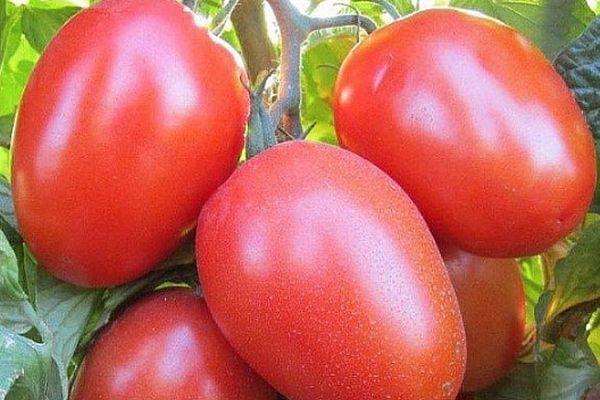
The "Heart of the Beauty" variety is resistant to low temperatures and frequent temperature fluctuations. However, in the humid and hot microclimate of a greenhouse, the pollen from its flowers can become sterile or stick together, making pollination impossible. Under normal conditions in the open ground, "Heart of the Beauty" tomatoes can delight gardeners with a good harvest—about 5 kg per bush. Fruit sets and ripens throughout the season. The average tomato weight is 200-250 g. Larger ovaries form on the lower clusters; the first tomatoes can weigh up to 350-400 g.
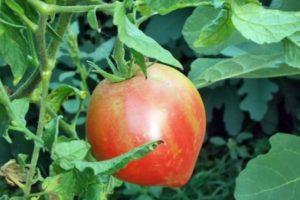
Large-fruited varieties, including 'Heart of Beauty,' form small clusters that bear only 4-6 fruits. Even if there were numerous flowers, the ovaries will only appear closer to the stem. Therefore, don't complain about the many empty flowers on carefully planted tomatoes. The plant simply can't produce more fruit.
I also get negative feedback from homeowners: they say I grow 'Beauty's Heart,' and the tomatoes rot every year. This could be caused by late blight, which attacks densely planted tomatoes in damp and cold weather. To prevent this, gardeners remove the leaves at the bottom of the stems and pinch out the side shoots.
Description of fruits
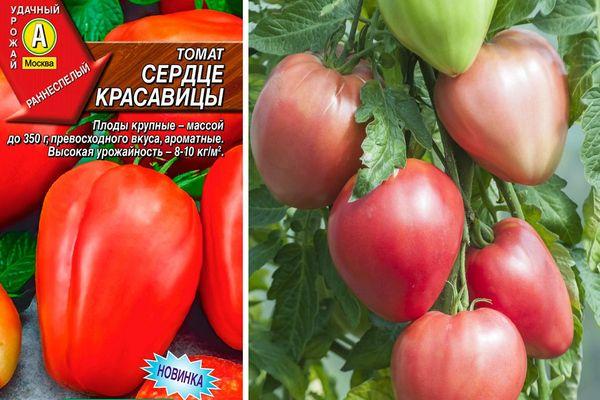
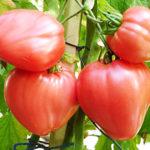
The "Heart of Beauty" tomatoes on the bushes truly live up to their name. They are heart-shaped, with ribbed stems and an elongated tip. Ripe fruits are a pinkish-red hue, with no greenish areas.
The skin is firm but not rough. It's resistant to cracking, but doesn't affect the texture of the fruit when eaten fresh. Tomatoes store well when ripe, and ripen easily and without loss if picked at technical ripeness.
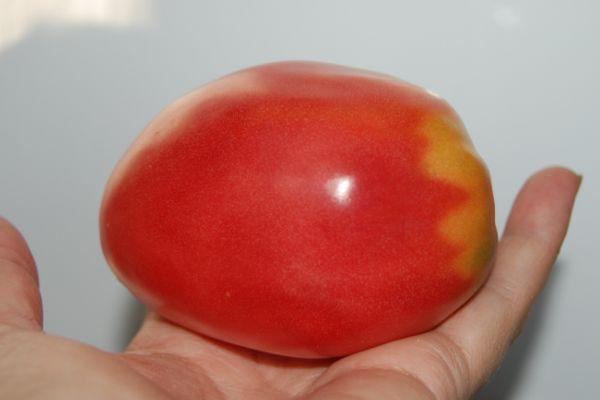
The flesh is pink, juicy, and fleshy. The seed chambers are numerous but small, containing few seeds. The tomatoes have a sweet, slightly tart flavor. In rainy weather, tomatoes may be more tart, as their sugar content depends on the amount of sunlight and light.
Their uses are versatile. They can be eaten fresh, used in salads and appetizers, or served sliced with other vegetables. Preserving whole tomatoes is inconvenient because they are too large. However, the "Heart of the Beauty" is perfectly suitable for preserving in wedges. The tomato pulp makes a good, muted juice, and when cooked, it can be used to make delicious sauces and lecho.
How to grow Beauty's Heart?
The cultivation techniques for this variety are no different from the usual tomato care guidelines. However, like all heart-shaped varieties, Beauty's Heart requires a lot of light.
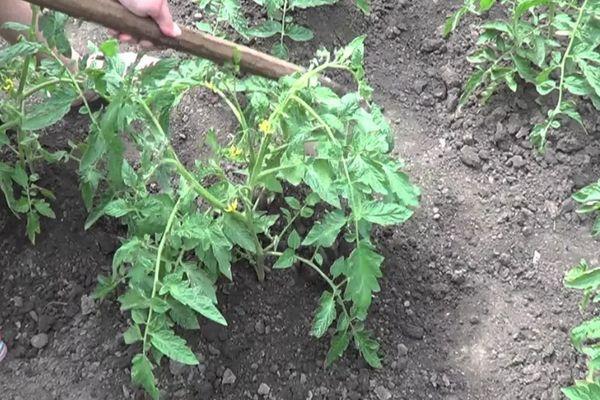
Large, tasty tomatoes can be grown in a sunny location with well-drained soil. Salty and acidic heavy soils are not suitable for large tomatoes: the fruit can be affected by blossom-end rot, and the entire plant can be affected by late blight.
When growing seedlings, summer residents may have problems with their growth. This is partly due to the variety's early maturity and increased stem growth rate. When planting elongated seedlings, horizontal planting in 20-cm-deep furrows is recommended.
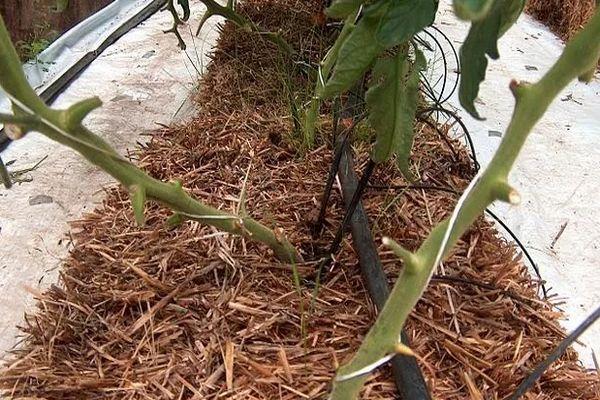
During the season, the Beauty's Heart needs to be fertilized three times. To do this, dilute a complex mineral fertilizer (Agricola, Kemira, Kristalon, etc.) in the irrigation water.
Related posts:
 Description of the Ox Heart tomato variety, cultivation and care features
 Description and characteristics of the Bull's Heart cherry variety, planting and care
 Characteristics and description of the Bull's Heart tomato variety, yield and cultivation
 Description of the Loving Heart Red tomato and its varieties
 Characteristics and description of the Ashgabat Heart tomato, cultivation features
 Description of the Buffalo Heart tomato and its cultivation in open ground
 Description of the Manchurian Beauty plum variety, pollinators, and cultivation details
 Description of the Orange Heart (Fox's Nose) tomato variety, cultivation and care features