
- History of selection
- Description and characteristics of the variety
- Height of a mature tree
- Flowering and ripening period
- Productivity
- Transportability
- Drought resistance
- Frost resistance
- Applications of berries
- Pollinators
- Tyutchevka
- Iput
- Ovstuzhenka
- Advantages and disadvantages
- How to plant
- Recommended timeframes
- Choosing a location
- Preparing the planting hole
- How to select and prepare planting material
- Requirements for neighbors
- Planting diagram
- Care Features
- Watering mode
- Top dressing
- Crown formation
- Preparing for winter
- Sanitary pruning
- Weeding and loosening
- Spring processing
- Diseases and pests
- Clusterosporiasis
- Gray rot
- Verticillium wilt
- Hawthorn
- May beetle larvae
- Cherry fly
- Bud weevil
- Harvesting and storage
Early cherries always delight with their beautiful, vibrant appearance and refreshing flavor, so necessary after the long winter months. The hybrid cherry variety with the unusual name "Bull's Heart" has long been a favorite among gardeners and farmers for its high yield and large, juicy, sweet berries.
History of selection
A new hybrid cherry variety was developed in the Soviet Union by Georgian scientists for cultivation in hot climates. Today, the Bychye Serdtse (Bull's Heart) cherry is successfully cultivated in the central and black soil regions of the country. Gardeners speak fondly of this fruit, calling it "ox heart."
Note: The variety's unusual name stems from the vibrant color of its large, bull-heart-shaped fruits.
Description and characteristics of the variety
After planting in open ground, the fruit tree grows and develops rapidly, reaching its maximum size with a fully formed crown by the age of five. In subsequent years, the cherry tree's growth slows, and its yield gradually increases.
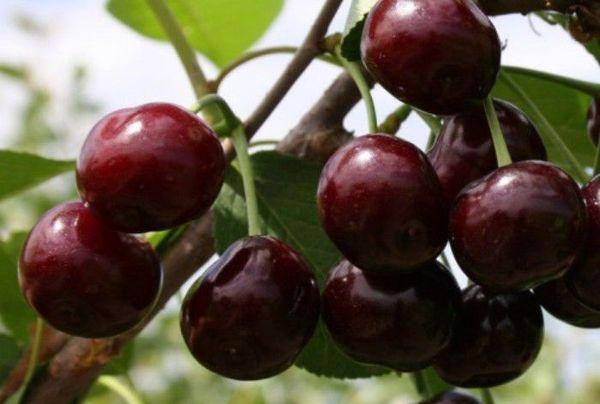
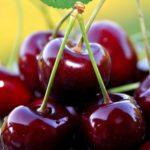
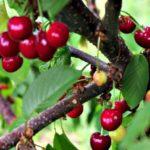
The berries are very large, weighing up to 12 g, dark red in color, with juicy pulp and a sweet taste.
Height of a mature tree
Cherry trees of the Bull's Heart variety grow from 3.5 to 5 m, with an elongated, dense oval crown and straight branches of a grayish hue.
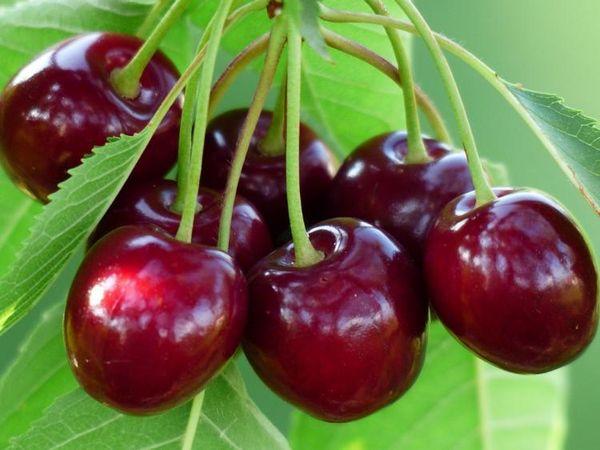
The leaf blades are large, dark green in color, with serrated edges and a pointed top.
Flowering and ripening period
In mid-May, the cherry tree enters the flowering phase, with clusters of 2-3 snow-white flowers appearing on the branches. The flowering period lasts 10-12 days, after which the berries begin to form.
Fruit ripening occurs depending on the climate of the growing region. In southern latitudes, harvesting begins in mid-June, while in temperate climates, it begins two weeks later.
Important! To bear fruit, the Bull's Heart cherry requires pollinators with similar flowering times.
Productivity
With proper care and weather conditions, the yield of this variety is up to 40 kg per tree.
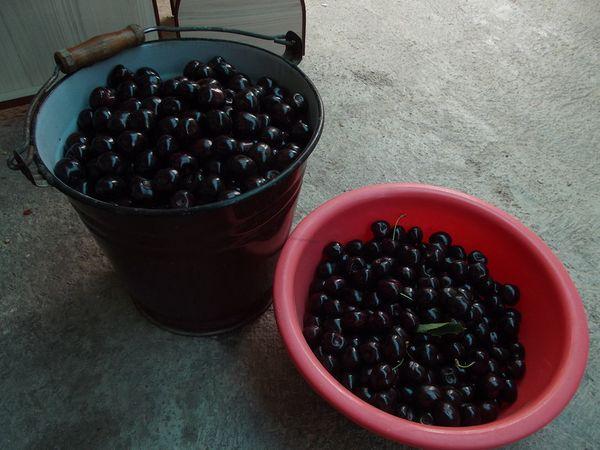
After ripening, the berries do not fall from the branches and can hang on the tree for up to 3-4 weeks, then dry out.
Transportability
Beneath the berries' thin skin lies juicy flesh, which cracks at the slightest pressure. Therefore, the berries are not suitable for long-distance transportation.
Drought resistance
Fruit trees respond equally negatively to both drought and excess moisture. While trees tolerate short periods of drought well, prolonged rainfall can cause berry spoilage.
Frost resistance
In southern regions, berry trees tolerate winter temperatures well. In temperate climates, frosts as low as -25 degrees Celsius cause branches and shoots to freeze. According to gardeners, proper and timely preparation of trees for winter helps preserve healthy plants even in subzero temperatures.
Take a look Also
Applications of berries
Experts have recognized this variety as a dessert variety for universal use.
Note: Ripe cherries contain a large amount of vitamins and nutrients, so eating them fresh is recommended.
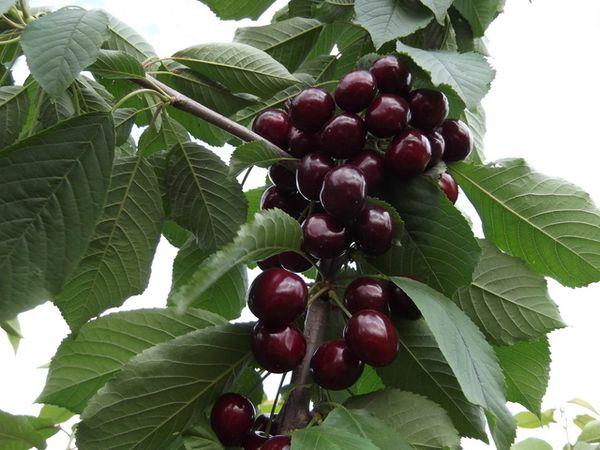
Juicy berries are also used to make juices, nectars, homemade wines and liqueurs, make jams and preserves, and add them to confectionery and dairy desserts.
To preserve cherries for a long time, the berries are dried, frozen or canned.
Pollinators
Any fruit or cherry variety with similar flowering times is suitable as pollinators for the Bull's Heart cherry. However, to ensure a high-quality and abundant harvest, it is recommended to plant trees of specific varieties.
Tyutchevka
The Tyutchevka cherry tree tolerates frost well and is resistant to diseases and pests. The berries ripen to a medium size, weighing up to 6 g, are dark red in color, have firm flesh, and a sweet flavor.
One plant produces 15 to 20 kg of fruit.
Iput
A popular, high-yielding cherry variety with excellent resistance to frost and disease.
The berries are large, weighing up to 9 g, dark burgundy in color, with dense pulp and a sweet taste.
A single tree produces 30 to 35 kg of ripe berries. The right pollinators are required.
Ovstuzhenka
This variety was developed by Russian breeders. Fruiting begins in the fourth year of growth and is partially self-pollinating.
The fruits are medium-sized, weighing up to 5 g, dark red in color, juicy, and sweet in taste.
This berry crop tolerates winters well and has strong immunity to certain types of fungi and pests. A single tree produces up to 15 kg of ripe berries.
Advantages and disadvantages
Before growing the Bull's Heart cherry variety, it is necessary to know all the possible advantages and disadvantages of the fruit crop.
Pros:
- High yield rates of the variety.
- Natural immunity to some types of fungal diseases and pests.
- With proper preparation, fruit trees can easily survive frosty winters.
- Relative drought tolerance.
- Appearance of fruits and taste of berries.
Important! This fruit crop produces stable, annual fruit.
Among the disadvantages, the short shelf life of ripe berries and the impossibility of transportation are particularly noted.
How to plant
To grow healthy, strong, and fruitful cherries, you need to choose the right location for planting seedlings, determine the timing of the work, and purchase high-quality planting material.
Recommended timeframes
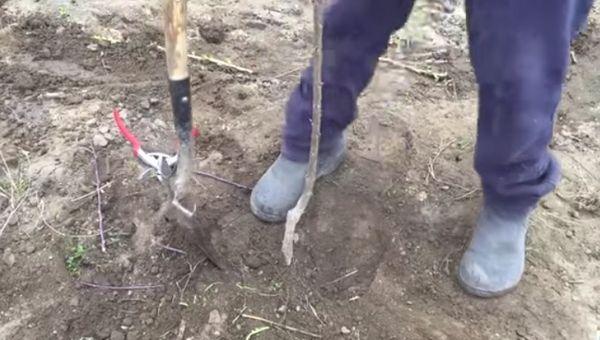
In southern regions, fruit trees are planted outdoors in the fall, 4-6 weeks before the first possible frost. This gives the seedlings enough time to root and prepare for winter.
In temperate climates, Bull's Heart cherry trees are planted in the spring to allow the trees to strengthen and grow over the summer.
Choosing a location
Light-loving cherries are planted in sunny, south-facing plots of land protected from the north wind and drafts.
The groundwater level should not be higher than 3 m, otherwise the tree roots will rot.
Lowlands and marshy areas are not suitable for growing fruit crops.
Preparing the planting hole
The Bull's Heart cherry tree is demanding when it comes to soil composition. Berry trees prefer to grow and bear fruit in fertile, loose soil with moderate acidity and moisture.
Prepare the soil 6-8 weeks before planting the seedlings.
- The selected area is carefully dug up, cleared of roots and weeds, and loosened.
- The soil is mixed with humus, organic and mineral fertilizers, and acidic soil is limed.
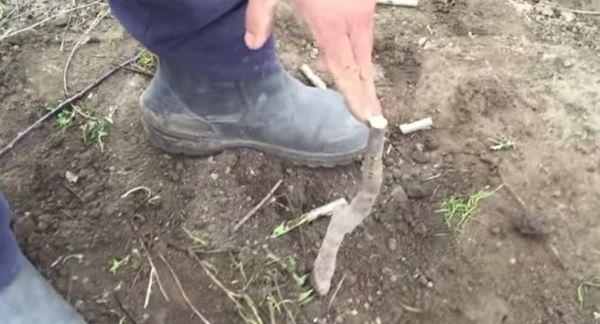
- On the prepared area, planting holes are dug with a depth and width of 70 to 90 cm.
- The distance between plants is left at least 1.5-2 m, between rows from 3 to 5 m.
- Drainage is placed at the bottom of the hole, fertile soil is poured on top, a support peg is driven in and the hole is watered.
Tip! Clayey, heavy soils should be enriched with humus and river sand; compost and peat should be added to sandy soil.
How to select and prepare planting material
It is recommended to purchase seedlings of varietal cherry species from nurseries or specialized garden centers.
- For planting in open ground, select 1-3 year old plants.
- The trunk of the seedling is straight, uniform in color, without obvious damage or disease.
- The presence of twigs, fruit buds or green foliage is required.
- The roots are moist, well developed, without damage, putrefactive deposits, compactions or nodules.
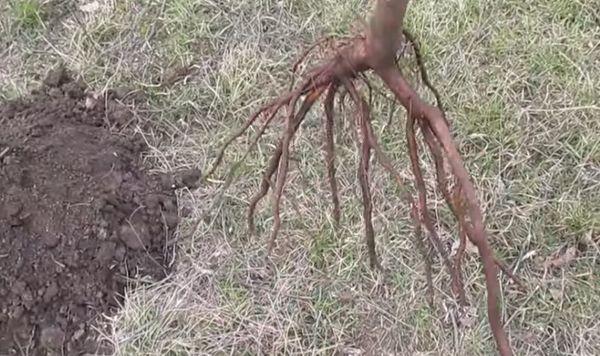 Important! Before planting outdoors, soak the seedling in a container of water for 10-15 hours. Afterward, treat the roots with a manganese solution and a growth stimulant.
Requirements for neighbors
Properly selected neighbors increase crop yields and reduce the risk of spreading diseases and pests.
The best neighbors for the Bull's Heart cherry are other varieties of the crop or cherry trees.
It is not recommended to plant apple trees, pears, gooseberries, raspberries, tomatoes and peppers next to cherries.
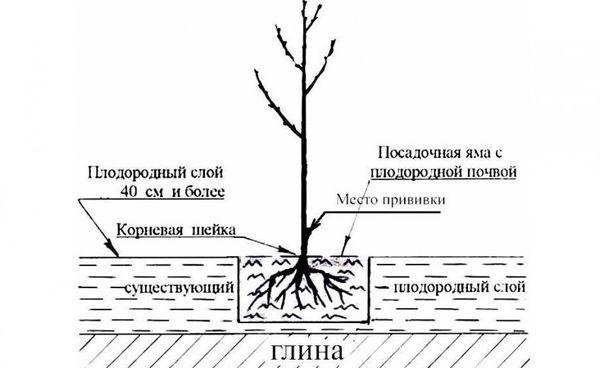
Planting diagram
Fruit trees are planted in dry, warm weather.
- Prepared seedlings are placed in the center of the planting hole.
- The roots are evenly distributed in the hole and covered with fertile soil.
- The soil is compacted from above, the seedling is tied to a peg and watered generously.
After planting, the tree trunk circle is mulched with humus or peat mixed with sawdust.
Care Features
The Bychye Serdtse cherry variety is easy to care for. Standard cultivation practices are followed for this fruit crop.
Watering mode
In a temperate climate, trees are watered as needed, and during prolonged rainfall, watering is avoided altogether.
In the southern regions, fruit crops are irrigated once every 3-4 weeks; young trees require more frequent watering.
Note: Irrigation is especially important during cherry blossom and fruit set.
Top dressing
For a fruit-bearing tree, additional feeding and fertilizers are important.
- With the onset of spring, trees are fed with ammonium nitrate.
- Once the berry harvest has been collected, the cherry tree needs mineral fertilizers.
- In autumn, trees are fertilized with organic matter.
Also, before wintering, a balanced mineral complex is added to the soil, which will nourish the cherry tree roots during the winter period.
Crown formation
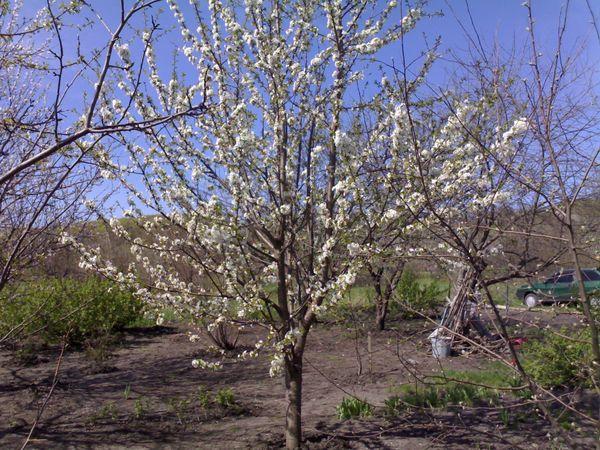
Proper formative pruning can increase fruit yield. Crown shaping begins in the tree's second year of growth. Pruning is performed in early spring, before the growing season begins. Each year, a tier of 5-7 of the strongest and healthiest skeletal branches is left on the main trunk, and the rest are pruned. By the age of five, the crown is fully formed.
Preparing for winter
With the onset of autumn, the cherry trees are prepared for winter dormancy.
- The trees are watered generously, with up to 100 liters of water poured under each plant.
- The tree trunk circle is thoroughly cleared of debris and weeds, loosened and
lay out a thick layer of humus mulch.
- The lower part of the trunk is wrapped with a net or burlap, thus protecting it
trees from small rodents and animals
- In cold winter conditions, the rhizomes are additionally protected with spruce branches.
- Young seedlings are covered with special materials.
Tip! As soon as the first snow falls, rake a large snowdrift under the tree.
Sanitary pruning
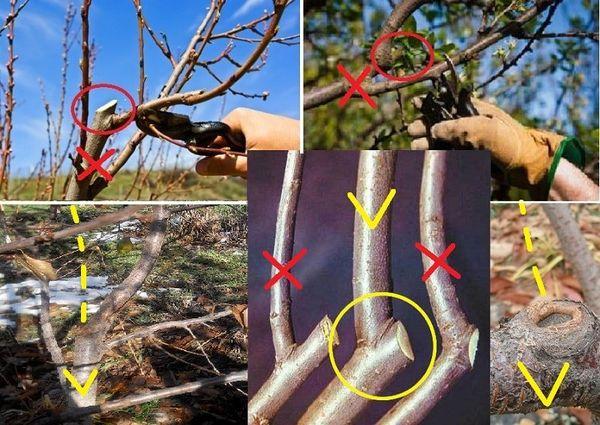
During sanitary pruning, broken, dried, diseased, and pest-infested branches and shoots are removed. Also pruned are frozen, abnormally growing, and old, non-fruiting branches.
Weeding and loosening
Weeding around the tree trunks is carried out as needed. Weeds are carriers of diseases and pests, so weeding the soil under trees protects fruit crops from potential damage.
Loosening the soil is done after watering, which allows moisture to penetrate to the plant roots more quickly.
Spring processing
In early spring, sanitary pruning, the first feeding, and preventative treatment of cherry trees are carried out by spraying the trees with copper sulfate.
Diseases and pests
With proper and timely care, fruit trees develop a natural resistance to diseases and pests. Failure to do so can lead to damage from fungi, viruses, and harmful insects.
Clusterosporiasis
Clasterosporium, or holey spot, affects flowers, buds, leaves and branches of the plant.
To combat fungal infections, fungicides and copper sulfate solutions are used.
Gray rot
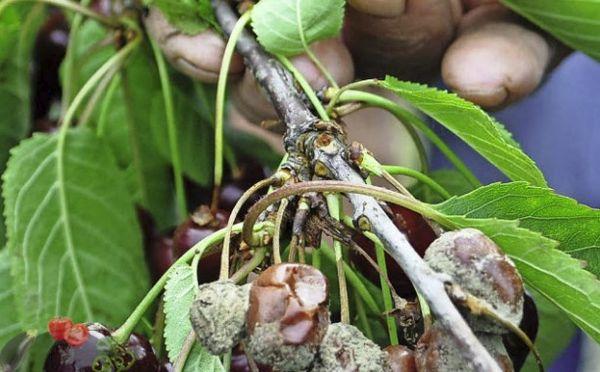
Moniliosis affects the fruit and leaves of the tree, appearing as burnt spots and a gray coating. Copper-containing fungicides are used to prevent and treat this fungal disease.
Verticillium wilt
Fungal infections manifest as wounds on the tree bark and wilting of flowers. Damaged bark is treated with special products, and the plant is sprayed with fungicides or a copper sulfate solution.
Hawthorn
This small butterfly poses a threat in its caterpillar stage, devouring everything in its path. Insecticides are used to control the pest.
May beetle larvae
The pest spreads deep into the soil, attacking plant roots. To control cockchafer larvae, deep soil loosening and insecticide treatments are performed.
Cherry fly
The cherry fruit fly appears in the spring. The pest feeds on the sap of green leaves, and as soon as the fruit appears, the fly lays its larvae on them. The larvae develop inside the berries as white worms.
To prevent and control the pest, insecticides are used by spraying the trees and the soil underneath them.
Bud weevil
The pest feeds on the leaves, buds, flowers and fruits of the cherry tree, spreads quickly and affects the entire tree.
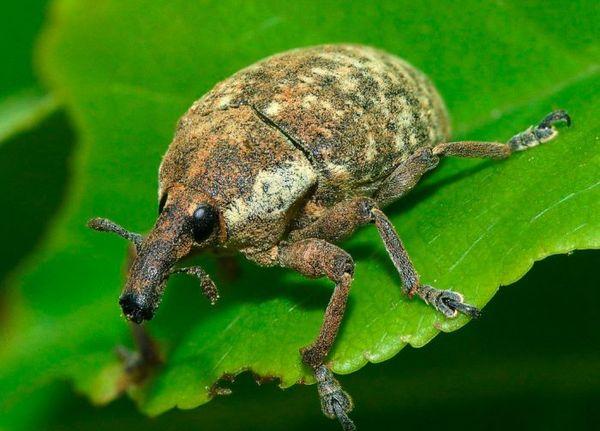
For prevention and control, trees are treated with biological or chemical professional agents.
Harvesting and storage
The ripening of the Bull's Heart cherry depends on the climate of the growing region. When harvesting, the berries are carefully picked, stems included. The cherries of this variety are very large, but due to their thin skin, they burst with the slightest force.
The harvested berries are laid out on a flat surface and sorted. Any bruised or damaged fruit is eaten or processed immediately. Whole berries are placed in special containers or boxes in the refrigerator, where they are stored for no more than 3-5 days.
To increase shelf life, berries are dried or frozen.
Related posts:
 Planting and caring for cherries, feeding and growing rules
 Descriptions of the 20 best cherry varieties for the Moscow region, their planting and care
 Description and cultivation of the Bryansk pink cherry variety, pollinators
 Description and characteristics of the Valery Chkalov cherry variety, planting and care
 The health benefits and harms of cherries, rules of consumption, and their effects on the body
 Description and characteristics of the Tyutchevka cherry variety, planting and care
 Description of the Iput cherry variety, planting and care features
 Description and characteristics of the Veda cherry variety, planting and care scheme