
The Chocolate Amazon tomato is a collectible exotic variety. It belongs to the aronia group, although its coloring is closer to brown. Chocolate Amazon tomatoes may not be everyone's cup of tea, but connoisseurs of unusual varieties are captivated by this beautiful new variety.
General characteristics of the plant
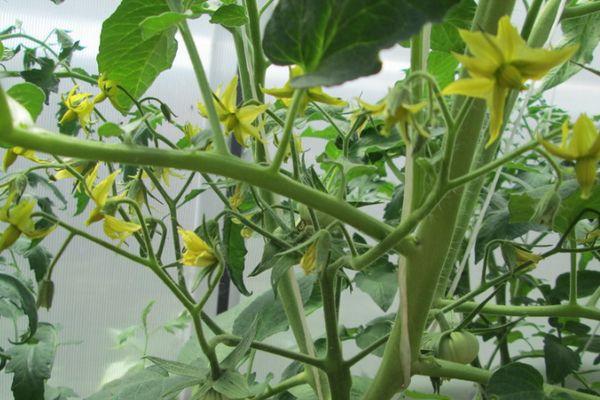
Indeterminate, tall-growing bushes can reach 2 meters in greenhouses, but can reach 1.5 meters in open ground. It is recommended to artificially restrict the growth of tomatoes starting in mid-August. Only then will the ovaries that form during this time be able to fully mature, and the grower will not lose part of the harvest due to the inability to harvest the remaining tomatoes at technical maturity.
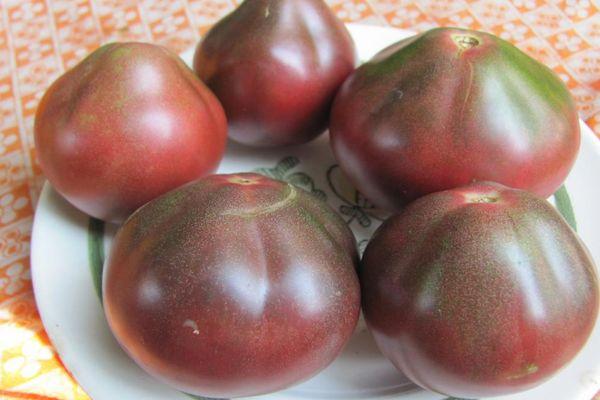
The Chocolate Amazon tomato variety is considered a mid-season tomato. The first ripe fruits appear in mid-July, with the main fruiting period beginning 1-2 weeks later. In regions with challenging climates, it's best grown in a greenhouse.
Planting mature seedlings is convenient for open ground, but in a cold, rainy summer, most tomatoes will not have time to ripen. Tomatoes are harvested at technical maturity and then ripened artificially indoors.
Chocolate Amazon tomatoes should not be confused with the early-ripening hybrid with a similar name. The Amazon F1 tomato differs in fruit shape and color, bush type, and yield.

The Chocolate Amazon variety is resistant to late blight in years of low prevalence, but if the disease hits tomatoes in cold seasons, fungicides will need to be applied to preserve the harvest. Tomatoes are resistant to greenhouse fungal infections, but are not immune to brown leaf spot.
Reviews from gardeners who have already grown this variety note the high yield of Chocolate Amazon. Each bush can yield up to 6-7 kg of marketable produce per season. These plants should be trained into 2-3 stems, and must be tied to a support.
Characteristics of the Chocolate Amazon fruit
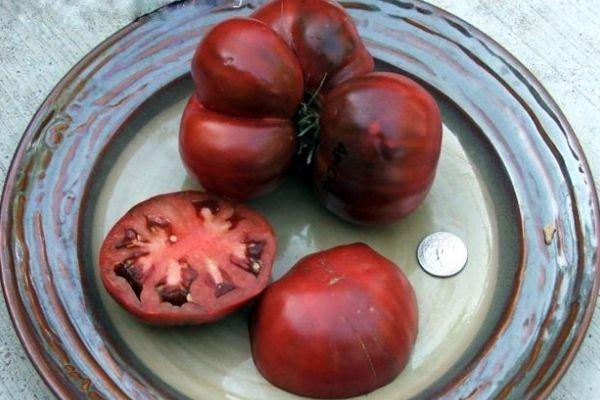
A cluster produces 5-6 fairly large fruits. A single tomato can weigh up to 250 g, but the largest ones grow to 300-350 g. The shape is flattened and round, with pronounced ribbing. Some fruits may be oval.
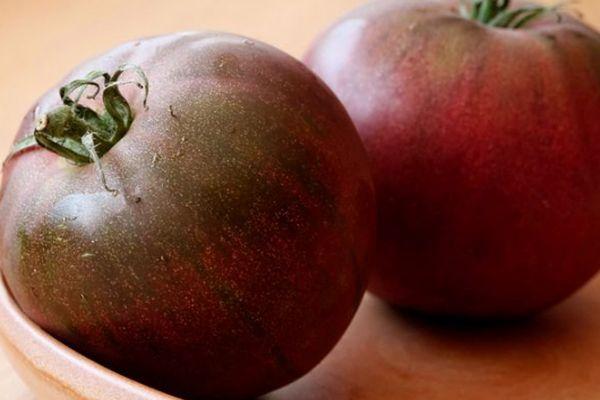
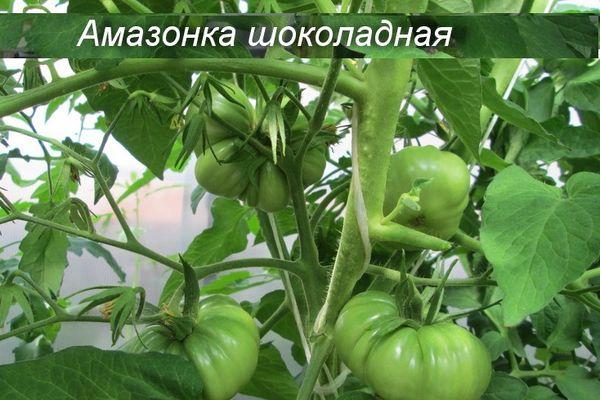
The skin of the fruit is quite strong but thin. Chocolate Amazon tomatoes do not crack even when exposed to excess moisture. The color of a ripe tomato is dark burgundy or brownish, darkening toward the base. At commercial maturity, tomatoes are pale green with a dark green, diffuse spot at the base of the fruit.
The flesh is grainy when cut, has a pleasantly tender texture, and is very juicy. Chocolate Amazon tomatoes are classified as beefsteak tomatoes, with numerous small seed chambers around the cut and a uniform, fleshy core. The flesh is a rich red, uniform color, with no white spots in the center.
Gardeners' descriptions of tomatoes also highlight their flavor, rating them 4.5-5 on a scale of 1-5. Some growers note that with excess moisture and insufficient sunlight, fruits may have a more tart taste than those grown in good conditions. General flavor characteristics include sweetness, a piquant tartness, and a pleasant aroma.
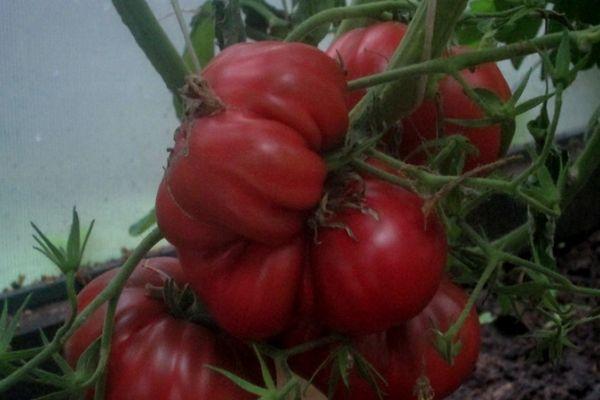
This variety is best eaten fresh. The vibrantly colored tomatoes add a vibrant flavor to any salad or platter containing slices. Their sweet flavor pairs well with cucumbers and bell peppers, and is also suitable for salads with meat ingredients. The aromatic fruits are ideal for gazpacho, and the vibrant flesh complements vegetable caviar well.
Beef tomatoes are suitable for making sandwiches and hamburgers, and look unusual when used in gourmet appetizers.
Tomatoes are also suitable for processing into juice and sauces. The unusual skin coloring doesn't affect the quality of these products, as the flesh is a traditional red. However, the higher pulp content in the pulp allows for a thick juice with a rich, full-flavored flavor without the need for long simmering or adding sugar. The flavor of tomato paste made from this variety is close to that of the best Italian varieties.
Agricultural technology of the variety
To harvest outdoors in central Russia, it is recommended to sow seeds for seedlings 90 days before transplanting into the garden. When using a greenhouse, seedlings can be planted at 60-70 days old.
For sowing, use a loose, fertile substrate made from equal parts sand, humus, and garden soil. It's a good idea to add some ground chalk or eggshells (2 tablespoons per 10 kg of potting mix) to the soil. To kill fungal and bacterial spores, place the soil in boxes and soak it in a hot solution of potassium permanganate.
If you grew the seeds yourself, it's also a good idea to disinfect them by soaking them in a lukewarm pink solution of potassium permanganate for 30-40 minutes. Afterward, drain the water and dry the seeds briefly on paper.
Don't plant the seeds too deeply; simply spread them over the surface of the damp, cooled soil in the box, then add 0.5 cm of dry sand or potting mix on top. Cover the box with plastic wrap with 2-3 holes to retain moisture. Germinate the seeds in a warm place (+25°C).
When 2-3 leaves (not cotyledons) appear on the seedlings, the tomatoes can be transplanted into separate pots. To prevent the seedlings from becoming too tall during cultivation, they are given a well-lit place near a southern window, and if there is insufficient light, they are provided with supplementary lighting using phytolamps. Care consists of timely watering: the soil in the containers should not dry out.
The permanent location is set for planting in mid-May (in a greenhouse) or early June (outdoors). Three to four plants are planted per square meter, with supports immediately installed. If the seedlings have become elongated, they are planted horizontally, laid in 15-20 cm deep grooves. The tops, with four to five leaves, are left above the surface. Tomatoes can be tied to supports approximately one week after planting.
Related posts:
 Description of the best varieties of black tomatoes for open ground and greenhouses
 Description and general information about chocolate mint, planting and care
 What varieties of tomatoes are best to plant in a polycarbonate greenhouse?
 The best tomato varieties for growing in the Leningrad region for greenhouses and open ground
 The 42 Best New Year's Dessert Recipes for 2020
 Description of the best tomato varieties for open ground in the central zone
 16 Best Quick Pickled Tomato Recipes for the Winter
 The best and most productive tomato varieties for greenhouse cultivation in the Urals, with descriptions
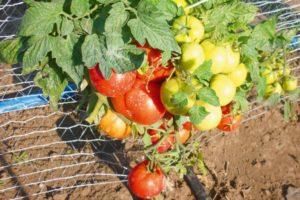
I've been planting this variety for three years now—it's simply superb, delicious, meaty, and I don't know how it can be preserved; we eat it all fresh. But I noticed the fruits got much larger, and the plant itself became more resilient, when I started feeding it. BioGrow.