
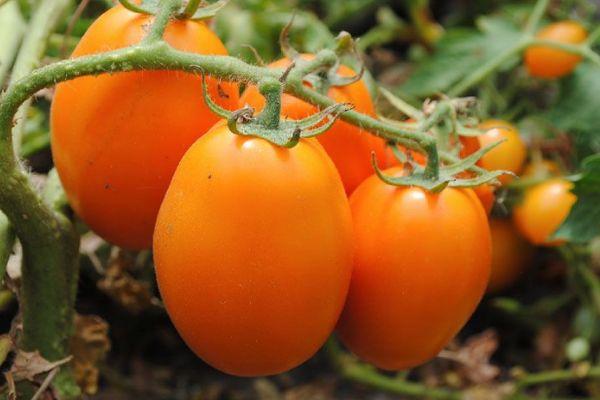
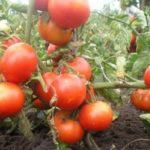
The Elisey tomato, the characteristics and description of which are presented below, is a very early-ripening variety. Its distinctive orange color and excellent flavor make it a unique variety. These tomatoes fit perfectly into small containers for canning.
Biological indicators of culture
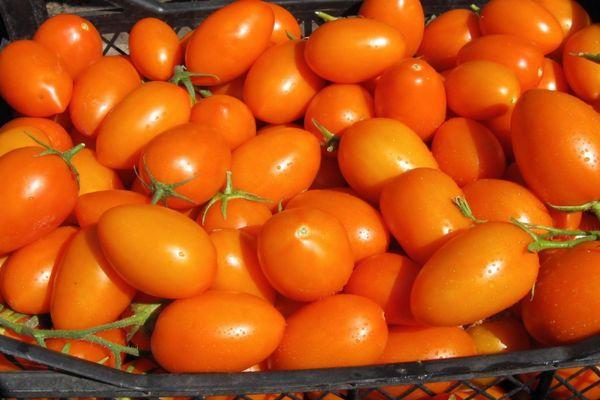
The Elisey tomato has excellent pickling potential. Its small fruits can be preserved whole, in salads, or in assorted dishes. The plant is very easy to care for, as the maximum height of the bushes is barely 80-100 cm. On average, the first harvest is 100 days after germination.

The plant is resistant to fusarium and verticillium wilt and is undemanding of weather or greenhouse conditions. Its cold tolerance allows for early planting in open ground and an extended growing season.
The determinate type of bush results in the formation of numerous lateral shoots. Therefore, side shoots must be frequently pruned. Otherwise, they form clusters with ovaries, which, without thinning, produce very small, substandard tomatoes. Since the leaf surface is small, it does not provide much shade. This is precisely what ripening tomatoes need, as the more sunlight they receive, the brighter their color.
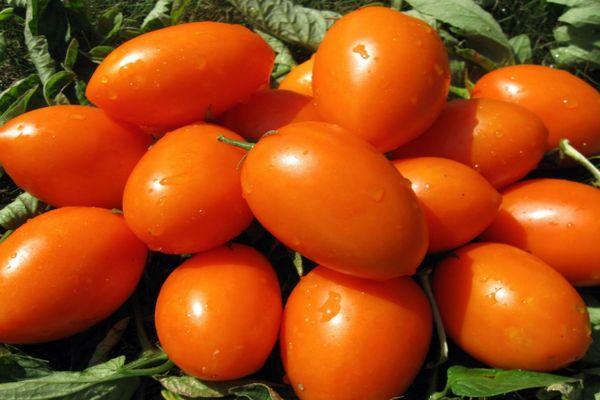
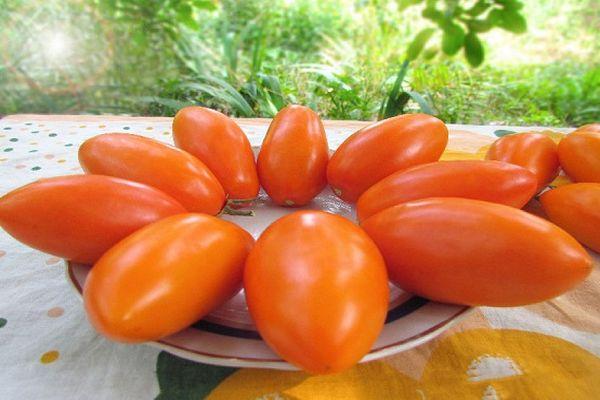
These tomatoes have a distinctly elongated oval shape and firm flesh. Additionally, the Yelisey tomato is characterized by:
- a small number of seed chambers - 2-3 pcs.;
- fruit weight - 50-60 g;
- number of harvests during the growing season - 4-5;
- yield - up to 3 kg per plant.
The large amount of carotenoids included in the composition allows this variety to be classified as a dietary product.
Planting seeds in trays should be done very early, no later than the end of February, or better yet, mid-February. The Elisey tomato thrives in heavy, highly productive soils. Sow seeds at a depth of 2-3 cm. Pricking out can be done when one or two true leaves appear.

After the seedlings emerge, thin them out, removing the weakest and most unviable shoots. During growth, the plants need to be hardened off by ventilating the room they are in. This hardening-off procedure should be carried out a week to a week and a half before planting outdoors.
The optimal temperature for growing seedlings is within +18°C, but not below +16°C. March is characterized by a high number of cloudy days. Therefore, the lack of natural light is easily compensated for by special plant lights. To increase yield, tomatoes are watered with liquid humic fertilizer every two weeks.
Transplanting young shoots
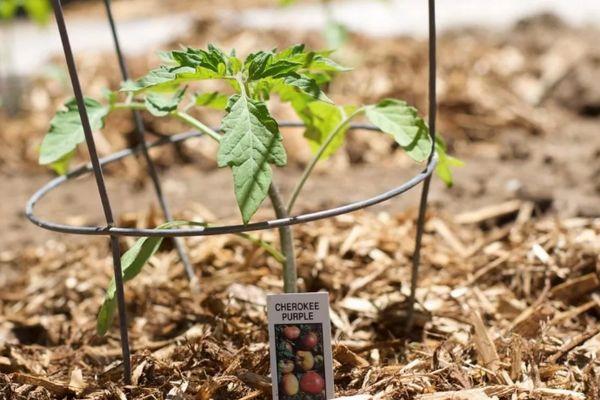
In central Russia, the first consistent warmth with minimal risk of returning night frosts begins in early May. At this time, gardeners begin transferring seedlings under plastic covers. This allows them to open the covers in good, warm weather and protect the crop from inclement weather in cold weather. When growing tomatoes without seedlings, the area containing the sown seeds is covered with plastic.
The advantages of this method are as follows:
- reducing labor intensity;
- formation of larger bushes with a powerful root system and aboveground part;
- the appearance of fruits with uniform shape and close weight values;
- ripening up to 60 fruits on 1 plant.
Reviews from gardeners indicate the variety's high yield, even under unfavorable weather conditions, provided all agricultural practices are followed.
The bush placement pattern corresponds to a distance of 40 to 50 cm between them. The same distance should be maintained between rows.
An ideal fertilizer is a mullein infusion, using the following ratio: 2 kg of fresh fertilizer per 10-liter bucket of water. The mixture is left to steep for one week. After this, it can be diluted up to seven times.
For 1 bush, 1.5-2 liters and 3-4 feedings at intervals of 2 weeks are enough. For watering, use only warm and settled water, if it is from the tap.
Thanks to its nutritional qualities, tomatoes are suitable for those diagnosed with high stomach acidity when eaten fresh. The carotenoids in the pulp naturally reduce digestive secretions. The high level of simple sugars ensures good preservation properties. Therefore, tomatoes remain mold-free for a long time when pickled in barrels.
Related posts:
 The best eggplant varieties for growing in a polycarbonate greenhouse: planting and care
 Description of the best varieties of black tomatoes for open ground and greenhouses
 Description of the best Dutch tomato varieties for greenhouses and open ground
 Description of the best tomato varieties for pickling and canning
 Description of blight-resistant tomato varieties for open ground and greenhouses
 Description of the best tomato varieties for greenhouses in the Kirov region
 Description and characteristics of non-stepsoning tomato varieties for open ground and greenhouses
 A review of the best tomato seed varieties for open ground in the Rostov region