
The Favorite tomato, described below, belongs to a group of first-generation hybrids with a mid-season ripening period. Favorite f1 is included in the State Register of Russian vegetable crops grown in greenhouse blocks, plastic shelters, and open fields. In the northern regions of the country and in the vast expanses of the central zone, heated greenhouses and hotbeds are used when cultivating this variety. In the southern regions of Russia, Favorite tomatoes are grown in open ground.
The tomato is eaten fresh and used to make sauces, pastes, ketchups, and lecho. Whole Favorit tomatoes are not suitable for pickling.
Technical data of the plant and fruit
The characteristics and description of the tomato variety Favorite are as follows:
- The plant's growing season, from sowing seeds to producing full-sized fruits, lasts 110-120 days. The first harvest is collected in late August.
- The height of a mature bush ranges from 150 to 160 cm. Unlike varieties such as cherry tomatoes, Favorit rarely produces side shoots. If they do appear, they quickly die off.
- The ovary develops above the 7th leaf. Subsequent inflorescences form in increments of 3 leaves.
- Tomatoes have relatively small, fairly compact clusters. Each cluster produces up to six berries.
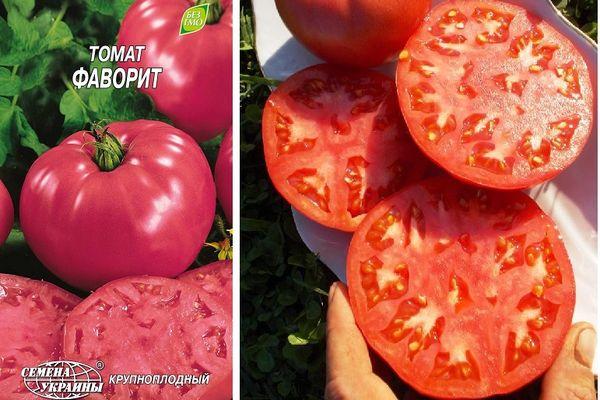
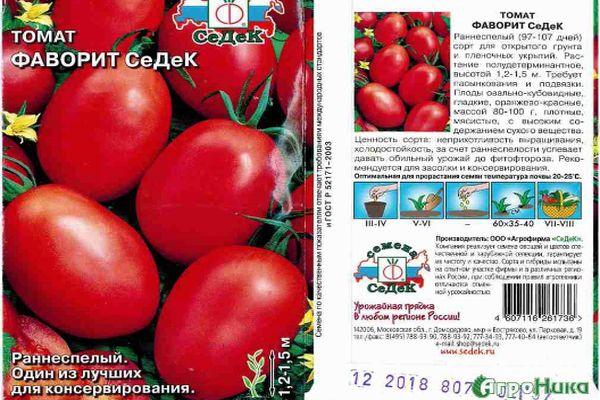
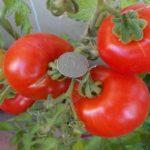
- Description of the shape of the fruit: they resemble a ball, flattened at the poles.
- The weight of one hybrid fruit ranges from 0.2 to 0.35 kg. Ripe tomatoes are red. Unripe berries have a dark spot near the stem and are colored dark green. The skin is smooth; there are no ribs on the surface of the tomato. A small indentation sometimes forms near the stem.
Reviews from farmers whose favorite tomato (Favorita f1 is truly beloved) indicate yields of up to 18-20 kg of fruit per square meter of garden bed. This can be achieved with 3-4 plants per square meter. A mature bush produces 5-7 kg of berries.
<span data-mce-type=”bookmark” style=”display: inline-block; width: 0px; overflow: hidden; line-height: 0;" class="mce_SELRES_start"></span>
According to gardeners, this tomato has a stable yield throughout the entire fruiting period. Strong immunity is also considered a virtue of this variety: Favorit tomatoes are resistant to fusarium, cladosporiosis, or tobacco mosaic virus. Furthermore, the plant can grow successfully in the shade.
A drawback of this variety is the inability to store the berries for more than 10 days. The bushes must be tied to trellises or supports. Transporting the harvest is very difficult, as the berries' thin skin causes them to crack at the slightest mechanical impact.
Obtaining seedlings in a private garden
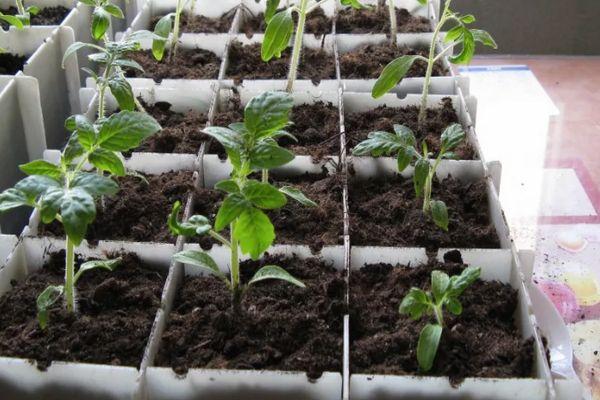
The seeds are disinfected with potassium permanganate or hydrogen peroxide. They are planted in containers filled with special tomato soil. Water them once a day with a small amount of warm water. The first sprouts appear in about 5 days. They are fed with organic and nitrogen mixtures. After 1-2 leaves appear, the seedlings are pricked out.
When growing seedlings, the room containing the plant trays must be maintained at the appropriate humidity and temperature. Transplanting is done when warm weather sets in. This typically occurs in the last ten days of May, and in some regions, as early as June.
Before planting seedlings in permanent soil, the soil is loosened and disinfected with potassium permanganate. Shallow trenches are then dug and nitrogen and organic fertilizers are added. The seedlings are planted in 0.5 x 0.5 m grids and tied to supports.
Form a single-stemmed bush. Planting is recommended in loamy soil on the south side of the plot, preferably on a raised platform.
Caring for plants before harvest
Water the tomato plants twice every 7 days. Avoid stagnant water around the roots, as this will cause plant death and crop loss. Water the seedlings with warm water. This should be done early in the morning before sunrise or late in the evening.
If the bushes are planted in a greenhouse, it's recommended to regularly ventilate the space. This helps control some garden pests and regulates humidity and temperature.
Loosen the soil under your tomato plants once a week. This allows oxygen to reach the plant's roots. This strengthens the entire root system and accelerates the ripening process.
Weeding the garden eliminates the risk of late blight and other tomato diseases. It also helps eliminate some root-dwelling pests.
Favorit is fertilized three times per season. Initially, nitrogen fertilizers are used to accelerate bush growth. After fruit sets, the plants are fed with potassium mixtures. Once fruit appears on the branches, the tomato is fed with phosphorus and organic fertilizers or complex mixtures. Garden pests are controlled with chemicals.
Related posts:
 Description of the best tomato varieties for pickling and canning
 Description and characteristics of the best indeterminate tomato varieties for greenhouses
 Description of the best varieties of black tomatoes for open ground and greenhouses
 Description of the best Dutch tomato varieties for greenhouses and open ground
 Characteristics and description of pepper-shaped tomato varieties, yield and cultivation
 Description of blight-resistant tomato varieties for open ground and greenhouses
 Description of the best tomato varieties for greenhouses in the Kirov region
 Characteristics and description of the Sprut tomato variety, yield and cultivation