- What is included in the composition and existing forms of release
- Operating principle and purpose
- Calculation of consumption and rules of use
- Flower crops
- Sugar beet
- Apple tree, pear tree
- Ornamental shrubs
- Potato
- Grape
- Application for roses
- Precautionary measures
- Possible compatibility
- Storage conditions
- Analogues
- Its differences from the "Skor" product
When choosing a fungicide for their garden, many gardeners prefer products that are suitable for use on most fruit plants. One such product is the fungicide "Discor," which is used not only on seedlings but also for pre-sowing seed treatment. The manufacturer's instructions explain how to properly prepare the solution and the recommended application rates.
What is included in the composition and existing forms of release
This fungicide, which has complex and systemic effects, contains one active ingredient, difenoconazole, which belongs to the triazole class of chemicals. One liter of the chemical contains 250 grams of the active ingredient.
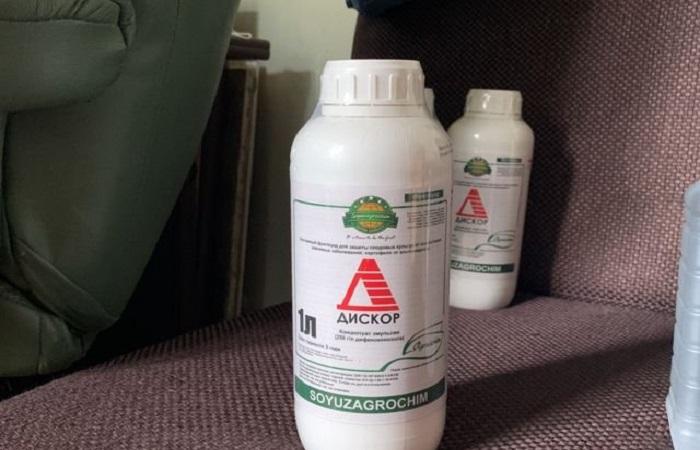
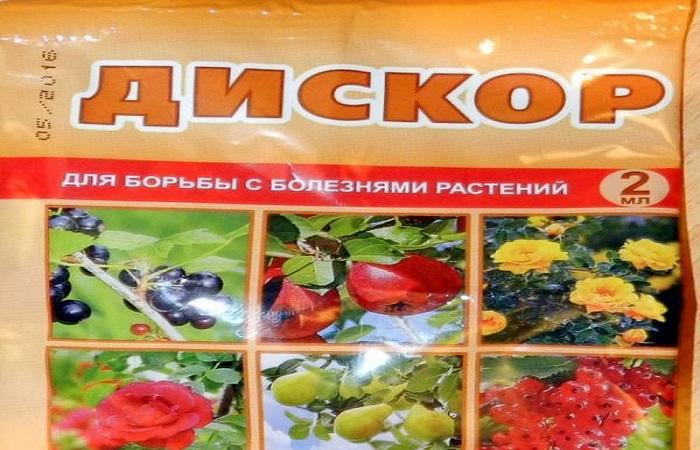
The fungicide "Discor" is available commercially as an emulsifiable concentrate packaged in 10 ml bottles and 2 ml ampoules. These packaging options are used by flower growers for treating houseplants and by gardeners for use in small garden plots. Farmers prefer 1- and 5-liter plastic canisters. The fungicide is manufactured by the domestic company "Agruskhim" LLC.
Operating principle and purpose
The chemical product "Discor" is designed to protect fruit crops from diseases. Plants suitable for this fungicide include fruit trees, berry bushes, vegetable crops, and ornamental plants, both indoors and outdoors. The product is applied not only to the foliage but also to soak seeds before planting, treat tubers and bulbs, and water the soil in pots.
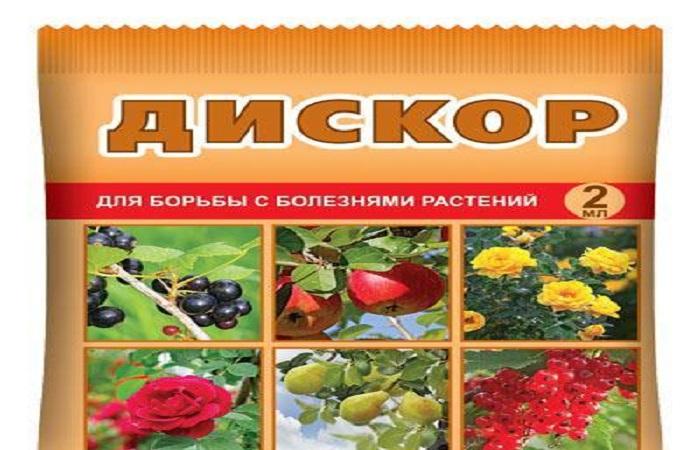
The fungicide "Discor" effectively kills pathogens that cause diseases such as powdery mildew and gray mold, powdery mildew and early blight, leaf curl and coccomycosis, various types of spotting, and scab. The active ingredient in this chemical works as follows:
- After treatment, difenoconazole quickly spreads throughout all plant tissues;
- after this, it begins to disrupt the permeability of the cell membranes of the mycelium;
- Under the influence of the active component, sporulation ceases and the mycelium dies.
Those gardeners and farmers who have already used the fungicide "Discor" on their crops have highlighted several advantages of the chemical.
They cite the following points as advantages of the plant protection product:
- the speed of penetration of the active substance into the tissues of treated crops and the onset of a destructive effect on pathogens - for this it only needs 2 hours;
- the possibility of using the fungicide for many cultivated and ornamental plants;
- a wide range of pathogens against which the domestic drug is effective;
- the possibility of using it for both treatment and prevention of diseases at all stages of plant development, from seeds to adult crops that have entered the fruiting period;
- the effectiveness of the chemical at temperatures above 15 degrees;
- the possibility of use with the main part of fungicidal preparations in tank mixtures after conducting a chemical compatibility test;
- absence of phytotoxicity when the application rates and frequency of treatments are observed;
- increasing the yield of fruit crops and preventing the development of diseases during storage in the winter.
Calculation of consumption and rules of use
The instructions supplied by the manufacturer with the fungicide indicate the application rates for each plant species and the best time to apply the product.
Flower crops
Flower crops are treated with a chemical against powdery mildew and gray mold. Treatments are administered at two-week intervals when the first signs of disease appear. To kill powdery mildew pathogens, dissolve one ampoule of the product in 10 liters of settled water. For gray mold, use two ampoules of 2 ml each. This amount of working solution is sufficient to treat 100 square meters of flowerbed.
Sugar beet
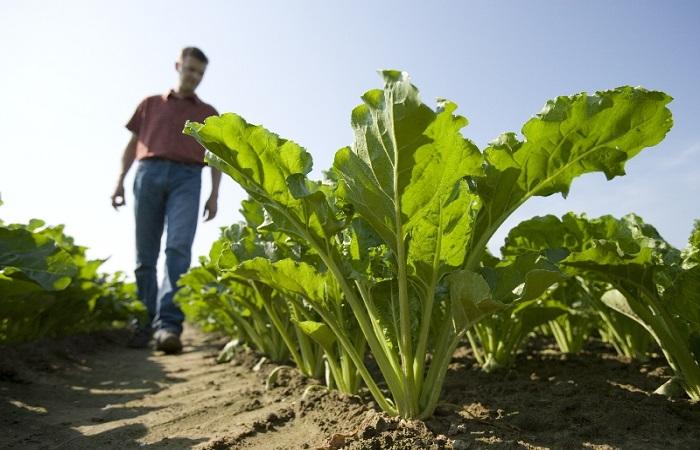
To combat bacterial leaf spot and Alternaria, use a dosage of 4 ml (2 ampoules) per 10-liter bucket of water. Apply the prepared solution to the beds twice, separated by a 14-day interval. It's best to apply this solution in the morning or evening, out of direct sunlight.
Apple tree, pear tree
To treat fruit trees against powdery mildew and scab, use a dosage of 2 ml per 10 liters of water. Apply before and after flowering, keeping a two-week interval. Pour 2 to 5 liters of the solution under each tree, depending on the age of the tree. To treat Alternaria blight, use a dosage of 3 ml per 10-liter bucket of water.
Ornamental shrubs
Ornamental shrubs in the garden are often affected by various types of spotting and powdery mildew. To kill the pathogens, prepare a working solution of 10 liters of settled water and 5 ml of fungicide. This amount of solution is sufficient to treat 100 square meters of garden space. A maximum of four treatments are allowed per growing season, with two-week intervals between each.
Potato
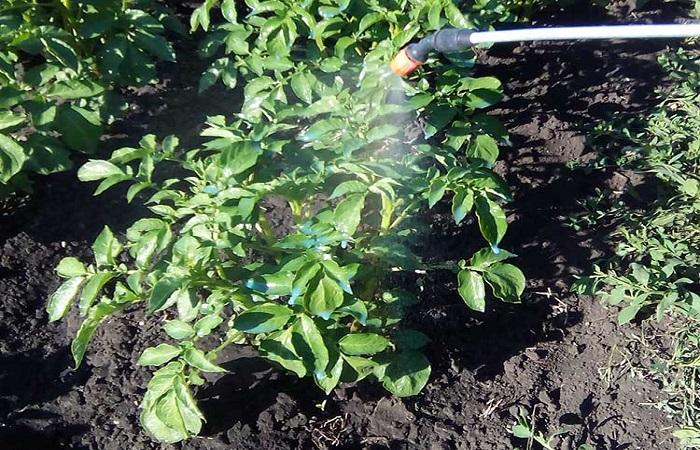
Potato plantations are sprayed with a working solution consisting of 4 ml of the chemical and 10 liters of water. A minimum of 14 days must be allowed between treatments.

Grape
Black spot, rubella, and powdery mildew of grapes are treated with a working solution consisting of 10 liters of settled water and 4 ml of fungicide. Vineyards are sprayed twice per season, with 14 days between treatments.
Application for roses
The solution used for roses depends on the specific problem. For black spot, add 5 ml of the solution to a 10-liter bucket of water. For powdery mildew, add only 2 ml (1 ampoule) to the same amount of water. Apply twice, two weeks apart. Use 10 liters of the solution per 100 square meters.
Precautionary measures
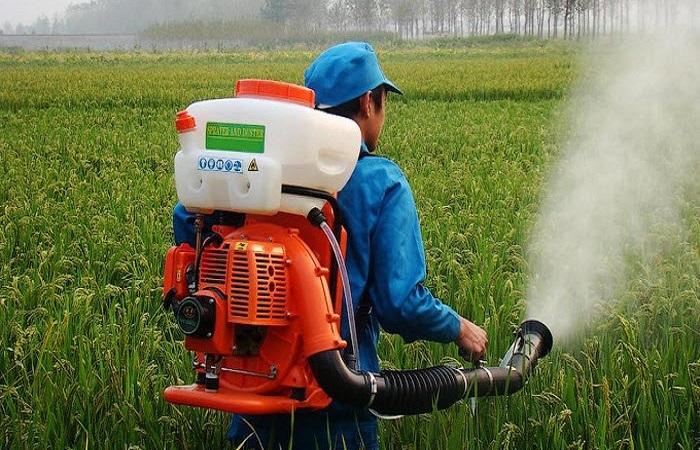
When working with chemicals, it's essential to adhere to safety precautions. Anyone spraying plants should wear protective clothing, rubber gloves, and a gauze mask or respirator. To prevent solution droplets from getting into your eyes, it's recommended to wear safety goggles. After completing all work, be sure to shower with soap.
Possible compatibility
The fungicide is approved for use with other plant protection products in tank mixes. However, a chemical compatibility test should be conducted first.
Storage conditions
The product's shelf life is 3 years if stored properly. Store in a separate, inaccessible location, away from children and sunlight.
Analogues
If necessary, “Discor” can be replaced with such analogues as “Chistotsvet”, “Skor” or “Raek”.
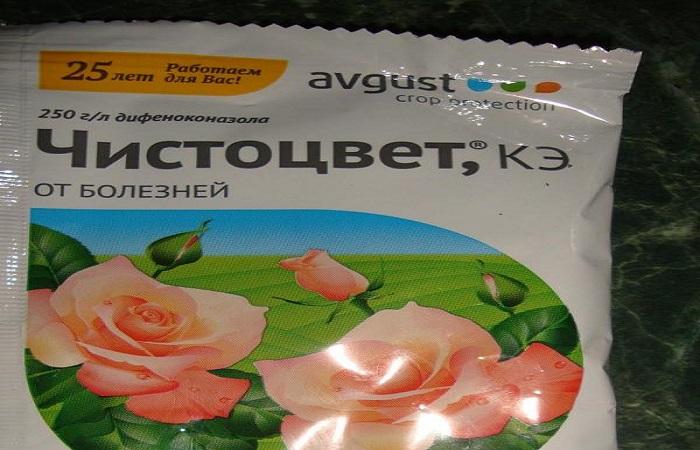
Its differences from the "Skor" product
The described preparation differs from the fungicide "Skor" only in its manufacturer: "Diskor" is produced by a domestic company, while "Skor" is produced by a Swiss company.
Related posts:
 Types of garden fungicides and descriptions of the top 24 best, instructions for use
 Causes and treatment of eggplant pests and diseases, how to combat them at home
 Instructions for using Fitosporin for cucumbers and processing rules
 Types of fungicides for cucumbers in a greenhouse and instructions for use
 Instructions for use of Gliocladin and the composition of the fungicide, application rates
 Instructions for use of the fungicide Topaz for plants, composition and analogues
 Instructions for use of Fitosporin for grape diseases and dosage
 Instructions for use and composition of the fungicide Teldor, application rates