
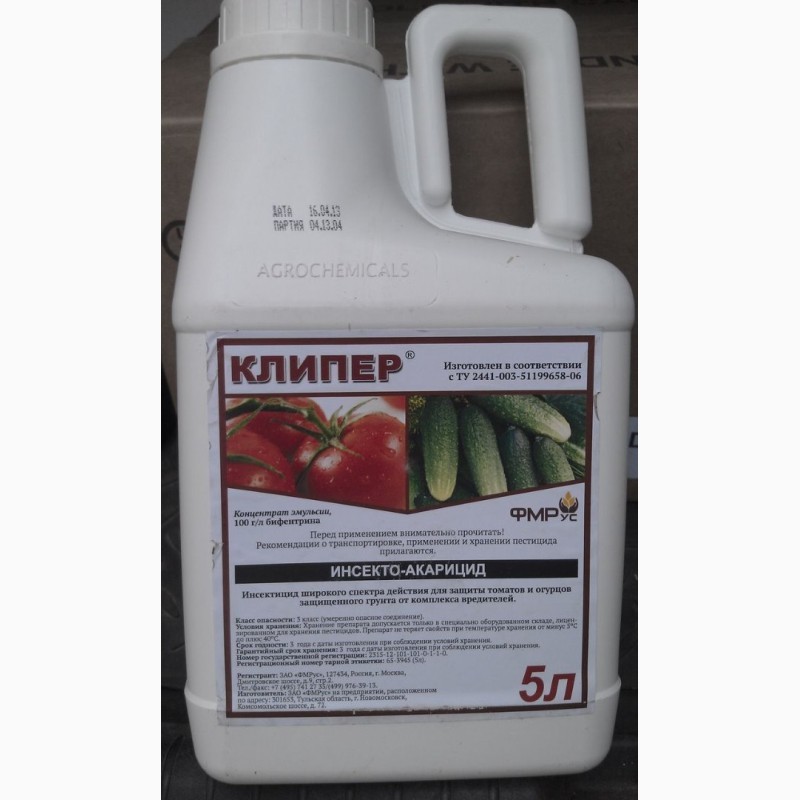
Clipper insecticide is a unique product that helps address a wide range of issues related to protecting a variety of agricultural crops from pests. It effectively controls a wide range of insects and protects plants from mites. Its effectiveness lasts for 2-3 weeks. To eliminate pests, follow the instructions carefully.
Active ingredient and dosage form
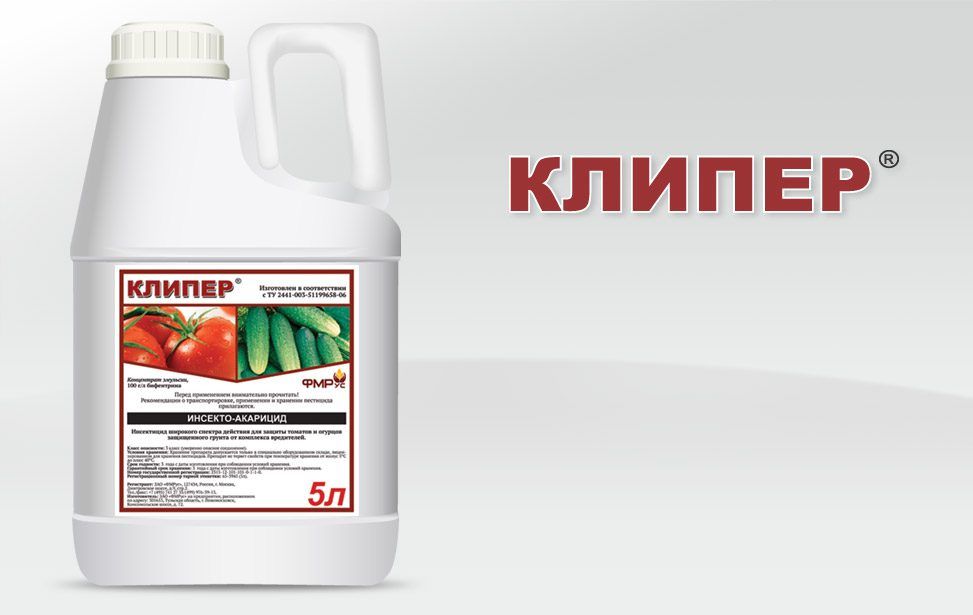
The active ingredient of this product is bifenthrin, a synthetic pyrethroid. One liter of the product contains 100 grams of the active ingredient. The product is available as an emulsifiable concentrate. It is sold in 5-liter canisters and 1-liter bottles. To make a working solution, the concentrate is mixed with water in the required proportions.
Mechanism of action
Clipper works as a contact and stomach insecticide. Its active ingredient paralyzes the parasites' nervous system and immediately stops feeding. This is especially important for protecting greenhouse vegetables, as it helps maintain their quality and appearance.
Thanks to its broad spectrum of action, protecting plants from a range of pests is significantly simplified. Furthermore, Clipper indirectly reduces crop disease. It effectively combats pests that attack foliage and fruit, creating conditions conducive to secondary fungal infections.
The main advantages of the drug include the following:
- Economical consumption, since the product is capable of simultaneously affecting a whole range of parasites.
- Low toxicity to humans and warm-blooded animals.
- There is no risk of penetration into crop cells. Therefore, the active substance does not accumulate in the vegetative parts.
- No resistance develops after pest treatment. Therefore, Clipper can be used multiple times during the season.
- Highly effective against insects that infest tree trunks. In particular, the substance successfully combats bark beetles.
- No phytotoxicity to plants being treated.
- Complex effect on different types of harmful bugs.
It's important to note that greenhouse-grown vegetables can only be treated with Clipper once per season. Under these conditions, plants are not exposed to precipitation, so the product doesn't wash off the leaves. As a result, the crops are reliably protected from pest attacks for 14-20 days.
At the same time, Clipper has virtually no drawbacks. The only drawback is the insecticide's high toxicity to beneficial insects.
Purpose
The active ingredient in this product belongs to the class of synthetic pyrethroids. It effectively controls the following pests:
- aphid;
- whiteflies;
- pliers;
- thrips.
This insecticide helps protect fruit trees and vineyards from a wide variety of pests, including spider mites, codling moths, and leaf rollers. On cereal crops, it is used to control bugs, thrips, and ground beetles. Bifenthrin is equally effective against pest larvae.
Rules of application
This product can be used as a preventative treatment for vegetables and garden crops. It helps protect plants from pest attacks. Such spraying can be carried out throughout the summer. To prevent damage to trees by stem pests, spray the plants with this product approximately 6-8 days before their mass emergence.
It's important to note that it's recommended to space treatments with the product every 2-3 weeks. The frequency of spraying is primarily determined by the number of pests on the plants. Spraying should be done in dry, windless weather. The working solution should be applied to the entire vegetative surface of the crops.
Specific dosages and rules for using the product are indicated in the table:
| Cultivated plants | Consumption rate, liters per 1 hectare | Pests | Features and time of spraying | Waiting times (number of treatments) |
| Spring and winter rapeseed | 0.2-0.3 | Cabbage moth | Treatment is carried out during the growing season. 200-300 liters of working solution should be applied per hectare. | 20 (1) |
| Soybeans | 0.2-0.3 | Spider mite | Treatment is carried out during the growing season. 200-300 liters of working solution are applied per hectare. | 20 (2) |
| Coniferous and deciduous forest-forming plants | 2-3 milliliters per 100 square meters of bark | Stem pests | Spraying harvested wood is necessary during the adult insects' flight phase. Apply 2 liters of the working solution per 100 square meters of surface area. | — (1) |
| harvested timber | 2-3 milliliters per 100 square meters of surface | Stem pests | The material should be treated during the adult insects' flight phase. Apply 2 liters of the working solution per 100 square meters. | — (2) |
Precautionary measures
The product is low in toxicity. However, safety precautions must be followed when using it. Wear protective goggles, protective clothing, and a respirator. It is important to use the product in calm weather. When working with the product, be aware of its toxic effects on bees.
What can it be combined with?
The product can be combined with pesticides and fertilizers that are neutral in reaction. However, a compatibility test should be performed before preparing a tank mix.
How and how long to store
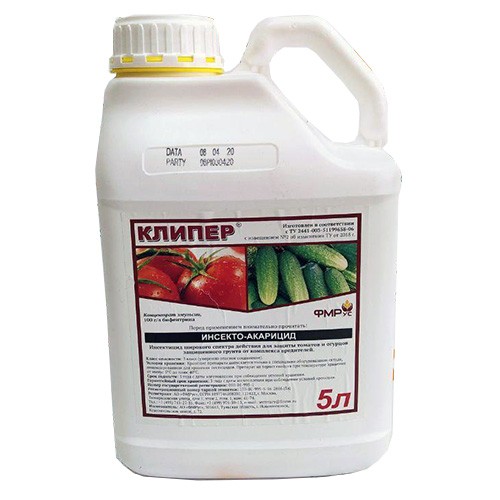
It is recommended to store the product in a dry, closed area at temperatures between 0 and 35 degrees Celsius. The shelf life of the product is 3 years from the date of manufacture.
What to replace it with
Effective analogues of Clipper include the following products:
- "Volcano";
- "Semaphore";
- Talstar.
Clipper is an effective product that successfully combats a wide range of pests. To ensure the desired results, it's important to strictly follow the instructions for use.
Related posts:
 Description of acaricides, their mode of action on plants and the best remedies
 Instructions for using green soap against plant pests and its composition
 Instructions for using birch tar in the garden to control pests
 Instructions for use of Golden Spark and the composition of the pest control product
 Methods of dealing with caterpillars on apple trees, how to treat them correctly and what is the best way to do it
 The best eggplant varieties for growing in a polycarbonate greenhouse: planting and care
 Nitrophoska composition and instructions for use of fertilizer, errors
 How to treat grapes for mildew, the best control measures and treatment rules