
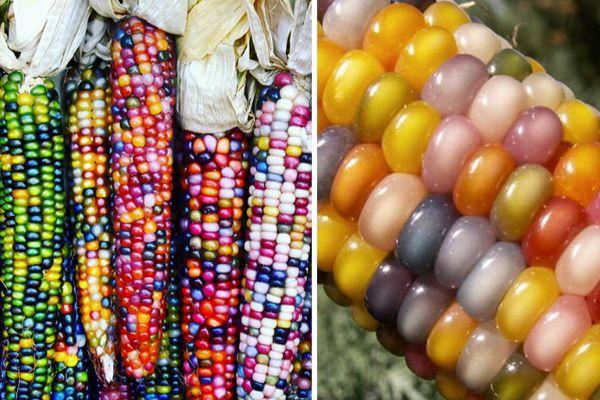
Colorful corn, which Americans call maize, is an unusual crop, but any gardener can grow it. Although it is considered a recent development, it is more accurately considered a forgotten variety that has been around for a very long time. Each ear of colorful corn differs from every other primarily in color, but also in the size of the kernels and their arrangement on the cob.
What is Colorful Corn?
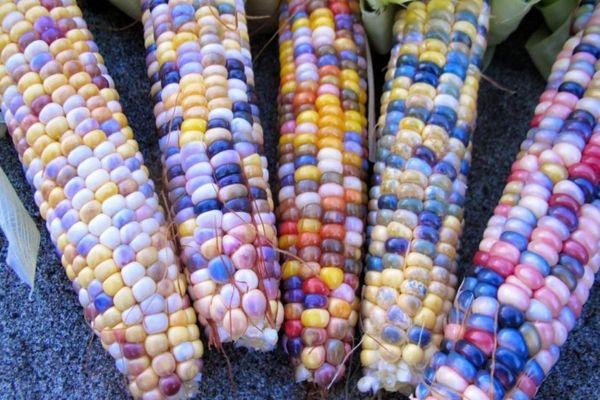
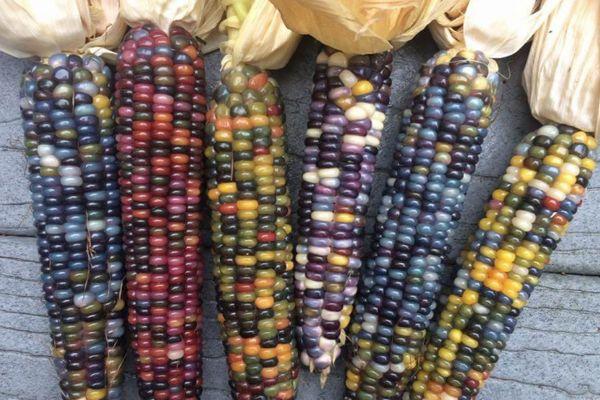
This corn was developed by American farmer and breeder Carl Barnes. This variety is notable for the fact that the cob contains kernels of different colors. This is why it received its name, which can literally be translated as "Glass Gem" or "Glass Pearl."
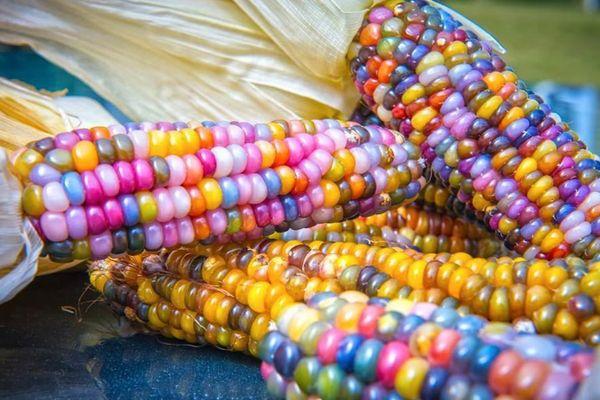
The main colors found in the cob are:
- White.
- Orange.
- Yellow.
- Black.
- Brown.
This American-bred fruit is known for its versatility. However, unlike regular sweet corn, multicolored corn is not typically eaten raw. It is typically used to make popcorn or ground into corn grits. This vegetable crop is used not only for food but also for decorative purposes.
Multicolored corn kernels have a hard shell, while the kernel's core can be loose and flour-like. This vegetable is characterized as a starchy crop.
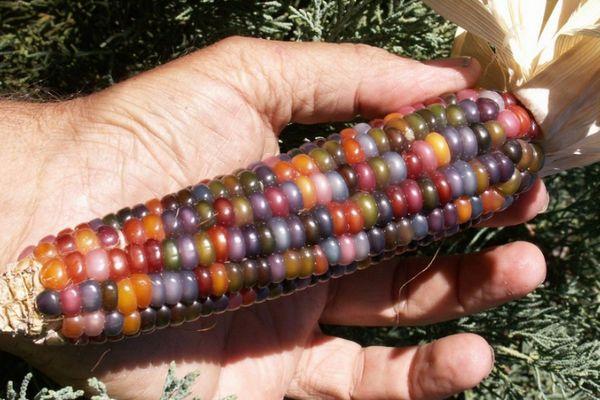
American breeders have developed several varieties of multicolored corn, each with distinct flavors. Among the varieties that might appeal to gardeners are the following:
- North American corn has lilac-brown kernels. This plant grows to almost 2 meters in height.
- The South American plant grows up to 2.5 m in height, and a farmer can harvest variegated corn cobs from such a plant, the length of which reaches 20 cm.
- Magic Kaleidoscope is a decorative variety of corn. Its stalks reach a height of 1.8 meters, and the cobs themselves bear multicolored kernels, including white and black ones. This crop is grown from seedlings and transplanted outdoors in the last month of spring. Plants should be spaced 40 cm apart.
- Pink Glow is a variety characterized by very early maturity, with approximately two months between germination and initial harvest. The plant is low, reaching just over 1 meter in height. The cobs are a standard pyramidal shape, no longer than 15 cm. They have pinkish-purple kernels and a sweet flavor. This corn is primarily eaten boiled. It produces a good harvest for farmers.
- Mother-of-pearl is a mid-season crop, typically taking 100 days from planting to harvest. The plant's stems can reach 2 meters in height. During cultivation, this vegetable crop produces pyramidal cobs up to 14 cm long. Its purple-white kernels have a pearlescent sheen. Corn is eaten pre-boiled, at the milky stage of ripeness. Ripe seeds can be ground into grits.
Growing rules
This variety, like most other varieties of this plant, thrives in warm conditions. Experts recommend growing this crop in areas with ample sunlight. This area should be relatively windless to prevent the plants, which can grow to great heights, from breaking. The soil in which corn is grown should be very fertile. Farmers should remember that corn thrives with consistent moisture and timely application of appropriate fertilizers.
Caring for the plant primarily involves constant, abundant watering, as the soil in sunny locations quickly loses moisture. Furthermore, the vegetable requires regular fertilization, preferably with mineral fertilizers. Fertilization should be done during flowering and also when the corn cobs begin to form.
The plant reproduces through seeds - grains that form cobs.
They must be sown in pre-prepared, fertile soil. It's important to understand that the seeds will only take root if the soil is already warm, so planting corn before May is not advisable. In some southern regions, seeds can be planted as early as mid- to late April. The seed depth should not exceed 5 cm.
Let's consider how to plant the seeds of this garden crop. Before planting all the seeds of future corn The seeds need to be warmed up. To do this, place them in the sun and expose them to sunlight for several days. Next, prepare a container of warm water, place the warmed seeds in it, and leave them there for 24 hours. When transplanting seeds to their final growing location, it is necessary to leave a minimum distance of 40 cm between future plants.

Buying colored corn seeds isn't all that difficult. If you can't find them in a specialty store, just search for them on any online search engine—you'll find plenty of seed options. Reviews from gardeners who have planted this vegetable crop are mostly positive. Growers note the excellent taste of colored corn, its good yield, and its ease of cultivation and care.
Related posts:
 Description and characteristics of the most productive varieties and hybrids of corn
 Description and characteristics of the best varieties of sweet corn, cultivation technology
 Rules for harvesting corn from fields for different purposes: for grain, for popcorn and for silage
 Technology for growing corn in open ground and greenhouses, planting and care
 Corn sowing rules and regulations, how to plant and prepare seeds
 Names of the 7 best varieties of corn for popcorn, features of cultivation
 Technological map for growing corn for silage, seeding rates and yield per 1 ha
 How to preserve corn kernels and cobs in jars at home for the winter
A wonderful variety, the heads look very presentable, but it requires careful care. The best thing for this is BioGrow, ensures both active growth and increased yield.