
- The best varieties of corn for popcorn
- Red popcorn
- Granddaughter's joy
- A treat
- Ping-pong
- Zeya
- Lop-lopay
- Volcano
- Biological characteristics of varieties
- How it grows
- Flowering and fruiting
- How to tell if corn is ripe
- Harvesting and storing cobs
- Further implementation
- What kind of grains should be used to make popcorn?
- How to Dry Popcorn Seeds
Adults and children alike enjoy corn products. It's enjoyed boiled, as flakes, and as popcorn. Corn is cultivated commercially and grown in gardens. Popcorn varieties have more stringent growing conditions than other varieties. The crop thrives in fertile soil and receives regular watering. It doesn't tolerate weedy soil, as seedling growth is slow in the early stages.
The best varieties of corn for popcorn
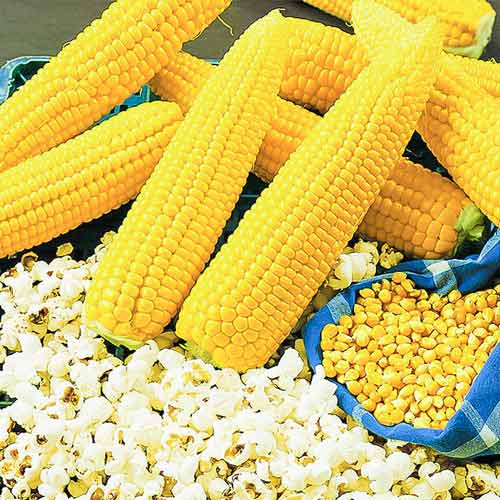
To corn seeds to burst in the frying pan, you need special varieties: Red popcorn, Lopay-lopay, Vulcan, Vnuchkina radost, Zeya.
Red popcorn
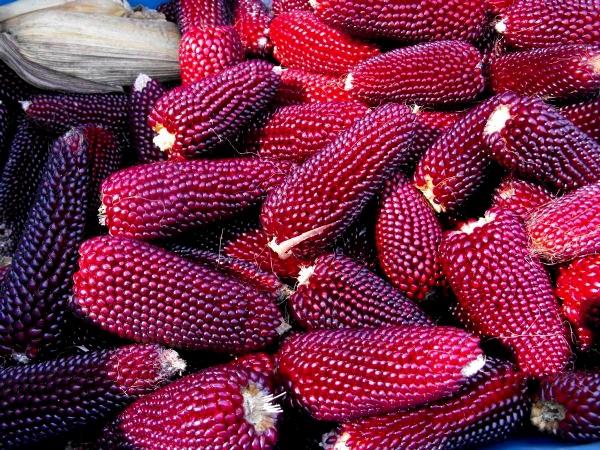
Red Corn Red popcorn is an early-ripening variety. This heat-loving plant is planted in warm soil when the soil reaches 12-15 degrees Celsius. A distinctive feature of Red popcorn is its stalk height, which reaches 110-120 centimeters. The cobs, compared to other varieties, are small – 5-10 centimeters.
The miniature fruits have excellent flavor, making this variety popular among consumers.
The mahogany-colored seeds resemble large strawberries. This hue is due to the record-breaking amount of anthocyanin in the seeds. This substance is a powerful antioxidant that prevents the development of cancerous tumors and cardiovascular disease. Each seed is rounded, reminiscent of a mushroom. The seeds are sown in square nests. Planting depth is 5 centimeters. The consumption of planting material is 3-5 grams per square meter. The plant requires regular watering.
Granddaughter's joy
The Vnuchkina Radoshka variety is a record-breaker for ripeness. It ripens in 70-80 days after germination. The stems stretch up to 1.5 meters, and the ears are 12 centimeters long. This variety is known for its high yield.
The variety's name, "Granddaughter's Joy," is no coincidence—the kernels are used to make popcorn, puffed corn, and cereal, all of which are so beloved by children. This is all thanks to the kernels' juicy, sweet flavor. The kernels, when biologically ripe, are a light brick color.
A treat
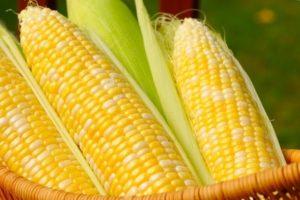
Gostinets corn is considered an early variety. Ripening occurs 80 days after germination. This crop is popular in southern regions due to its ability to withstand dry summers. The plant grows up to 2 meters tall. Cobs up to 22 centimeters long are found in the leaf axils.
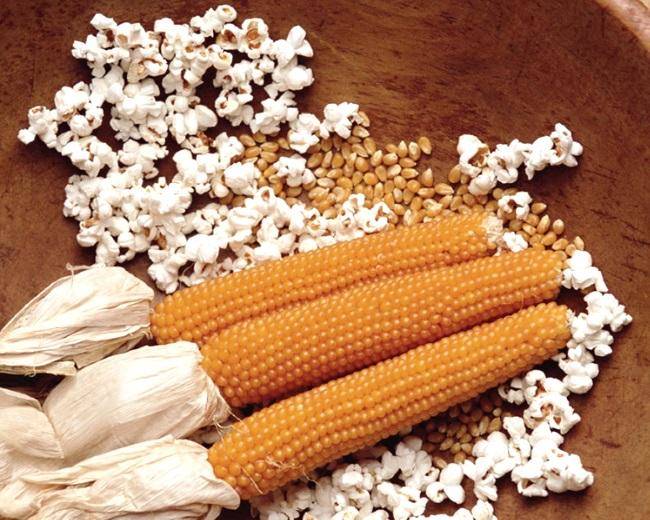
The white stems contain clusters of yellow, pearl-shaped kernels. The seeds have excellent flavor. The dried cobs are threshed to make popcorn. The finished product increases in volume by 28%.
Ping-pong
Ping Pong corn is a mid-early variety. The plant grows to a height of 180-200 centimeters. Despite the large stem, the cobs in the leaf axils grow to 11-15 centimeters. The seeds are small, amber-colored, and have excellent flavor.
The crop prefers fertile soil. With proper agricultural practices, high yields are achieved. It should not be planted near sweet corn, as they may cross-pollinate. Ripening occurs 90-110 days after emergence.
Zeya
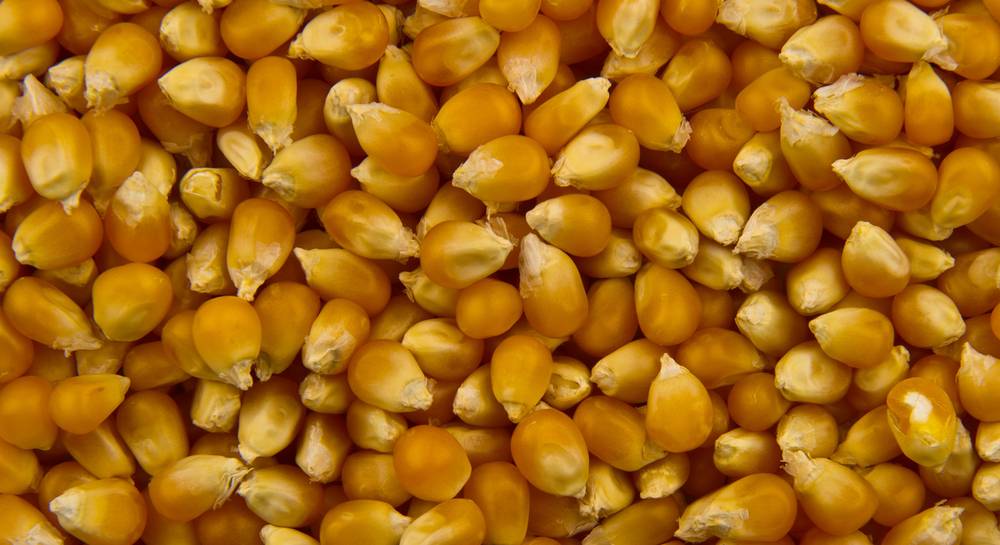
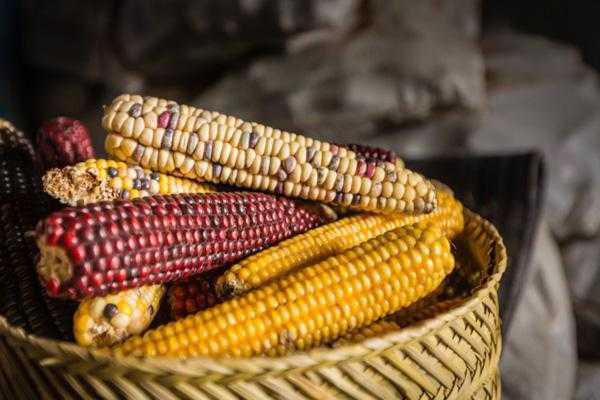
Zeya corn stands out among other varieties for its kernel color and shape. Cherry or dark red seeds are round on one side and pointed on the other. It is an early-ripening crop, maturing in 80 days. The stem is unbranched and grows up to 1.8 meters tall. Ears, 18-20 centimeters long, protrude from the leaf axils. At the initial stage of ripening, the ears become horizontal.
Lop-lopay
The tall Lopay-Lopay corn matures in 130-170 days, making it a mid-season crop. Mature ears are 21 centimeters long, cylindrical, and have yellow kernels. This variety is popular for its high immunity and disease resistance.
Volcano
The Vulcan variety is a mid-early ripening variety. The stem grows up to 2 meters tall. The cobs, 15-22 centimeters long, are located in the leaf axils. The grains are bright yellow and rice-shaped. It is popular for its high immunity, allowing the crop to withstand diseases and weather conditions. Each fruit produces 100-120 grams of grain.
Biological characteristics of varieties
Popcorn varieties are demanding when it comes to growing conditions. The crop requires different temperatures at different stages of growth:
- warm weather – from germination to flowering.
- further, until ripening, the crop needs cool weather.
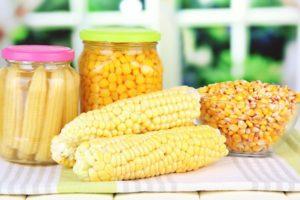
Whereas sweet corn requires heat throughout the growing season.
How it grows
Popcorn varieties are grown in fertile soil. The crop does not tolerate sandy or light soil. Initially, corn growth is slow—roots struggle to establish a foothold in such soil. Weeds inhibit seedling emergence. Therefore, weed-free, well-drained soil is chosen. This is the most important agricultural requirement.
Good predecessors are early-ripening crops, tomatoes, potatoes.
Sow seeds in warm soil. Plant in rows and square nests. After rain, loosen the soil and remove weeds. In dry conditions, water 2-3 times a week. Side shoots appear after the 6-8 leaf stage and require removal. If two kernels are planted per hole, thin the corn in the first few weeks. Leave strong seedlings, remove small, weak ones.
Flowering and fruiting
Corn flowers merrily. Male and female inflorescences appear in the leaf axils. Pollination occurs by wind. In windless weather, assisted pollination by shaking the panicles is required. Flowering lasts for ten days. During this period, the procedure is repeated up to three times.
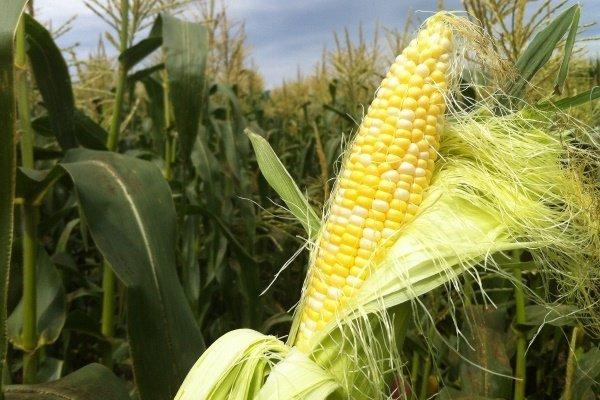
For good fruiting and flavor, corn requires mineral and organic fertilizers. In light soils, fertilizers are applied in the spring. Fertile soil is fertilized with organic matter before winter. The first application is liquid urea when 3-5 leaves appear. The second application is nitrophoska, when 6-8 leaves appear. Fertilizers containing potassium and nitrogen are added during fruit formation.
How to tell if corn is ripe
Unlike its counterparts, popcorn is not harvested at the early stage of ripeness. The cobs dry on the stalk. The kernels develop a glassy shell. Moisture content remains at up to 20%.
Harvesting and storing cobs
Depending on planting time, the harvest is typically between August and October. Dry heads are collected and sent for additional drying. Particular attention is paid to storage on a production scale. Corn is stored as kernels or cobs. In the latter case, the crop can be stored until it is threshed.

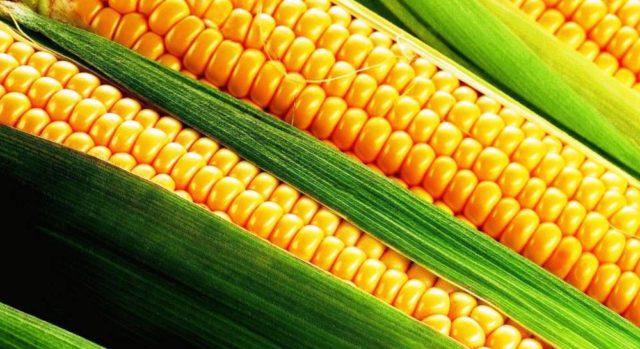
Depending on the percentage of humidity, different methods of storing cobs are used:
- Special rooms with vertical and horizontal ventilation are required for grain with a moisture content greater than 20%. The grain silos are maintained at a height of up to 2 meters.
- The same conditions are required for cobs with a moisture level of 18-20%. The difference lies in the mound, where the height does not exceed 2.5 meters.
- Embankments up to 3 meters high are made with a humidity of 16-18%.
- At 16% humidity the band does not exceed one meter.
Canopies must be 3.5 meters high.
Further implementation
The profit margin from producing and selling popcorn is 500%. Popcorn machines are purchased and sold at entertainment centers, zoos, and parks. Contracts can be drawn up with movie theaters or any other establishment.
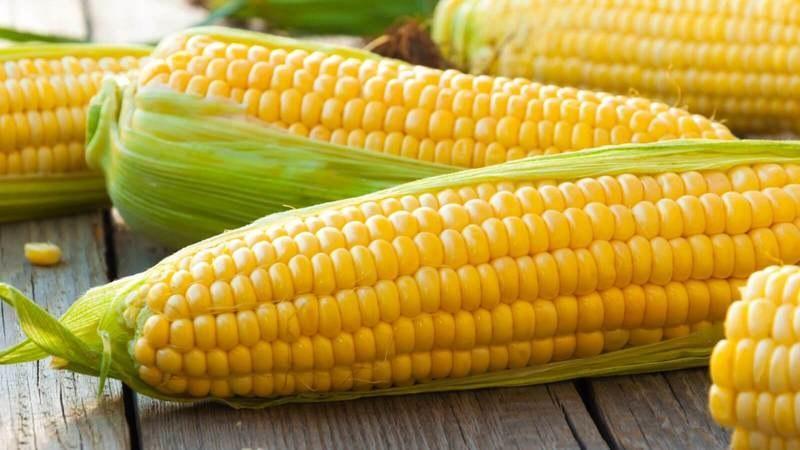
What kind of grains should be used to make popcorn?
Special varieties are used to produce popcorn. The kernels must have a moisture content of 15-20%, a thin shell, and a low starch content.
The fat and protein content is higher than in other varieties of corn.
The grains are placed in a sealed container: a frying pan or a heavy-bottomed saucepan. When heated, the moisture inside the grains turns into steam, which breaks the shell.
How to Dry Popcorn Seeds
At home, dry cobs are placed in a ventilated room or under a canopy, hanging them by their leaves. After a month, the produce is packaged in thick paper or natural fabric bags.
Related posts:
 Description and characteristics of the most productive varieties and hybrids of corn
 Rules for harvesting corn from fields for different purposes: for grain, for popcorn and for silage
 Description and characteristics of the best varieties of sweet corn, cultivation technology
 Technology for growing corn in open ground and greenhouses, planting and care
 Corn sowing rules and regulations, how to plant and prepare seeds
 Technological map for growing corn for silage, seeding rates and yield per 1 ha
 How to preserve corn kernels and cobs in jars at home for the winter
 The benefits and harms of corn for human health