
- The best varieties of corn
- Corn - varieties and hybrids
- Early corn
- Mid-season varieties of sweet corn
- The most productive late varieties
- Popcorn corn
- Krasnodar corn
- Varieties of feed corn
- Varieties of white corn
- Japanese corn
- Bonduelle variety
- Corn for cooking
- Dentate and semi-dentate
- Siliceous
- Hybrid Phenomenon
- Pioneer and its hybrids
- Membranous
- Waxy
The annual plant, whose stem grows several meters tall, is believed to have originated in Latin America. It was from there that the Spanish conquerors brought back ears of corn with large, golden kernels. Their flavor was quickly appreciated in Europe, and new varieties of corn were developed in various countries. Vast tracts of land are planted with this grain. It has become a favorite and is as prized as bread. Children adore the sweet ears. Flour, oil, and grits are made from the kernels.
The best varieties of corn
The crop is prized not only for its pleasant taste but also for its rich nutritional content. The cobs contain fats, proteins, trace elements, and vitamins.

In Russia, the grain was first cultivated after the war with Turkey and was considered a variety of wheat. The annual crop has multi-tiered roots, cobs instead of inflorescences, and large leaves that reach a meter in length. The grain thrives in full sun, thrives at temperatures above 20°C, is drought-resistant, and freezes at sub-zero temperatures.
Under favorable conditions, various types of corn are cultivated, with sweet varieties being particularly popular. They are grown even in temperate climates, where summers end quickly and offer few sunny days or warm temperatures. The seeds contain virtually no starch, and the kernels have a sweet, delicate flavor.
The best varieties of corn include those varieties of the crop that:
- adapted to natural disasters;
- have high immunity;
- produce a good harvest.
The plant's growing season lasts several months. A mature ear of grain weighs 300–500 grams. The grains, which can number up to a thousand depending on the species, are red, yellow, or purple.
Several varieties of corn thrive in Russia and can be planted not only in fields but also in gardens and vegetable patches. Dobrynya matures quickly, with stalks reaching 1.6–1.7 meters in height.
The culture is undemanding to soil and is practically not affected;
- mosaic;
- rust;
- Fusarium wilt.
The Lakomka-121 variety is prized for its disease resistance and thick cobs, which contain juicy kernels suitable for canning. This corn matures 10 weeks after sowing. Each kernel weighs between 180 and 250 g.

In the southern regions, the early variety Spirit is cultivated; in the temperate zone, it is grown from seedlings. Sweet, tender, yellow grains ripen on 20-cm-long cobs. This grain is resistant to:
- rot;
- viruses;
- fungi.
Gardeners love the high-yielding Ice Nectar crop for its significant sugar content. The approximately 1.8-meter-tall bush produces ears of creamy-colored grains.
Early Golden corn is sown for canning. It matures in three months. This low-growing plant rarely gets sick due to its strong immune system.
Sundance is an early variety. Ears larger than 5 cm in diameter are harvested 2.5 months after planting. The grains, distinguished by their elongated shape and sweet taste, are boiled and canned.
Corn - varieties and hybrids
Corn has a long history. The oldest remains of cobs, discovered in two Mexican states, date back nearly 5,000 years. During this time, various subspecies of the grain have emerged. Corn hybrids, created by crossing varieties, are distinguished by high yields and resistance to pests and diseases.
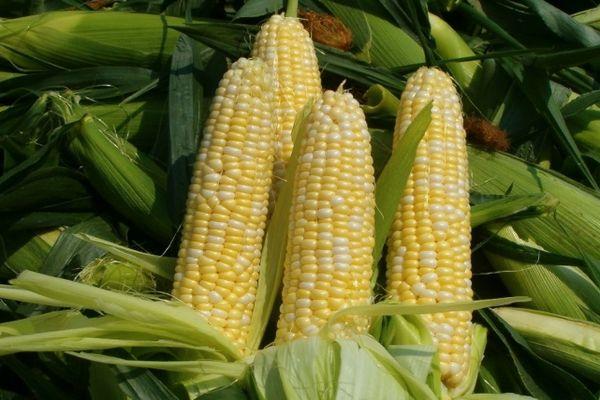
The largest and most widespread subgroup of the plant is the sugar beet. Vast agricultural areas are occupied by cultivation of this "queen of the fields." The grains of this crop contain little starch but are rich in sugars.
Dent corn is a late-ripening variety. This annual plant doesn't boast dense foliage, but it produces sizable cobs. The kernels are sent to mills, where they are processed into flour and grits.
Flint varieties of this grain can be found in garden plots in Ukraine and Moldova, as well as in the southern regions of Russia. It is used in livestock farming and the food industry. It is believed that the cob of this corn was brought to Europe by Columbus's sailors. This crop is characterized by early maturation and high starch content.
Pioneer, a high-yielding variety, has taken root in Russia, with the first cobs ripening in 100 days. The grain is used for livestock feed and is harvested for silage.
Waxy corn is grown in East Asia, cultivated in only a few countries, and is popular in China. The kernels are distinguished by a tough, two-layered husk.
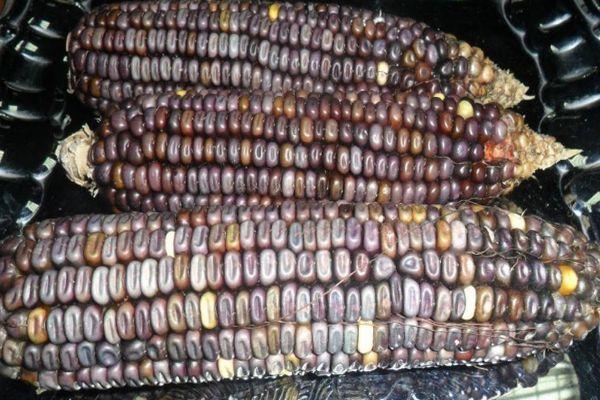
Starchy maize is grown in Latin and North America. The grain is distinguished by its large, dense leaves. The cobs are used to produce:
- ethyl alcohol;
- molasses;
- flour;
- starch.
Bursting corn is grown in summer cottages Farmers cultivate it in fields in rural areas. Children adore the puffed cereal, and the kernels are heated to make popcorn. This variety of cereal is rich in protein.
In cooking and the food industry, hybrids are used that are obtained by crossing Indian and dent varieties.

No country cultivates hulled corn, and it's rarely used even as animal feed. Starch-sugar hybrids haven't gained much popularity either.
Early corn
In regions with hot, long summers, grain crops grow well and always ripen. Any type of grain can be sown on an industrial scale in southern regions. Early corn varieties ripen quickly. In temperate latitudes, hybrids bred through selective breeding thrive. They are sown from seed and are suitable for propagation from seedlings.
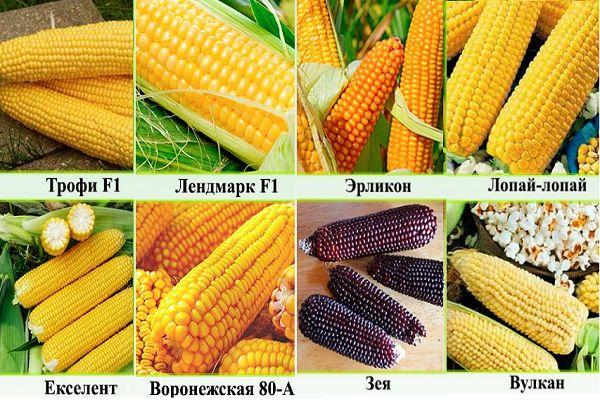
Trofi F1 is characterized by rapid ripening and high yield. The variety produces its first ripe cob, weighing approximately 200 grams, on the 76th day. The fruit reaches 45 mm in diameter. The sweet, golden-colored kernels are eaten boiled or canned.
Breeders developed the Ladozhsky 191 hybrid for cultivation in the Urals and Central Black Earth regions. The corn matures in 113 days. On average, farmers harvest 120 centners of grain per hectare, and about half a ton of green fodder.
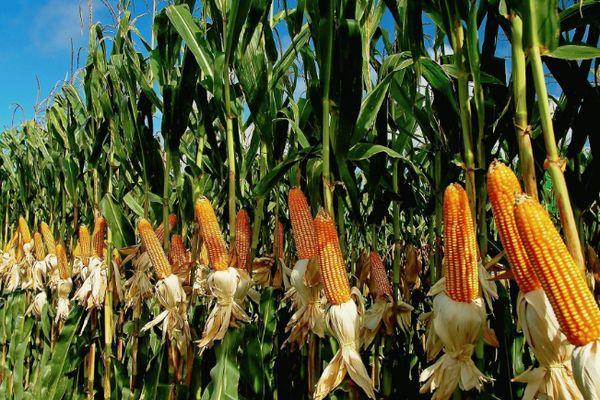
Tall bushes tolerate cold weather well, are drought-resistant, and are not affected by:
- bacterial rot;
- fusarium;
- stem moth;
- bladder smut.
The Ladozhsky 250 MV hybrid is cultivated in the North Caucasus, Lower Volga, and central regions. This variety grows to a height of almost 3 meters. The kernels are arranged in rows of up to 16 on the cob. Farmers begin harvesting the crop 105 days after sowing in open ground. This hybrid is drought-resistant, insect-resistant, and rarely suffers from diseases.
Early grain varieties are used in cooking, the food industry, and livestock farming. Landmark F1 corn is characterized by a very short growing season, long shelf life, and sweet, bright yellow kernels.
The Jubilee F1 hybrid is resistant to bacteria and viruses. The plant, with stems reaching 2.5 meters, produces a stable harvest. Round grains covered with a thin shell form on the cobs in 18 rows.
Mid-season varieties of sweet corn
Early hybrids are commonly grown in regions where summers don't offer many sunny days and end by August. Mid-season corn thrives in arid climates and can withstand prolonged periods without moisture. The product retains its flavor even after heat treatment.
The Maxalia corn hybrid has a low stem with curved leaves. In the North Caucasus and Krasnodar Krai, yields range from 50 to 80 centners per hectare. The plant's growing season lasts approximately 100 days. The hybrid suffers from infestations of stem borers, but is resistant to viruses and bacteria that cause diseases in cereals. Maxalia is a variety of grain corn.
Sweetstar F1 is grown both from seedlings and seeds, with stems exceeding 2 meters in height. Cobs approximately 6 cm in diameter produce golden kernels with an excellent sweet flavor. This hybrid has good immunity and delivers impressive yields.
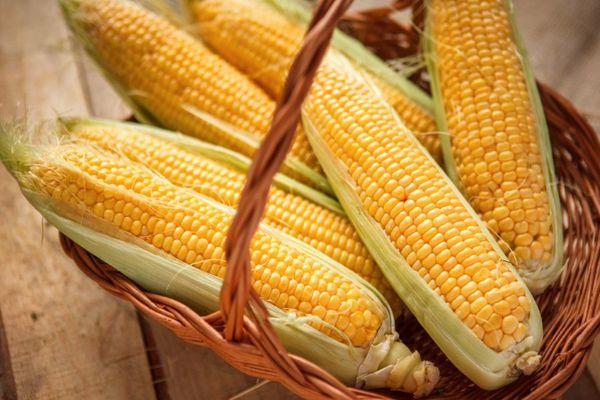
Rusalka corn matures three months after sowing. It's disease- and drought-resistant, and each ear weighs over 250 grams. Its lemon-colored kernels retain their flavor even after cooking.
The low-growing Favorite hybrid thrives in fertile black soil. Yields per hectare exceed 55 centners. Pearl corn matures in 11 weeks, boasting 20 rows per cob. Its juicy kernels are cooked and canned.
Two months after sowing, the bright yellow seeds of the lingonberry ripen. Corn is planted in batches to ensure that young, firm cobs are harvested in the fall.
The most productive late varieties
In the southern regions, it's common to see fields where grains are still growing in late October and November. Breeders have succeeded in developing high-yielding, late-ripening hybrids. Corn cobs, which are particularly disease-resistant, are harvested in late autumn.
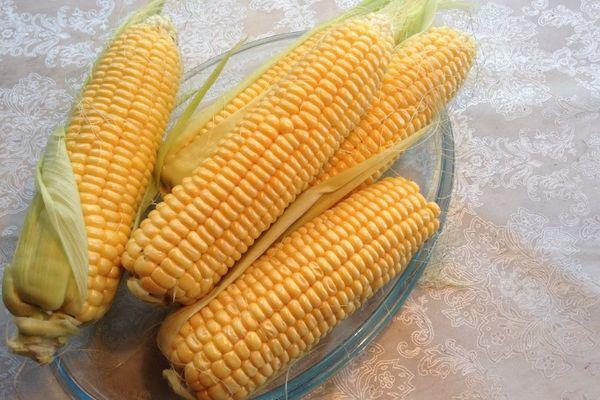
The Bashkirets variety's stem height is just under 3 meters, and the ripe fruit weighs over 350 grams. The seeds are arranged in rows, with an average of 18 rows. The seeds are round and yellow.
Transnistrian breeders have developed Polaris, a corn variety that is the most productive among late hybrids. The plant's stalk is over 2 meters tall, and ripe cobs weigh up to 320 grams. The sweet kernels have a delicate texture and are covered with a thin shell.
The Polaris hybrid seeds are rich in sugars, surpassing even late-ripening varieties in sugar content. Under favorable conditions, 22 tons of yield can be harvested per hectare. The golden-colored seeds are cooked, frozen, and preserved for winter.
Popcorn corn
Some varieties of the "queen of the fields" ripen with seeds containing water. When heated, this water turns into steam and breaks the kernel's shell. A handful of corn turns into a large bowl of popcorn in a minute.

Several varieties have been specially bred for this purpose. Vulcan is distinguished by its tall stalks, on which ripening yellow ears resemble rice. The grain rarely suffers from diseases and adapts to a variety of climates.
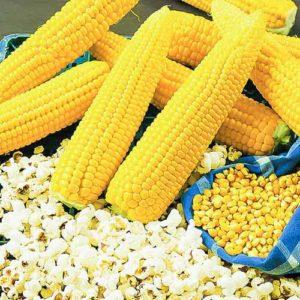
The firm grains of the Oerlikon variety are prized for their sweet taste and, when heated, emit a pleasant aroma.

Russian popcorn has ears up to 23 cm long and weighing up to 250 grams, with seeds ripening in approximately 100 days. Almost all kernels burst when heated; this late-ripening variety is used for making flakes.
The early Zeya variety's seeds aren't the usual yellow, but almost black. They darken when the soil lacks moisture, but retain their flavor and properties even in drought.
Krasnodar corn
Grain breeding is being carried out in many countries and regions. Taking into account climate, fertility, and soil type, high-yielding hybrids are developed through crossbreeding. Seeds Krasnodar variety corn Farmers in the Central Black Earth Region and the North Caucasus purchase 291 for planting. The bushes, approximately 2 meters tall, produce cylindrical cobs, each weighing at least 280 g.
The hybrid thrives in hot and sultry weather and rarely gets sick. Farmers harvest up to 115 centners of crop per hectare.
Krasnodar 194 MV corn is grown in the southern regions, Eastern Siberia, the Middle Volga region, and the North Caucasus. This variety tolerates cold weather, is resistant to lodging, and matures in three months. Cylindrical cobs weighing about a quarter of a kilogram contain up to 18 rows of sweet, yellow kernels. Many farmers were intrigued by these characteristics of Krasnodar 194 corn, and the variety's description also attracted gardeners. The hybrid seeds are now sown directly into open ground. The average yield exceeds 84 centners per hectare.

Varieties of feed corn
The fruits of this grain crop are used in the production of flour, cereals, starch, and vegetable oil, and are also eaten canned and cooked. The leaves and stems of this annual cereal are used in livestock farming. The best varieties of feed corn grown by farmers in Russia for livestock feed include:
- Viola;
- Pearl;
- Golden Fleece.
Saratovskaya Sakharnaya and Aurika not only produce sweet grains that are eaten with pleasure by people, but also have thick, wide leaves that are used as silage for livestock.
The Adewey hybrid was specially bred for regions with arid climates. This corn has tall stalks and large ears, weighing up to 340 grams. Each row, of which there are 14, contains approximately 34 kernels. This mid-early variety is cultivated in the Stavropol and Krasnodar Krais. In the Belgorod Oblast, where the plant experiences adequate moisture, the average yield per hectare is approximately 80 centners.

Farmers have received many positive reviews about the DKS 3511 corn hybrid. The seeds germinate even when the soil warms to only 10°C. The plant has a strong root system and thick, leafy stems suitable for silage. This high-yielding forage corn hybrid is resistant to the following diseases:
- rust;
- nigrospora;
- bladder smut;
- spotting.
DKS 3511 is cultivated using traditional technology, as well as minimal tillage.
Farmers are most interested in the different varieties of corn available, including whether any can be grown for both silage and grain in arid climates. Every year, breeders develop hybrids suitable for various purposes.

Varieties of white corn
Many countries cultivate this annual grain, whose small grains boast a striking, unusual color, and whose tall stems bear long, pointed leaves. An interesting corn variety was created through crossbreeding and is considered a hybrid. One of these, Snow Avalanche, is heat-resistant and tolerates cold and dry weather well.
Thompson Prolific corn impresses with its large ears, which reach 40 cm in length. This variety was developed in North America for flour production.
The Snow Queen rarely suffers from pests, is almost disease-free, and is eaten boiled and baked. The sweet seeds have a high sugar content. The caryopsis is snow-white in the hybrids Eskimo and Ice Nectar.
Japanese corn
Some grain crops grown for food are also decorative. They have distinctive leaves and unusually shaped ears. The reddish seeds of Japanese corn are eaten unripe. Bushes of this grain are used to decorate summer cottages.

The leaves of the Pearl Miracle variety are striped in various colors, and the plant reaches a height of one and a half meters. The tasty kernels are edible. This corn does not do well in the field or garden, as it is sensitive to wind and does not tolerate drafts.
Bonduelle variety
Sweet corn varieties, suitable for canning, are particularly popular with Russian gardeners. F1 hybrids such as Spirit, Bonus, and Dobrynya are suitable for temperate climates and require little cultivation experience. Bonduelle varieties have a fairly high yield, but this corn needs to be fed with fertilizers and water.
Trofi F1 is grown through seedlings in the temperate zone and by sowing in open ground in the southern regions. This hybrid produces sweet grains. The first ear can be harvested in 75 days.
Bonus F1 corn impresses with its high yields. The dark yellow seeds are arranged in 20 rows on the compact plant's cobs. Farmers can harvest up to 100 centners of grain per hectare. Both summer residents and owners of country plots plant this hybrid.
Corn for cooking
Forage grain varieties are drought-resistant, grown with virtually no irrigation, and produce high yields, but are not suitable for consumption at the milk-ripe stage; their grains lack sweetness and juiciness.
For boiling, select varieties with golden or light yellow seeds. Young ears, without their outer leaves, are placed in a pressure cooker, microwave, or oven and covered with cold water. In less than half an hour, the kernels will soften and can be pierced with a fork.
Among the varieties of corn for cooking, hybrids are most often used in the form of:
- Pioneer;
- Jubilee;
- Sweet Tooth;
- Spirit.
The grain seeds will be even more delicious and sweet if you drain the water and leave the cobs in the pan for about 20 minutes, covered with a towel. Ripe cobs should be cooked for about an hour.

Dentate and semi-dentate
Late-ripening Syngenta and Krasnodarsky 436 cereal varieties don't boast lush green foliage, but they do have large ears. Dent corn kernels are elongated, with a barely noticeable dimple at the very top.
High-yielding varieties of this crop include Sterling and Dneprovsky 172 MV. Semi-dent corn is produced by crossing with flint maize. The yellow and white seeds of this cereal are edible, used as cattle feed, and are eagerly consumed by poultry.
Siliceous
A variety of corn with smooth, round kernels is planted in fields and gardens. They contain a lot of starch. The seeds come in a variety of colors, ranging from light yellow to lilac and brown. People value flint corn for:
- for a pleasant taste;
- good yield;
- resistance to adverse weather conditions.

The Severodakotskaya, Voronezh 80, and Ornamental Congo hybrids are resistant to temperature fluctuations. The seeds are not susceptible to fungal infections, and the plant is resistant to fusarium wilt and other major cereal pests.
Hybrid Phenomenon
IN Corn cobs ripen early, whose orange seeds contain over 70% starch. Cattle happily eat the leaves and stems of this crop. Not all gardeners know about the Phenomenon hybrid, although the variety is distinguished by:
- excellent yield;
- drought resistance;
- rapid development of the root system.
The plant even tolerates light frosts. The large ears of the Phenomenon SI hybrid corn bear kernels shaped like a human tooth. When ripe, the seeds quickly release moisture. The stalks do not lodge.
Pioneer and its hybrids
Gardeners who plant the "queen of the fields" in their plots tend to rotate varieties frequently, as the grain doesn't always deliver a satisfying yield. For over 30 years, Pioneer has been supplying corn hybrids to markets around the world. The plants are fast-growing, adapt to a variety of soils, and withstand extreme weather conditions.

The manufacturer offers customers different varieties of Pioneer corn seeds:
- Elite FAO 210;
- 3893 Clarica;
- Costella 220.
Hybrid grains contain a high amount of nutrients. They are used to produce cereals, flour, and feed cattle.
Membranous
A grain grows in African countries whose husk-covered cobs are not eaten, although the kernels are yellow and indistinguishable in appearance from the maize seeds brought from Latin America to Europe. There are no hybrids of husk-covered corn, and no one is breeding it. It has not become widespread, perhaps because each kernel must be separated from its husk before boiling or baking.

Waxy
Starch is produced from the smooth-surfaced seeds of this cereal grain. They are covered with a tough shell. The sticky flesh of the kernels consists solely of amylopectin. Waxy corn is grown in China. Some varieties are decorative. The leaves of the strawberry plant are decorated with white stripes. The small, burgundy ears are edible.
Ocean corn matures in exactly three months after planting. The plant reaches a height of 2 meters. The red kernels have a sweet taste.
Waxy crops grown for starch production differ not only in seed color but also in cob shape. The "Perlamutr" variety produces cobs resembling a pyramid.
For many years, the "queen of the fields" has been one of the most sought-after grains in the world, used in cooking, industry, and livestock farming. The crop thrives in sun and warmth and grows well in fertile soil.
Related posts:
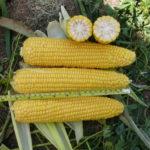 Description and characteristics of the best varieties of sweet corn, cultivation technology
 Corn sowing rules and regulations, how to plant and prepare seeds
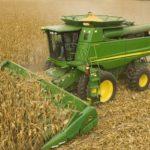 Rules for harvesting corn from fields for different purposes: for grain, for popcorn and for silage
 Technology for growing corn in open ground and greenhouses, planting and care
 What is corn - a vegetable or a fruit, what family does the cereal belong to and where is it used?
 The benefits and harms of corn for human health
 Technological map for growing corn for silage, seeding rates and yield per 1 ha
 Names of the 7 best varieties of corn for popcorn, features of cultivation
Whatever corn variety you choose, be sure to use bio-growth activators; they will significantly increase your yield. For three years now, I've been buying only "BioGrow", works wonderfully on seedlings.