
- What climate conditions does corn grow in?
- The country's leaders in growing and harvesting crops
- USA
- China
- Brazil
- Countries of the European Union
- Argentina
- Ukraine
- Mexico
- India
- Canada
- Russia
- South Africa
- The best crop varieties for different regions of Russia
- Moscow region and central Russia
- Altai Krai
- Siberia and the Urals
- Northwestern Federal District
- South of Russia
- Open-ground cultivation technology
This cereal plant is cultivated in many countries around the world. Corn, or maize, is valuable for humans because its grains contain a large amount of essential amino acids. Therefore, this vegetarian product can be a successful substitute for meat. Forage varieties of the crop are used for livestock production and are crucial for improving the quality of dairy and meat products. It is well known that where corn grows, the quality of livestock products is higher.
What climate conditions does corn grow in?
Cultivation of this cereal crop began in Central and South America. Warmth is essential for the crop, especially during the early stages of growth. Corn seedlings They will appear faster when the soil warms up to 8-10 degrees Celsius. Therefore, it's easier to grow the crop in areas where average daily temperatures rise above 10-12 degrees Celsius.
Spring frosts won't harm seedlings unless the growing point is damaged. However, mature plants won't survive the drop in temperature in late summer and early fall. In northern regions, grain yield depends on air and soil temperatures. The colder the temperature, the less fruiting the plant will produce.
Moisture plays a major role in seed germination. However, drought is not an obstacle to seedling emergence. If you plant the seeds deeply, the corn will develop a strong root system in warm weather. The roots penetrate into the deep layers of soil, extracting moisture.
Plants require watering when the plants produce panicles and the grain reaches milky ripeness. However, excessive watering reduces cereal yields. Strong winds can cause stem lodging, especially for young seedlings. Corn is more demanding of climatic conditions than of soil structure.

The country's leaders in growing and harvesting crops
The leading countries successfully cultivating corn have remained ranked consistently for decades. This includes not only the main countries with historically established corn cultivation systems but also those introducing innovative cultivation methods. Both warm-climate and temperate countries cultivate the grain worldwide.
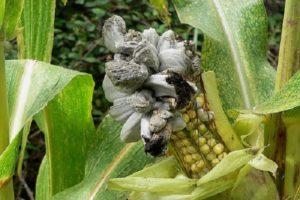
USA
American farmers grow grain in the southern states. Production volumes are sufficient to meet domestic demand and export grain to other countries. The United States accounts for 20-25% of the export market in commercial grain.
China
Since the 1990s, the country has been the world's leading grain producer. Over the past 25 years, grain corn by harvest volume has overtaken the main Chinese crop—rice. Corn is now the main product for fattening livestock, especially pigs and poultry.

Brazil
Half of the agricultural land is devoted to corn, beans, and cassava. Brazil rivals the United States in sweet corn exports. Favorable climate conditions allow for the cultivation of double-grain crops in the fields.
Countries of the European Union
In Romania, Hungary, France, and Greece, the cultivation of forage varieties is well-developed, leading to high meat and milk production. The countries of the union export corn grain, having almost completely abandoned genetically modified products.
Argentina
Agriculture is well developed in the country, where grains are the leading crop. Maize is used to meet domestic needs and for export. Since food production is the primary focus of the national economy, large areas are allocated to cultivating forage corn varieties.

Ukraine
Cereals occupy a key position in the agricultural sector. Corn yields are stable year after year thanks to favorable climatic conditions.
Mexico
Farmers harvest up to 22 million tons of corn grain annually, importing another 10 million. The country purchases maize for its domestic needs from Southern African countries.
India
Around 80% of the country's cultivated land is devoted to corn. Consistently high temperatures allow for year-round grain harvests. Only the monsoon season hinders plant development due to high humidity.

Canada
Industrial production of corn and soybeans is a natural development for the country. Over the past 50 years, the prairie regions, where the temperate climate is ideal for the growth of grain, have seen an increase in acreage. Canadian breeders are also focusing on developing maize hybrids.
Russia
Climate conditions for growing corn are not favorable in all regions. Globally, Russian farmers have lower yields. Therefore, grain and flour must be imported from other countries. Corn is grown for silage and feed everywhere.

South Africa
Drought is a common occurrence in southern Africa. Therefore, farmers grow drought-resistant maize hybrids. South Africa is the leading producer of this crop on the African continent.

The best crop varieties for different regions of Russia
Although the climate in Russia is not entirely favorable for the development of corn, many farmers grow the plant for livestock feed.And the crop's yield is at world standards: over 5 tons per hectare. Regions with favorable soil and weather conditions for grain cultivation experience higher yields per hectare.
Moscow region and central Russia
In temperate climates with high humidity and unstable weather, it's best to plant early-ripening varieties. Trophy, Gamma, and Madonna varieties will reach milky ripeness within three months. Furthermore, the grains of these hybrids have an excellent flavor and a high sugar content on the cob.

Altai Krai
The short summer, though favorable for corn due to its warmth, allows the cobs to ripen on time. Of course, it's best to choose varieties with early ripening times:
- Triple sweetness. The harvest is 100 days after germination. On 2-meter-tall bushes, cobs with yellow kernels weighing up to 200 grams grow. The kernels are rich in protein and sugar.
- A mid-season hybrid, Lakomka. Its small grains are high-quality, scoring 5 points for flavor. The seeds are used for canning, freezing, and drying.
- A locally bred farmstead variety. The plant begins producing crops in just 71 days. The cobs are 13 centimeters long and weigh 140-160 grams. This variety is prized for its compact, medium-sized growth habit.
It is better to choose zoned varieties of corn for regions with moderate or cold climates.
Siberia and the Urals
Here, it's also important to grow early- or mid-season varieties. Suitable hybrids include Khutoryanka, Lakomka, and Bylina.

Frost-resistant varieties like Landmark and Jubilee thrive in open ground and produce fruit. Among the sweet varieties, Bonus F1 is recommended. The grains, when ripened to milky stage, are used for canning.
Northwestern Federal District
In northern latitudes, it's difficult to harvest maize by sowing seeds directly into the ground. In the Leningrad and Pskov regions, the grain will have to be grown from seedlings.
The best locally bred variety is Ladozhsky. It is resistant to low temperatures and will ripen before frost.
Among the hybrids, Creamy Nectar, Golden Ice, and Early Lakomka bear fruit successfully.

South of Russia
Unlike the Leningrad region, all corn varieties are suitable for the southern regions of Russia. Hybrids of the Krasnodar variety produce high grain yields. The seeds can be planted in the fields of the North Caucasus and the Central Black Earth Region.

In the Krasnodar Krai, maize is cultivated, valued for the high quality of its sugary grains and the nutritional value of its leaves, which are used as livestock feed. These versatile hybrids include Aurika, Saratovskaya Sakharnaya, and Adewey.
Open-ground cultivation technology
Corn can be grown in both farm fields and garden plots. Sweet varieties are eaten by boiling the cobs.
The plant needs to be placed in a well-lit area. It will get sick in the shade.
The soil in the garden bed is prepared to be nutritious and rich in phosphorus, potassium, and nitrogen. The plot is dug in the fall, adding 6 kilograms of humus, 2 tablespoons of superphosphate, and 1 tablespoon of potassium salt per square meter.
In Siberia, it is better to plant seeds for seedlings 30 days before placing the seedlings in open ground. Warmth is essential for corn. Therefore, it will thrive when temperatures are above zero both day and night.
Care for maize plantings includes:
- regular watering, especially at the stage of earing and grain filling;
- weed removal;
- hilling after rains, when the roots are exposed;
- pinching out side shoots with cutting off 15 centimeters long;
- top dressing during the formation of 4-5 leaves with a mullein solution in a ratio of 1:8, after 2 weeks - with mineral complexes.
When the leaves on the cobs become dry and brittle, the cobs are harvested. The bright yellow kernels are ready to eat if they release a whitish juice when pressed.
Related posts:
 Description and characteristics of the most productive varieties and hybrids of corn
 Technology for growing corn in open ground and greenhouses, planting and care
 Corn sowing rules and regulations, how to plant and prepare seeds
 Description and characteristics of the best varieties of sweet corn, cultivation technology
 Technological map for growing corn for silage, seeding rates and yield per 1 ha
 Rules for harvesting corn from fields for different purposes: for grain, for popcorn and for silage
 What is corn - a vegetable or a fruit, what family does the cereal belong to and where is it used?
 Why do you need to fertilize corn? Irrigation and watering after applying fertilizer.