
- The best varieties of corn for planting
- In an open area
- Early
- Mid-season
- Late
- The sweetest
- For popcorn
- On the balcony or loggia
- How to choose: variety or hybrid?
- Preparatory work
- Preparing the soil and planting area
- After which plant corn
- The best neighborhood for a plant
- Do I need to treat corn seeds before planting and how?
- Planting a crop
- Deadlines
- We calculate the rate and density of corn sowing per 1 hectare
- What row spacing and depth should I plant corn at?
- Schemes and features of crop cultivation
- Seedlings
- Seeds
- Ways to quickly germinate seeds?
- Fast seeding attachments
- Caring for sprouts
- Thinning seedlings
- Hilling and weed removal
- Watering and fertilizing
- Protection from illnesses and diseases
- Helminthosporium
- Fusarium
- Rust
- Loose smut
- Bladder smut
- Stem rot
- Methods of control
Maize, or corn as it's known in our country, is one of the world's most important grain crops. A favorite crop of South American people, it replaces wheat and is widely used worldwide in cooking, medicine, and livestock farming. Like many crops, it arrived in Europe during the time of Columbus and was later cultivated in Russia. Let's look at the specifics of growing corn, including sowing, choosing varieties, caring for it, and protecting it from diseases.
The best varieties of corn for planting
Many varieties and hybrids of corn have been developed for use in various purposes, differing in the appearance of the cob, the content of sugars, starch, and other elements.
Reference: maize ranks third (after wheat and rice) in the production of grain crops; it is used in cooking, industry, and as animal feed.
Russian gardeners cultivate two types of the crop: sugar and burst.
In an open area
Gardeners grow corn in their plots not only for consumption but also to create natural hedges and protect other plants. Tall bushes provide shade-loving crops with sun protection, wind protection, and distinct areas within their gardens.
The main goal of planting corn is to produce tasty, juicy ears of corn suitable for fresh eating, canning, and freezing. Let's look at the best varieties for Russian regions.
Early
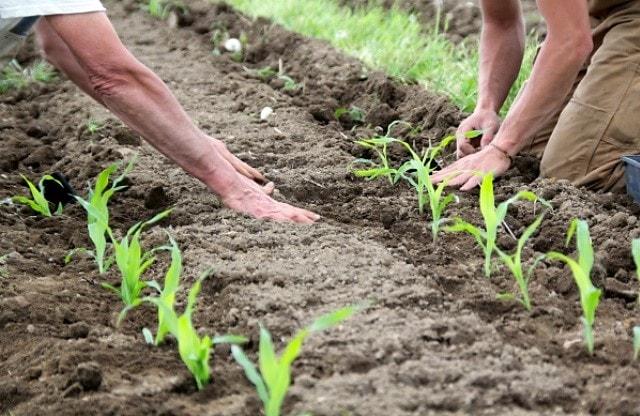
Among the varieties of corn with a short maturation period (75-85 days), the following are especially popular:
- Trophy F1 – ripens in 75 days, cobs up to 20 centimeters;
- Julibi F1 – bushes more than 2 meters, grains are sweet and juicy, cob – up to 22 centimeters;
- Sugar F1 is a favorite among gardeners, very juicy sweet seeds, well preserved when frozen;
- Madonna – produces many cobs, small in size and dense, drought-resistant;
- Landmark F1 – large grains contain a lot of sugar and retain their juiciness and flavor for a long time.
Early varieties are popular in cold regions with short summers.
Mid-season
Favorite mid-season corn varieties include:
- Sweetstar F1 – a hybrid that demonstrates high yield and resistance to major diseases;
- Maxalia - grains in the form of teeth, bush of medium size;
- Delicacy - sweet grains retain their flavor no matter how they are prepared or cooked, and are considered the best variety for canning;
- Pearls - cobs over 20 centimeters, widely cultivated for grain.
Mid-season varieties have increased resistance to drought and are well genetically protected from diseases and pests.
Late
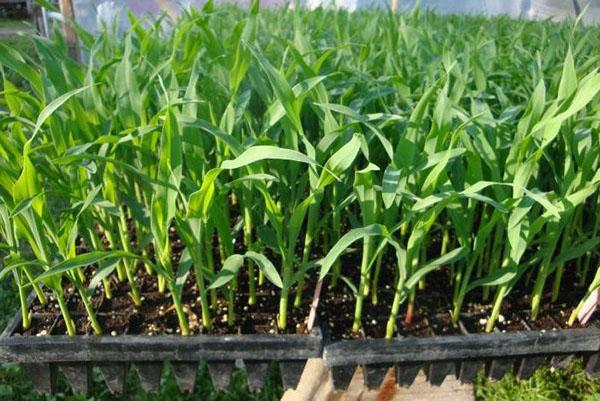
Late-ripening corn varieties should only be grown in very warm regions; in most cases, the seeds do not have time to ripen. Popular varieties and hybrids include Bashkirovets, Polaris, and Ice Nectar.
These varieties are very sweet and yield higher than earlier varieties.
The sweetest
The varieties with the highest sugar content (more than 10%) include Shamo, Ledenets, Elizaveta, and Dobrynya.
For popcorn
Popcorn lovers should pay attention to the following varieties: Oerlikon, Russian Burst 3, Vulcan, and Vozdushnaya.
The grains contain a drop of juice in the center, which breaks the shell during cooking, creating a favorite delicacy.
On the balcony or loggia
For growing on balconies, choose low-growing varieties that can accommodate the root system in a limited container. Popular varieties grown on loggias include:
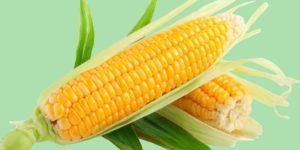
- Squirka. Ripens in 75-80 days. It is distinguished by its medium-sized bush. The cobs are up to 17 centimeters long, containing 20-40 rows of bright yellow seeds.
- A delicacy. The low bush produces cone-shaped cobs up to 18 centimeters in size. It is an early-ripening variety.
- Kulikovsky. This hybrid variety matures in 80-85 days, producing cylindrical ears with bright yellow seeds.
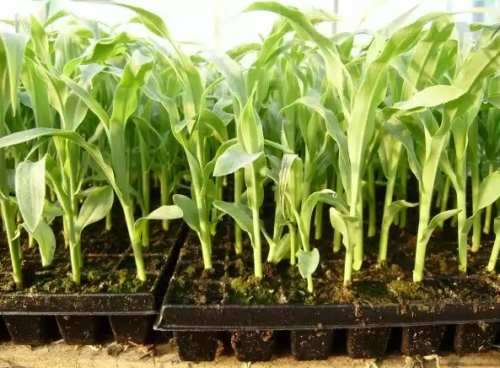
Usually, to get an early harvest, corn for the balcony is planted as seedlings.
How to choose: variety or hybrid?
Hybrids of any crop are traditionally more productive, tastier, and juicier, and are more resistant to diseases and pests. Gardeners who don't plan to grow their own seeds can safely choose more resilient and hardy varieties. corn hybrids.
Many gardeners grow their own seed. This doesn't require any special knowledge; you simply need to wait until the ears are fully ripened. It's important to grow only one variety in a plot to prevent cross-pollination and preserve the parental characteristics.
Preparatory work
Corn isn't considered a particularly demanding crop, but without proper agricultural knowledge, a good harvest is impossible. Preparation includes site selection, crop rotation, and seed treatment.
Preparing the soil and planting area
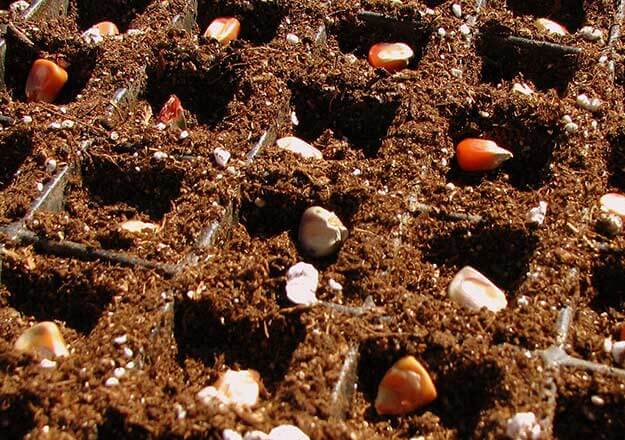
Corn requires open, well-ventilated, and well-lit areas. Insufficient light, especially during the first half of the growing season, prevents it from growing green mass and forming cobs.
During the short summer period, corn must develop a strong stem and fruit, and it requires a well-developed root system. It requires loose soil with constant access to air for growth.
The site is prepared in the fall:
- In the fall, the soil is cultivated – dug with a shovel or a walk-behind tractor to a depth of 25-30 centimeters, roots are selected, and weeds are removed.
- Rotted manure and phosphorus-potassium fertilizers are added to the soil.
- If acidity is high, lime is added based on the indicator.
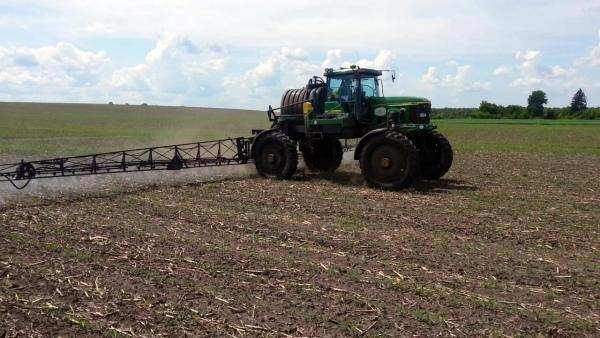
In the spring, the soil is dug again to a shallower depth, weeds are removed, and complex fertilizer is applied. This work is carried out two weeks before planting the seeds.
After which plant corn
Crop rotation is a crucial part of agricultural technology. Proper crop rotation ensures mutual support for plants and protects them from common diseases and pests.
Corn grows well in fields where last year's crops were grown:
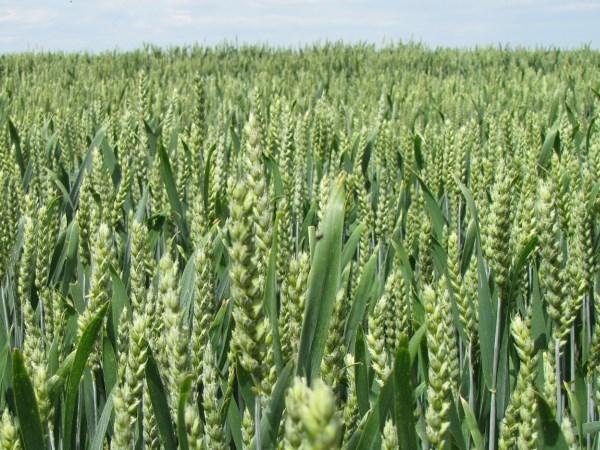
- wheat;
- roots;
- legumes;
- cucumbers;
- tomatoes.
Repeated growing corn Corn is grown on soils with normal acidity (pH 5.5-7). As a monoculture, corn can be planted in the same location for several years in a row, provided the soil is fertilized and cultivated regularly.
The best neighborhood for a plant
Corn grows well near legumes, which enrich the soil with nitrogen. Pumpkins also provide a beneficial effect, covering the roots with their thick tops and protecting them from overheating.
Do I need to treat corn seeds before planting and how?
Seeds are prepared for planting according to the following scheme:
- Selection and sorting.
- Heat or cold hardening. Heat hardening is carried out at 35°C for 5 days. For cold hardening, seeds are left in a damp cloth in the refrigerator for 5 days. This preparation step is optional; gardeners choose the method based on experience.
- Treatment with potassium permanganate (for an hour), treatment with fungicides.
- Soaking for germination. Completely immerse the seeds in water for 24 hours. Germinating seeds is useful if the soil is dry and watering is difficult.
When purchasing seeds, you need to read the instructions, which indicate what preparation the planting material requires.
Many gardeners plant some of their corn with sprouted seeds and some with dry seeds in order to extend the ripening period.
Planting a crop
Compliance with agricultural practices helps to obtain a good harvest and protects corn from diseases and pestsRecommended seeding rates are determined by the plant's needs, ensuring adequate nutrition and comfortable living conditions.
Deadlines
Planting timing is especially important for corn, as it develops poorly in conditions of too little or too much warmth. Soil temperatures should be at least 10°C (50°F). At low temperatures, the seed remains in the soil for a long time, swells, and fails to germinate, often becoming infected with fungal infections.
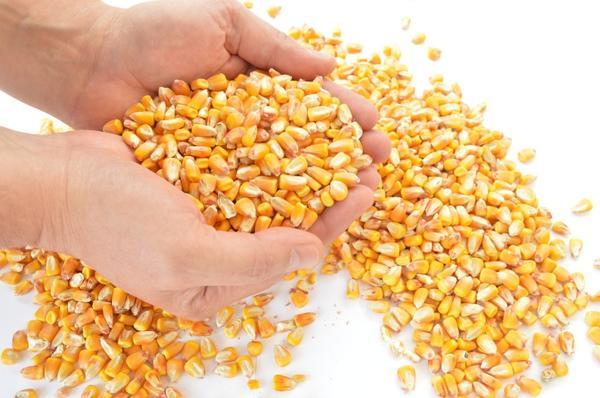
Sowing times depend on the region's climate and weather conditions. If a sharp warming is forecast, corn can be planted earlier, warming the soil with plastic wrap, as vegetation slows significantly at temperatures below 30°C. Depending on the region, sowing times range from late April to early May.
In northern regions, corn is planted as seedlings. Seeds should be sown indoors in early May and then transplanted into the ground in early June.
We calculate the rate and density of corn sowing per 1 hectare
The seeding rate depends on the corn variety, the intended use of the crop, the soil, and weather conditions. Average rates are 50,000-70,000 seeds per hectare of planting. This translates to 500-700 seeds per 100 square meters, and 5-7 plants per square meter.
15-25 kilograms of seeds are planted per hectare. In fields, 15-20 seeds are sown per 3 linear meters. The same rates should be followed when sowing in summer cottages.
Take a look Also
What row spacing and depth should I plant corn at?
Corn is planted in rows, spaced 60-70 centimeters apart, with 20-25 centimeters between adjacent crops. When planting, follow the instructions on the seed, as different varieties require specific conditions.
The planting depth is 5-6 centimeters; when planting in heavy loamy soils, 4-5 centimeters is sufficient. High-sugar hybrids can be planted 1-2 centimeters shallower, following the manufacturer's recommendations.
Tip: In very light, loose soils, corn can be planted up to 8 centimeters deep.
Schemes and features of crop cultivation
Corn is not planted as single bushes; it is cross-pollinated, so it is necessary to provide the crop with full proximity to its relatives.
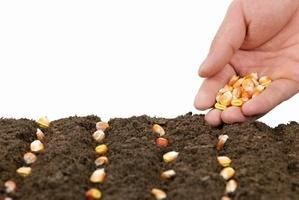
The square-nested method is recommended for sowing. Plants are spaced at a distance that ensures ventilation and pollination. Overly dense growth will shade the lower parts of the bushes and promote fungal infections. When choosing the spacing between plants, follow the seed manufacturer's recommendations.
Seedlings
Planting seedlings is practiced in cold regions where frosts are likely to return. Gardeners also use the seedling method for an early harvest. Basic growing guidelines:
- soil – humus (2 parts), peat (1), sand (1), 200 grams of ash per bucket of mixture;
- It is better to plant seeds in separate containers to avoid picking - peat, paper, plastic cups (5x5 centimeters);
- the soil mixture is soaked, 1 seed is placed at a depth of 2-3 centimeters;
- moisten regularly as the soil dries out;
- good lighting is important – fluorescent lamps are used for backlighting;
- with the beginning of intensive growth, they are fed with mineral complexes.
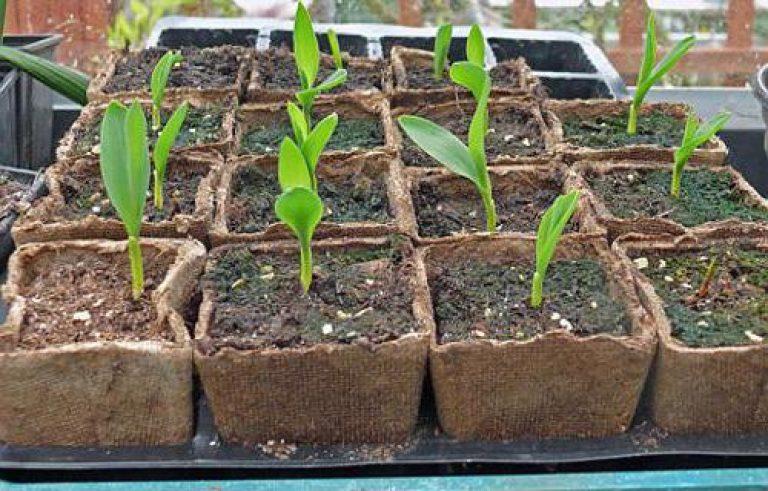
They are transplanted into the soil when warm weather sets in and the seedlings are ready (at home they grow for 20-25 days).
Seeds
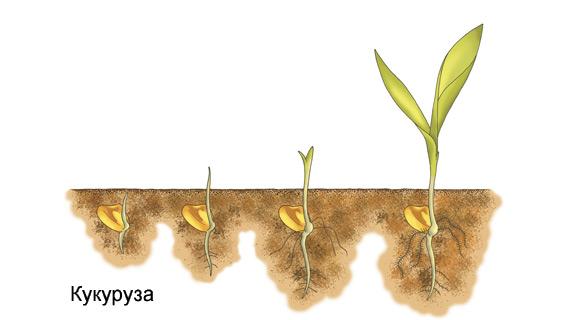
Planting seeds in the ground is straightforward. The process chart recommends nest planting. Dig a hole in pre-prepared soil, water it, and place 2-3 corn kernels around the edges. Cover with soil and lightly compact. After sprouting, remove the weak shoots, leaving the most vigorous and robust one.
Ways to quickly germinate seeds?
Let's look at several popular ways to speed up the germination of corn seeds:
- soaking in water for 24 hours;
- placing seeds in a soaked cloth or paper for 3-5 days until sprouts appear;
- use of growth stimulants (Epin, Zircon);
- When planting dry seeds in the soil, use spunbond.

Sprouted grains are sown one at a time, which reduces seed consumption and the time it takes for sprouts to appear.
Fast seeding attachments
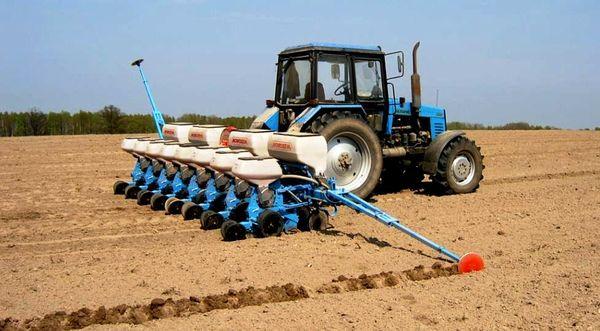
For seeding large areas, specialized seeders are used to ensure proper planting practices. Seeders ensure seeds are placed at a specific depth and spacing, eliminating the need for harrowing.
The types of seeders used depend on the size of the sowing area:
- The SUPN-8 allows you to sow different crops in rows spaced 50-60 centimeters apart. Fertilizers are applied simultaneously.
- Seeder for a mini tractor. Adjustable for planting corn.
- For a walk-behind tractor. Provides a row spacing of 15-30 centimeters.
- Manual. A common option for garden plots. For seeding corn, it's convenient to purchase a special bushing.
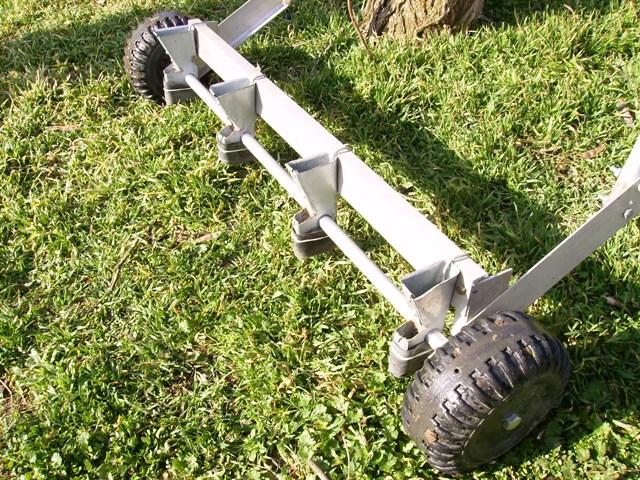
Many summer residents make planters themselves, using drawings and their own designs.
Caring for sprouts
Corn isn't considered a difficult crop to grow, but with proper care, you can significantly increase your yield and make the cobs more delicious. The main challenge in growing corn is protecting it from the numerous diseases that attack it.
Thinning seedlings
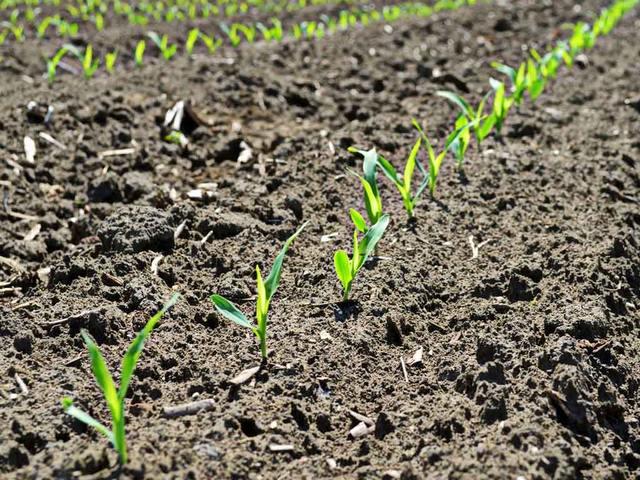
When nest planting corn, it's important to remove excess seedlings promptly to avoid slowing down vegetation. When removing an extra seedling, hold the soil in place to prevent the remaining plant's roots from being exposed. Add soil if necessary.
Hilling and weed removal
Corn requires constant access to air to its roots, so weeds are removed regularly and the soil is loosened. Weeding is done before adventitious roots have grown. After this, hilling is necessary, which replaces weeding and helps support the heavy plant. This is done once or twice per season.
Watering and fertilizing
Corn should be watered regularly, ensuring the soil is moist to a depth of 15 centimeters. This moisture-loving crop requires watering throughout the entire growing season.
Corn doesn't like standing water; excess moisture prevents air from reaching the roots, causing the leaves to take on a gray-purple hue. During rainy weather, reduce watering to ensure proper soil drainage.
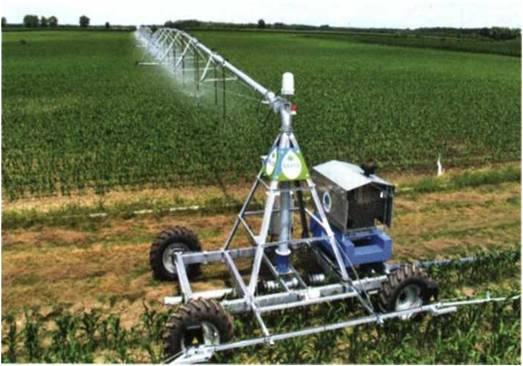
Watering increases as the stem grows and fruit begins to form, and decreases when the threads on the cobs begin to darken. A drip system helps facilitate watering, providing the recommended moisture and nutrient supply.
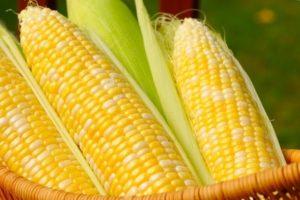
Corn is fertilized with organic and mineral fertilizers. It's important to follow the appropriate timing and schedule for proper growth:
- the first organic fertilizing (manure, chicken droppings) after 3-4 leaves appear;
- the second is ammonium nitrate, potassium phosphate in liquid form, at 10-11 leaves (approximately after 2-3 weeks).
Additionally, during the stage of active cob formation, urea is used for foliar feeding and microelement complexes.
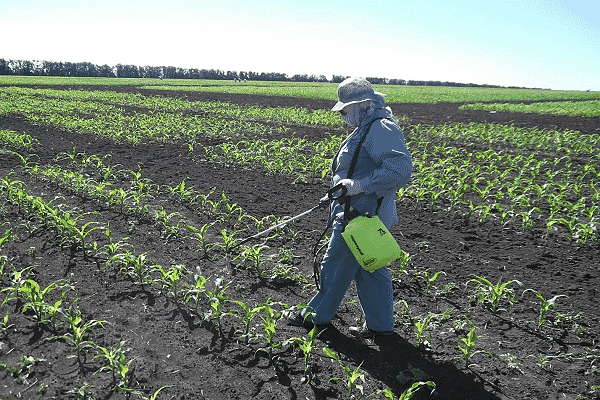
Note: The cobs are harvested when they reach milky ripeness – when opaque juice is released when pressing on the seed.
Protection from illnesses and diseases
Of all grains, corn is most susceptible to various diseases. Excessive moisture leads to the rapid spread of fungal diseases. Let's look at the most common problems.
Important: to prevent diseases, pre-sowing seed treatment with fungicides is recommended.
Helminthosporium
Helminthosporium leaf spot develops most often in the second half of summer on late crops. The pathogen overwinters in the soil or on corn seeds.
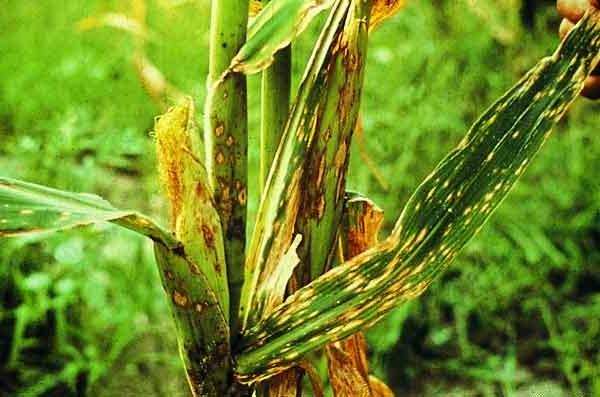
Elliptical or rectangular spots of orange-brown color form on the foliage. The leaf dries up and dies. Greenish or dark spots form in the internodes of the stem. The base of the ear and the interkernels are affected, resulting in a dark, felt-like coating.
The diseased plant is removed. The remaining bushes are treated with biological or chemical fungicides.
Fusarium
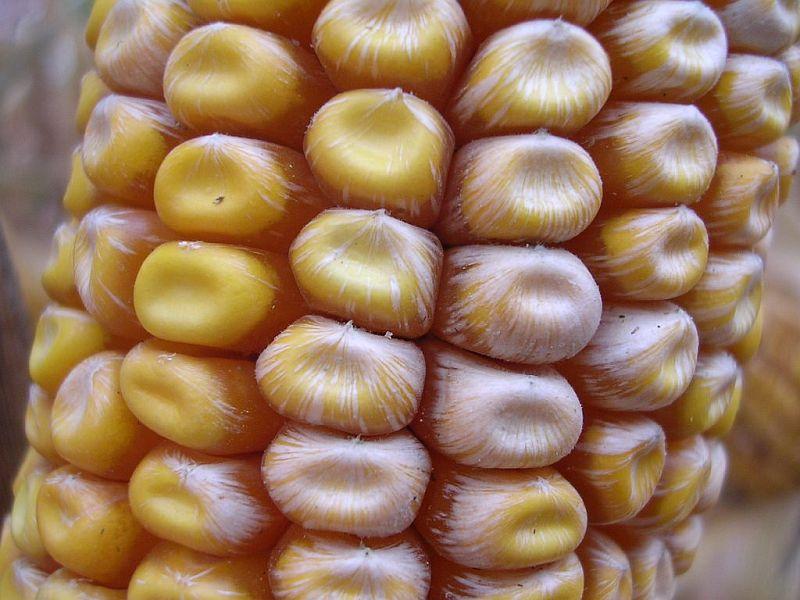
Corn cobs are infected by the fungus Fusarium verticillioides during the waxy and milky stages of ripeness. Several lesions with fluffy white, pink, or purple mycelium appear on the cob. The disease develops from the tip of the cob and moves downward. Sometimes, kernels germinate directly within the diseased cobs. The husks adhere to the seed, making them difficult to separate. The disease can affect corn not only on the vine but also during storage of the harvested crop. Seeds infected with Fusarium verticillioides do not produce a harvest, although they sometimes germinate when planted.
Rust
The disease is caused by a dioecious fungus. It manifests itself as yellow spots on the foliage, which darken and cause the leaves to rupture. Rust is dangerous if it develops rapidly. The cobs are underdeveloped, and the grains are small and uneven in size.
Loose smut
The fungus that causes the disease persists in the soil for several years (up to 9). Corn is often infected from the soil during seed germination. The fungus affects the panicle and ear. In severe cases, a sloppy lump of irregular shape remains where the inflorescence and fruit once were. Loose smut infects the soils of southern Russia.
Bladder smut
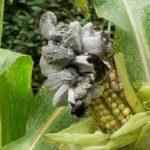
Blistering blisters are caused by a fungus that affects the entire above-ground portion of corn. They grow up to 15 centimeters, initially slimy, then dry out and release dusty spores. The disease is widespread.
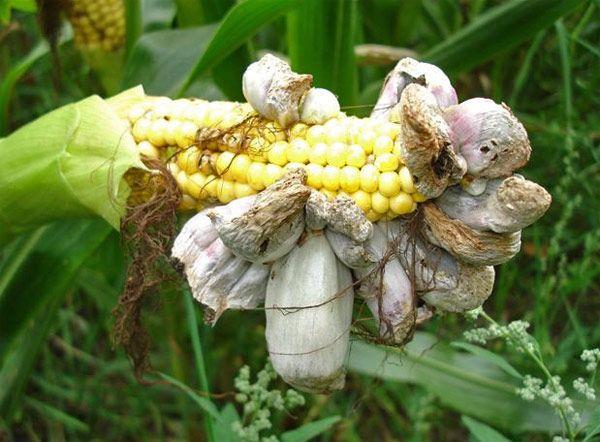
Stem rot
A type of fusarium wilt. The disease develops when the ears of corn are ripening. The leaves and the plant dry out right at the roots, without collapsing. The plant easily pulls out of the soil because the roots have rotted and dried out.
Methods of control
The following helps to avoid diseases:
- selection of varieties and hybrids resistant to fungal infections;
- deep digging of the soil;
- soil preparation in autumn, removal of organic matter from the soil, treatment with fungicides;
- treating corn seeds with antifungal preparations;
- compliance with sowing dates and planting density;
- proper watering, loosening, weed removal;
- Preventive spraying of plantings with fungicides.
Protecting corn from diseases requires a combination of measures and constant care, from seed selection to soil cultivation after harvest.
The most common pests of this crop include cutworms, root aphids, Swedish flies, and corn borers. It's important to recognize the early stages of an insect infestation and promptly treat them with folk remedies or insecticides.
Most gardeners grow the queen of the fields on their plots. By mastering simple farming techniques, you can provide yourself with delicious, juicy corn in the summer and prepare supplies for the winter. Corn grows well in all regions, producing consistently high yields and delighting you with fruits that have high nutritional and medicinal properties.
Related posts:
 Technology for growing corn in open ground and greenhouses, planting and care
 Description and characteristics of the most productive varieties and hybrids of corn
 Technological map for growing corn for silage, seeding rates and yield per 1 ha
 Rules for harvesting corn from fields for different purposes: for grain, for popcorn and for silage
 Description and characteristics of the best varieties of sweet corn, cultivation technology
 The best eggplant varieties for growing in a polycarbonate greenhouse: planting and care
 How to preserve corn kernels and cobs in jars at home for the winter
 Corn diseases and pests, effective control measures and prevention