
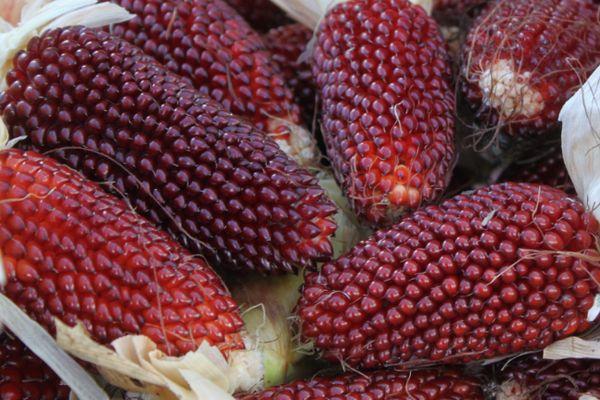
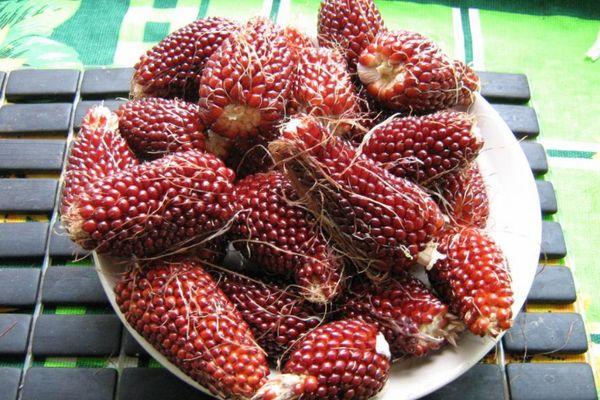
Strawberry corn is considered one of the most unusual vegetable crops today. It has a unique appearance. The corn cobs are dark pink and purple, reminiscent of pine cones or strawberries. The fruits are eaten and used as ornamental material.
What is Strawberry Corn?
Characteristics of the variety:
- Ornamental corn loves warm, sunny weather and abundant watering.
- It is grown in different countries where weather conditions permit.
- The culture is also gaining popularity in Russia.
- This is a young variety and can be grown outdoors. It takes several months for the plant to fully mature.
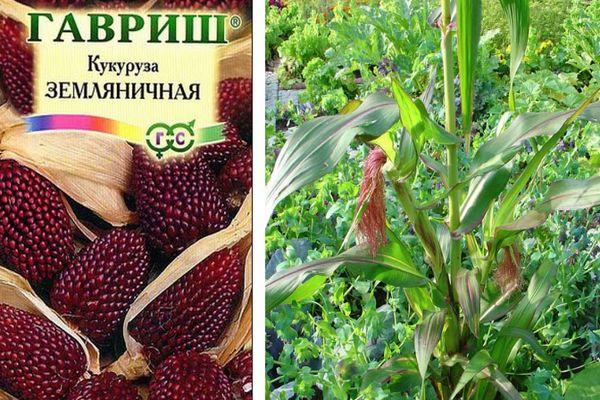
- The bushes of this variety are not very tall, reaching a height of 1 m. Sometimes they can stretch up to 1.5 m.
- The leaves are oblong and have pronounced white stripes.
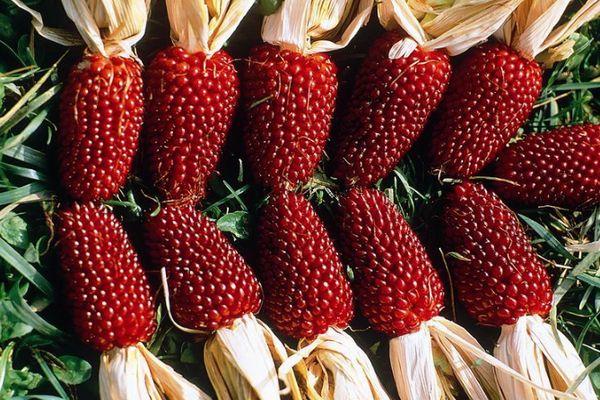
Strawberry corn cobs are small, measuring 4-7 cm in diameter and about 10 cm in length. They are cylindrical in shape, tapering toward the top. The cob is thicker at the base. Unlike regular corn, the kernel is not hidden under the husks. It is visible only when ripe. The outer leaves, or talash, resemble parchment paper. They are thin and grayish-white in color.
One of the unique features of corn cobs is their longevity. They can be stored for a very long time without losing their characteristics. Even after several years, the plant will not spoil or rot.
This type of corn is most often grown in gardens as a decorative feature. However, its kernels are also eaten. If picked when the cobs are still in their milky stage, they have a classic sweet corn flavor.
Strawberry corn bushes will decorate any garden. They are grown in flower beds and as hedges. The plant is versatile in its uses. The fruits and leaves are used to create decorative arrangements. They are also used to decorate the home. The leaves are used to create whimsical 3D crafts. The leaves are also suitable for appliqués.
The crop is suitable for dietary and baby food. It contains many beneficial substances that remain intact even after cooking. Nutrients in strawberry corn:
- calcium;
- potassium;
- manganese;
- iron;
- magnesium;
- copper;
- zinc;
- phosphorus.
Cooking method: Boil the purple corn on the cob for 1 hour, brush with butter, and eat. Alternatively, you can grind it and add it to flour. This will give baked goods a lovely pink color. This corn is a natural dye.
Growing
Growing the crop is hassle-free. Growing strawberry corn will be especially easy for those with experience growing the regular variety. Seeds are available in specialty stores. Cultivation is quite simple. It can be sown directly into the ground or planted as seedlings.
The seedling method is suitable for central Russia, where summers are not too hot. Seeds are placed in paper cups with potting soil in April. For germination, the seedlings require warmth and moisture. Sprouts will appear in the cups within 5-7 days. Transplanting to a permanent location occurs in late May. By this time, prolonged frosts will have passed, and the air temperature will have warmed to 17ºC.
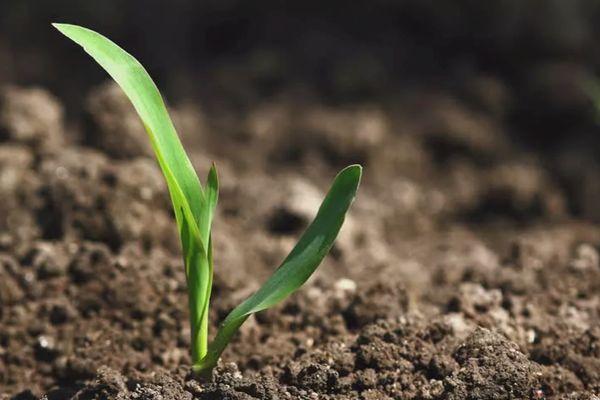
Planting seeds outdoors is suitable for regions with warm climates. A few days before planting, warm the seeds in the sun and soak them in water. Sow in fertilized soil at a temperature of at least 13ºC.
Seeds (and small seedlings) are planted 40-50 cm apart. Choose a sunny location, preferably away from strong winds. Fertilize, till, and moisten the soil before planting. Good predecessors for corn are beans, potatoes, alfalfa.
Strawberry corn requires standard care. It needs to be weeded regularly. This is very easy to do. It's best to avoid hand weeding in favor of regular or mechanical weeding.
The plant needs water. Adequate moisture will help the corn mature faster. Water thoroughly and daily. Increase the amount of water once the cobs appear on the plants.
The crop needs fertilization. Organic and mineral fertilizers are suitable for this purpose. It's best to use them together. Provide the plant with nitrogen, phosphorus, potassium, magnesium, zinc, sulfur, and other nutrients. All these nutrients help fruit formation.
This plant should be grown in large groups. It's wind-pollinated. If there are many bushes nearby, the cobs will be abundant. Fertilize the crop during flowering, as this is when it needs its nutrients most. If corn is grown for food, there is no need to use chemicals to control pests or weeds.
To obtain larger fruits, it is recommended to remove side shoots. Harvesting occurs in August and early September. The corn is ripe when a milky liquid oozes out when pressed, and the cobs are slightly dry. The tastiest corn is that cut just after sunrise. It is believed to retain its sugars longer. It is best to store cobs of corn for consumption in the refrigerator.
Related posts:
 Description and characteristics of the most productive varieties and hybrids of corn
 Description and characteristics of the best varieties of sweet corn, cultivation technology
 Rules for harvesting corn from fields for different purposes: for grain, for popcorn and for silage
 What is corn - a vegetable or a fruit, what family does the cereal belong to and where is it used?
 Corn sowing rules and regulations, how to plant and prepare seeds
 How to preserve corn kernels and cobs in jars at home for the winter
 Technology for growing corn in open ground and greenhouses, planting and care
 The benefits and harms of corn for human health
A wonderful variety, I bought it especially for my granddaughter, and I've been planting it for three years now. But last year I fed it with a plant growth bioactivator. BioGrowThe result was significantly better than in the previous year.