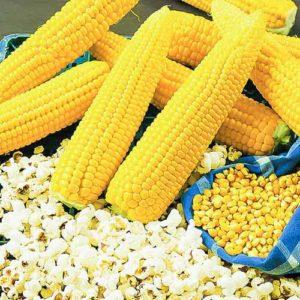
Corn yield is a concern for farmers and gardeners. Seasonal profits depend on the quantity and quality of the harvest. Weather conditions, crop variety, and seedling care influence the number of ovaries and the quality of the cobs.
What does plant yield depend on?
The amount of harvest depends on corn growing conditions and species. Each region has its own suitable varieties that produce the maximum yield.
From the variety
Corn is classified as early-ripening, maturing in 50-70 days; mid-season, maturing in 80-90 days; and late-ripening, ready for harvest in 90-105 days. Yield is calculated based on the crop's variety.
Important! Early maturing varieties produce more cobs.
From climatic conditions
The crop is considered a southern one, where it thrives quickly and efficiently. However, prolonged heat also requires additional watering and care. Early-ripening varieties are used for temperate and northern regions.
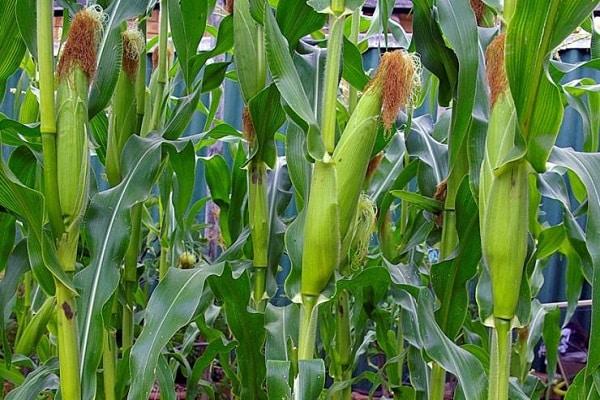
From soil fertility
Corn may fail to germinate in poor soil. If seedlings do form, the plant will likely fail to set fruit. To grow corn, soil must be rich in nitrogen, phosphorus, and potassium. These elements improve stem and plant development, increase yield, and help build immunity to infectious diseases.
The most fertile varieties and hybrids
The crop has many species and varieties. Early maturing varieties are preferred, as they mature before the onset of dry periods and also produce a bountiful harvest. These include:
- Collective 160. Ripens in 90-100 days. Average yield is 80-85 c/ha.
- Bemo 182. A hybrid variety with a 95-105-day growing season. Under favorable growing conditions, it yields up to 90 centners per hectare.
- Dokuchaevsky 250. Suitable for growing in temperate climates. Fruiting occurs 100-105 days after planting. Harvests up to 80 centners per hectare.
- Korsar 315. A mid-season hybrid, it produces tall plants up to 270 cm. Yields 80 c/ha.
- Spirit. An early, early-ripening variety. Ripens in 55-60 days. Adapts well to any soil type and is suitable for cultivation in all regions. Up to 70 centners of yield can be harvested from 1 hectare of land.
- Lakomka 121. An early variety, ripens in 70-80 days. Harvests up to 55 c/ha.
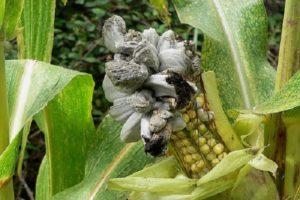
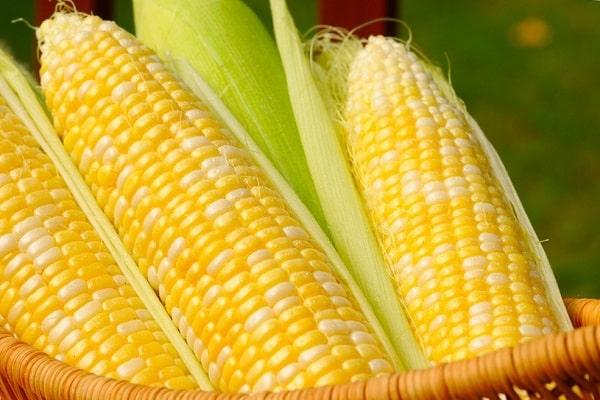
Corn yield data
Based on crop yield data in Russia, the optimal climate for growing can be determined.
By regions of Russia
The corn yield by region of Russia is:
| Region | Harvest volume in thousands of tons |
| Krasnodar Krai | 3,360 |
| Stavropol Krai | 938 |
| Belgorod Oblast | 747 |
| Rostov Oblast | 630 |
| Kursk Oblast | 529 |
| Voronezh Oblast | 517 |
| Kabardino-Balkarian Republic | 396 |
| Tambov Oblast | 297 |
| Republic of Tatarstan | 277 |
| Lipetsk Oblast | 230 |
| Republic of North Ossetia-Alania | 214 |
| Saratov Oblast | 192 |
| Republic of Mordovia | 192 |
| Republic of Adygea | 156 |
| Volgograd Oblast | 142 |
| Oryol Oblast | 137 |
| Bryansk Oblast | 127 |
| Karachay-Cherkess Republic | 102 |
| Ryazan Oblast | 79 |
| Nizhny Novgorod Oblast | 79 |
By year
Corn yields vary from year to year, depending on cultivation methods, variety, and weather conditions. Average yields by year:
| Year of cultivation | Amount of harvest in centners/ha |
| 2000 | 21.2 |
| 2001 | 18 |
| 2002 | 28.5 |
| 2003 | 32 |
| 2004 | 40.3 |
| 2005 | 38.5 |
| 2006 | 36.2 |
| 2007 | 29.3 |
| 2008 | 38.6 |
| 2009 | 35.3 |
| 2010 | 30 |
| 2011 | 43.4 |
| 2012 | 42.4 |
| 2013 | 50.1 |
| 2014 | 43.6 |
| 2015 | 49.3 |
| 2016 | 54.6 |
Over the past 16 years, the harvest has doubled. This has been facilitated by the development of new high-yield, disease-resistant varieties, as well as improved agricultural practices.
Payback calculation
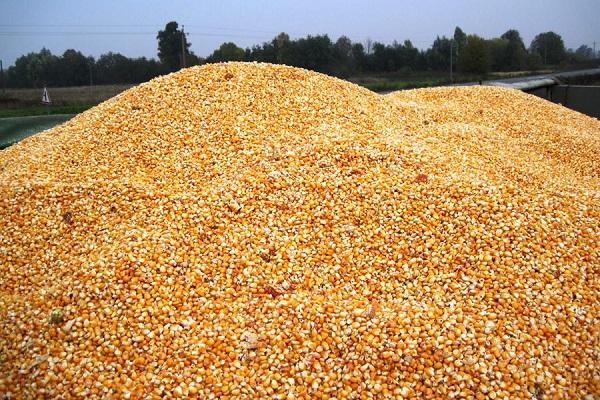
Depending on the variety, seeds are purchased, with an average cost ranging from 16,000 to 65,000 rubles. This amount is enough to sow 1 hectare of land. Depending on the variety, up to 80 centners of grain can be harvested from 1 hectare. The return on investment ranges from 40 to 80%.
Much depends on the quality of care for the crop, the chosen variety, the growing area and the climate zone.
Important! Before starting corn production, it is recommended to thoroughly familiarize yourself with the growing regulations and select the appropriate variety for the growing region.

Tips for increasing crop yields
To increase the yield, you need to follow several rules, as well as know how to properly cultivate and prepare the soil.
Cultivation methods
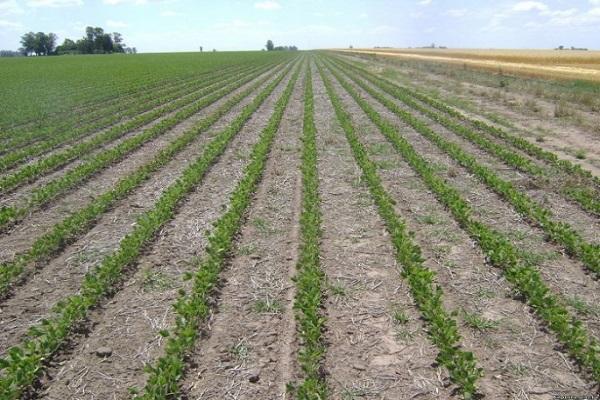
Corn growing rules must be followed to obtain a good harvest and large fruits:
- Plant the seeds according to the pattern. Leave 60 cm between each row. After the first shoots emerge, thin the seedlings.
- Leave a gap of at least 15 cm between plants, as the plants are large and can interfere with each other’s normal development.
- The seeds are planted 5-7 cm deep into the soil.
- The culture prefers abundant watering at least once a week.
- When lateral shoots appear, they are cut off, as they degrade the quality of the cobs.
- The soil in the root area is constantly loosened to avoid crust formation.
- Regular fertilization is carried out, which improves the development of fruits and the plant itself.
The influence of soil cultivation methods
The soil for planting begins to be prepared in the fall. It is dug over and manure is added at a rate of 40-50 kg/ha. If necessary, dolomite flour is spread to reduce acidity. Corn does not grow in acidic soil. Before planting, the soil is fertilized with nitrogen, phosphorus, and potassium.
All mineral fertilizers improve plant development, strengthen its immunity and increase yield.
Related posts:
 80 Best Eggplant Varieties for Different Regions with Descriptions and Characteristics
 The best grape varieties for growing in the Urals, planting and care rules in summer
 Rules for harvesting corn from fields for different purposes: for grain, for popcorn and for silage
 Description of the best varieties of onions, planting and care in open ground
 How to propagate and grow peas, cultivation technology, and care in open ground
 Description of the 23 best pear varieties for the middle zone, planting and care rules
 Description and characteristics of the best seeds of pea varieties and types
 The best eggplant varieties for growing in a polycarbonate greenhouse: planting and care