
- Peculiarities of planting corn in the country
- Selecting a site for planting
- Soil requirements
- How to plant corn
- Planting dates
- Preparing the soil for planting
- Preparing the seed material
- Planting diagram
- Planting seeds in open ground
- Growing plants using seedlings
- How to care for a plant planted in a garden
- Hilling and weed removal
- Watering and fertilizing
- Pests and diseases of corn
- When to harvest corn and how to store it
To plant and grow corn in your garden, you need to prepare the plot in advance, provide the necessary soil, and monitor its development. This easy-to-grow crop is grown commercially, for canning, and for processing into animal feed. Gardeners love boiled corn, which contains many beneficial and nutritious nutrients.
Peculiarities of planting corn in the country
Corn is grown commercially. Many gardeners try to grow it in their own backyards. With optimal conditions and proper planting guidelines, corn can be easily grown in your own garden. The key is to choose the right variety: mid-season varieties are suitable for temperate regions, while early-ripening varieties are best for northern regions.
Selecting a site for planting
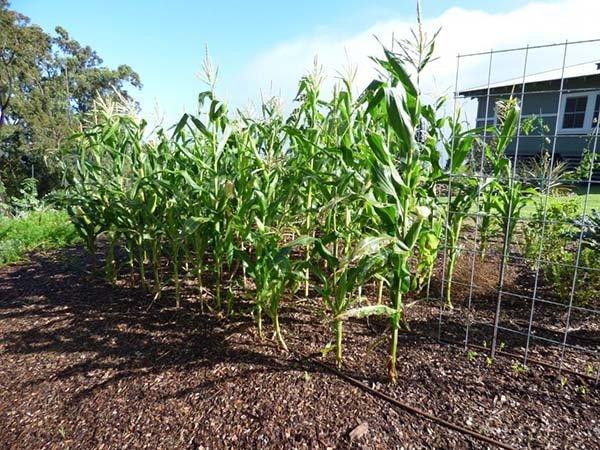
The crop prefers well-lit areas. Since its stems reach up to 2 meters in height, it can be grown near shrubs. It's important to avoid shade. In fields, corn is sown after legumes and cereals. It's easier to grow in the garden; any plot will do. Corn grows especially well after:
- tomatoes;
- cucumbers;
- beans;
- potatoes;
- pumpkins;
- watermelon;
- zucchini.
Soil requirements
Corn doesn't have very high soil requirements. It thrives in sandy and sandy loam soils. Clay and loam soils require drainage. Adding sand to the soil can also improve the situation. For seedlings, mix peat, humus, and sand. Corn grows well in slightly acidic soils.
How to plant corn
The crop is planted from seeds or by preparing seedlings in advance. In southern regions, seeds placed in the ground produce strong shoots.
In temperate and northern regions, it is recommended to grow corn through seedlings.
Planting dates
Planting of seeds and seedlings begins in mid-May. By this time, the soil should warm to 10°C at a depth of 12 cm. In northern regions, the seeds are planted to a depth of 7 cm. Depending on the variety's maturity, the cobs ripen from late July to mid-August.
Preparing the soil for planting
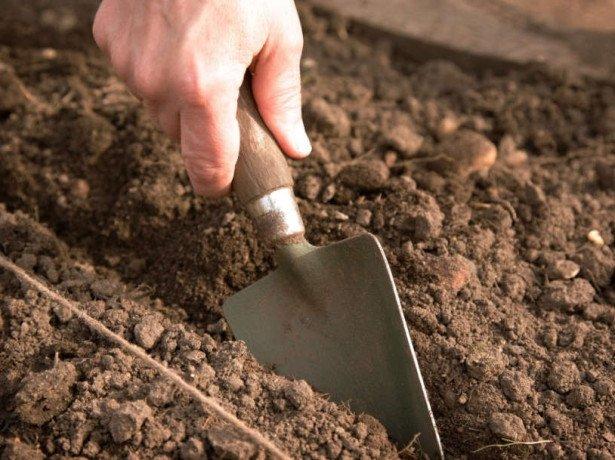
The selected plot is prepared in the fall. It is dug to a depth of 10 cm, removing all weeds and stones. Phosphorus and potassium fertilizers are added. If the soil is highly acidic, dolomite flour or slaked lime is added.
In the spring, the procedure is repeated. The soil is dug up and organic fertilizer is added. Corn absorbs the following well:
- wood ash;
- mullein solution;
- compost.
Important! If organic fertilizers are not available, use mineral fertilizers containing phosphorus and potassium.
Preparing the seed material
Seeds are purchased in stores, where they are sold disinfected. These seeds have a higher germination rate and are less susceptible to disease. Seeds are also collected from private plots, with a few cobs left on the stalk to ripen.
Before planting, the seeds are heated at a temperature of 35 °C for 5 days.
Then they are soaked in warm water for 2 days. Afterwards, the seeds are transferred to the soil.
Planting diagram
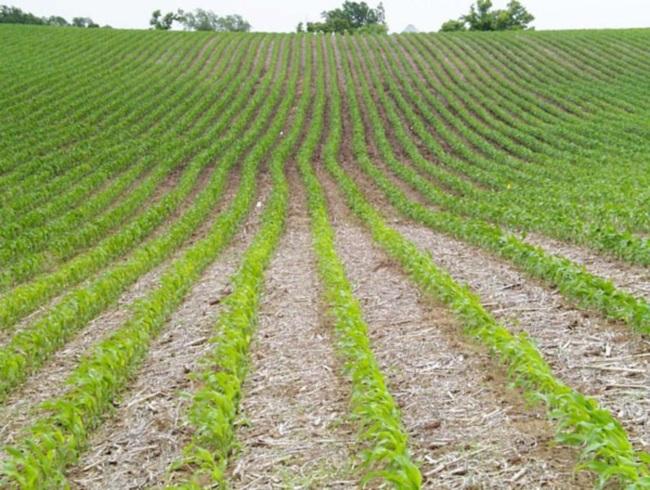
Beds are formed in the prepared area. They can be single-row or multi-row. A distance of 40 cm is maintained between each plant, and 60 cm between rows and beds.
Planting seeds in open ground
Sowing corn seeds is carried out according to the following algorithm:
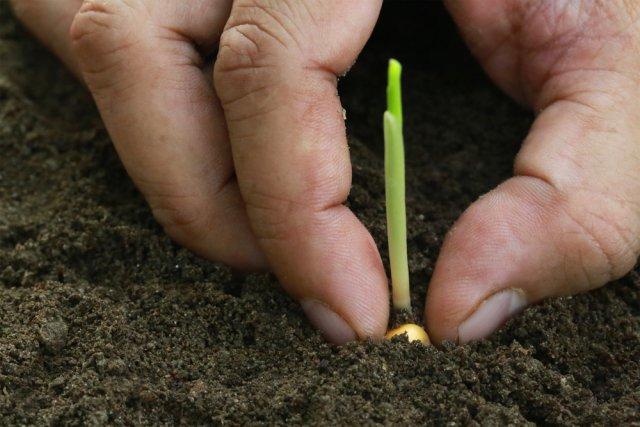
- On the prepared area, holes are made 7 cm deep.
- A little warm water is poured into each hole.
- Three grains are placed in one place.
- They bury it in the ground.
- The bed is leveled with a rake.
- After the seedlings have emerged, they are thinned out, leaving the strongest shoots.
Growing plants using seedlings
Peat boxes are used for seedlings. After the sprouts have sprouted, they are embedded in soil along with their roots. Each box is filled halfway with soil. Two or three seeds are placed in each box and covered with soil. The boxes are then covered with transparent plastic wrap until sprouts emerge. The seedlings are thinned out, leaving the strongest seedlings.
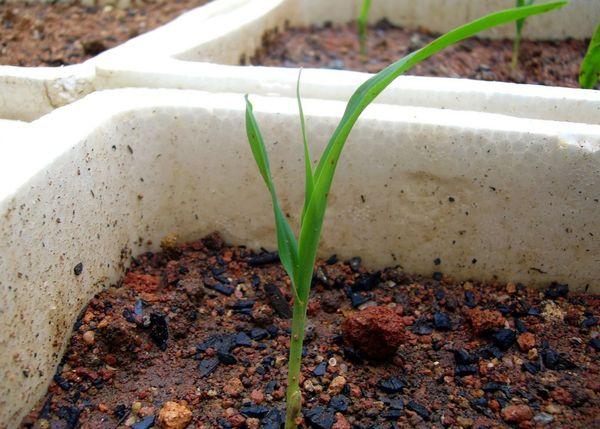 Important! Mini-greenhouses with seedlings are ventilated for 30 minutes every day.
When the sprouts have formed 3 true leaves, they are planted in the ground, following the planting pattern.
How to care for a plant planted in a garden
Corn is an easy-to-care-for crop. However, when growing it in your garden, a little attention is required. This will ensure the formation of strong cobs and improve the plant's development.
Hilling and weed removal
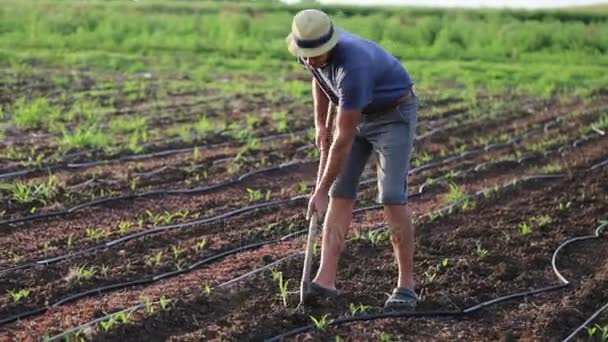
Hilling is done several times per season. The condition of the roots is monitored; if they are visible above the soil surface, they are covered with soil to a depth of 10 cm. Weeds are also monitored and removed as they appear. Weeds absorb some of the minerals, preventing the corn from having enough micronutrients to form strong ears.
Watering and fertilizing
Water the plants weekly, using 5-10 liters per bush. Once the fruit has formed, reduce the watering by half. Allow the water to settle beforehand. Fertilize three times per season, combining this with watering. The following are used for this purpose:
- potassium sulfate;
- superphosphate;
- potassium magnesium sulfate;
- urea.
Of the organic additives, corn is well absorbed:
- chicken manure solution;
- mullein solution;
- wood ash.
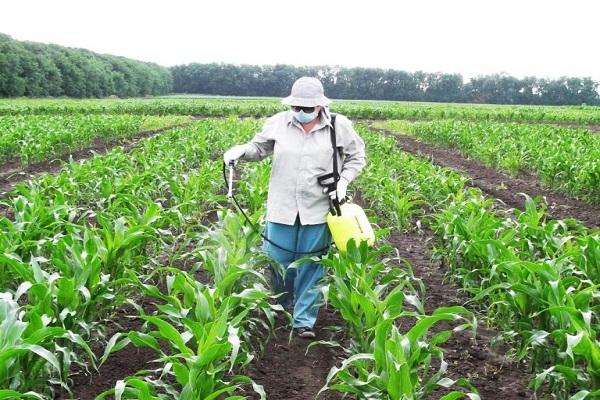
Pests and diseases of corn
When all growing rules are followed, the crop rarely gets sick. However, under unfavorable weather conditions, it can be affected by:
- fusarium;
- rust;
- root rot;
- bladder smut;
- helminthosporiosis.
Among insects, the following feed on corn leaves and fruits:
- wireworm;
- meadow moth;
- stem borer;
- oat fly;
- false wireworm.
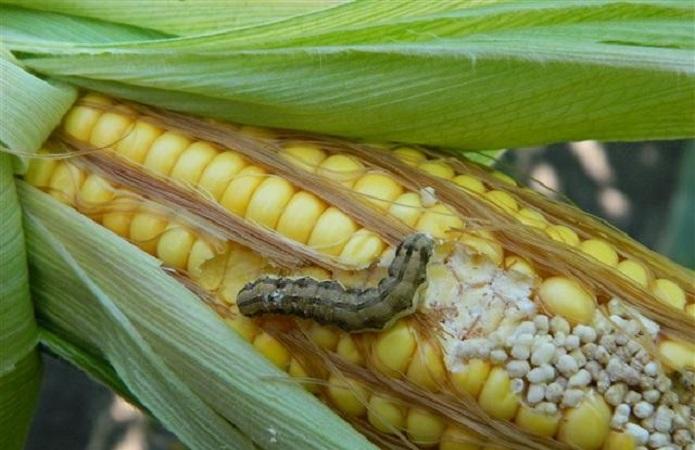
To combat the damage, insecticides and fungicides designed to combat corn diseases are used.
When to harvest corn and how to store it
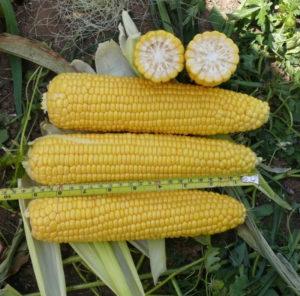
For canning and cooking, the cobs are harvested when the kernels are light yellow and the hairs inside the cob are white with brown tips. For drying and seed extraction, the cobs are cut when the kernels are bright yellow and the hairs are brown.
Corn is stored frozen or dried. Fresh corn on the cob will keep in the refrigerator for up to 14 days. Parboiled kernels or whole cobs can be frozen, maintaining their shelf life for up to six months.
Related posts:
 How to grow peanuts in a country house in the middle zone: the intricacies of planting and care
 How to propagate and grow peas, cultivation technology, and care in open ground
 How to plant grapes step by step, with a description of the process and care
 Is it possible to grow an apricot tree from a seed in your garden? How to plant and care for it?
 The best grape varieties for growing in the Urals, planting and care rules in summer
 Methods for planting and propagating cherries at home
 How to properly plant peas in a greenhouse and open ground
 How to grow grapes in the Moscow region in open ground without a greenhouse