- Optimal time for collecting seed material
- Which cucumber should be left to obtain seeds?
- Technology of obtaining seed material
- How to properly dry collected seeds
- What to do if the seeds start to rot
- Duration and rules for storing dried seeds
- Optimal conditions for long-term storage
- Selecting containers and locations
- Secrets of collecting cucumber seeds
Many gardeners don't know how to properly collect cucumber seeds for future seedlings. Collecting seedlings isn't difficult if you follow the instructions and properly prepare the vegetables for further processing. The advantage of this method of planting is not only saving money but also producing high-quality vegetables.
Optimal time for collecting seed material
Timing of seed collection is crucial. To ensure the seeds produce the desired germination and abundant fruit the following year, it's crucial to choose the right harvesting period. Cucumbers must undergo all stages of preparation and be hardened off by storing them in the fall. Natural stratification will strengthen the seeds and allow you to select the right ones. To harvest fully ripened seeds, cucumbers should remain on the plant until early September.
Which cucumber should be left to obtain seeds?
Seeds must be collected according to the following criteria:
- the stalk dries up and falls off on its own;
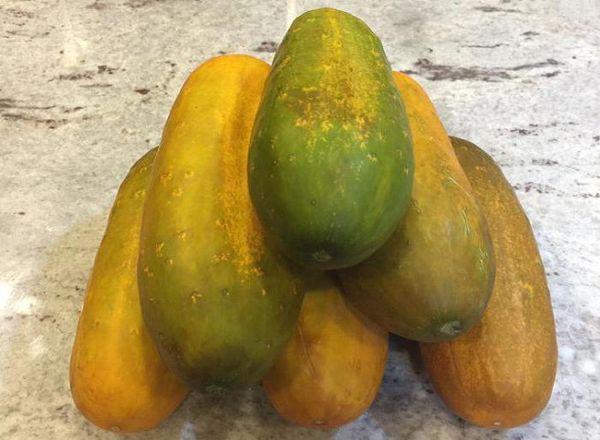
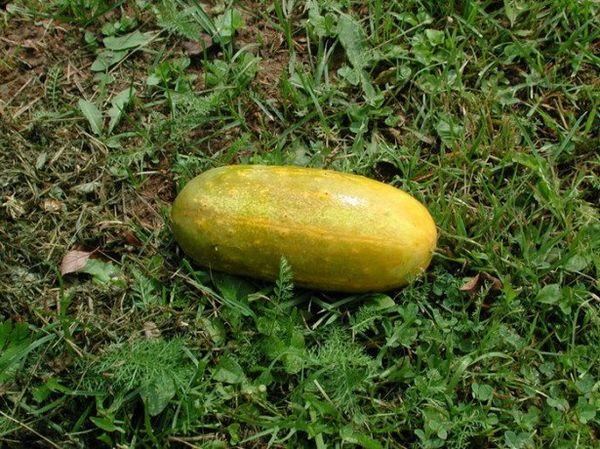
- the cucumber turns brown;
- the vegetable becomes soft and watery.
Cucumbers that will later serve as seeds should be large and overripe. The cucumbers should be from a plant that has not been exposed to disease. To prevent premature harvesting, mark the cucumber with a ribbon.
Technology of obtaining seed material
To obtain high-quality seed, ripe cucumbers are picked from the garden in early September and placed on a flat surface for further stratification. The fruits are left until the first frost.

To obtain high-quality seedlings at home, you need to follow the following steps:
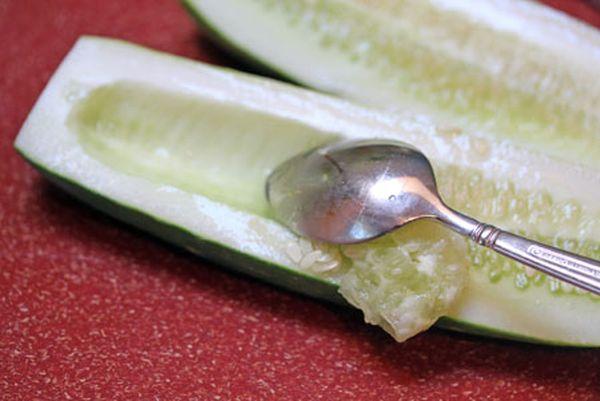
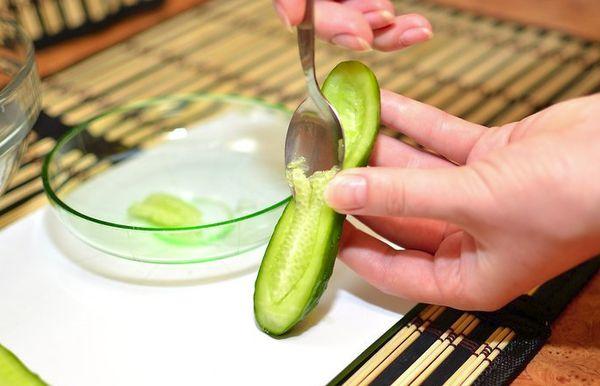
- cucumbers are cut lengthwise into two parts, this is done to make it easier to remove the seeds;
- Using a spoon, collect the seed material together with the pulp in a deep container;
- cover the container with a lid and place in a warm place for 3 days;
- Using a wooden spoon, thoroughly mix the seed mixture;
- wait for the fermentation process to complete, then rinse the seeds with clean water 2-3 times;
- dry the seeds.
The seeds should separate easily from each other and not contain any pulp particles.
 Important: When rinsing, ensure that the seed coat separates, otherwise the planting material will not sprout.
How to properly dry collected seeds
Proper drying of seeds is an important step. Dry the seeds outdoors. To dry, wash the cucumber seeds, spread them in a thin layer on cardboard, and leave them outside under a canopy. Stir the seeds frequently to prevent them from sticking to the cardboard. Bring the seeds indoors overnight. Complete drying takes at least 2 days.
What to do if the seeds start to rot
Cucumbers can begin to spoil, harboring bacteria that promote rot. To prevent the seeds from rotting, they should be treated with a copper sulfate solution after washing. The treated seeds are then dried and stored.
Duration and rules for storing dried seeds
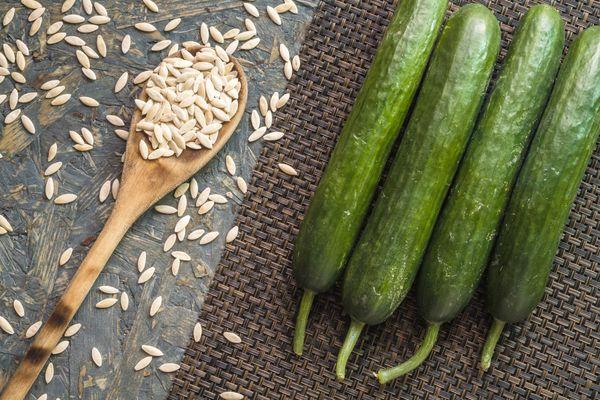
Seeds should only be stored after they have been thoroughly dried. Incompletely dried seeds quickly spoil and are unsuitable for further use. Storing large quantities of seeds is not recommended, as this can lead to spoilage and mold.
Cucumber seeds can be stored for up to 7 years. Avoid storing them near heating appliances or in damp areas. This can lead to the growth of harmful organisms that cause mold and damage to the seedlings.

Optimal conditions for long-term storage
The storage temperature for cucumber seeds should be no higher than 12 degrees Celsius. Excessively high temperatures can cause the sprouts to sprout.
Selecting containers and locations
For storage, use containers such as jars and plastic bottles with holes for aeration. To preserve the seeds, store them in a basement or pantry, as the room temperature is higher than recommended.
It is important to know that cucumber seeds are not planted the following year. The highest quality specimens are those that have been stored for at least 3 years.
Secrets of collecting cucumber seeds
To obtain seed material, the following rules must be observed:
- fruits must be selected with a square cross-section, indicating a female type;
- To prevent the vegetable from rotting, it is necessary to place the cucumber on a wooden board without picking it from the bush;
- do not expose cucumbers to moisture, which may negatively affect their germination;
- Do not use cucumbers that have rotted, as this may lead to further infection of the crop.
Following simple rules will allow you to collect high-quality planting material without any difficulties.
Cucumbers are a undemanding crop, not only in growing but also in harvesting. To preserve the desired cucumber variety, you can use home seed collection methods. This procedure has many advantages and allows you to harvest the desired quantity.
Related posts:
 Description of unusual methods for planting and growing cucumbers
 Description of the best varieties of Chinese cucumbers, planting, growing and care
 How to properly plant cucumbers in open ground with seeds, and at what depth
 TOP 30 best determinate cucumber varieties with descriptions
 How to make a cucumber trellis with your own hands from scrap materials
 How to plant cucumbers in open ground under film: timing and cultivation technology
 How to care for cucumbers in open ground from planting to harvesting
 How to properly plant cucumber seedlings in a greenhouse and care instructions