
The Ginga f1 cucumber belongs to a group of mid-season hybrids. This variety was developed by breeders for cultivation in open fields and plastic greenhouses. The Ginga cucumber variety was added to the State Register of Russian Cucumbers in 2002. Cucumbers of this type are recommended for industrial production.
The hybrid is consumed fresh, canned, and pickled. Ginga's transportability is average, making it a popular choice for retailers.
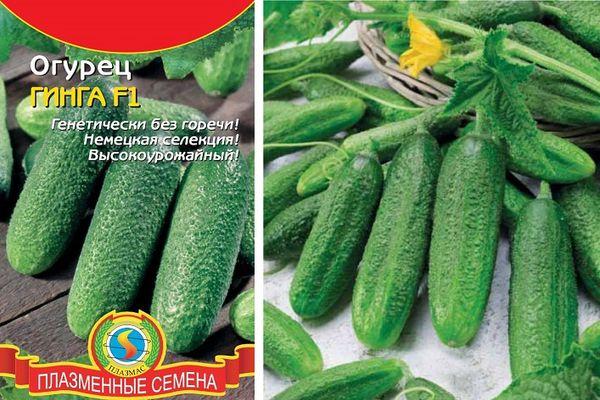
Technical data of the crop
The characteristics and description of the variety are as follows:
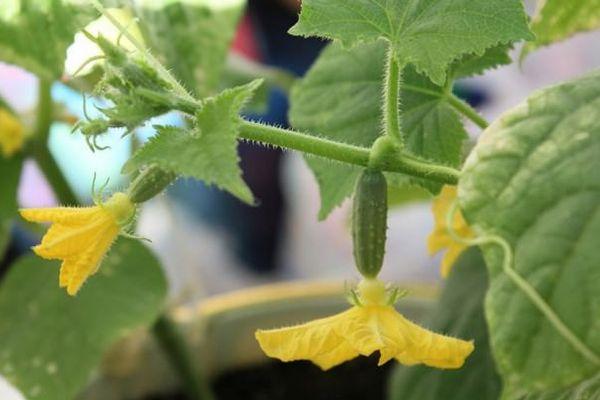
- The first harvest of cucumbers appears on the bushes 46-50 days after germination. Pollination is not required, and the variety itself is a female-flowering variety.
- The bush grows to a height of 200-250 cm. The branches bear a medium number of small green leaves. The plant produces numerous clustered ovaries.
- The bushes can be additionally pollinated by bees.
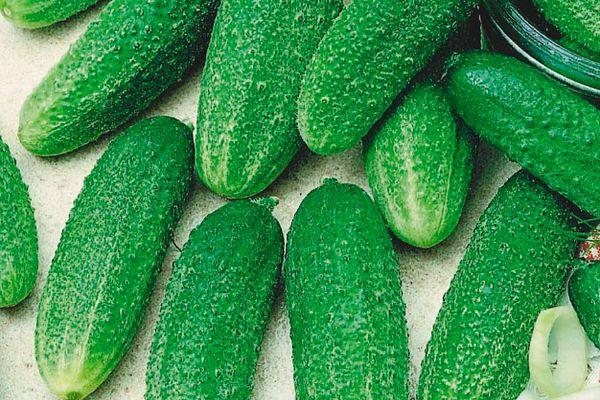
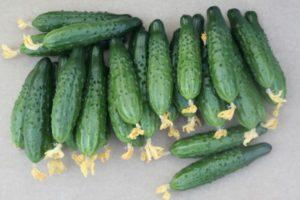
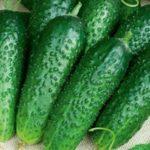
- Ginga cucumbers are covered in dark green skin across the entire cylindrical surface of the fruit. It has numerous small bumps covered in a light fuzz. Cucumbers of this type are covered with faint dark spots, short white stripes and spines, and poorly developed ribs.
- One cucumber weighs from 80 to 90 g. Its length can vary from 90 to 120 mm, and its diameter is 3 cm.
- The fruit's dense and crisp pulp contains no large seed chambers. Ginga has no bitter taste.
According to reviews from gardeners growing this variety, its yield when grown on an industrial scale ranges from 230 to 510 centners per hectare, with a marketable yield of 80-90%. On small farms, Ginga yields 3.0 to 6.0 kg of fruit per bush.
Farmers note Ginga's high resistance to diseases such as powdery mildew, brown spot, and cucumber mosaic virus. The hybrid is less resistant to downy mildew and powdery mildew.
In Russia, it is recommended to grow this variety in greenhouses and plastic film greenhouses in the central regions of the country. In Siberia and the Far North, Ginga can be grown in heated greenhouse complexes. In the southern regions of Russia, cucumbers are grown in open ground.
Growing cucumber seedlings
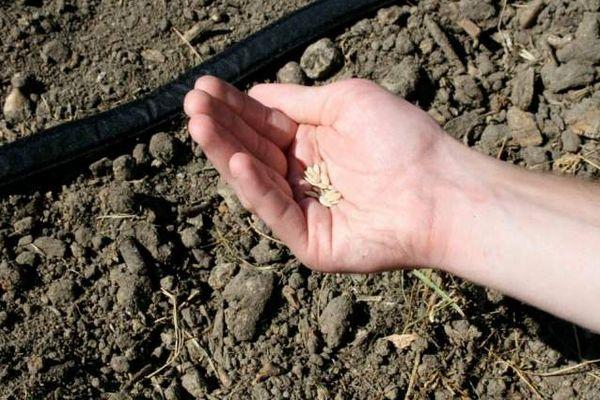
This variety is most often sown directly into the garden beds. However, to ensure a guaranteed harvest, farmers use the Ginga seedling method. After purchasing the seeds, they are treated with potassium permanganate for 15-20 minutes. To increase germination, it is recommended to soak them in a solution containing growth stimulants for 5-6 hours.
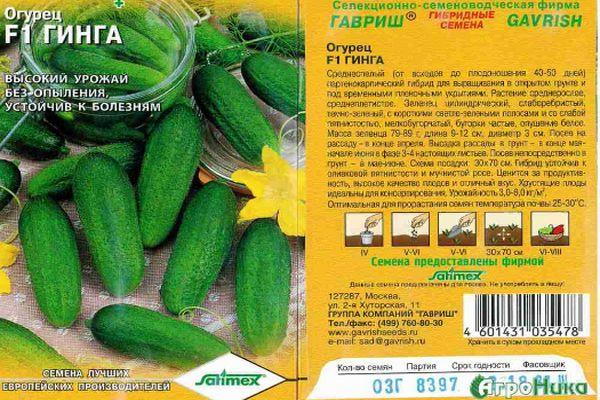
The seeds are then placed in boxes filled with soil, after adding organic fertilizer. After germination, the plants are pricked out when they have developed 2-3 leaves. Before planting in their permanent location, the seedlings are hardened off for a week.
Young bushes are planted in well-sunlit beds.
Before this operation, the soil is loosened and humus or rotted manure is added (ratio: 1 bucket of fertilizer per 1 m² of bed). Before planting, the soil is watered with warm water.
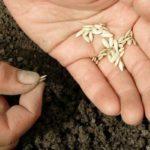
The bushes are planted 0.7-1.0 m apart. Ginga is most often planted in beds between April 15 and 20. When sowing seeds directly into the ground, they are arranged in nests measuring 0.3 x 0.7 m. Each seed is buried 30-40 mm into the soil.
Caring for plants before fruiting
Growing cucumbers outdoors requires the use of plastic film to protect the plants from sudden cold snaps. When using greenhouses, temperature control is achieved by ventilating the rooms.
Take a look Also
If a farmer grows Ginga in open ground, he will have to water the bushes more frequently, hill them several times a week, and feed them with complex fertilizers 3-4 times per season.
 In greenhouses, mineral mixtures are used, for example, nitroammophoska, in a ratio of 30-35 g of fertilizer per 1 bucket of warm water. If foliar feeding is required, use aqueous solutions of superphosphate and calcium sulfate. Urea and other fertilizers can also be used.
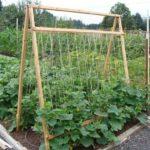
It's recommended to tie the branches of the bushes to a trellis. This will prevent the fruit from falling onto the ground.
If cucumbers are grown outdoors, the lateral buds on the bushes should be pinched off from the first to the fifth leaf on the main stem. The tops of the bushes are pinched off above the second leaf. Garden pests are controlled with chemicals.
Related posts:
 Description of the best varieties of Chinese cucumbers, planting, growing and care
 Description of unusual methods for planting and growing cucumbers
 How to care for cucumbers in open ground from planting to harvesting
 TOP 30 best determinate cucumber varieties with descriptions
 How to properly plant cucumbers in open ground with seeds, and at what depth
 How to make a cucumber trellis with your own hands from scrap materials
 How to properly plant cucumber seedlings in a greenhouse and care instructions
 Why cucumber leaves are drying out and what to do, how to treat them in a greenhouse and in the ground