
The Satina F1 cucumber was developed by Dutch breeders, who are also the creators of many other well-known cucumber varieties. The first Satina cucumbers were bred in 2007, and within a couple of years, it had established itself in Russia and became popular among Russian gardeners. As the description, characteristics, and reviews indicate, Satina F1 is easy to grow and care for and can produce a good harvest even under unfavorable conditions.
What is a Satin cucumber?
Characteristics and description of the variety. The Satina cucumber variety is characterized by generative pollination. It is a self-pollinating crop. These plants have one very important advantage: pollination does not require insects, making them ideal for growing in closed greenhouses or hotbeds. Satina is equally suitable for both private farmers and those planning to grow cucumbers commercially.
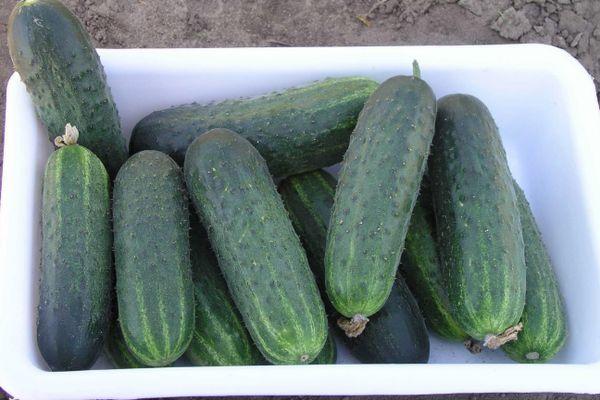
This variety ripens relatively quickly. The first fruits can be harvested within 1.5-2 months after the seedlings emerge. The bushes are medium-vigorous, female, and mid-season. The plant is an indeterminate variety, so it will continue to grow regardless of flower bud formation.
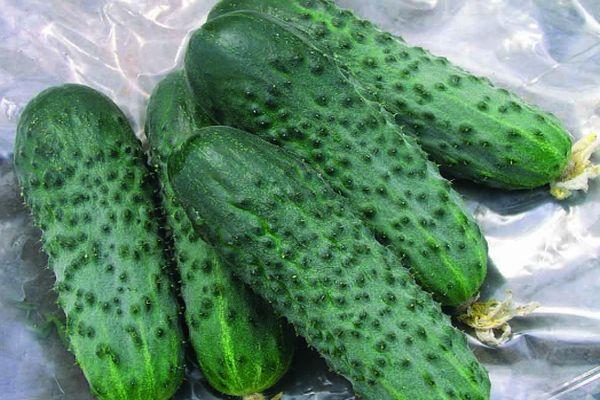
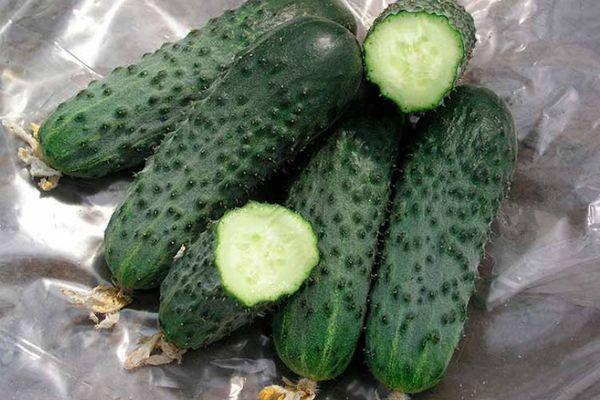
Dutch cucumbers have fairly large leaves and a rich green color. The cucumbers themselves are cylindrical and perfectly shaped. The cucumbers are short but not flattened. The cucumbers have noticeable bumps on their surface, topped with small white spines. On average, a single cucumber of this variety can weigh up to 110 g. Thus, with proper care, a farmer can yield up to 115 centners of cucumbers per hectare of Satina cucumbers.
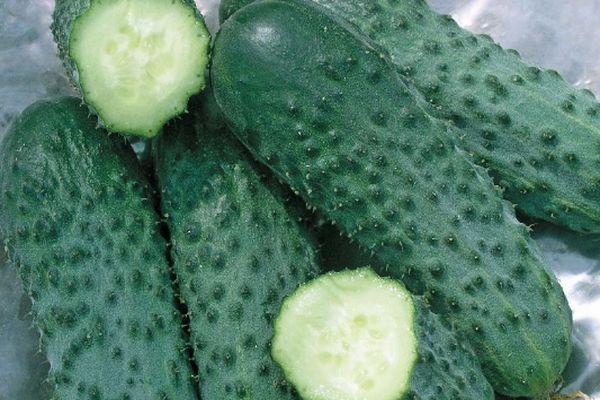
The fruits have a pleasant flavor, and the flesh is juicy and crisp. The fruit contains numerous seeds, which are also particularly soft and small. The cucumber's cavity is completely closed, making it ideal for both fresh consumption and for pickling and marinating. Pickling cucumbers are available in a variety of styles, including:
- regular large cucumbers;
- gherkins;
- Pickles are cucumbers no more than 5 cm in length.
How to grow cucumbers?
The planting and growing technology for this variety is similar to others and is characterized by its simplicity. The key advantage of growing satin cucumbers is the lack of need for pollination.
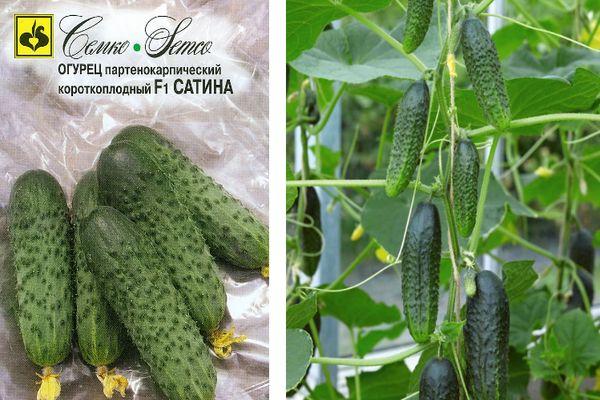
Satin cucumbers have only one requirement: the quality of the soil they're grown in. Medium loam is preferred, as this type of soil has good aeration. It's ideal if cucumbers are planted in areas previously used for potatoes, onions, peppers, or cabbage.
Before planting, seeds should be treated with a potassium permanganate solution. To do this, dilute 1 g of the solution in 200 ml of water. Then, soak the seeds in the resulting solution for 20 minutes. This disinfects the seeds, protects them from pests, and makes them more resistant to diseases.
The soil must be pre-treated with a potassium permanganate solution. To do this, mix 5 grams of potassium permanganate per 10 liters of water. Additionally, remove all weeds from the soil and loosen the soil where you plan to plant the Satina.
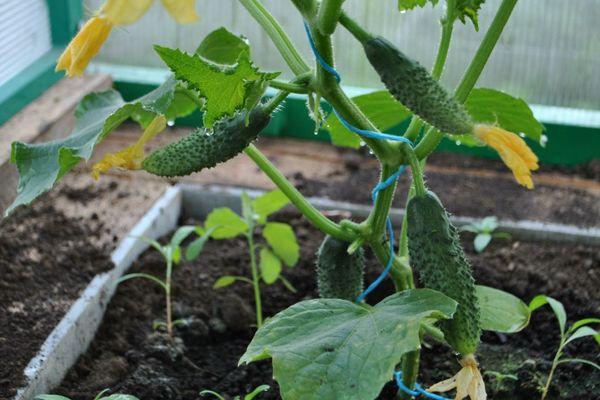
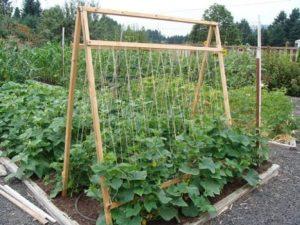
When planting in a greenhouse, follow a 60x15 cm pattern. If you plan to grow plants outdoors, a 60x60 cm pattern is suitable. Cucumbers should be planted using a trellis.
The length of one row should be approximately 70 cm. Regular fertilization with mineral and organic fertilizers is essential. A distance of 1-1.5 m is recommended between rows. The posts should be approximately 2-2.5 m high. Wire is stretched between them, to which plastic film is attached.
Cucumber bushes emerge from seedlings, so it's important to grow them in soil that's warmed to 25°C (77°F). If you're planting seeds directly in the garden, the soil should be no colder than 13°C (55°F). It's recommended to bury the seeds no more than 3 cm (1.2 inches) deeper.
If you're growing cucumbers from seedlings, it's best to plant them in the garden when they're about 25 days old. It's important to consider the number of leaves: there should be at least two. As soon as the fifth leaf appears on the seedlings, tie them to a net. The satin stems form into a single stalk.
Unnecessary shoots must be removed regularly, otherwise you will not get a rich harvest.
Plants need to be watered every 4-6 days. The amount of watering depends entirely on the weather. Drip irrigation is preferred, as this allows for even distribution of moisture throughout the plant.
Fertilizers should be applied approximately three times during the growing season. Experts recommend using nitrogen, phosphorus, or potassium fertilizers. Regular soil loosening is essential, as this improves oxygen availability, which helps cucumbers grow faster. Loosening should be done around the root system.
One of the key advantages of this variety is its resistance to a number of diseases. However, improper care can lead to illnesses. Bacterial wilt, the most common, can occur if the soil is too wet. It can be recognized by white spots on the leaves. Olive spot is a fungus that attacks the fruit, causing red ulcers. It is also caused by excessive moisture and cold. Cucumber mosaic spreads throughout the plant as white and yellow spots.
Related posts:
 30 Best Dutch Cucumber Varieties with Descriptions and Characteristics
 TOP 10 recipes for quickly preparing lightly salted crispy cucumbers using cold and hot methods in a saucepan
 Description of the best varieties of Chinese cucumbers, planting, growing and care
 TOP 30 best varieties of cold-resistant cucumbers with descriptions and characteristics
 How to prepare pickled cucumbers in adjika for the winter without sterilization and Caucasian style: recipes
 33 of the best recipes for delicious cucumbers for the winter
 Description of the best varieties of bee-pollinated cucumbers, rules for their formation and care
 Description of unusual methods for planting and growing cucumbers