
- Which varieties should you choose?
- How to choose the best melon
- Recipes for winter preparations
- Classic melon jam
- With the addition of lemon
- With orange
- With cinnamon
- With bananas
- Melon jam
- Canned melon
- Melon in sugar syrup
- In its own juice
- Jam for the winter without sterilization
- Preserving melon for the winter in jars
- Pickled melon
- Melon jam in a slow cooker
- Methods for storing preparations for the winter
This sweet fruit keeps well when stored properly. In a cool, dry, dark place, it will keep for several months. If these conditions aren't available, melon is preserved for the winter. It can be used to make any kind of canned product. The list of additional ingredients is endless: fruits, berries, spicy ripening ingredients, honey, and wine.
Which varieties should you choose?
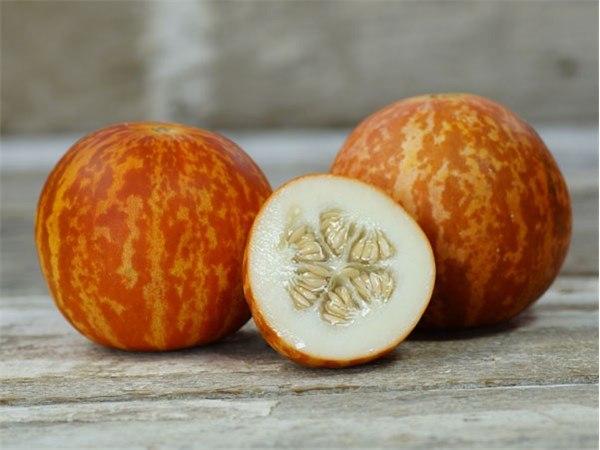
The wide variety of melon varieties makes choosing one for canning challenging. Fruits differ not only in size but also in flesh density and sugar content. The Livadia, Zolotistaya, and Yuzhanka varieties have firm, sweet flesh. Plants grown in southern regions have a natural sweetness advantage over pumpkins from the Moscow region, Siberia, and European Russia.
Varieties suitable for cooler regions have a denser texture and lower sugar content. Autumn-winter varieties are the sweetest, as they ripen in 95-100 days. Early-ripening varieties contain 8-15% sugar, while mid-season varieties contain 14-15%.
When choosing a fruit for canning, consider the recipe's requirements. If the purchased melon is of a different quality, you'll need to choose a suitable preservation option.
How to choose the best melon
For jam, use melons that are not fully ripe and have firm, aromatic flesh. For preserves, ripe, juicy melons are needed. For melon in its own juice, use very ripe or overripe melons.
It's important to adhere to the recipe's instructions when selecting raw materials: avoid using ripe or overripe fruit where firm flesh is required. Such pieces will lose their shape during cooking, reducing the product's appeal.
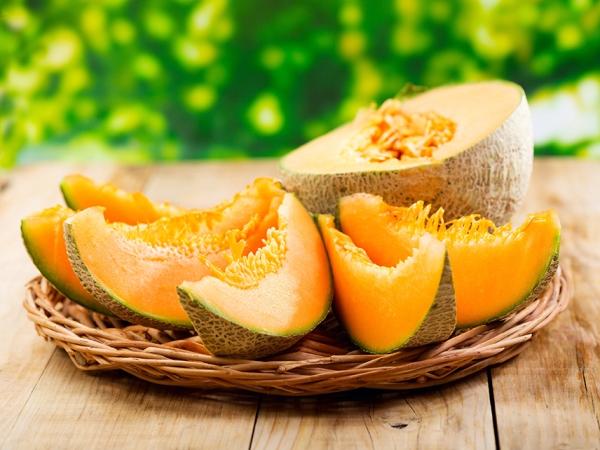
Signs of a ripe fruit:
- noticeable sweet aroma;
- springs back when pressed;
- large mass;
- uniform bright color;
- dull sound when tapped;
- dry tail;
- the peel has a jagged appearance.
Unripe fruits:
- do not smell;
- have a greenish tint;
- are inferior in weight to ripe ones;
- not elastic;
- produce a ringing sound;
- the tail is tight.
Overripe ones have soft skin and a very strong aroma.
Recipes for winter preparations
For home use, it is more convenient to prepare liquid jam, packaging it hot or pasteurizing it.
Thick syrup burns easily if not stirred constantly and at temperatures above normal.
Signs that jam is ready:
- the foam disappears;
- the syrup and melon pieces become transparent;
- boiled particles float in syrup;
- The temperature of the sweet solution when it is ready is 104 degrees.
The end time of cooking is also determined by the state of the syrup: a cooled drop retains its shape.
Sterilization is the process of keeping a semi-finished product in boiling water under specific conditions: the initial water temperature in the sterilizer is 70 degrees, the lids are not secured, and the liquid level is 3 centimeters below the glass top.
Making pasteurized jam differs from sterilization and hot packaging in that the jars are heated at 90 degrees Celsius without boiling, with the lids loosely closed. A 0.5-liter jar is pasteurized for 10 minutes, and a 1.0-liter jar is pasteurized for 15 minutes. Once the process is complete, the lids are screwed on tightly.
What can you make from melon? You can make jam, preserves, compotes, pickle it, preserve it in its own juice, or use it as a semi-finished product.
Classic melon jam
Wash, core, and peel the melon, then cut it into 2-centimeter-thick rectangular pieces. Blanch the pieces in boiling water for 5-7 minutes and then immediately plunge them into cold water to cool.
Prepare a 70% syrup. For 1900 grams of melon pulp, you'll need 1 liter of liquid and 2300 grams of sugar. Add the blanched pieces to the cooked syrup and let it sit for 4 hours.
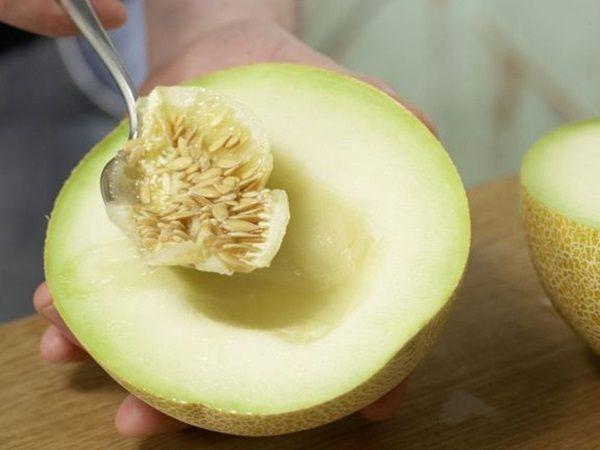
Making jam in three steps:
- Bring to a boil over medium heat and simmer for 10 minutes. Cool. Let stand for 8 hours.
- Repeat the previous method with cooling and 8-hour soak.
- Cook until desired consistency.
The hot jam is transferred into warmed jars, closed, and cooled without turning over.
With the addition of lemon
The rind is removed from the melon. The peeled portion is cut into 3-4 centimeter pieces. Sugar is added to the prepared melon. The ratio of sweetener to melon is 1:2. For flavor and aroma, vanilla sugar can be added at a rate of 1 gram per kilogram. Let the melon pieces sit for several hours until they release their juices and soak up the sugar.
Adding lemon zest and juice to the classic recipe adds a tart, citrusy flavor to the jam. One lemon is enough to make 2 kilograms of pulp. Peel the lemon and squeeze out the juice. Finely grate the zest.
Add the zest to the melon-sugar mixture and bring to a simmer. When the sugar has completely melted and begins to turn clear, pour in the lemon juice and stir well. Cook the syrup over low heat, stirring to prevent burning.
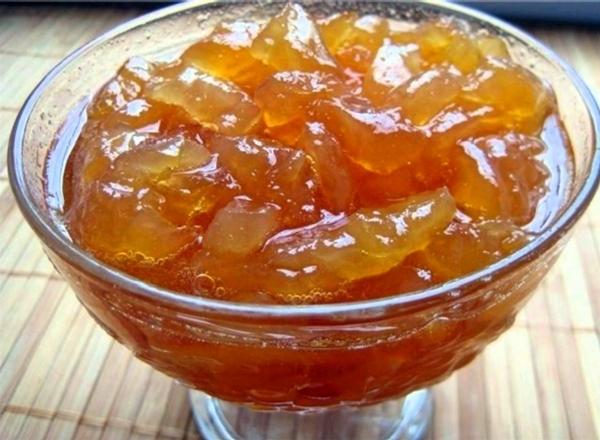
Check the jam's readiness periodically by checking the syrup's quality: drop a drop onto a cool surface. If the drop doesn't spread, the jam is ready. The melon pieces should be soaked in the syrup, translucent, and free of any raw melon flavor.
The degree of concentration of the syrup is determined by the thickness of the hot stream:
- thin – the jam will be runny;
- medium - thicker;
- thick – thick.
The test method is called the thin, medium, and thick thread test. Use a spoon to scoop up some syrup and pour it slowly, watching the stream.
With orange
Lemon can be substituted with orange. Orange zest is omitted. Orange juice will be used as a flavoring. Juice three oranges per 2 kilograms of melon. You can increase the amount if desired. Bring the sugar volume to 2.5 kilograms.
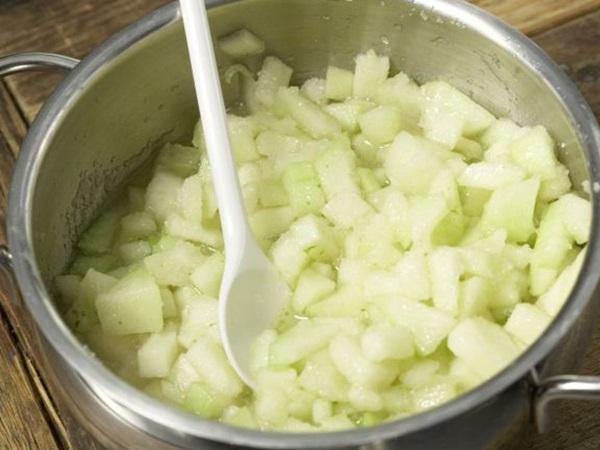
Orange juice, like lemon juice, is added once the sugar has completely dissolved. The jam is stirred to ensure smoothness and then cooked in three stages to the desired consistency.
With cinnamon
Adding cinnamon to melon jam has two positive aspects:
- The sweet dish acquires a spicy aroma and taste, which are good in the cold season, as they have a warming effect.
- This spice is recommended for weight loss due to its effect on metabolism. Jam is a high-calorie food, and the cinnamon helps burn calories.
Add no more than 1 teaspoon of cinnamon to the syrup for every 1 kilogram of pulp. Excessive amounts can have an adverse effect on the kidneys.
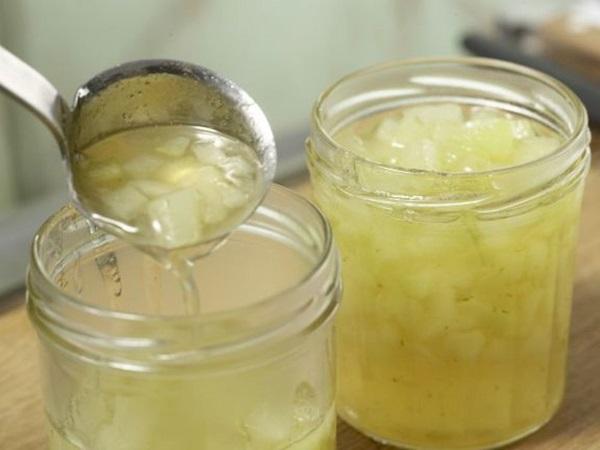
The prepared pulp is soaked in sugar for 24 hours, at a rate of one kilogram per kilogram, to extract the juice. A thin syrup is made using 0.3 liters of liquid and 0.5 kilograms of sugar. The melon juice is combined with the syrup, cinnamon is added, and the mixture is boiled down to a thin thread.
Add the melon to the boiling syrup and cook in 2 stages:
- The first time – 15 minutes on low heat. Cool for 4 hours.
- Boil until the desired concentration is reached.
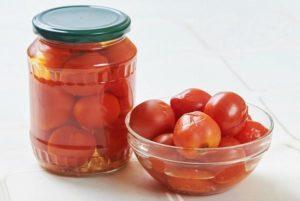
While hot, distribute into jars and cool.
With bananas
In a banana recipe, it makes sense to add a sour fruit, such as lemon, to avoid overly sweetness.
Compound:
- 1.0 kilogram of melon;
- 1.0 kilogram of bananas;
- 0.5 kilograms of lemons;
- 1.0 kilograms of sugar.
The pieces are mixed with sugar and left for 24 hours. The juice is squeezed from the citrus fruits and poured into the sweet mixture. The mixture is placed on the stove and simmered over low heat until a liquid syrup forms. Peeled bananas are cut into 1-centimeter rounds and placed in the jam. Readiness is checked by the syrup and the appearance of the melon and banana pieces.
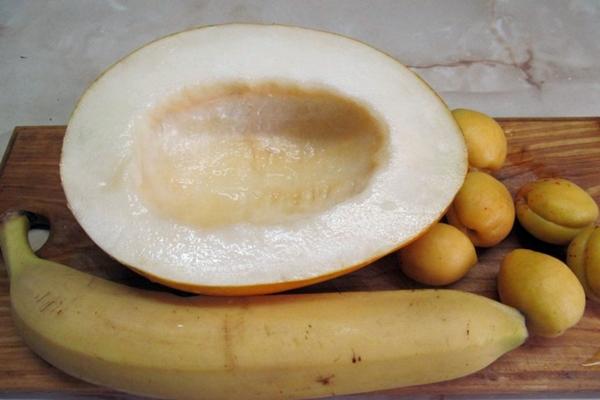
Melon jam
To make the jam, you'll need very ripe pumpkins. The peeled, chopped flesh is then blended. Add a liter of water per kilogram and simmer for half an hour.
Then add 2 kilograms of granulated sugar and simmer over low heat until done. Stir the jam regularly and check for doneness: the end of cooking is when the cooled drop retains its shape.
Canned melon
Canned melon can be prepared as a compote or natural preserves.
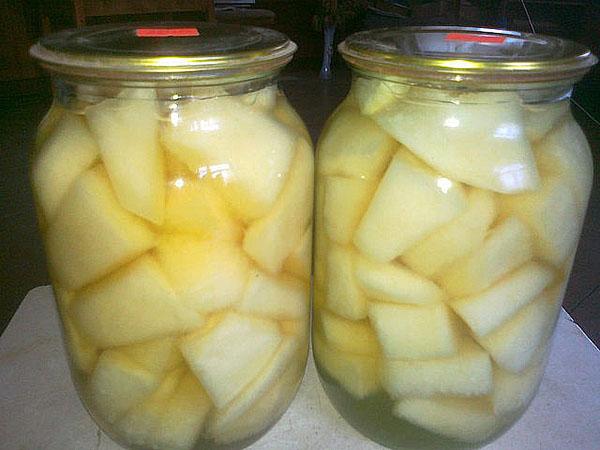
For compote, blanch the prepared pieces at 80 degrees Celsius for 10 minutes. Place them in prepared jars to a capacity of 2/3 full and pour in 25% syrup. The ratio required is 0.3 kilograms of sugar per liter of water. Sterilization time for a 0.5-liter jar is 10 minutes, and for a 1.0-liter jar, 12 minutes.
Preserving natural melon differs from compote in the way it's prepared: instead of syrup, boiling water is used. Melon preserved this way is a semi-finished product for making jam, preserves, and compote.
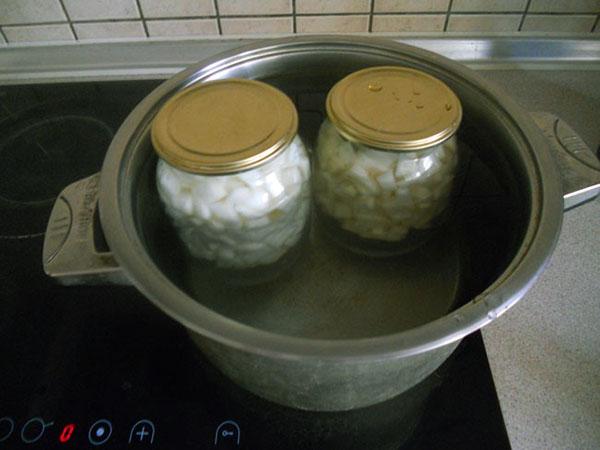
Melon in sugar syrup
The ratio of pulp, sugar and water is 1.0:1.1:0.2. Additionally, citric acid (10 grams per kilogram) and vanillin (a pinch per kilogram) are added.
Preparation, based on kilogram of product:
- Add 100 grams of sugar to a glass of water and bring to a boil.
- Blanch the melon pieces one by one in this syrup for 10 minutes.
- They take it out.
- Add the remaining sugar to the syrup and, stirring continuously, bring it to a thin thread.
- Add melon and cook until desired consistency.
- At the end, add citric acid and vanillin.
Roll up using the hot packaging method. Cool without turning.
In its own juice
To prepare melon in its own juice, you will need juicy ripe and overripe pulp.
The first step is to prepare the juice. Blend half of the prepared melon (2 kilograms) into a puree. Add the juice of 1 lemon, 0.5 liters of water, and 0.25 kilograms of sugar. Simmer the mixture over low heat for 15 minutes.
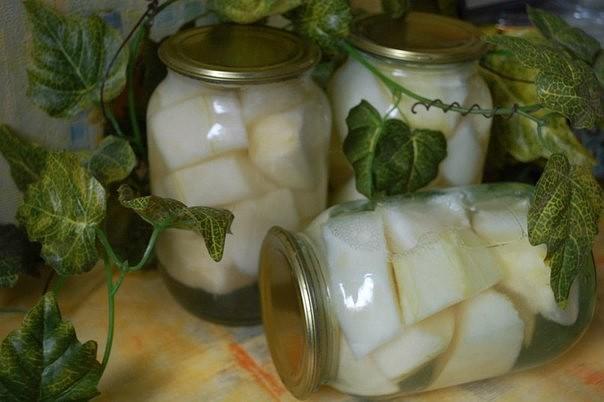
The remaining mass is blanched at 80 degrees Celsius for 3-5 minutes (to maintain the shape of the pieces) and cooled in water. The blanched pieces are placed in boiling juice and left for 15 minutes. After being packaged into half-liter jars, the preserves are sterilized for 10 minutes. Sea immediately and cool without turning.
Jam for the winter without sterilization
Jam cooked in several stages does not require sterilization.
To prepare a sweet melon dish, you'll need to boil the melon three times, 10-12 hours apart. In the first stage, blanch the melon parts for no more than a minute. The amount of liquid is 0.4 liters per kilogram of pulp. Sugar is added to the water in which the melon was boiled, in the same proportion as the melon itself.
Boil the syrup for 10-15 minutes. Remove from heat and cool slightly. Place the blanched ingredients in the container with the syrup. Stir. Reduce heat to a simmer.
Preserving melon for the winter in jars
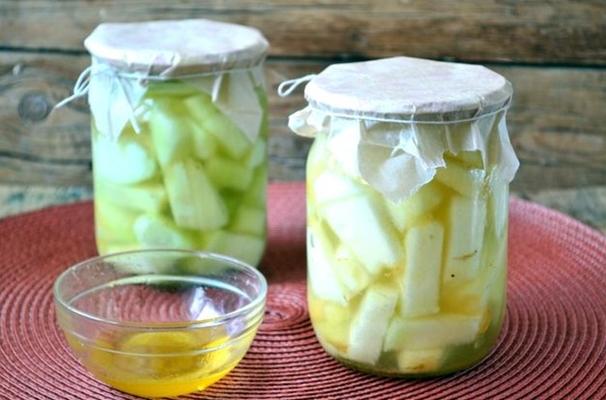
The pulp is cut into rectangular pieces no more than 2 centimeters thick. Fill liter jars halfway. For flavor, you can add mint or basil leaves, according to your taste. Add a cup of granulated sugar, pour boiling water over the jars, and sterilize.
The water temperature at the beginning of sterilization should be no lower than 80 degrees Celsius. The cooking time for a liter jar from the start of boiling is 12 minutes. The boiling should not be vigorous. Cool the jars upside down.
Pickled melon
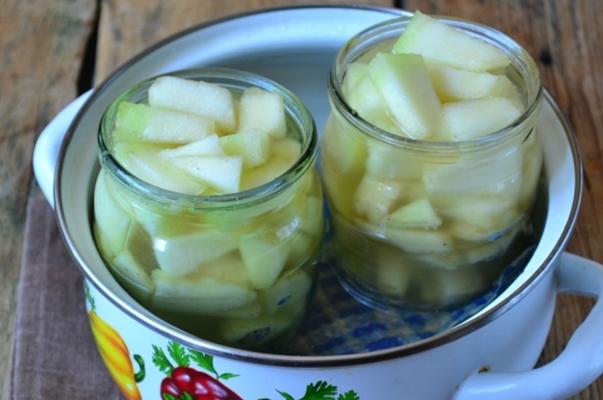
The flesh for pickling should be ripe and firm. Blanch the prepared pieces in boiling water for 1 second and then cool in the water.
Place the following at the bottom of a sterilized liter jar:
- 0.5 grams of cinnamon;
- 3-4 cloves;
- melon (just below the shoulders).
Pour boiling marinade over it and put it in for sterilization.
Marinade for a 1 liter jar:
- 0.3 liters of water;
- 0.11 kilograms of sugar;
- 0.04 liters of 5% vinegar.
Sterilization:
- the water temperature in the sterilizer is 50 degrees;
- filling – 3 centimeters below the neck;
- time – 12 minutes.
When finished, close the lids tightly. Cool upside down.
Melon jam in a slow cooker
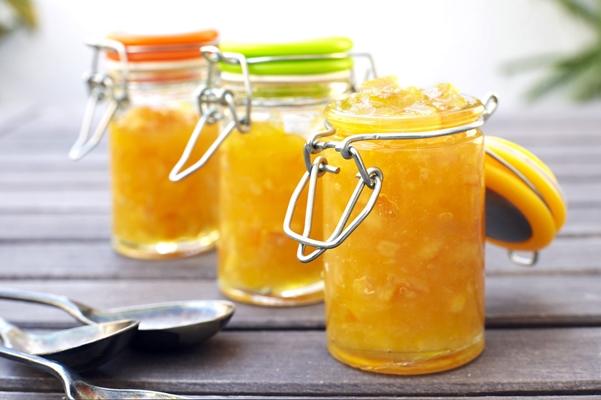
To make 1 liter of jam, you'll need 1 kilogram of peeled and finely chopped melon, 0.7 kilograms of cantaloupe, 1 lemon, and 4 grams of pectin. Pour boiling water over the lemon, trim the ends, and cut into quarters. Place the melon and sugar in a multicooker bowl and mix well. Add the lemon pieces to the bowl, squeezing the juice into the sugar and melon mixture before adding them.
Set the "Jam" setting for 60 minutes. After 12 minutes, open the multicooker lid and continue cooking with the lid open. Following the pectin instructions, add it to the boiling jam a few minutes before the end of cooking, removing the lemon slices. Pour the pineapple-flavored jam into jars.
Methods for storing preparations for the winter
Canned food should be stored in a dry, unheated, darkened area; in some cases, it can be stored at room temperature.
If prepared at home and stored correctly, canned fruit can last for 6-7 years. However, the quality (taste and appearance) will decline.
The main causes of spoiled jam are insufficient sterilization time, leaky seals, and prolonged sealing. In such cases, the lid may bulge or come off, mold may form on the surface, and a strong odor may develop. Such preserves should not be eaten.
Jam made without sterilization should be stored in cellars or pantries under the conditions specified above. Sterilized and pasteurized jars can be stored indoors. An opened jar of such jam should be stored for no more than two weeks. Low-sugar jam should be consumed within three days; after opening, keep it in the refrigerator.
Related posts:
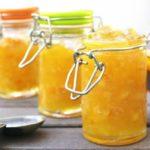 Simple step-by-step recipes for making melon jam for the winter and tips on choosing the fruit and storing the preserves
 27 Best Homemade Pear Jam Recipes for the Winter
 Simple recipes for making cherry plum jam with and without pits for the winter
 The simplest step-by-step recipes for making melon rind jam for the winter
 Simple step-by-step recipes for making lingonberry jam for the winter
 Simple recipes for making banana jam for the winter
 23 of the most delicious orange jam recipes for the winter
 40 of the best recipes for delicious homemade winter preserves