
When properly prepared, tomato preserves have a shelf life of 2-3 years. During storage, they can swell or explode for various reasons. Housewives often wonder what to do if jars of tomatoes have swelled. How to preserve the preserves, what steps to take if the jars swell, and how to prevent it.
Why do cans of tomatoes swell and explode?
Bloating of canned tomatoes occurs due to improper cooking techniques:
- It is strictly not recommended to preserve spoiled, damaged, or rotten produce. Such fruits contain fungal spores that promote putrefaction and fermentation.
- Poorly washed containers may contain particles of dirt, dust, and dried residue from previous canning.
- Air can penetrate through a chipped or cracked jar neck, which will also cause the container to bulge.
- Poorly washed additional ingredients. Dirt and dust particles remain on dill, horseradish leaves, bay leaves, allspice, and garlic. Pathogenic microbes in the dirt particles cause the release of carbon dioxide. This triggers fermentation and swelling of the container.
- Deviating from the recipe or using inappropriate amounts of ingredients. Overdoing it with granulated sugar, salt, vinegar, and citric acid when making tomato brine can cause the containers to bulge.
- Inadequate heating of the canning jar, disruption of the sterilization process of containers and lids. Due to reduced sterilization time, microbes survive, devouring the canned product. Their proliferation leads to the canning jar exploding.
A poorly sealed jar can also cause an explosion. If the rubber seal on the lid is damaged, a gap forms, allowing oxygen to enter. Along with the oxygen, microbes enter the container, triggering putrefaction. As a result, the liquid becomes cloudy, and the jar and lid bulge.

Saving canned food if the jars have swelled
To preserve canned products, you should take into account some points:
- Early detection of container damage increases the chances of product preservation. Canned tomatoes are stored on racks or shelves in the basement/cellar. This method of storing containers facilitates inspection.
- The jars are checked for leaks during the first 7-14 days. They are inspected regularly throughout the entire storage period.
- If the lid swells and the brine darkens, place the jar in the refrigerator for 3-4 days.
You can recognize an exploded can by the characteristic loud pop that the swollen lid makes. Excessive pressure can cause the jar to burst, spilling its contents onto the shelves. This type of seal cannot be preserved.
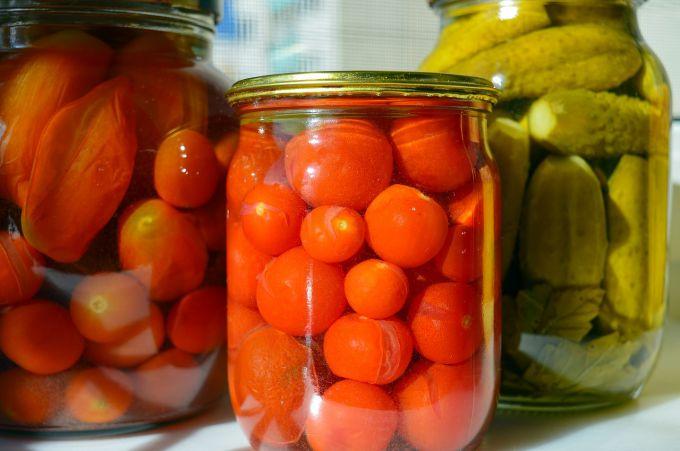
What to do if the blanks explode
It is not recommended to consume food after a can has exploded, especially if the explosion was not immediately detected.
Vegetables are saturated with dangerous toxins that, when ingested, cause food poisoning. These toxins can cause botulism, a fatal condition.
Immediately after the container has exploded, the cans must be reheated:
- the marinade is poured out;
- vegetables are taken out and their integrity is checked;
- specimens with rot and mold are rejected - they cannot be rolled again;
- whole tomatoes must be washed with a salt mixture;
- the marinade must be strained through dry gauze, poured into a saucepan, and brought to a boil;
- the jar is washed with a soap/soda solution and rinsed under the tap;
- The containers are placed in the oven and sterilized for 15-20 minutes at 110 OWITH;
- pour water into a separate pan, bring to a boil, place lids on, and sterilize for 5 minutes;
- tomatoes are placed in a sterile container and filled with marinade;
- The bottle is sealed and left for storage.
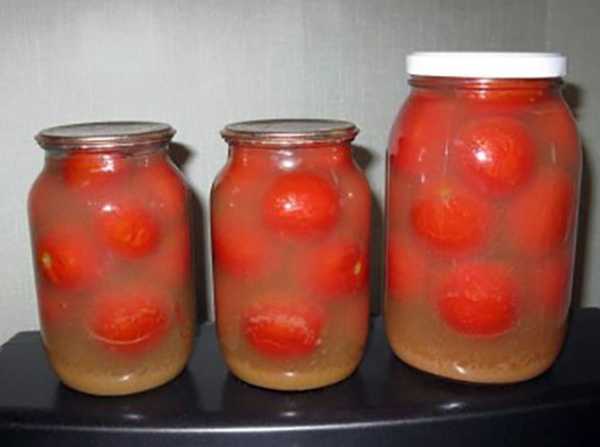
The cooled product is stored in a refrigerator, basement, cellar, or pantry. Repeated sterilization prevents the bottle from exploding and extends the shelf life of the product.
Preventing a disaster
You can prevent container swelling by following the rules below:
- Before canning, select healthy fruits, free of any signs of disease, rot, or mold. Spices and herbs are thoroughly washed.
- The bottle is inspected for integrity; broken or cracked jars are not used. The container is washed with detergent and baking soda, and rinsed 2-3 times. The jars are sterilized for 15-20 minutes in a double boiler, microwave, or oven.
- Each lid must be sterilized in boiling water for 4-5 minutes.
- When preparing a marinade for tomatoes, it is important to strictly adhere to the ratio of ingredients, and not to overdo it with citric acid, sugar, water, salt, or vinegar.
- The can seamer must be in good working order.
You can check for leaks by tilting the jar downwards—if the lid isn't tightly sealed, the marinade will leak. After canning, each jar should be turned upside down and covered with a warm cloth. This will sterilize the contents faster.
After cooling, the tomatoes are stored in a cool, dark place with moderate humidity, such as a basement, cellar, or balcony. The canned tomatoes are inspected regularly—every 7-14 days in the summer, and every 30-45 days from autumn to spring.
Related posts:
 How to sterilize jam jars in the microwave: methods and rules
 Why do jars of cucumbers explode? What to do? How to save and reseal them? Is it safe to eat?
 How to properly sterilize jars at home and for how long, the best methods
 How to properly sterilize jars with preserves, the best methods and duration
 Is it possible to sterilize empty jars in the microwave? How to do it correctly and for how many minutes?
 How to properly preserve compotes for the winter, methods for sterilizing jars, and the main problems
 How and how long should you sterilize jars in a pot of water at home?
 15 simple recipes for pickling tomatoes in jars for the winter