
- What is it and what dishes is it served with?
- Prepare the ingredients
- Variations for preparing the most classic sauce
- Homemade Parsley Pesto Sauce: A Unique Recipe with Walnuts
- With the addition of cashew nuts
- With tomatoes
- Pesto with arugula
- With ripe avocado
- Italian cooking option
- With pine nuts
- How long does pesto last?
Italian cuisine is renowned for its numerous recipes and sauces, featuring herbs, spices, and incredible combinations of vegetables and fruits. We could go on and on about how delicious it is. But it's best to read this article about pesto, which includes a recipe for the classic version, with basil, and other ingredients.
What is it and what dishes is it served with?
Pesto, as the name suggests, is not just any sauce, but a truly Italian one. Residents of Milan and Venice use it with their favorite pasta dishes, and it also pairs well with meat, fish, and salads. And best of all, the sauce is incredibly easy to make—it takes just 10 minutes.
All ingredients are natural, guaranteeing the health benefits and amazing taste of the finished product. These include:
- basil;
- hard cheese (parmesan or any other);
- garlic;
- pine nut kernels;
- olive oil.
Important. Pesto is almost like Italian cuisine—simple, nutritious, and completely natural. This sauce will add a new flavor to any dish, making you savor every bite, enjoying the subtle hints of basil and Parmesan.
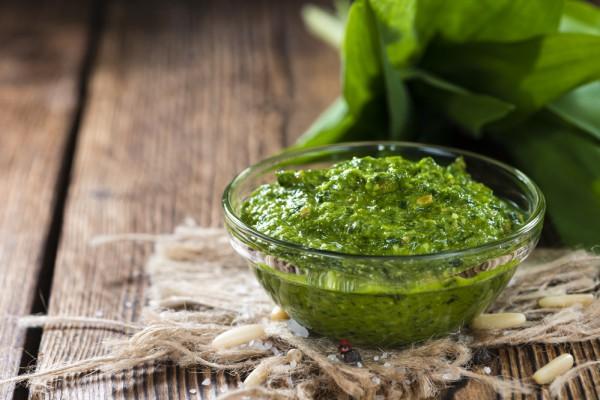
Prepare the ingredients
To prepare the recipe according to the classic scheme, you will definitely need olive oil (preferably cold-pressed - it has a milder taste), pine nuts, hard Parmesan cheese (can be substituted with another), and basil.
There won't be any problems with garlic; it's available in abundance on the shelves of markets and vegetable stores.
These are the essential ingredients of the symphony of flavors known as pesto. It's highly recommended to find them all to prepare the sauce properly. Basil leaves must be washed, separated from the stems, and dried (gently patting them with a soft towel is fine). Garlic, in all varieties, must be peeled of its tough outer skin and finely chopped into thin slices.
The cheese can be grated finely. Once the preparation is complete, the sauce ingredients will need to be mixed together and chopped. Salt may sometimes be needed, especially if the Parmesan has been substituted with another type. Traditionally, Italians ground herbs and spices in a mortar, but in modern times, it's quicker to chop them in a blender.
Variations for preparing the most classic sauce
According to traditional technology, pesto is made from:
- fresh basil leaves – 100 grams;
- olive oil – 150 grams;
- pine nut kernels – 4 tablespoons;
- garlic – 3 cloves;
- Parmesan cheese – 50 grams;
- salt.
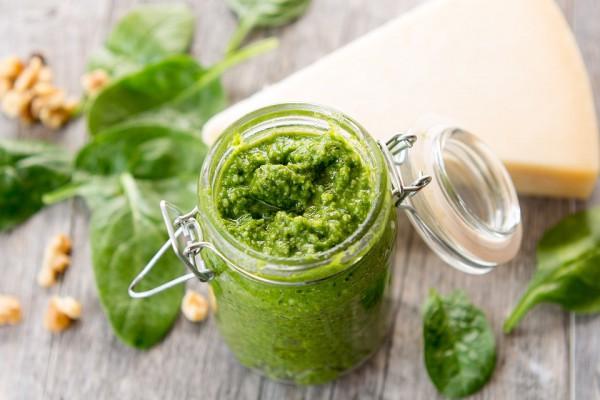
For the sauce, basil leaves and stems are usually used, removing only the bottom part (sometimes using just the leaves is recommended). The herbs should be lightly chopped into small pieces to make them easier to blend. Peeled garlic and shelled walnuts are mixed with the basil, and the cheese is cut into pieces. If the taste is too salty, you can add more. Previously, the ingredients were pounded in a mortar, but now there are household appliances for this purpose.
Place the prepared sauce components in a blender jar and pulse. Add the oil in small portions, not all at once. There are no specific requirements for how long to blend the mixture—it's all up to you, until a smooth consistency is achieved.
Homemade Parsley Pesto Sauce: A Unique Recipe with Walnuts
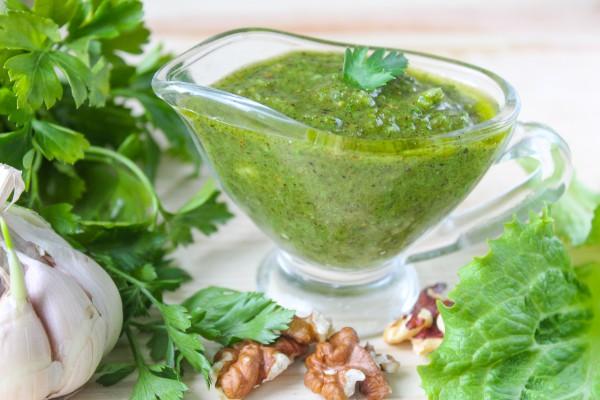
If you can't find basil, no problem: parsley can be a great substitute. However, you'll need walnuts and two types of cheese. Here's the recipe for the new sauce:
- Walnut kernels – 250 grams.
- Parsley – 250 grams.
- Parmesan cheese – 150 grams.
- Pecorino Romano cheese – 50 grams.
- Garlic – 4 cloves.
- Olive oil – 100 milliliters.
The base of this recipe is walnuts. Add them to a blender along with pre-cut cheese and finely chopped parsley and garlic. It's crucial to gradually add the oil as it blends: this ensures even mixing and a subtle, refined flavor. The sauce goes well with classic pasta or with a lightly toasted slice of crispy fresh bread. This is believed to be the way pesto is made in Veneto, northeastern Italy.
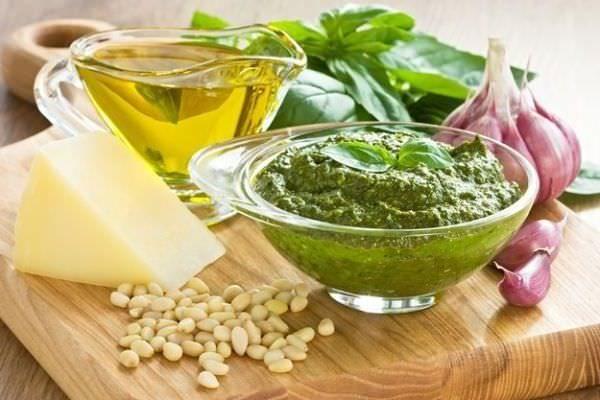
With the addition of cashew nuts
Want to treat yourself to something special, homemade, and made in your own kitchen? Then this Italian cashew sauce, made with an exotic tropical nut, is for you. To make it, you'll need:
- a bunch of basil;
- cashew kernels – 100 grams;
- Parmesan cheese – 50 grams;
- garlic - a couple of cloves;
- high-quality olive oil, cold pressed – 8 tablespoons.
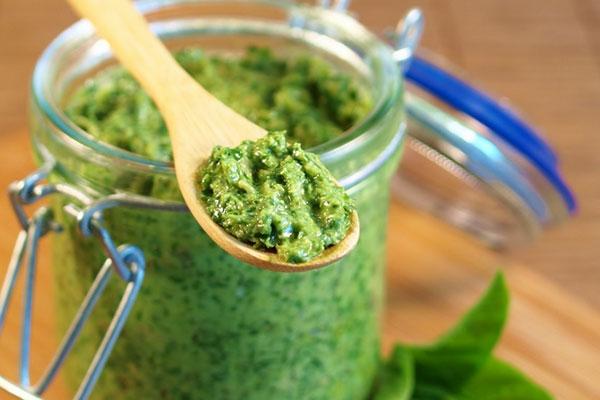
Grate the cheese using the finest grater, separate the basil leaves from their stems, and wash. Combine the garlic and nuts with the first two ingredients and place them in the bowl of an immersion blender. Add the oil a little at a time, literally a spoonful at a time, while simultaneously blending the mixture until smooth. Parmesan cheese itself is a bit salty, but if you find it lacking in salt, that's easy to adjust. The sauce isn't canned; it can be stored for a maximum of 3-4 days, then used and then made fresh.
Important: By adjusting the amount of olive oil in the sauce, you can easily adjust its consistency depending on how you're using it: as a pasta topping, a crouton topping, or a seasoning for roast meat.
With tomatoes
A slightly unconventional twist is to enhance the effect of the fermented milk product with tomatoes. You can use home-dried tomatoes. Sauce ingredients:

- Sun-dried tomatoes – 100 grams.
- Nut kernels (pine nuts, almonds, walnuts, cashews) – 25 grams.
- Hard cheese (Parmesan, Grana Padano) – 25 grams.
- Garlic – 2 cloves.
- Balsamic vinegar – 2 tablespoons.
- Basil – about 20 grams (small bunch).
- Olive oil – a couple of spoons.
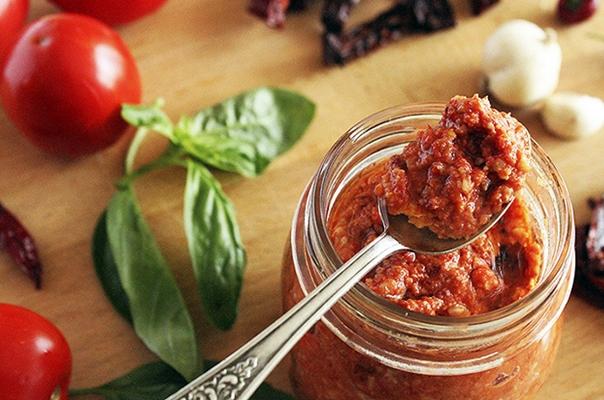
Dried tomatoes are soaked in water, vinegar is added, and the mixture is heated on the stovetop until boiling, then removed from the heat and allowed to cool. After about half an hour, the liquid is drained and the tomatoes are left to drain in a colander. Lightly toast the nuts in a preheated frying pan (without oil!) to fully develop their flavor. Peel the garlic, and grate the cheese on a fine grater – that's all there is to it.
Next comes the blender: tomatoes, nuts, and garlic are added, and everything is ground, followed by the cheese and herbs. When the mixture reaches the desired consistency, oil is added. The finished sauce can be stored in a cool place, but not for very long. It can be used as a seasoning for soups, pasta, pizza, and is even delicious spread on bread.
Pesto with arugula
Another alternative to basil is arugula. Add the following to the sauce:
- fresh arugula – 80 grams;
- parmesan – 30 grams;
- garlic - one clove;
- pine nut kernels – 40 grams;
- olive oil – 100 grams.
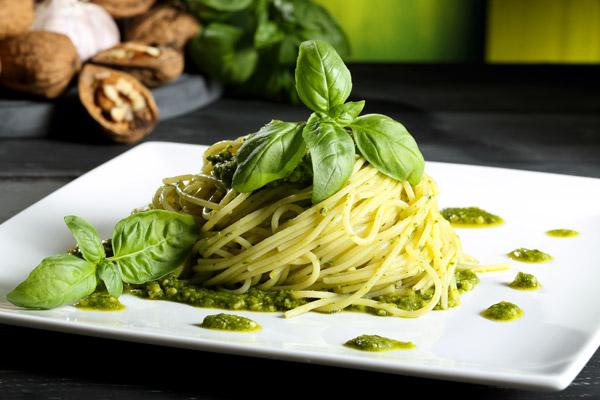
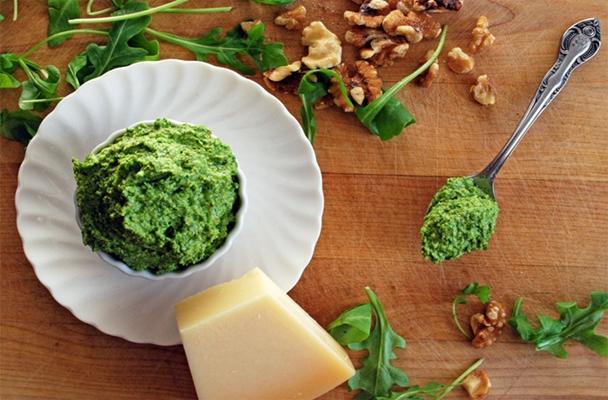
Preparation begins with preparing the herbs: wash them, then dry them thoroughly with paper or soft cloth towels. Grate the cheese on a medium-sized grater—not too coarse, not too fine. Peel the garlic and finely chop it into thin slices. Place the arugula, cheese, garlic, and nuts in a blender, add a touch of oil, and then begin blending.
It's important to gradually add oil while blending, continuing to stir the sauce. It's not necessary to completely crush the nuts into a paste—the uneven texture will add a certain charm and piquancy to the pesto.
With ripe avocado
It turns out that the famous Italian sauce can be made from almost anything—even avocado. You'll need:
- Avocado – 1 fruit.
- Garlic – 1 clove.
- Pine nut kernels – 15 grams.
- Freshly squeezed lemon juice – 1 tablespoon.
- Olive oil – 1 tablespoon.
- Spinach, parsley, black pepper and salt – to taste.
Carefully peel the avocado, remove the hard pit, and chop the flesh into pieces. Peel the garlic, nuts, and herbs. Place everything in a blender, spritz with lemon juice (half a lemon is enough), add oil, and blend until smooth. Season with salt and pepper if needed.
Take a look Also

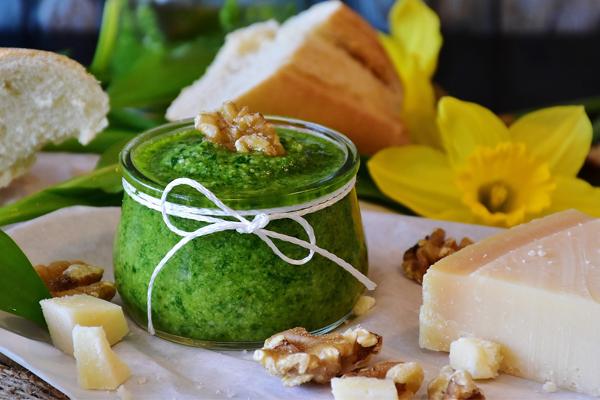
Italian cooking option
Many people wonder how to make a truly original pesto—the Italian way. It's easy! Perhaps the sauce from the shores of sunny Sicily deserves the right to be called authentic. The original recipe calls for a special cheese, ricotta, but you can do without it. You'll need:
- almonds (unpeeled is fine) – 50 grams;
- fresh tomatoes – 300 grams;
- basil – 1 bunch, olive oil, salt, pepper – required;
- garlic - at your discretion.
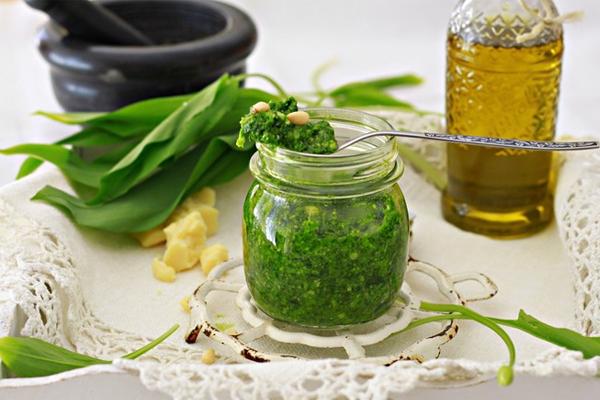
First, lightly toast the almonds in a preheated frying pan; do not add any oil! Next, chop the herbs in a mortar or blender, mix with garlic and salt, then add the almonds and grind again. Fresh, ripe tomatoes are peeled—this will make them more tender—cut into cubes, and added to the mixture.
The rest of the process is up to you: you can pour oil over the sauce, add salt and pepper—whatever you prefer. Finally, stir everything until smooth. After the sauce has rested for a while, it can be served as a condiment for pasta, soups, or spread on croutons—it's all delicious.
With pine nuts
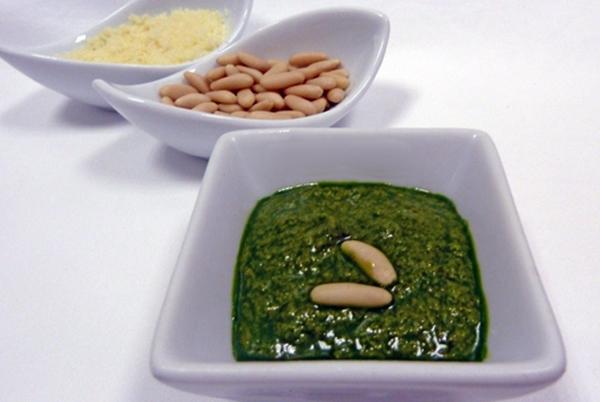
Pine nuts are a virtually essential part of Italian sauce, appearing in every other recipe. Combine basil (50 grams), Parmesan cheese (50 grams), pine nuts (3 tablespoons), 2 cloves of garlic, and half a cup of extra virgin olive oil, using any convenient method, until smooth. Adjust the amount of oil, salt, and pepper to your liking, but make sure to thoroughly mix the ingredients.
How long does pesto last?
Unfortunately, this sauce isn't meant to be stored for the winter. It's best to eat it immediately after making it, so you can make it fresh later using a different recipe. Pesto will keep for a maximum of 3-4 days in a glass jar in the refrigerator.
Related posts:
 Recipes for cold, hot, and original appetizers for the New Year 2020
 TOP 50 recipes for favorite and unusual salads for the New Year of the Pig 2019
 33 Hot, Meat, Fish, and Sweet Sandwich Recipes for New Year 2019
 What to cook for New Year 2020: a new and exciting menu for the holiday table
 TOP 40 New Year's 2020 Meat Recipes Using Pork, Beef, Chicken, and Lamb
 TOP 40 Hot Dish Recipes for New Year 2020: What to Cook
 Top 40 DIY New Year's Baking Recipes for 2020
 13 Best Step-by-Step Recipes for Making Tkemali Sauce from Plums for the Winter