
The healing properties of raspberries have been known since ancient times. That's why many people try to preserve the berries for the winter, but not everyone enjoys the taste of raspberry jam. Furthermore, cooking destroys many of their beneficial properties. This is where freezing comes in handy. Before you begin preserving the berries, you need to understand how to properly freeze raspberries to preserve all their vitamins.
Freezing raspberries for the winter
It's not recommended to wash berries before freezing. Any contact with water, even very gentle, will cause juice to leak out. Therefore, simply sorting through the raspberries is sufficient.
Particular attention will have to be paid to the container:
- When freezing, it's important to choose the right containers. There should be no condensation in the container. Otherwise, the crumbly berries will turn into a thick layer of frost. Therefore, it's recommended to use a plastic container with a tight-fitting lid. Heavy-duty plastic bags are also an option.
- Choose a container large enough to allow the contents to be consumed immediately. Even partially defrosted raspberries become covered in frost and lose their shape and color.
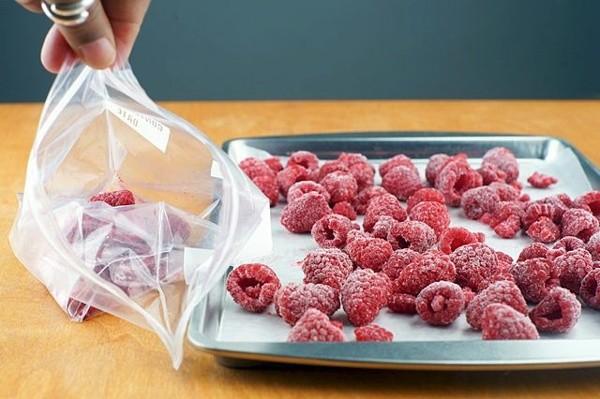
- To prevent the berries from crushing and releasing juice, do not fill the containers completely. If freezer space is limited, pre-freeze the raspberries and pack them in heavy-duty bags.
- Each container is additionally placed in a plastic bag. This will help prevent frost from forming on the raspberries if the lid isn't properly sealed.
- Store winter preserves in a separate compartment from other foods, especially meat and fish. Berries easily absorb foreign aromas, losing their flavor.
Product selection and preparation
Collection rules:
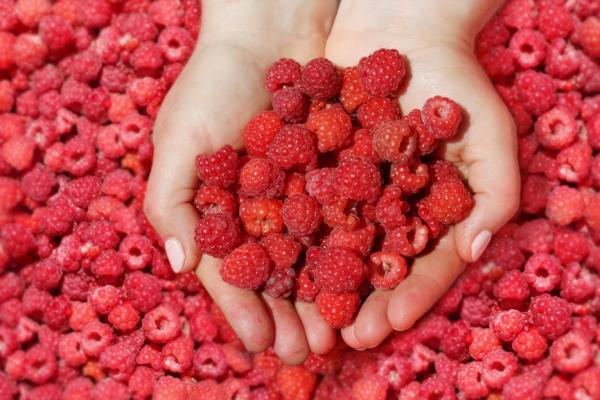
- It's recommended to use freshly picked raspberries. Harvest them in the morning. The weather should be dry and not too hot. Otherwise, the berries will quickly darken and lose their shape.
- When buying at the market, choose dry, firm berries that have not released juice.
- Don't store the harvest in tall buckets or baskets. These containers will immediately crush the raspberries and release their juices. Use a tray or shallow box.

To ensure the product is crumbly, the berries must be prepared correctly:
- The best, firmest, and undamaged specimens are selected for freezing. Any debris or leaves are removed.
- If the raspberries grew in a clean area, there's no need to wash them. If they were near a road or bought at a market, it's best to rinse them. To do this, place the berries in a colander and gently immerse them in water a couple of times.
- A salt solution will help get rid of larvae and insects inside raspberries. Add a large spoonful of salt to a liter of water, stir, and pour it over the berries. All the insects will float to the surface. Remove them, and rinse the berries.
- Spread the product in a layer on a paper towel and leave until completely dry. Change the towel as needed.
- To ensure the berries remain crisp and don't turn into a lump of ice when frozen, pre-freeze them. To do this, spread them out in a single layer on a tray and place them in the freezer for half an hour. Then, pack them into prepared containers.
How to freeze raspberries at home
To ensure your berries retain their aroma and flavor this winter, choose the right freezing method based on the quality of your berries.
It's recommended to use the quick freeze function, which should be turned on in advance. It will take at least two hours for the refrigerator to cool to the desired temperature.
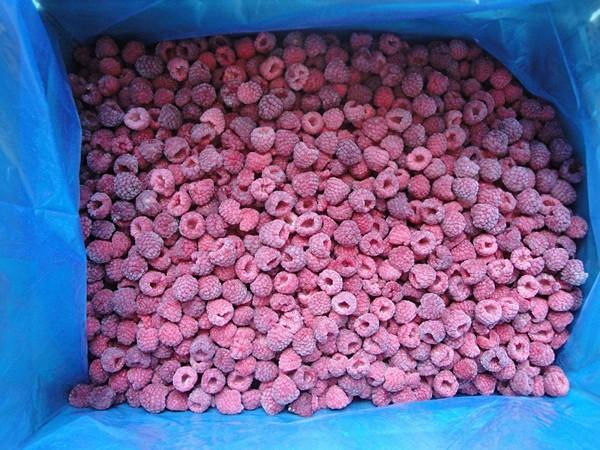
Whole berry
- Only firm, fresh raspberries are used, which are carefully sorted.
- Spread the mixture in a layer on a tray and place it in the freezer. Freeze for half an hour, then divide into individual serving containers.
- Without pre-cooking, a properly frozen product retains its nutritional and flavor properties until the next season.
Raspberry puree
This option is suitable for overripe and bruised berries, but not spoiled ones.
Ingredients:
- raspberries – 750 grams;
- sugar – 375 grams.
Preparation:
- Place the berries in a blender. Blend. Add sugar and mix. Let it sit for 15 minutes until the sugar crystals are completely dissolved. Mix.
- Pour into containers. Leave a third of the space empty, as the contents will expand during freezing.
- Place the blanks in the freezer and store for no more than four months.
Take a look Also
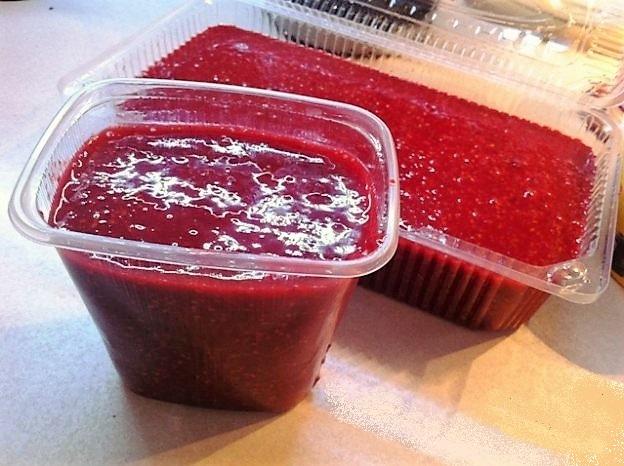
Seedless raspberry puree
Don't wash the product before storing it. Otherwise, it will absorb excess liquid, which will affect its flavor and shorten its shelf life.
- Place the berries in a blender. Sprinkle with sugar. Adjust the amount to suit your taste. Blend.
- Pour the mixture into a sieve and strain. If any seeds are found in the puree, strain it again.
- Pour the mixture into containers. You can use containers. Small ice cube trays will also work. Store in the freezer.
Sugar free
Whole and soft berries are suitable for this method of preparation.
- Sort through. The product should not contain larvae, debris, or insects.
- Grind. You can use a masher or a blender.
- Pour into storage containers. Place in the freezer. You can pre-pour the mixture into baking molds. Freeze, then transfer to bags for further storage. The small form of the preparations allows you to add the product to tea as needed or quickly brew a small batch of compote.
This product is ideal for diabetics and those on a diet. Raspberries prepared this way are ideal for making a healing drink at the first sign of seasonal illnesses.
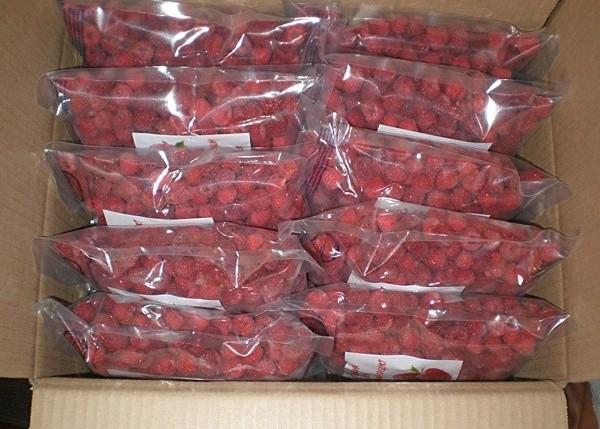
In a container
For container storage, it's important to choose the right raspberries. They should be firm and ripe.
- Remove any debris from the fruit. Spread it in a layer on a tray and freeze for half an hour. Make sure the berries don't touch each other.
- Carefully and quickly pour the product into the container. Close the lid. If it doesn't fit tightly enough, wrap it in plastic wrap. Place in the freezer.
With sugar
Ingredients:
- raspberries – 1 kilogram;
- sugar – 250 grams.
Preparation:
- Sort the berries. Rinse if necessary. Then dry completely.
- Mix the ingredients carefully. Pour into bags. Press out any air and seal tightly. Store in the refrigerator or freezer.
Further storage
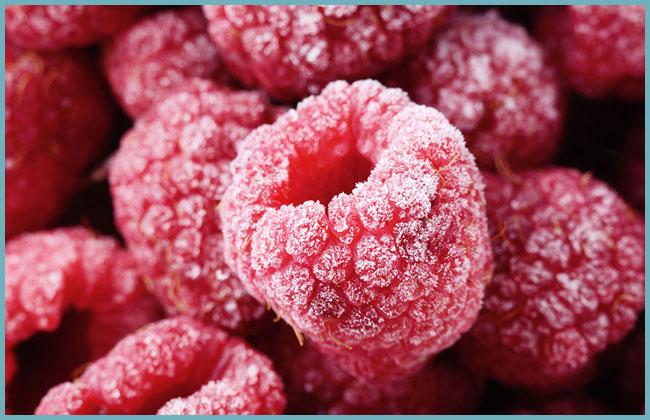
The product should be stored at temperatures between -18 and -22 degrees Celsius. Freezing preserves raspberries for about a year. Sugar-coated and pureed raspberries can be stored at the same temperature for up to four months. Higher temperatures shorten the shelf life.
It is recommended to prepare it in portions, since the berries cannot be frozen again.
Rules for defrosting berries
Do not thaw the product quickly. It is recommended to transfer the berries to the refrigerator and defrost them naturally. Only this method will preserve all of the raspberries' beneficial properties, aroma, and flavor.
If time is limited, you can leave the containers at room temperature. This will cause the raspberries to release more juice and lose their shape.
Related posts:
 The benefits and harms of gooseberries for human health, properties and uses
 Description of 36 of the best sweet and large varieties of gooseberries
 How to treat raspberries against pests during fruiting and flowering
 TOP 10 recipes for freezing cherries for the winter in the freezer or refrigerator
 TOP 10 easy homemade raspberry jam recipes for the winter using fresh and frozen raspberries
 The health benefits and harms of cherries, rules of consumption, and their effects on the body
 TOP 10 recipes for freezing gooseberries for the winter at home in the refrigerator
 How to plant grapes step by step, with a description of the process and care