
- Causes and factors of white plaque appearance
- The pathogen and its life cycle
- Symptoms and signs of bush damage
- What is dangerous for the plant and harvest?
- How to fight the disease
- Chemicals
- Mechanical methods
- Folk methods of struggle
- Bush processing technology
- On the foliage
- On shoots and branches
- Plaque on fruits
- Prevention of occurrence
- Selecting resistant varieties
- Seasonal treatments
- We observe agricultural technology rules
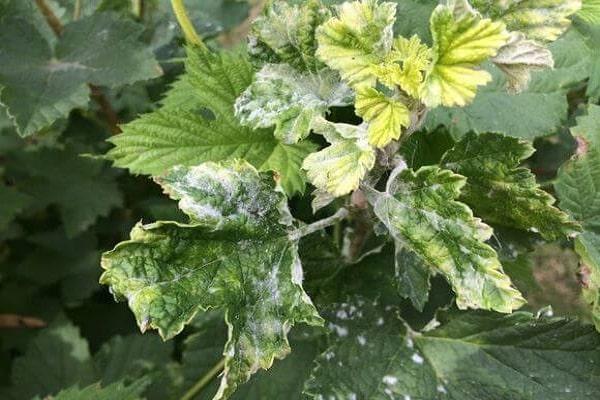
A white coating on the leaves, shoots, and berries of currants indicates a fungal infection. The coating spreads quickly, resembling a spider web, and liquid droplets form on the foliage. This is where the name "powdery mildew" comes from. In advanced stages, the disease causes severe damage, and the bush may die.
Causes and factors of white plaque appearance
If a white coating appears on the leaves or other parts of the shrub, it indicates a microscopic fungal infection. These fungi cause a disease called powdery mildew. The main factors that cause the disease are:
- Warm summer weather, air temperature not below 18 °C.
- High humidity, over 90%.
- Shaded areas where currants grow.
- Plantings too dense.
Plants can become infected in several cases:
-
- Through infected fallen leaves.
- Overwintered individuals penetrate through the roots.
- Infection occurs from affected neighboring bushes.
Important! Overwatering weakens the plant's immunity.
The pathogen and its life cycle
A special type of fungal infection that affects only currants and gooseberries. The fungi tolerate frost well, so they overwinter in the soil or near currant roots. Afterward, damage occurs and the disease progresses again.
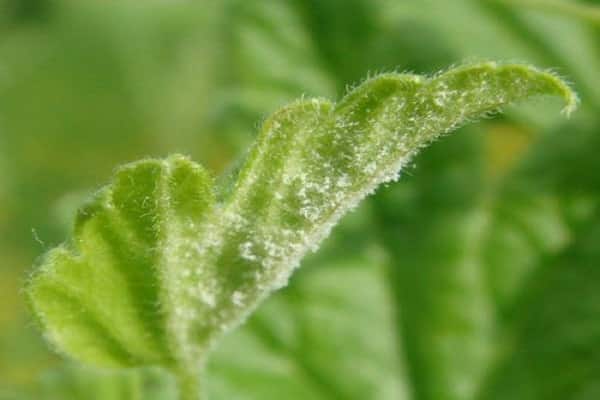
After awakening, the fungi begin to actively multiply. Small white spots appear on the foliage. In more advanced stages, the coating takes on the appearance of a web, densely clinging to parts of the shrub. The pathogens secrete droplets of liquid, hence their name.
Symptoms and signs of bush damage
Mold appears on the foliage of various currant varieties: red, black, and white. Symptoms also appear on the bushes. Knowing these symptoms allows you to assess the plant's condition and initiate treatment. The main symptoms are:
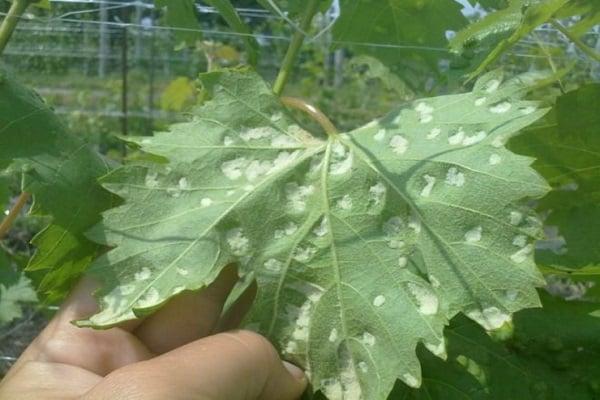
- The leaves were covered with white spots and plaque.
- The shoots gradually curl up and fall off.
- Droplets of liquid are visible on parts of the plant.
- The plaque quickly spreads to leaves, branches, stems and fruits.
- It begins to take on the appearance of a web.
- The bush is shedding its fruits.
What is dangerous for the plant and harvest?
The disease causes the greatest damage to blackcurrants. They are particularly susceptible to powdery mildew. Red and white varieties are also susceptible to similar fungi, but less frequently than black varieties. In the initial stages, the disease does not cause significant damage. In more advanced stages, the plant's leaves dry out and fall off, the bush's mineral metabolism is disrupted, and the quality and quantity of fruit production decreases. The worst-case scenario is complete plant death.
How to fight the disease
If currants become covered with a white coating, they are infected with a fungal infection. Action must be taken as quickly as possible, as the parasite multiplies rapidly. Treatment can be carried out chemically, mechanically, or with folk remedies.
Chemicals
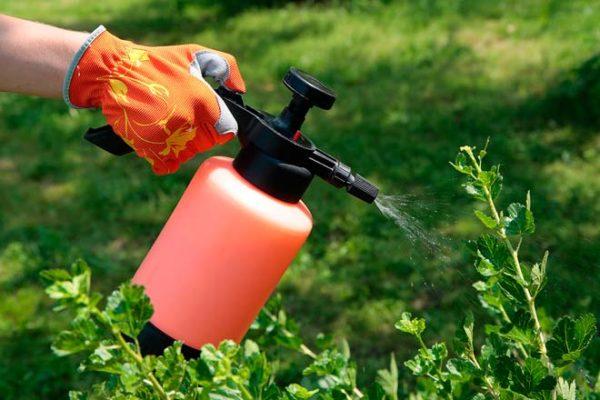
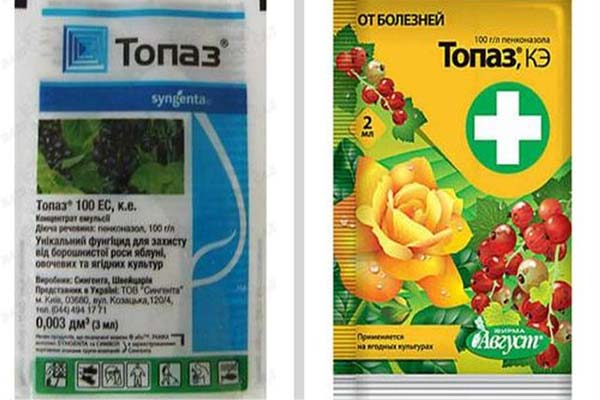
Fungicides are sprayed on the shrub's foliage. For currants, choose products labeled "for garden shrubs." These include:
- "Topaz";
- Vectra;
- "Previkur";
- "Skor";
- "Fundazol".
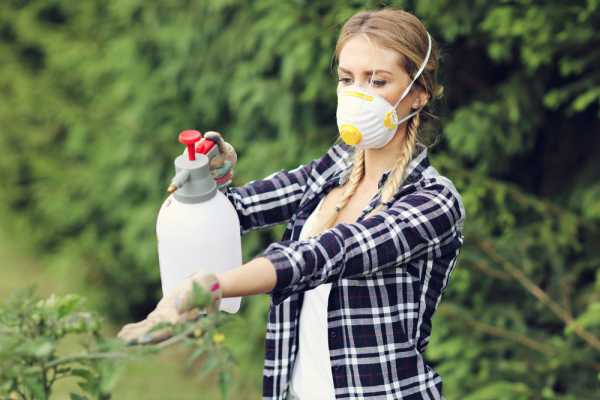
The product is diluted according to the instructions, personal protective equipment is used during work, and safety precautions are observed.
 Important! Stop treatment 20 days before harvest. This is the period during which all toxic substances are eliminated.
Mechanical methods
Many gardeners prefer to avoid chemicals. One option for removing powdery mildew is to prune all affected areas of the currant plant. All leaves, branches, and fruits are collected in one place and then burned.
This method cannot provide a complete guarantee of recovery.
Folk methods of struggle
Folk remedies are a happy medium between chemical and mechanical methods. They were used by people before fungicides were developed. The most effective recipes are:
- Mullein solution. Mix one part manure with three parts water and let it steep for five days. Drain the water, dilute the solution three times, and spray the bushes.
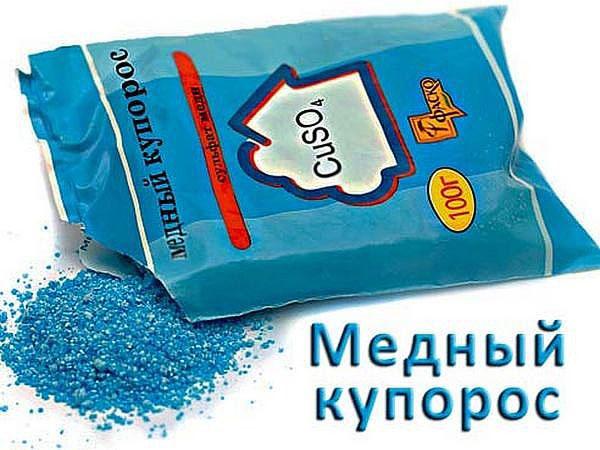
- Copper sulfate. Sprinkle the powder around the currant tree trunks. Then dilute it with water and spray it on the currants.
- Wood ash. Prepare a 10% solution. Spray the plant with it.
- 50 g of laundry soap, 100 g of soda are poured into 10 liters of water and the affected bush is watered.
- Add 200 g of mustard powder to 10 liters of water and spray the foliage.

Bush processing technology
Powdery mildew treatment depends on the location of the fungus. Treatments for foliage, shoots, and fruit vary slightly.
On the foliage
When the foliage is covered with a coating, the leaves turn white. They gradually turn yellow and fall off. The longer the currant bush is infected, the greater the damage. Before starting work, all damaged leaves are picked off and burned. Afterwards, the bush is sprayed with a fungicide or a folk remedy.
On shoots and branches
Plaque on stems and trunks is treated slightly differently. If the solution is evenly distributed across the leaves, it will run off the branches. To enhance the effect, after spraying the solution, smear the mixture over the branches with gloved hands.
Plaque on fruits
If powdery mildew appears on berries, the affected bunch is picked first. If it's just one bunch, treating it with a protective solution is sufficient. If the disease has spread to the entire crop, organic pesticides are used. If ripe berries are affected, harvest them first and then treat them.
Prevention of occurrence
To avoid fighting the disease, it is necessary to carry out preventive measures that will prevent infection from penetrating the currants.
Selecting resistant varieties
It's best to choose varieties resistant to powdery mildew. They have a strong immunity to the disease, making it virtually impossible to be affected. These varieties include:
- Moscow;
- Bagheera;
- Black pearl;
- Ussuri;
- Boulogne red;
- Red Cross;
- Boulogne white;
- Dutch White.
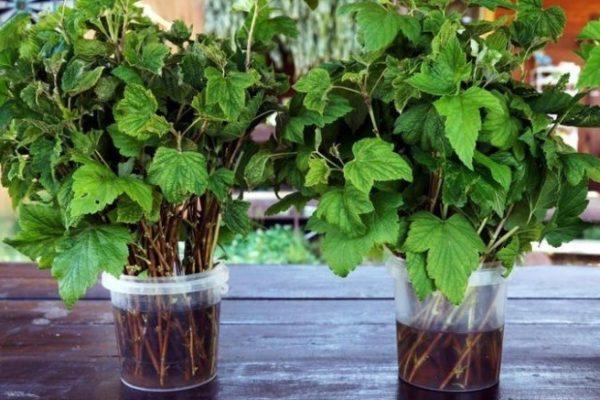
When purchasing a seedling, pay attention to the condition of the young plant. It should be free of damage, scratches, stains, or spots. If any signs of damage are detected, discard the purchase and reschedule it for another time.
Seasonal treatments
To avoid infestation, preventative treatments for shrubs are necessary. These are classified depending on the stage of the growing season:
- Before flowering, spray with insecticide.
- After flowering, treat with a wood ash solution.
- During fruiting. Treatment with a mullein solution.
Take a look Also
Important! At the beginning of the season, sprinkle the area around the currant bush with copper sulfate to prevent infection from penetrating through the roots and lower trunk.
We observe agricultural technology rules
Proper plant care will help prevent fungal infections. To do this:
- Maintain regular watering, do not overwater the bush.
- Choose a sunny, illuminated place without frequent shading.
- Follow the planting pattern, leaving enough space between bushes.
- Mulch the tree trunk area.
- Carry out weeding and fertilizing.
- At the end of the season, do sanitary pruning of shoots.
If bush care rules are not followed, the risk of disease increases more than twofold. When optimal growing conditions are created, currants rarely become diseased.
Related posts:
 Description and rules for growing black currant variety Veloy
 20 Best Blackcurrant Winter Preserves Recipes
 Characteristics and descriptions of the 40 best red currant varieties
 Description of currant diseases and pests, control methods and treatment
 Causes and treatment of blackcurrant terry, what to do and how to combat it
 TOP 10 recipes for red, black, and white currant sauce and ketchup for the winter, and how to store your preparations
 The health benefits and contraindications of white currants
 Why and what to do if blackcurrant leaves turn yellow