
Proper spacing between currant bushes when planting is crucial for their successful growth. This will ensure the plants have sufficient space to develop and produce abundant fruit. Optimal spacing also simplifies subsequent care. To ensure proper planting, please follow the recommendations below.
Schemes for placing currants on a plot
Currants should be planted according to a pattern that depends on the variety and the amount of light in the area. The quality and composition of the soil also plays a role.
Red-fruited varieties
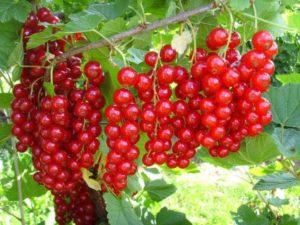
Red currants are planted using a 2-row spacing with 1.5 m between plants. When different varieties are planted in the same plot, cross-pollination occurs. This increases the intensity of fruiting and the quality of the berries.
Black-fruited species
Blackcurrant bushes are planted at a spacing of 2.5 m between rows and 1.5 m between rows. It is advisable to plant them separately from other varieties of the crop to prevent loss of yield.
What distance should there be between bushes?
To determine the correct spacing between rows, consider the following recommendations when planting. Ideally, space seedlings 0.5 meters apart along the bed, with the same spacing between rows.

The amount of space an individual shrub occupies depends on factors such as:
- A variety of currant. Some species have spreading bushes, while others are upright or small.
- Seedling planting techniques. They can be planted not only vertically but also at an angle. The angle should be between 45 and 60 degrees relative to the ground.
- Depth of planting. Seedlings should be placed so that the stems are 10-12 cm below ground. This promotes better rhizome development and increases yield.
- When moisture supply to the plantings is limited, densely growing bushes suffer. If this is a concern, the distance between seedlings should be increased.
- Ensuring pollination. If a variety is self-fertile, rows can be planted consisting solely of its own species. If this species is not available, it is necessary to alternate varieties. Without pollination, yield and fruit quality suffer.
- Sometimes shrubs grow too wide, taking up space between beds. Access to the rows for maintenance becomes difficult, necessitating the use of trellises.
 If you double the spacing between plantings, space the bushes 3 meters apart, they will grow freely. The hole should be 40 cm deep and 50-60 cm long and wide.
Required distance from buildings and fences
It's not advisable to plant currant seedlings near buildings or fences. To ensure the bush feels comfortable in its new location, plant it at a distance of 1.2-2 meters. Many gardeners use currants for decorative purposes, such as garden borders. Maintain at least 1 meter of clearance from fences and buildings.
The specifics of growing berry crops without trellises
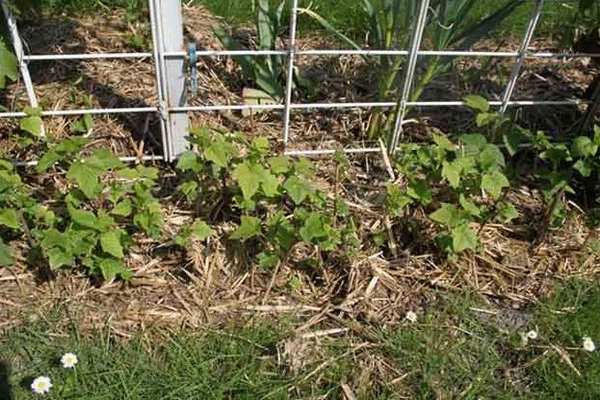
Using support structures requires additional financial investment. First, they need to be installed properly. They can be made of concrete, wood, or metal. Trellis are usually sold pre-treated to improve resistance to inclement weather and harmful beetles. Horizontal slats, usually made of wood, are attached to them.
Wire is also used to support currant bushes. Trellising is beneficial for currants, leading to increased yields. Trellis are removed in the fall and reinstalled in the spring. If left in place, the shoots may break during heavy rainfall.
If you plant currant bushes 1.5 meters apart, you'll need support. As they grow, they'll take up all the available space, making them difficult to access for maintenance. You can avoid using trellises if you plant currants 3 meters apart. The berries will get soiled, but mulching the soil with grass clippings will eliminate this problem.
Tips and advice from experienced gardeners
To create a picturesque plot, it's important to ensure proper crop placement, taking into account their compatibility. It's best to designate separate areas for different varieties. When the plot is small, keep fruit trees 1.5-2 meters away from the ground. This will prevent them from shading the currant bushes. Experienced gardeners recommend the following:
- choose places where groundwater flows at least 1 meter from the ground surface;
- Give preference to flat areas, or with a slight slope, so that moisture and cool air do not stagnate;
- elevated areas are not suitable for currant cultivation, as it suffers from dry winds in summer;
- remove weeds completely or treat the soil with herbicide in advance so that weeds do not interfere with the growth of young currants and do not reduce the yield of adult bushes;
- Plant 3 bushes per hole to increase fruiting intensity by 2-3 times, maintaining an angle of 45 degrees.
It's important to prepare foliar feeding during cloudy weather or in the evening, after sunset. When currants are flowering, spray them with a solution made from 1 teaspoon of potassium permanganate and 0.5 teaspoon of boric acid. The ingredients are diluted in 10 liters of warm water.
During fruit set, use a cup of superphosphate and 3 tablespoons of urea per the same amount of liquid. In cloudy weather, the bushes absorb the beneficial components more effectively, increasing the yield and quality of the fruit. Provided the right conditions for currant growth, it will bear fruit vigorously and be virtually immune to disease or insect attacks.
Related posts:
 20 Best Blackcurrant Winter Preserves Recipes
 Description and rules for growing black currant variety Veloy
 Characteristics and descriptions of the 40 best red currant varieties
 The health benefits and contraindications of black currants
 The health benefits and contraindications of white currants
 TOP 10 recipes for red, black, and white currant sauce and ketchup for the winter, and how to store your preparations
 When is the best time to plant currants to get a good harvest?
 Red currant health benefits, properties, and contraindications