
- Is it necessary to follow the planting dates for tomato seedlings?
- Seed preparation in Siberian conditions
- Planting dates for different varieties of nightshade crops in Siberia
- Favorable dates for planting tomatoes according to the lunar calendar
- When to plant greenhouse tomatoes?
- How to plant tomato seedlings
Choosing the right time to sow tomato seeds is the key to a good harvest. Beginning gardeners often find it difficult to know when to start the planting season. They must consider not only the plant variety but also the climate of their region. So, when should you sow tomatoes for seedlings in Siberia to enjoy the harvest as early as possible and continue harvesting before the cold weather sets in?
Is it necessary to follow the planting dates for tomato seedlings?
Tomato seeds are sown at a strictly defined time. The next season's harvest depends on this. If you sow too early, the tomatoes will overgrow and will be sick for a long time after transplanting, will take root poorly, and you won’t be able to expect abundant fruiting from them.
If you sow tomato seeds late, you risk not seeing any fruit at all, especially in Siberia. The lunar calendar recommends sowing in March. This ensures strong seedlings that will eventually yield an excellent harvest.
Seed preparation in Siberian conditions
A few days before sowing, select and prepare the seeds. Dissolve a tablespoon of salt in a glass of warm water and drop the seeds in. Reject any that float to the surface. You can also select the seeds manually, choosing only strong and healthy ones, discarding any broken or diseased ones. To disinfect them, soak them in an iodine solution at a rate of 3 drops per 100 ml of water. Soak the seeds for half an hour before sowing.
Experienced gardeners germinate seed material to increase germination. For this purpose, use a damp piece of cloth to wrap the seeds and place them in a warm place. After a couple of days, sprouts should emerge.
Take a look Also

Planting dates for different varieties of nightshade crops in Siberia
The generally accepted rule for sowing tomatoes in Siberia is March, but there are some nuances. Early varieties are best planted in the first ten days of the month, while mid-season tomatoes should be planted in mid-March (approximately between the 14th and 26th). Late varieties are sometimes sown after February 15th to ensure they have time to produce a harvest during the short summer. Indeterminate tomatoes are typically planted between mid-February and early March, while cherry tomatoes can easily be planted as late as early April.
Reputable producers indicate recommended sowing dates on their seed packaging so gardeners know exactly when to plan their sowing without guesswork. It's worth noting that early tomatoes have a growing season of approximately 100 days. To this, add another week for the seeds to germinate and five days for the plants to adapt to their new growing location after transplanting.
Having made some simple calculations, we can reliably say that sowing early tomatoes should be planned for April 1-5.
Favorable dates for planting tomatoes according to the lunar calendar
Many years ago, gardeners began following the lunar calendar's recommended planting times for vegetable crops. Its main rule is that all garden plants growing above ground should be planted during the waxing moon. Crops growing underground are planted during the waning moon. You cannot plan sowing and planting work on the new moon or full moon. The best time to sow tomatoes in Siberia is when the moon is in Taurus, Capricorn or Libra.
The most favorable dates for sowing, picking or transplanting tomatoes, recommended by the lunar calendar, should be presented in the form of a table.
| February | March | April | May | June |
| 16, 18, 22, 24, 27, 28 | 1, 4, 10, 17, 30 | 5, 10, 18, 23, 27, 28 | 1 – 4, 13, 25, 27, 30 | 2, 4, 7 |
When to plant greenhouse tomatoes?
Not all tomato varieties are suitable for outdoor cultivation in Siberia's climate. To obtain tasty, high-quality fruit, gardeners must use greenhouses. Therefore, seeds must be selected that are suitable for indoor cultivation. This also changes the timing of tomato planting.
Heated greenhouses maintain a comfortable temperature for plants even during the cold season. If there's no heating, sowing seeds for greenhouse tomato seedlings should be done at the same time as for planting them outdoors. Even experienced gardeners can't predict the exact time to plant the finished seedlings in greenhouses. They are guided primarily by the weather, climate observations in previous seasons, varietal characteristics and recommended planting times for them, and the soil temperature in the greenhouse. It is known that if the soil has not warmed up to at least +15 °C, then plants will not grow and develop.
To speed up the planting of tomatoes in a greenhouse, artificial soil heating is used using energy sources or organic fertilizers.
When growing tomatoes in very cold conditions, it is preferable to plant them in tubs or bags with a nutrient substrate to avoid contact with the soil surface.
How to plant tomato seedlings
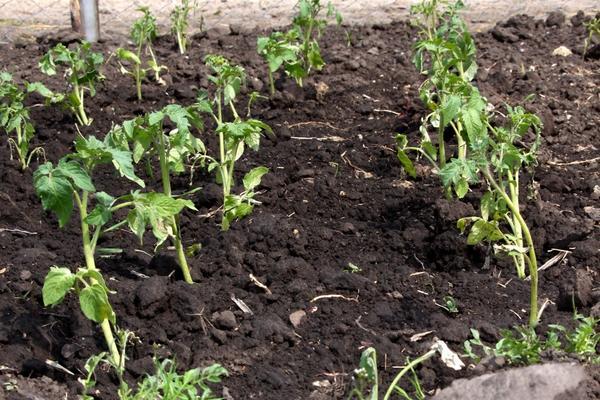
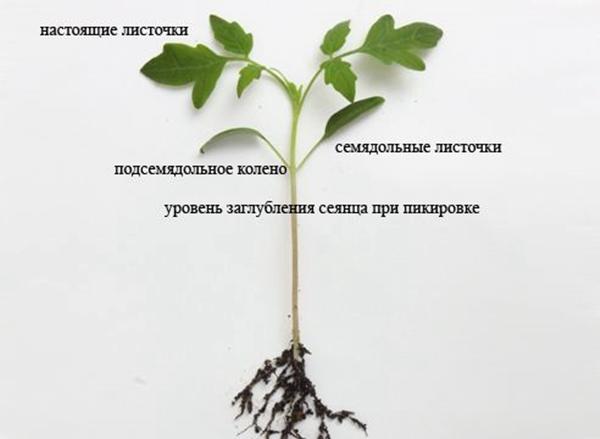
When the tomato seedlings reach 60 days of age, they are planted in the garden. By this time, the threat of night frosts should have completely passed, and if planting in a greenhouse, the soil should have warmed to the desired temperature. To prevent freezing, the plants are planted at an angle, covered with soil. After removing the soil, the stems are straightened.
Tomatoes are planted in beds using a 60 x 60 grid, while tall varieties are planted in 70 x 70 grids. Before planting, add a little wood ash to the dug holes; this not only disinfects the soil but also provides phosphorus for the tomatoes. The plants are planted deep down to the first true leaf, after which a couple of liters of water warmed to room temperature are poured under each bush. Tomatoes planted outdoors or in a greenhouse require regular, moderate watering.

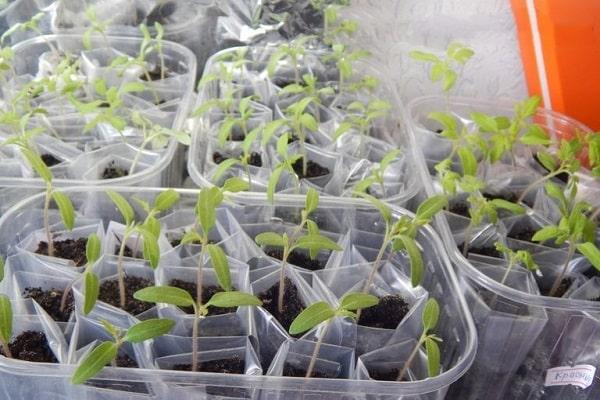
Tomato seedlings require fertilization after planting. Gardeners alternate mineral and organic fertilizers, applying them according to the recommended ratios. Fertilize the plants once every two weeks. Indeterminate varieties require staking and shaping.
When planting tomatoes early in garden beds or greenhouses, the soil level is raised slightly. A small amount of manure is added to the prepared holes and covered with last year's hay. Compost is then added and the tomato seedlings are planted. The beds are generously watered and mulched. A wire frame structure is constructed on top, covered with non-woven covering material.
During the day, it's lifted to allow the plants to breathe, and in the evening, it's covered again to protect them from freezing temperatures. Once the weather is sunny and warm, the cover is removed, and the frame is used as support.
To prevent viral and fungal infections, especially in damp and rainy weather, it's necessary to treat the plants with special preparations, such as Bordeaux mixture or iron sulfate. Even disease-resistant tomato varieties require this protection.
Related posts:
 What is the best way to feed tomato seedlings to make them plump?
 How to prepare tomato seeds for planting seedlings
 What fertilizers and when to use for feeding tomatoes in a greenhouse
 Is it possible to soak treated cucumber seeds before planting and how to do it correctly?
 15 simple recipes for pickling tomatoes in jars for the winter
 Timing for planting tomatoes in the Urals for seedlings, when is the best time to sow them, and how to care for them
 Description of the best varieties of black tomatoes for open ground and greenhouses
 How to Properly Sow Tomato Seeds for Seedlings: A Step-by-Step Guide