
With the onset of the spring season, vegetable growers are intensively engaged in growing seedlings. Therefore, the question When to transplant tomato seedlings Planting in pots becomes important during the seedling formation period. To ensure a high yield, it's recommended to prepare seeds, potting mix, fertilizer, and seedling pots before the start of the season.
First picking of seedlings
Plant seedlings begin growing two months before planting in the ground. The planting material is cultivated using various methods. Seeds are sown directly into cups or shared containers, followed by transplanting. This process has a beneficial effect on the development of the plant's root system.
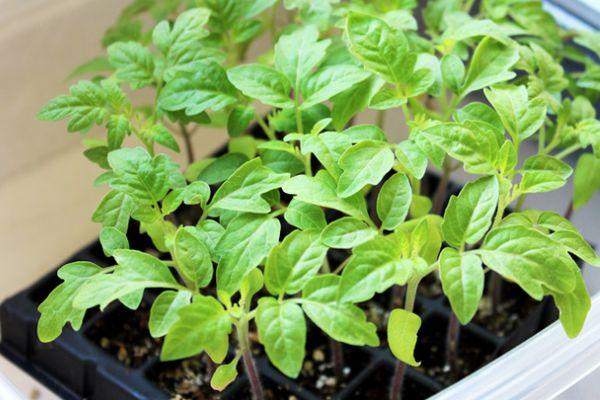
Tomatoes transplanted into individual pots develop additional lateral roots. Transplanting tomato seedlings:
- allows you to discard weak and damaged seedlings;
- reduces the costs of cultivating seedlings;
- ensures efficient use of crop area and soil.
After picking, the plant needs time to recover, so the negative effect of this procedure is a delay in the onset of fruiting.
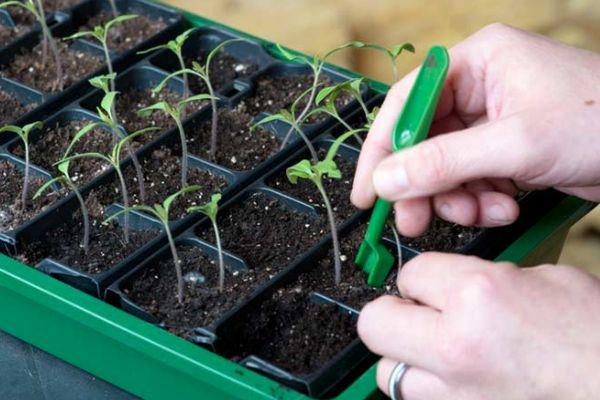
For picking, use a soil mixture that includes:
- peat;
- rotted compost;
- washed river sand.
The ingredients, taken in equal parts, are mixed and sifted through a coarse sieve to ensure a uniform soil structure. The prepared mixture is steamed or frozen for disinfection.
Tomatoes can be replanted in polymer chips, which swell several times as they absorb moisture. Unlike regular potting mix, this material is sterile and requires no preventative treatment.
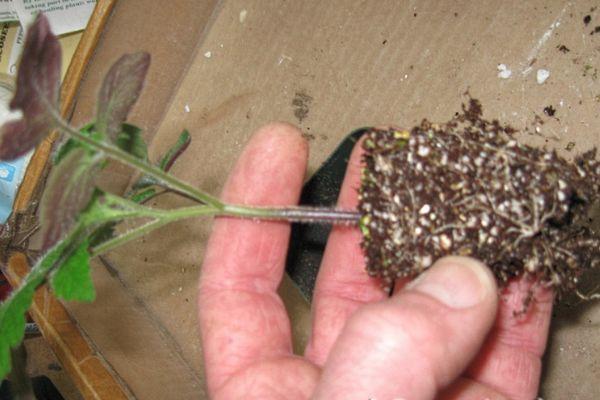
The plant's roots can gradually absorb water and nutrients. They have access to air. As moisture is released, the granules decrease in size. When transplanting, simply place 2 teaspoons of the soaked gel under the plant's roots to avoid overwatering.
Tomato seedlings are usually transplanted twice. The younger the seedlings, the easier they are to transplant. This is because their root system is less developed and less susceptible to damage during planting.
The first transplant is carried out after the seedlings emerge, when they have developed 1-3 true leaves. At this stage, small individual cups, 8 cm high and 8 cm in diameter, are used. The containers are filled with potting mix. The seedlings will develop in these cups for 20 days.
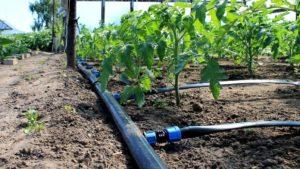
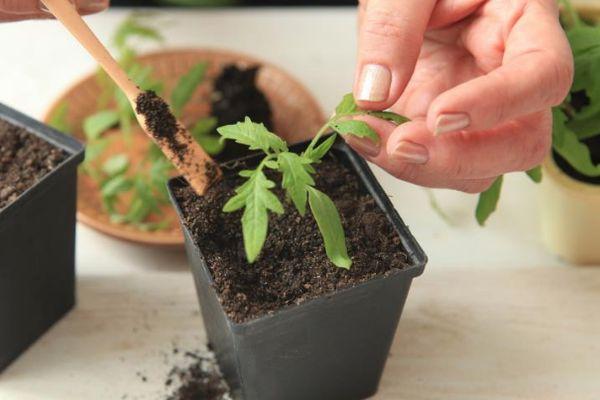
Unlike other crops, tomatoes thrive on transplanting. Roots damaged by transplanting quickly recover, developing a strong root system.
Transplanted plants are spaced 15 cm apart. The small cup saves space on the windowsill and increases water absorption by the roots.
Second transplantation of plants
If seedlings are immediately placed in a large container with potting mix, the excess moisture, unabsorbed by the seedling roots, will begin to turn sour. This is harmful to the plant, so use a larger pot for the second transplant.
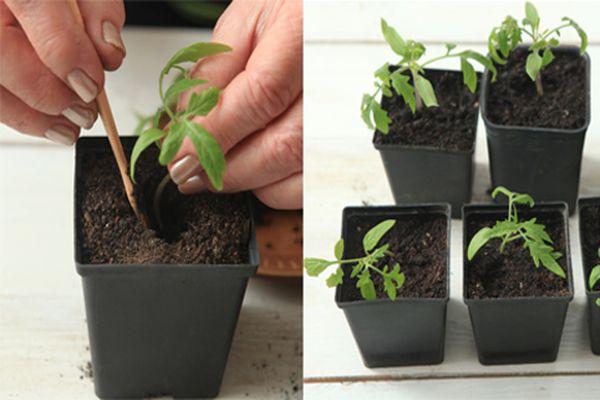
This stage of seedling cultivation ensures a gradual increase in the root system's nutritional area, which positively impacts the development of the seedlings. The seedlings become stronger, and the yield increases.
If for some reason the soil contains a pathogen causing a fungal or viral disease, replanting helps save the plants by replacing the soil.
The second transplant is carried out three weeks after the first transplant. Its purpose is to slow the upward growth of the tomatoes and promote the development of the underground part of the seedling.
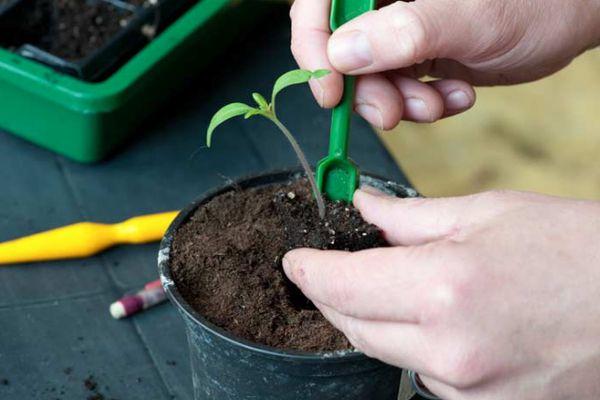
Larger pots provide the roots with additional space to grow and strengthen the stems. After the second transplant, the seedlings are watered generously with warm water. Subsequent soil watering is carried out after 7 days and as the surface layer of the soil dries out.
Some vegetable growers harden off their plants using cold water. This slows growth and inhibits flower cluster formation when growing seedlings in pots.
The process of transplanting tomatoes
Before planting the seedlings in individual containers, water them thoroughly. This should be done one day before transplanting. Soil that is moistened immediately before transplanting will stick in large clumps to the delicate roots.
Trying to lift a plant by its roots can damage the seedling. Dry soil will immediately begin to crumble, exposing the roots. Tomatoes transplanted with a root ball in place adapt more easily to new growing conditions.

After transplanting, the seedlings need good lighting. Insufficient light delays the onset of fruiting by 7-14 days. In this case, instead of flower clusters forming, leaves begin to form.
It's important to maintain a proper watering schedule. Excessive moisture leads to a lack of oxygen, which slows root growth. This leads to stunted development of the above-ground part of the plant.
Plants should be repotted by transshipment. This avoids damaging the roots and shortens the adaptation period. To achieve this, avoid watering the plants for a few days before repotting, allowing the root ball to be easily removed from the container.
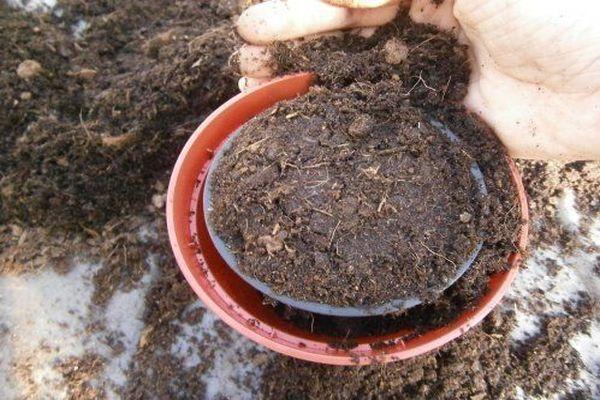
Fill a large pot one-third full with soil, place the tomato plant in the pot along with the soil, and fill in the gaps around the stem. Water the plant. For the first few days after planting, keep the seedlings in partial shade, preventing direct sunlight.
Two weeks after transplanting, the plants are fed with a mixture consisting of the following components:
- wood ash - 2 tbsp;
- superphosphate - 1 tbsp.
The mixture is diluted in 10 liters of water and watered into each pot. Fertilizing should be combined with watering to avoid burning the seedlings' roots. When growing seedlings in pots, do not add more soil to the potting mix.
Caring for seedlings
To promote strong plants, turn the seedling containers daily so they face the window glass. This ensures uniform growth.
Water the plants exclusively with warm, settled water at the roots, avoiding contact with the leaves. To ensure adequate airflow to the roots, place the seedling container on a stand.
As a preventative measure, it is recommended to spray plants with skim milk. To do this, use a mixture of 1 liter of water and 0.5 cups of milk. Moisten the leaves with a spray bottle.
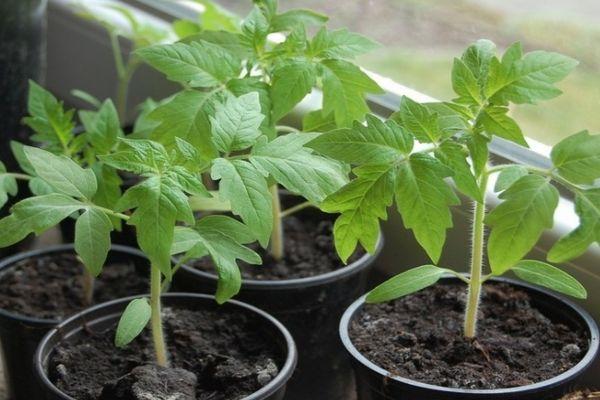
Some gardeners believe that when transplanting tomatoes, the central root should be pruned to stimulate the development of a secondary root system. In reality, mechanical damage occurs during transplanting, making additional pruning pointless.
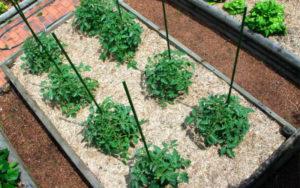
After transplanting tomatoes, it's important to maintain a temperature of 22°C during the day and 16°C at night for three days. Twelve days after transplanting, feed the seedlings with an aqueous solution of complex fertilizer.
Harden off the plants from the first days. At temperatures reaching 12°C, the seedlings can be taken outside in the afternoon.
Once tomato seedlings have established themselves, they can be transplanted at any time. Formed seedlings ready for transplanting should have strong stems, roots, and leaves.
Related posts:
 The best eggplant varieties for growing in a polycarbonate greenhouse: planting and care
 How to propagate and grow peas, cultivation technology, and care in open ground
 How to properly plant peas in a greenhouse and open ground
 Description of varieties of sowing peas and cultivation, to which family they belong
 Causes and treatment of eggplant pests and diseases, how to combat them at home
 What is the best way to feed tomato seedlings to make them plump?
 Description and characteristics of the best seeds of pea varieties and types
 Is it possible to soak treated cucumber seeds before planting and how to do it correctly?