
- Selecting high-quality seeds
- Is it necessary to sort the seed material?
- How to increase germination: preparing seeds for sowing
- Stratification
- Disinfection
- In open ground or indoor conditions, which is better?
- Preparatory work
- Preparation and disinfection of soil
- Selecting containers
- How to properly sow tomatoes for seedlings
- Optimal timing
- Sowing depth and pattern
- Seed sowing options
- Application of peat tablets
- In peat pots
- For toilet paper
- Into the boxes
- Caring for seedlings
- Temperature conditions
- Illumination
- Irrigation
- Required humidity
- What problems may arise and how to solve them
In southern regions, many gardeners plant tomato seeds directly in the garden, but in temperate climates, tomatoes have to be sown later, and the fruits don't have time to ripen. Markets sell ready-made seedlings of peppers, eggplants, and tomatoes, but there's no guarantee they'll grow into the desired variety. A bush with strong shoots and dense foliage doesn't always take root quickly and then resist late blight. Therefore, gardeners and novice vegetable growers are interested in the step-by-step process of sowing tomatoes for seedlings.
Selecting high-quality seeds
When purchasing seed, consider the climate where the tomatoes will be grown. Varieties with a long development period are suitable for southern regions, while for mid-latitudes, choose tomato seeds adapted to cool summers. When purchasing seed, consider where the tomatoes will be grown—in a garden bed or under plastic. Early tomatoes are planted where the warm season ends quickly, while late and mid-season varieties have a longer fruiting period and higher yields, but these tomatoes only ripen in the south.
When selecting seeds for sowing, it is necessary to consider the purpose for which tomatoes are being planted:
- for storage;
- for use in salads;
- for rolling into jars.
Some gardeners prefer the classic fruit color, while others prefer yellow or purple. Tall bushes are more difficult to care for than low-growing tomatoes, but they also produce much higher yields.
Is it necessary to sort the seed material?
Large, heavy tomato seeds are rich in nutrients and produce strong seedlings. To remove empty and small seeds, place them in a glass of salted water. The seeds that sink to the bottom are rinsed and dried, while those that float to the surface will not sprout.
How to increase germination: preparing seeds for sowing
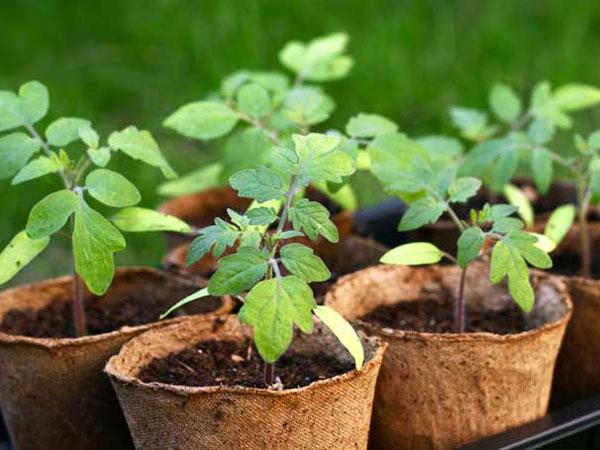
Tomato seeds sold in brightly colored packaging undergo heat treatment and disinfection, while those harvested from ripe fruits must be hardened.
Stratification
Seeds are best stored in a cool, dry place, placed in cloth bags. Thirty to forty days before planting, warm them up first at 20°C, then increase the temperature to 80°C, and finally reduce it to 2°C.

Disinfection
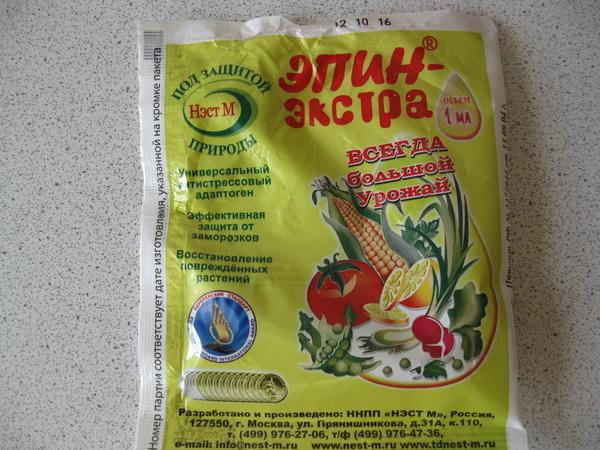
The infection spreads to adult plants from the seeds. To kill fungal spores and bacteria, tomato seeds are dipped in a potassium permanganate solution for 15 minutes or disinfected in hydrogen peroxide, heating the solution to 40°C. After disinfection, the tomato seeds are treated with a growth stimulant such as Epin or Virtan-Micro, sodium humate fertilizer, or aloe vera juice.
In open ground or indoor conditions, which is better?
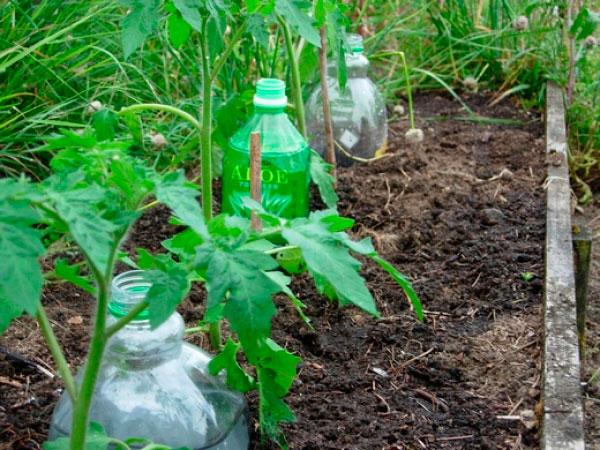
In southern regions, gardeners who grow large quantities of tomatoes sow seeds directly into the field. Once the plants grow, they thin them out and replant them. These tomatoes almost always thrive and are less susceptible to disease. To speed up ripening, seedlings are grown indoors first. In temperate climates, this is the only way to harvest this heat-loving crop.
Preparatory work
Before sowing into the soil, tomato seeds are germinated by laying them out on wet paper, gauze or fabric and covering them with some material.
When the length of the sprouts (seedlings) reaches 0.5 cm, they are planted in boxes or pots.
Preparation and disinfection of soil
Five to seven days before sowing, combine the garden soil with an equal amount of peat and humus, mix with ash and sand, and add a spoonful of superphosphate. The prepared substrate is scalded with boiling water or watered with a warm solution of potassium permanganate. To eliminate the pathogens that cause blackleg, the soil is disinfected with a fungicide.
Selecting containers
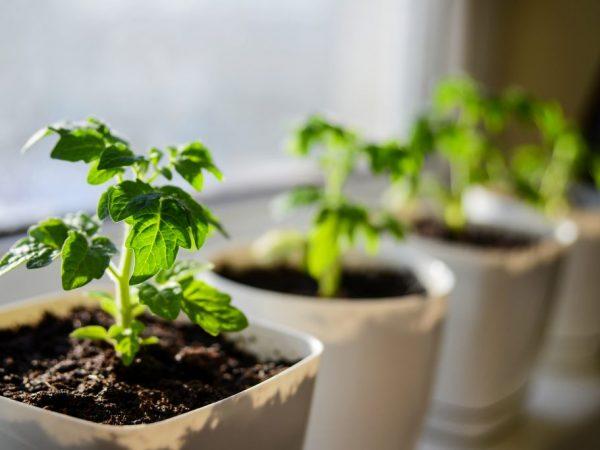
Tomato seeds can be sown in boxes at least 10 cm high, or in individual cups or 5 x 5 peat pots. When growing tomato seedlings in a single container, the mature plants should be pricked out. This will strengthen them, prevent them from stretching upwards, breaking, and establish them well in their permanent location.
How to properly sow tomatoes for seedlings
The time of harvest, size and yield of the fruits depend on when and to what depth the seeds are placed in the soil.
Optimal timing
Depending on the variety, seeding begins in February and continues until the second ten days of March. The timing depends on whether the tomatoes will be grown in a greenhouse or in the open ground. When planting in a garden bed, seeds for seedlings are sown two weeks later to protect the tomatoes from spring frosts. For mid-season varieties grown under plastic, seeds are planted in the ground about 10 days earlier.

Sowing depth and pattern
The next step after soil preparation is watering the substrate and planting. Tomato seeds should be placed in damp soil only, with two seeds placed at a depth of 10 mm. When using separate pots, the same number of seeds should be planted in one container; for peat pellets, two to four seeds should be planted.
Weak seedlings are pulled out. Large seeds are sown at a depth of up to a centimeter, small seeds at a depth of 0.5 centimeters. It's best to make holes or furrows with a stick or pencil.
Seed sowing options
Seedlings can be grown in a variety of containers. Before adding fertile soil, prepare a drainage layer.

Application of peat tablets
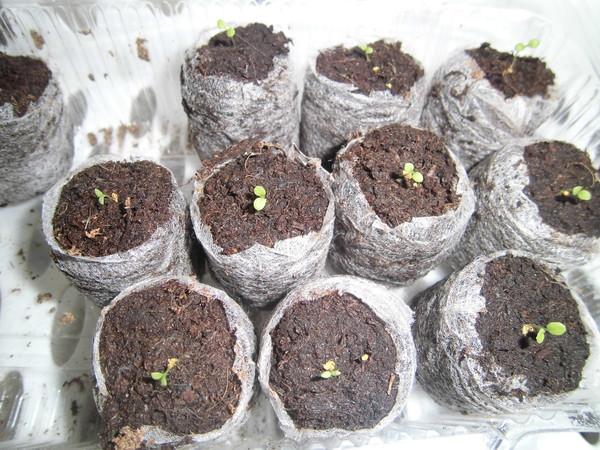
It's convenient to sow seeds in containers made from compressed fuel and fertilizer residues. These containers are also used to plant transplanted seedlings. When growing tomato seedlings in peat pellets:
- The roots are not damaged.
- The seedlings are saturated with nutrients.
- Tomatoes are not infected by spores and bacteria.
Before use, place the container on a tray and add warm water. Place 2-3 seeds in the top of the tablet, add soil, and cover the container with transparent film.
Tomato bushes are planted in a permanent location along with tablets that dissolve and do not interfere with root growth.
In peat pots
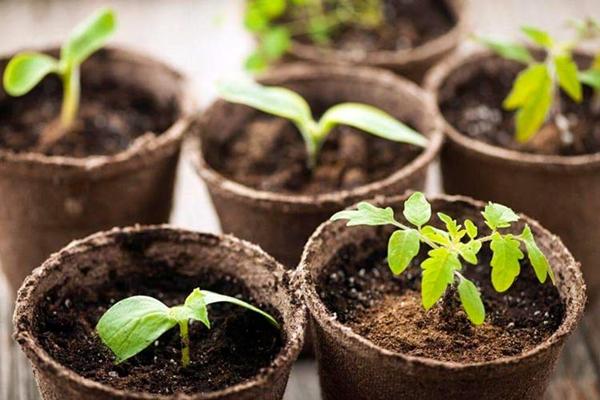
Containers made from compressed biomaterial are filled with a nutrient-rich substrate for sowing seeds. These containers, not in tablet form, are made in small pots to improve the soil's composition. A hole is made in the soil with a pencil and up to three tomato seeds are placed in the pots. These containers are wrapped in black film to prevent roots from growing through. The tomato plants are replanted along with their pots.
For toilet paper
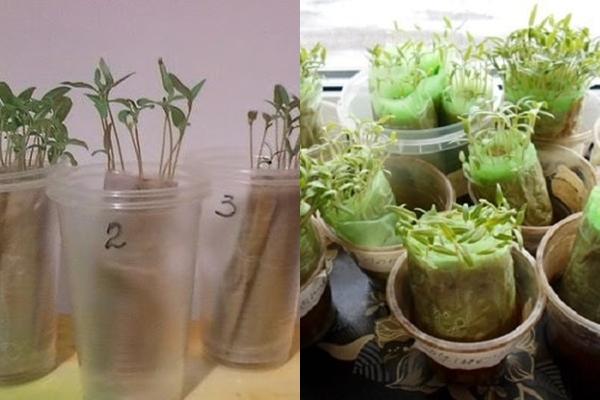
Seedlings emerge quickly and thrive when using an unconventional method that isn't suitable for many vegetables, but is suitable for tomatoes:
- Toilet paper is spread in layers on a cellophane bag.
- Tomato seeds are laid out.
- Spray using a spray bottle.
- The material is rolled into a roll, which is placed in a glass, filled with water and covered with plastic.
The bag is removed as soon as the sprouts emerge. Once sprouts appear, the seedlings are moved to a well-lit location.
Into the boxes
Containers used for growing large numbers of seedlings are lined with a drainage layer and filled with nutrient-rich substrate. To sow the swollen seeds, furrows are made in the soil surface every 5 cm to a depth of 10 ml.
The seeds are placed in them, covered with soil, and moistened with a spray bottle. The box is wrapped in plastic film.
Caring for seedlings
With proper care, seedlings will sprout leaves earlier. To ensure faster growth, tomato plants need optimal conditions.
Temperature conditions
After sowing, the containers with tomato seeds are kept in a warm room at 25–30°C. Once the seedlings emerge, to ensure good growth without overgrowing, the air temperature is reduced to 18–22°C. However, at lower temperatures, the roots stop growing.
Illumination
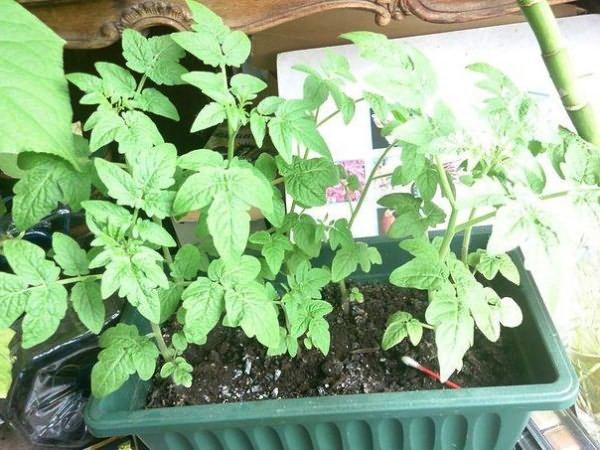
To prevent the seedlings from stretching, when sprouts appear, boxes, peat pots, plastic cups or other containers are moved to a windowsill, where a fluorescent lamp is installed.
It is advisable to illuminate the seedlings for the entire day during the first week, and then for 12–14 hours.
Irrigation
Seedlings dry out quickly under the plastic film, so it must be removed. Young tomato plants are watered near the stem using a syringe. The top layer of soil must always be moist, otherwise the roots will dry out, and the seedlings will either die or be unable to develop. It's best to start watering in the morning.
Required humidity
Seedlings need to be watered generously, preferably adding a potassium permanganate solution twice a month. For newly emerged seedlings, humidity should be maintained at 90%; for mature seedlings, this level can be reduced to 70%.
What problems may arise and how to solve them
Usually, the seedlings sprout quickly and develop well, but sometimes they turn yellow, the leaves become spotted, and dry out. Tomato plants stretch when there's insufficient light; adding a fluorescent lamp can solve this problem.
Leaves turn yellow when the soil is too wet; young tomatoes should be watered when the top layer of soil dries out. Seedlings stretch when temperatures are too high; this temperature should be reduced to 18–20°C.
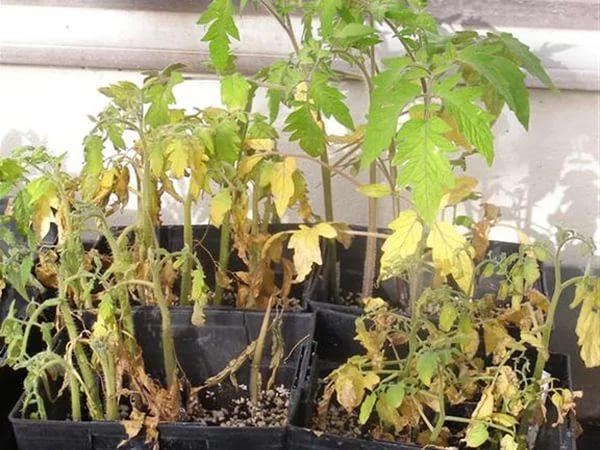
Leaf tips dry out for various reasons, including:
- dry air;
- potassium deficiency in the soil;
- watering with hard water.
Transparent spots form due to sunburn. In hot weather, seedlings should be shaded with newspaper, and damaged leaves should be treated with Epin.
Dark streaks are caused by septoria leaf spot, a fungal disease. To prevent the disease from developing, the soil should be frozen, treated with potassium permanganate, or heated before planting.
Blackleg infestations occur in seedlings due to excess moisture, overwatering, and high temperatures. Affected tomatoes are transplanted into a different substrate, supplemented with ash, and sprayed with a fungicide.
Related posts:
 Is it possible to soak treated cucumber seeds before planting and how to do it correctly?
 What is the best way to feed tomato seedlings to make them plump?
 How to prepare tomato seeds for planting seedlings
 The best eggplant varieties for growing in a polycarbonate greenhouse: planting and care
 Carrot care guidelines for outdoor cultivation to ensure a good harvest
 What fertilizers and when to use for feeding tomatoes in a greenhouse
 What is the best way to mulch tomatoes in open ground and greenhouses?
 Description of the best varieties of black tomatoes for open ground and greenhouses