
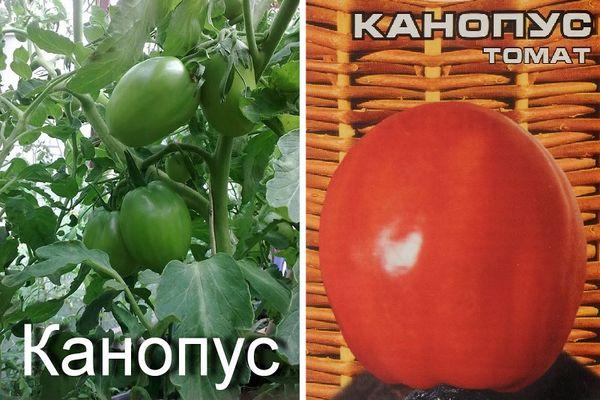
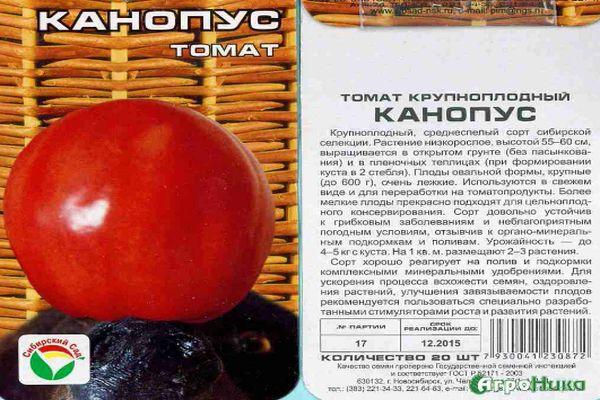
The Canopus tomato belongs to the group of mid-season hybrids. They require less fertilizer to grow. Canopus tomatoes are large, can withstand adverse weather conditions, and are resistant to fungal diseases. They are used for processing into sauces, tomato paste, ketchup, and juices.
Canopus tomatoes can be preserved for the winter. They can be transported over long distances. The disadvantages of this variety include a less-than-ideal aroma and flavor, so most of the berries are sent to processing plants.
Some information about tomato
The characteristics and description of the variety are as follows:
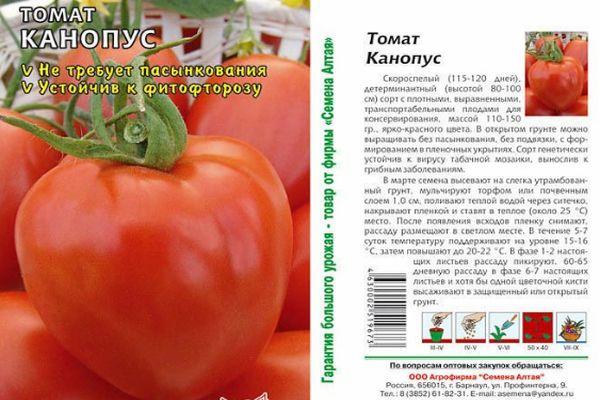
- The harvest can be obtained within 100-120 days after planting the seedlings.
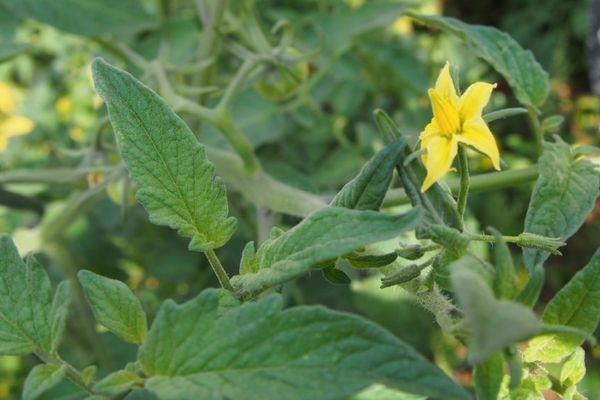
- The plant bush grows to 0.4-0.6 m. The stems produce a medium number of leaves, colored a rich green.
- Canopus has simple inflorescences. The very first one appears above the 6th, 7th, 8th, or 9th leaf, with subsequent ones appearing after 2-3 leaves.
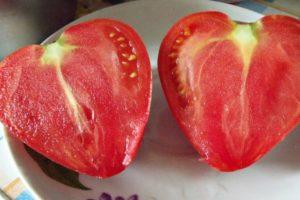
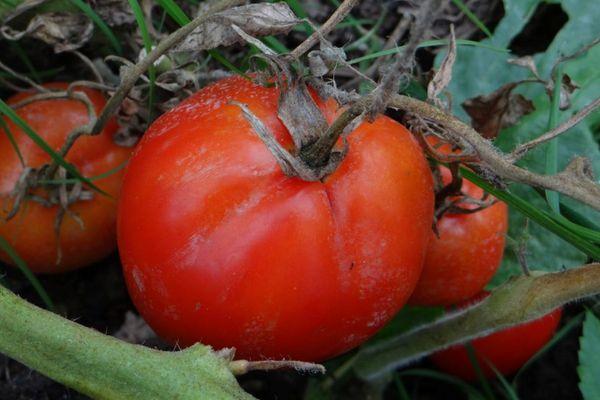
- The description of tomato fruits begins with their shape, which resembles an elongated cylinder. Ripe berries are a contrasting red color that stands out sharply against the plant's green leaves.
- Some farmers who have planted this variety in open ground claim that Canopus tolerates water stress well. Fruit weight ranges from 0.1 to 0.25 kg. Other gardeners who have planted this variety in full compliance with specialist recommendations or in greenhouses report fruit weights reaching 0.35-0.4 kg.
Gardeners' reviews indicate that tomato yields reach 3-3.5 kg per square meter of garden bed when sown outdoors. The same area in a greenhouse yields up to 5 kg of fruit.
This variety is resistant to various diseases. It has good resistance to late blight, tobacco mosaic virus, and bacterial spot. Most garden pests avoid this tomato, eliminating the need for chemicals to kill insects and their larvae.
Tomatoes in southern Russia and the central part of the country don't require greenhouses, as they thrive in open spaces. In Siberia and the northern regions of the country, it's recommended to plant in well-heated greenhouses.
Growing seedlings from seeds
The seeds are placed in prepared or homemade boxes filled with tomato soil, planted 3-5 mm deep. It is recommended to pre-treat the entire seed bank with a weak solution of potassium permanganate or hydrogen peroxide. This will improve the immunity of the future seedlings and protect them from fungal or bacterial infections.
Then, cover the planted seeds with thick paper and spray them with water. Once the seedlings sprout, water them with warm water and feed them with micronutrient fertilizers. When 2-3 leaves appear on the sprouts, transplant them. Plant the seedlings in permanent soil after 50-60 days. It is recommended to harden them off for a week before planting.
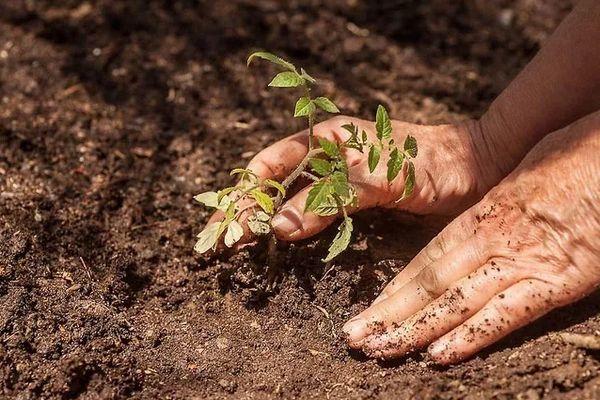
The bushes are planted in soil fertilized with nitrogen and organic fertilizers. The standard planting pattern is 0.5 x 0.5 m. To obtain an early harvest, the farmer can remove side shoots. This procedure increases the fruit weight when grown in a greenhouse. This is not necessary for open-field cultivation.
The stems are tied to supports or trellises, otherwise, when large fruits develop, the tomato branches may break.
Caring for the Canopus tomato
The bushes need to be watered once every 7-8 days. The amount of water should be regulated, otherwise too much moisture will ruin the future harvest. Watering should be done with water that has been left to stand in the sun.
It is recommended to fertilize the bushes three times per season. Initially, use nitrogen-containing fertilizers or organic matter. After the ovary develops, potassium nitrate is added to the organic mixture. After fruiting, a complex mixture containing nitrogen, potassium, and phosphorus is added to the soil.
It's recommended to loosen the soil in your garden beds twice a week. If possible, you can delegate this task to earthworms by releasing the required number of these primitive creatures into the area. However, it's important to be aware that earthworms attract moles, whose burrows can damage the plant's root system.
Weed the beds once a week. If this is not done, the tomato may become diseased, despite the variety’s resistance to infections.
Preventative spraying of tomato bushes with Fitosporin is recommended. This will protect the tomato plants from problems, such as eliminating the risk of bacterial infection.
Although insects pose little threat to the Canopus variety, experts recommend that farmers carefully inspect the leaves and stems of the plants. Sometimes natural defenses fail, leading to an infestation of garden pests, such as the Colorado potato beetle. To control insects, caterpillars, and larvae, treat the plants with chemical pesticides.
Related posts:
 Description of the best varieties of black tomatoes for open ground and greenhouses
 Characteristics and description of the Sprut tomato variety, yield and cultivation
 Description of the best Dutch tomato varieties for greenhouses and open ground
 Description and characteristics of the best indeterminate tomato varieties for greenhouses
 Description of the best tomato varieties for pickling and canning
 Description of blight-resistant tomato varieties for open ground and greenhouses
 Characteristics and description of the Japanese Truffle tomato variety, cultivation
 Characteristics and description of the Bull's Heart tomato variety, yield and cultivation