
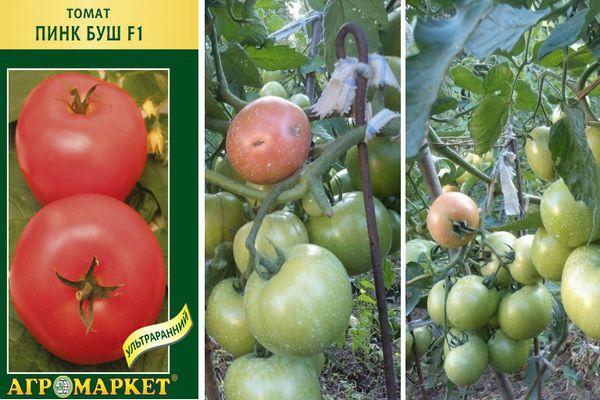
Tomato Pink Bush F1 is a relatively new variety from the Japanese company Sakata. This producer's seeds have only recently appeared on the Russian market, but gardeners' reviews of these unusual varieties are attracting potential buyers. Japanese tomatoes are expected to have extraordinary properties, but more often than not, they are simply industrial varieties with high yields and excellent flavor.
General characteristics of the plant
The Pink Bush tomato is a determinate standard variety with stems that self-top after 5-6 clusters of ovaries have formed. The bush grows to 75 cm tall, with strong stems that require staking. This tomato is considered an early ripening variety, with the first ripe fruits appearing 90-100 days after sowing.
The characteristics and descriptions of the variety provided by gardeners indicate that this tomato produces fruit well both in greenhouses and open ground. Pink Bush tomatoes easily tolerate temperature fluctuations in open ground, and they can even withstand slight overheating in a greenhouse without dropping their buds. This Japanese variety maintains its yield during unfavorable seasons, even under the challenging growing conditions of Siberia and the Urals.
One square meter (1 m²) can yield up to 10 kg of marketable produce per season. No more than three bushes are planted in this area, each of which can be trained into two or three stems to produce more fruit. According to those who have planted these tomatoes, each plant produces 25-30 fairly large berries.
The Pink Bush tomato variety is resistant to Fusarium wilt and tobacco mosaic. It is also resistant to other infections (brown spot, Alternaria), and is rarely affected by blossom-end rot.
This variety is easy to grow and requires little care, other than pinching out side shoots and staking new growth. If the soil is prepared in advance, tomatoes won't even require additional fertilizing. The grower will only need to ensure proper watering if there's no natural rainfall.

Consumer properties of fruits
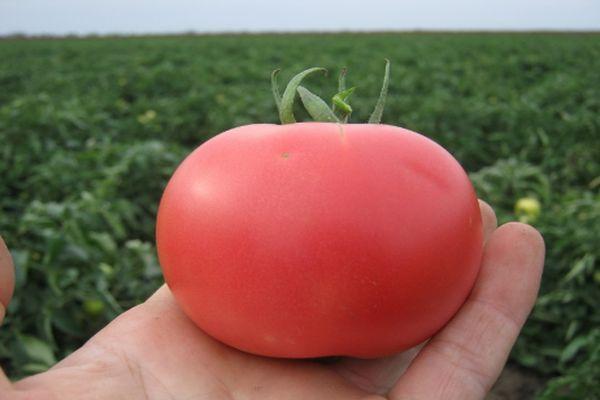
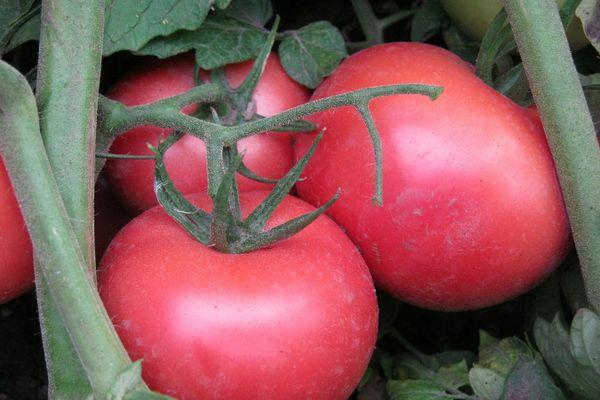
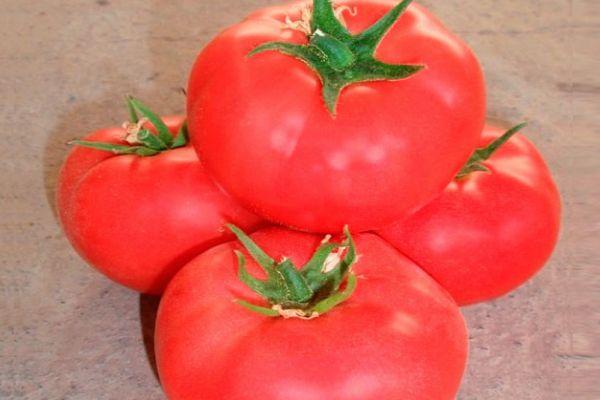
The Pink Bush hybrid produces fruit over a long period of time, but the tomatoes ripen almost simultaneously on the truss. Several vines planted together can yield about a bucket of tomatoes per harvest. The trusses are simple, containing 4-6 identical, round berries. A medium-sized berry weighs 200-220 g.
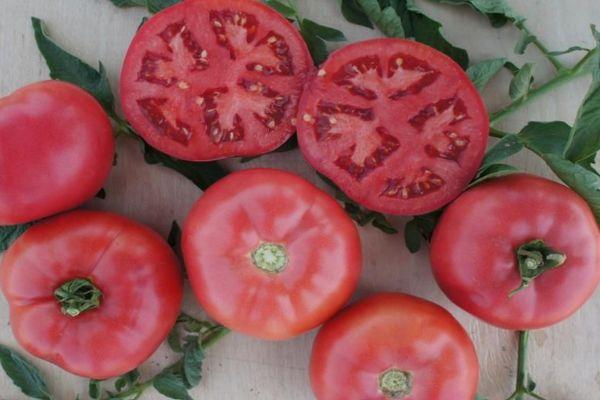
The skin is firm but not rough. If there's excess moisture during the cold, rainy season, the fruits may crack when ripening outdoors. This usually doesn't happen in greenhouses. The skin is a delicate pink with a pearlescent sheen. Ripe tomatoes are very beautiful. When ripe, the berries are light green.
The shelf life of tomatoes allows them to be transported over long distances. Even fully ripe tomatoes retain their marketable appearance for about two weeks. For sale, tomatoes are picked slightly unripe: by the time they are delivered to market and sold, they will have time to fully ripen, and their shelf life will be longer than that of tomatoes picked at full ripeness.
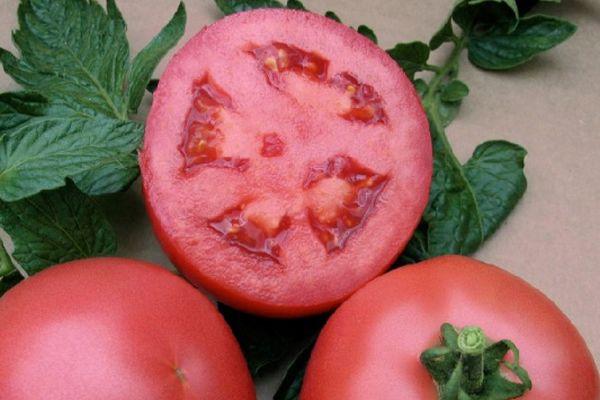
The flesh is intensely pink and grainy when cut. Four to six small seed chambers are visible when cut. The tomato has a fleshy texture, and the flesh is firm and juicy. There is no light-colored core in the center of the fruit.
This hybrid is designed for fresh consumption. Its flavor is excellent, with a sweet, delicate taste without a pronounced sourness. Those who have grown Pink Bush tomatoes outdoors note that the flavor becomes more sour with insufficient heat and sunlight. These tomatoes can be used in salads and unusual appetizers, as well as for stuffing and baking. Slices are perfect for garnishing sandwiches and other platters.
The light color of the flesh makes this pink tomato variety hypoallergenic. The high vitamin and lycopene content and low acidity of the flesh make the Pink Bush tomato and its dishes suitable for children's menus and diets.
A homemaker who has planted tomatoes in her own garden traditionally preserves the grown vegetables for the winter. Pink Bush tomatoes can be used for canning in any form. The texture of ripe tomatoes doesn't hold up when pickled, so it's best to use unripe ones. The berries' good flavor makes them suitable for making juice and sauces. They will be pale in color, but will be delicious and nutritious.
How to grow a good harvest of Japanese tomatoes?
The key to a good harvest is growing high-quality seedlings. Early varieties should be sown approximately two months before transplanting to their permanent location. To ensure young plants don't suffer from a deficiency of nutrients needed for growth, prepare a substrate of fertile soil, humus, and sand. For acidification, add 2 tablespoons of chalk or dolomite flour per 10 kg of the mixture. Ready-made soil is also available for seedlings.
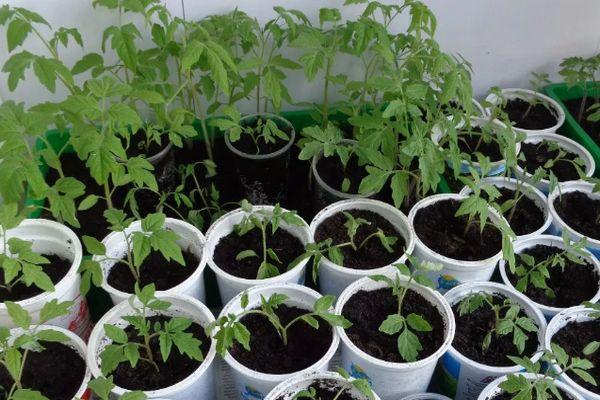
In any case, the soil is disinfected before sowing. The simplest and most effective method is to fill a seedling tray with soil and thoroughly soak it in a hot, dark pink solution of potassium permanganate. The combination of heat and antiseptic kills all pests and pathogens.
Japanese tomato seeds are already treated; soaking is not necessary. Sow immediately after the soil in the container has cooled; there's no need to let it dry. Spread the seeds over the moist soil and cover with dry sand to a depth of no more than 0.5 cm. Cover the container with plastic wrap to retain moisture, and make 2-3 holes 0.5-1 cm in diameter for air circulation. Place the seeds in a warm place (25°C) to germinate. At this temperature, sprouts will appear in 4-5 days. If the temperature isn't warm enough, germination may take an additional 2-3 days.
When the seedlings begin to sprout, remove the plastic wrap. You can avoid watering the tomatoes for a few more days, monitoring the soil: when it dries out to a depth of 1 cm, you can carefully water the plants with warm water with potassium permanganate (a light pink solution).
In the first 2-3 weeks of life, it is better not to reduce the temperature to prevent the appearance of black leg.
When the tomato plants develop true leaves (2-3), they are pricked out or transplanted into individual 0.5-liter pots. Further care consists of watering them regularly, as the top 1 cm of soil dries out. Depending on the growing method, they can be planted outdoors: in a greenhouse, they are planted 2-3 weeks earlier than in open beds. In greenhouses, tomatoes can be planted in the last ten days of May, as the plastic film can protect the plants from recurrent frosts.
Related posts:
 Description and characteristics of the Pink Charm daffodil variety, planting and care instructions
 Description and characteristics of the Pink Paradise F1 tomato variety, yield and cultivation
 Description of the pink tomato Pink Impression and similar hybrids
 Description of the Elematis Pink Fantasy variety and pruning group, planting and care
 Description and characteristics of the Pink Wonder daffodil variety, planting and care
 How to choose a tomato variety for growing in Ukraine and when to plant seedlings
 What is the best way to feed tomato seedlings to make them plump?
 Description of the Pink Rise f1 tomato, cultivation features and yield