- Selection and description of the Pink Wonder variety
- Pros and cons of growing
- Examples of use in garden design
- Specifics of growing daffodils
- Preparing the bulbs and soil
- Planting dates and patterns
- Watering and fertilizing regime
- Trimming
- Protection from diseases and insects
- Preparing the plant for frost
- Methods of reproduction
- Gardener reviews of Pink Wonder
Bulbous flowers (tulips, daffodils, crocuses) are a true highlight of spring gardens. The delicate Pink Wonder daffodil gracefully decorates garden arrangements, borders, flowerbeds, and flower gardens. The plant also looks natural in bouquets and vases. Growing daffodils outdoors is a simple task, suitable even for novice gardeners.
Selection and description of the Pink Wonder variety
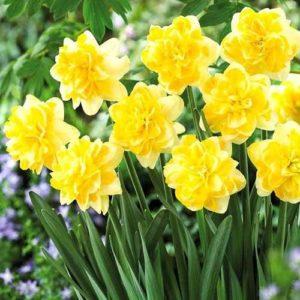
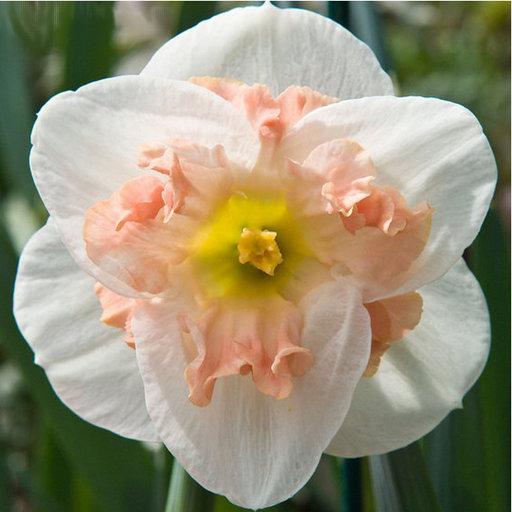
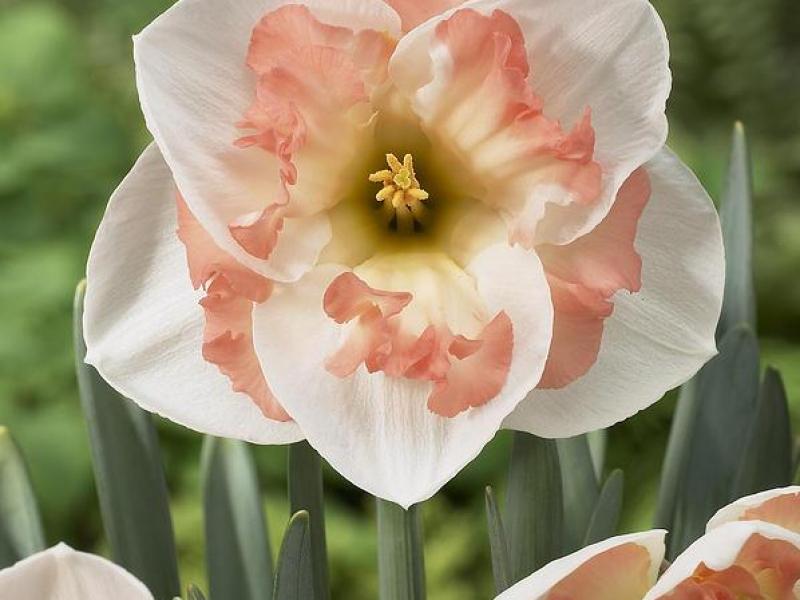
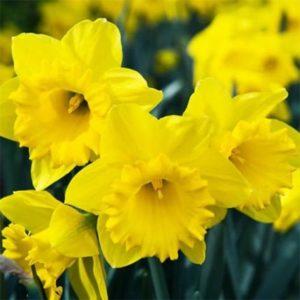
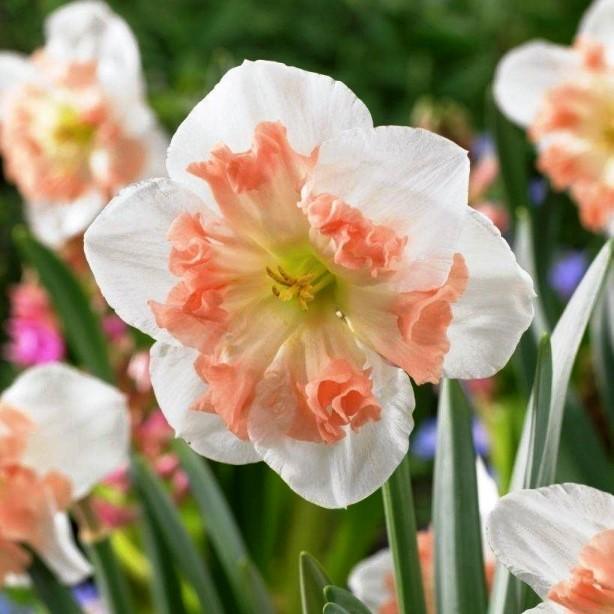
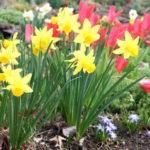
Narcissus is a double, mid-season variety. Pink Wonder blooms peak in April. Flower stalks grow 32-35 cm tall. The flowers, approximately 10 cm in diameter, are initially bright yellow, gradually changing to peach and pastel pink.
Pros and cons of growing
The Pink Wonder variety isn't considered a fussy flower and requires simple care. But its advantages don't end there:
- long flowering period – 2-3 weeks;
- look great in bouquets and flower beds;
- multicolor color palette of flowers.
One of Pink Wonder's downsides is its sensitivity to soil. It thrives in loose soils and flowers sparingly in denser soils.
Examples of use in garden design
Daffodils are most often planted in groups of 5-8. The delicate pastel pink hues of the flowers can be accented with snowdrops and muscari. If you don't want to create a composition, it's recommended to plant the bulbs along stone borders of garden paths or in rock gardens.
When growing daffodils, keep in mind that after flowering, the foliage doesn't wilt, but the plant loses its lush appearance. Therefore, daffodils are planted next to peonies and low-growing perennials (alchemilla, hosta).
Specifics of growing daffodils
Pink Wonder cultivation techniques are standard: watering, fertilizing, and loosening the soil. An important detail: do not trim the foliage immediately after flowering.
Preparing the bulbs and soil
The plot is prepared about a year before planting the bulbs. Narcissus prefers organic fertilizers – humus or compost is evenly added to the soil when digging (at a rate of 10 kg per square meter of the flowerbed).
Before planting, bulbs are inspected and disinfected. To prevent fungal diseases, the planting material is soaked in a solution of Fundazol or Karbofos. Bulbs will root faster if pre-treated with a growth stimulant (Zircon or Epin-Exta).
Planting dates and patterns
When planting Pink Wonder daffodils, consider the region's climate. In areas with frosty winters, bulbs are planted in August-September. In warmer climates, planting begins in October-November. Holes in rows are spaced 15-20 cm apart.

Tip! Landscape designers recommend planting plants in groups of 7-10 along paths, with a distance of 30-50 cm between groups.
Watering and fertilizing regime
Narcissus is a moisture-loving plant. Particular attention to soil moisture is required during bud formation and after flowering (when the bulbs accumulate nutrients for winter).
In early spring, daffodils are fertilized with a complex fertilizer (sodium, potassium, and phosphorus). Avoid overdoing the nitrogen-containing fertilizers, as this will cause the foliage to grow excessively. A second fertilizer application is made during the formation of flower stalks (using potassium-rich fertilizers).

Trimming
After flowering, the flower stalks are removed from the plants, but the green foliage is preserved. It is through the activity of the leaves that the bulbs store nutrients. Even as they wither, the leaves continue to transfer nutrients to the bulbs. Yellowed, lifeless foliage should be trimmed off.
Tip! When removing dried leaves, mark the location of the bulbs to avoid accidentally digging them up.
Protection from diseases and insects
Pink Wonder daffodil is disease-resistant. However, prolonged rainfall increases the risk of damage from fusarium wilt or gray mold. In this case, spraying with Bordeaux mixture is an appropriate treatment. Sometimes, the plant is damaged by harmful insects (flies, mites). Preventative plant treatment is the main way to prevent pests. Soak the bulbs in a solution of malathion.
Preparing the plant for frost
Double-flowered varieties tolerate freezing temperatures less well, which can be considered a disadvantage. When planting Pink Wonder in the fall, consider the onset of frost. Plants are planted so that the bulbs have time to root. Cover the area with a layer of dry leaves for the winter.
Methods of reproduction
A popular method of propagating flowers is by using daughter bulbs. The main steps are:
- an adult plant (4-5 years old) is carefully dug up after flowering;
- small daughter bulbs are easily separated from the mother daffodil;
- If you have to break off the bulbs, sprinkle the broken areas with wood ash.
Small bulbs are planted directly into the soil. The soil is watered and weeded. The planted bulbs are left undisturbed for three years. The plant can be propagated by seed, but this is a laborious and time-consuming method (the first buds appear after five to six years).
Gardener reviews of Pink Wonder
Svetlana Khvastova, Yekaterinburg: "I adore early flowers. I plant several varieties of daffodils at my dacha. My favorite is Pink Wonder. Every year, I'm amazed by the magically subtle change in the flower color—from yellowish to a washed-out pink. They're easy to care for. I always thin out the bulbs in the fall. Otherwise, the foliage starts to grow, and fewer flower stalks appear."
Irina Mironova, Lutsk: "The unusual aroma of daffodils always surprises me. The Pink Wonder variety attracts me not only with its delicate scent but also with the unusual color of its flowers. I decorate my paths and flowerbeds with daffodils. I often cut the flowers for vases. I generally plant several varieties of daffodils in a flowerbed, each with a different bloom time. Caring for the plants doesn't take much time; I always cover the area with dry leaves for the winter."
Related posts:
 Description and characteristics of the Pink Charm daffodil variety, planting and care instructions
 Description and characteristics of the Pink Paradise F1 tomato variety, yield and cultivation
 Description of the Elematis Pink Fantasy variety and pruning group, planting and care
 Description of the pink tomato Pink Impression and similar hybrids
 Description of shallot varieties, cultivation and care, when to harvest
 Planting and caring for daffodils in open ground, the best time and growing rules
 When and how to plant tulips in the Urals in autumn and care for them outdoors
 Description of the best varieties of onions, planting and care in open ground